
The cosmetic and beauty industry is on the brink of a remarkable transformation as we approach 2026. Rapid innovation, a surge in sustainability efforts, and evolving consumer values are reshaping every aspect of this field.
This essential guide delivers a clear roadmap for navigating the future of beauty. Entrepreneurs, brands, and professionals will discover fresh opportunities and strategies to thrive in the changing landscape.
Inside, explore detailed market forecasts, shifting consumer trends, groundbreaking technologies, new regulations, sustainability practices, and emerging business opportunities. Stay ahead, seize growth, and unlock the full potential of the cosmetic and beauty industry.
Global Market Outlook for 2026
The cosmetic and beauty industry is entering a period of accelerated growth and dynamic transformation. By 2026, global market forecasts show not only expansion in value but also significant shifts in how, where, and why consumers engage with beauty products. Let’s examine the data-driven outlook that will define the industry’s future.
Market Size and Growth Projections
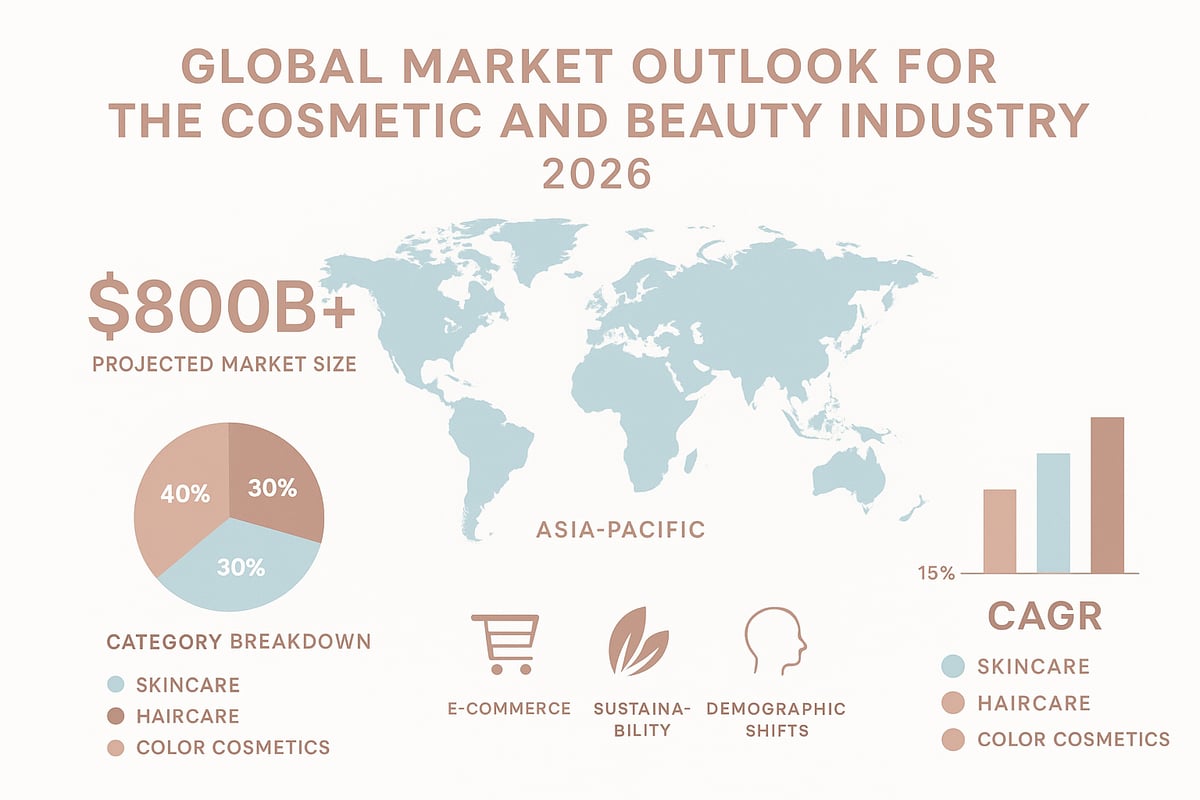
The cosmetic and beauty industry is projected to surpass $800 billion in global market value by 2026, marking a new milestone for the sector. Industry analysts report a robust compound annual growth rate (CAGR) across key segments, with skincare leading at 5.2%, haircare at 4.7%, and color cosmetics at 4.5%. Asia-Pacific, North America, and Europe are expected to drive the majority of this expansion.
According to recent global cosmetics market projections, this upward trend is fueled by rising disposable incomes, urbanization, and increased digital engagement. The sustained growth of the cosmetic and beauty industry suggests ample opportunities for established brands and new entrants alike.
Category Performance and Shifts
Within the cosmetic and beauty industry, skincare continues to dominate, making up nearly 40% of total market sales. However, men’s grooming and wellness-focused products are experiencing rapid acceleration, outpacing traditional categories.
Niche segments such as clean beauty, dermocosmetics, and hybrid formulations are also gaining momentum. These shifts reflect evolving consumer expectations for both efficacy and ethical considerations in product development.
- Skincare: 40% of market share
- Haircare: 25% of market share
- Color cosmetics: 18% of market share
- Men’s grooming and wellness: fastest-growing at 6% CAGR
Consumer Demographics and Spending Patterns
Demographic trends are reshaping the cosmetic and beauty industry. Gen Z and Millennials are now the primary drivers of demand, with a strong preference for brands that reflect ethical values and inclusivity.
These younger consumers are also willing to spend more on premium and personalized products, seeking out innovative formulations and tailored experiences. As a result, brands must adapt their offerings to meet diverse needs and expectations across age groups, genders, and cultural backgrounds.
E-commerce and Omnichannel Expansion
E-commerce is rapidly transforming the cosmetic and beauty industry’s retail landscape. Online sales are projected to account for over 30% of total global beauty sales by 2026. Social commerce and direct-to-consumer (D2C) models are powering this shift, making it easier for brands to build direct relationships with their customers.
Omnichannel strategies—integrating physical retail, digital storefronts, and mobile experiences—are now essential for capturing consumer attention and driving loyalty. Brands that invest in seamless, tech-enabled journeys will be best positioned for growth.
Competitive Landscape
The competitive dynamics within the cosmetic and beauty industry are evolving as market leaders face increasing competition from indie brands and digital disruptors. Top global players like L’Oréal, Estée Lauder, and Unilever continue to invest in innovation and sustainability, while smaller brands gain traction through agility and niche positioning.
Mergers and acquisitions (M&A) are shaping the landscape, with strategic partnerships and consolidation trends emerging as key strategies for scaling and maintaining market share. This dynamic environment fosters a culture of continuous innovation and adaptation.
Regional Insights
Growth within the cosmetic and beauty industry is not uniform across regions. China and India stand out as the fastest-growing markets, driven by rising middle-class populations and digital adoption. Meanwhile, Latin America (LATAM) and Africa are emerging as untapped opportunities, with increasing consumer awareness and demand for accessible beauty products.
| Region | Growth Rate (CAGR) | Key Drivers |
|---|---|---|
| Asia-Pacific | 6.2% | Urbanization, digital adoption |
| North America | 4.3% | Premiumization, wellness trends |
| Europe | 3.9% | Sustainability, innovation |
| LATAM & Africa | 5.1% | Accessibility, brand awareness |
Brands that localize offerings and marketing strategies will find the greatest potential in these high-growth regions.
Consumer Trends Shaping the Industry
The cosmetic and beauty industry is entering an era defined by rapidly shifting consumer expectations. As we approach 2026, brands are witnessing a transformation in how people discover, purchase, and engage with beauty products. Understanding these trends is critical to staying relevant and competitive in the evolving landscape.
Clean, Ethical, and Sustainable Products
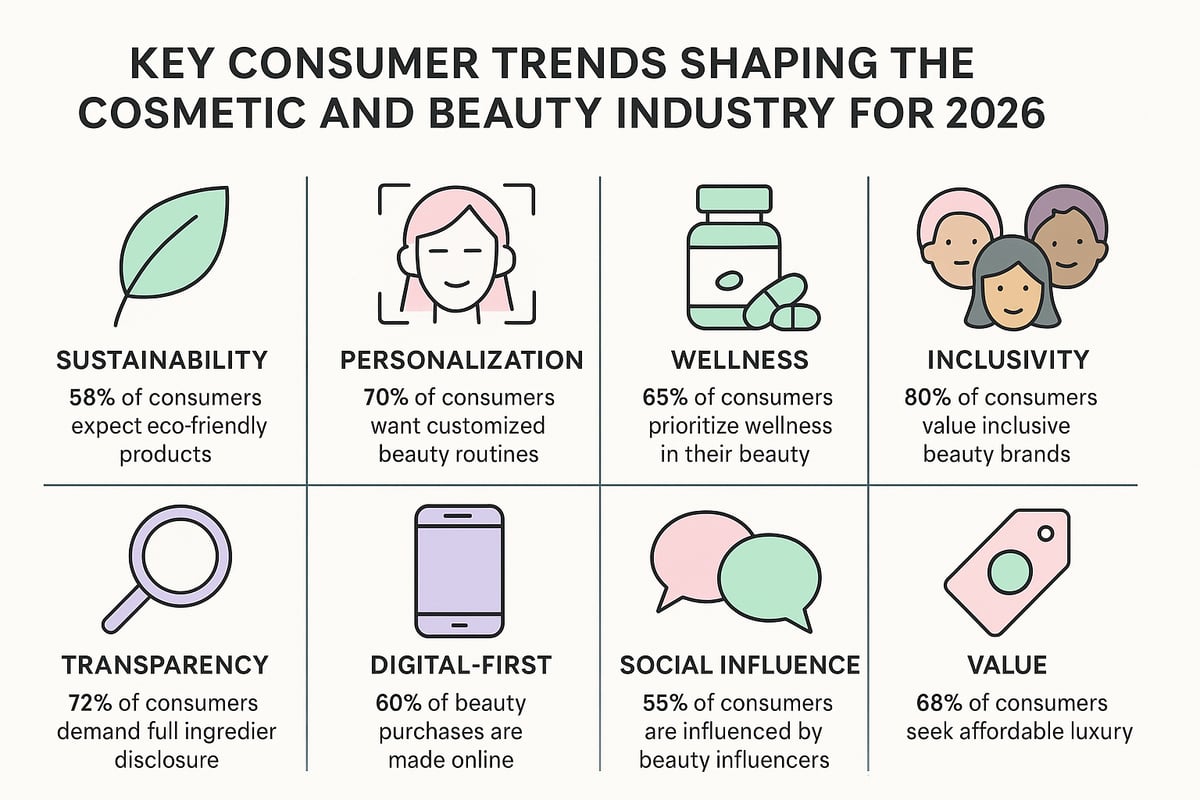
An overwhelming 73 percent of consumers now prefer brands that demonstrate a commitment to sustainability. The cosmetic and beauty industry is experiencing robust growth in vegan, cruelty-free, and zero-waste products. In fact, cruelty-free claims have become a major purchase driver, with brands educating shoppers about ethical sourcing and manufacturing. For a deeper look at the impact of cruelty-free practices, see Why being cruelty-free is important.
Personalization and Customization
Consumers are seeking tailored solutions, prompting the cosmetic and beauty industry to embrace AI-powered skin analysis and bespoke product formulations. Brands like Function of Beauty are leading the way by offering haircare and skincare products uniquely designed for each customer’s individual needs.
Wellness and Holistic Beauty
Beauty is no longer just skin deep. The cosmetic and beauty industry now integrates wellness, nutrition, and mental health into its offerings. The surge in ingestible beauty supplements and products that support emotional wellbeing reflects this holistic approach.
Inclusivity and Diversity
Expanding shade ranges, gender-neutral lines, and diverse marketing campaigns are reshaping the cosmetic and beauty industry. Fenty Beauty set a new benchmark for inclusivity, inspiring competitors to rethink product development and representation.
Transparency and Traceability
Consumers want to know exactly what goes into their products. Ingredient sourcing transparency has become essential in the cosmetic and beauty industry. Blockchain technology is emerging as a tool to verify supply chains and build trust with increasingly informed buyers.
Digital-First Experiences
The digital transformation of the cosmetic and beauty industry is accelerating. Virtual try-ons, augmented reality apps, and online consultations are now mainstream. Sephora’s investment in digital experiences sets a high standard, allowing users to experiment and receive expert advice from home.
Social Influence and Community Building
Social media platforms like TikTok and Instagram are driving trends and shaping brand narratives. The cosmetic and beauty industry benefits from user-generated content, micro-influencers, and vibrant online communities that foster loyalty and authentic engagement.
Price Sensitivity and Value
With economic uncertainty, consumers expect more from every purchase. The cosmetic and beauty industry is responding with affordable luxury, subscription models, and value bundles, making premium experiences accessible without compromising quality.
The bottom line: Consumer preferences are redefining the cosmetic and beauty industry at every level. Brands that anticipate these changes and adapt their strategies will be best positioned for success in 2026.
Technological Innovations and Digital Transformation
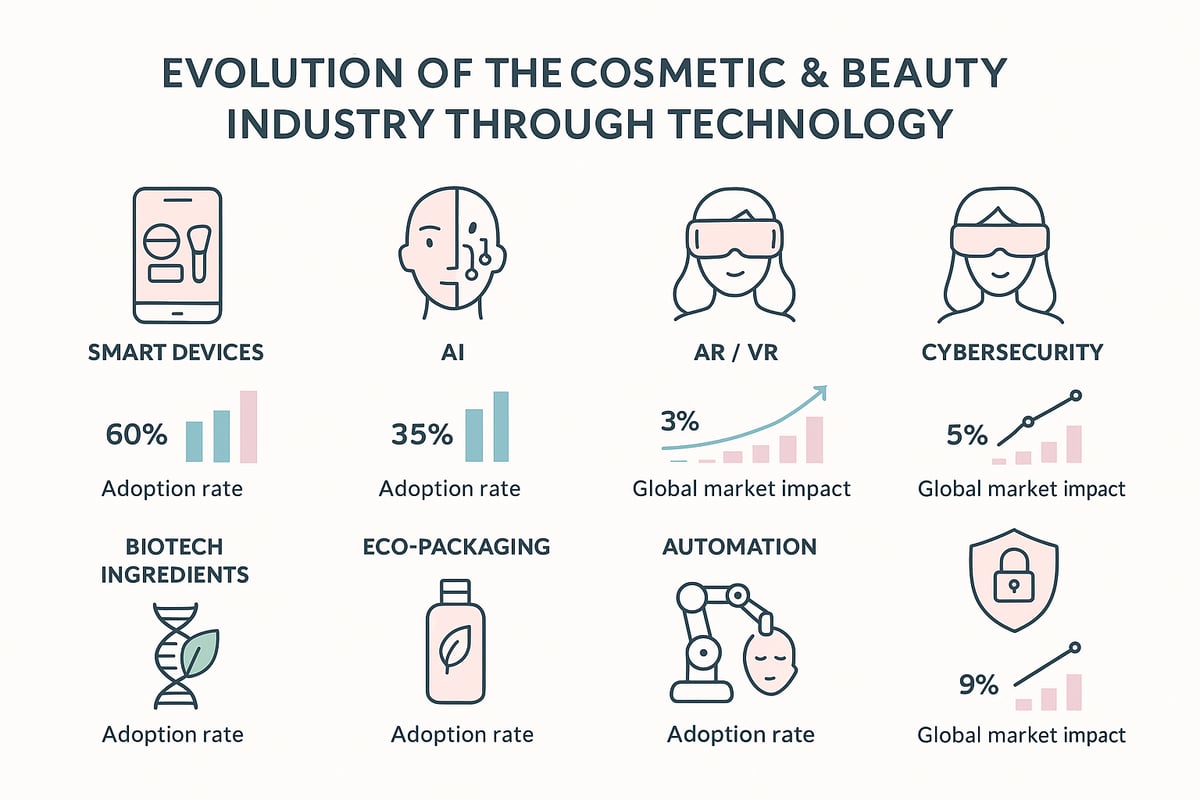
Technology is redefining the cosmetic and beauty industry, setting new standards for product performance, consumer engagement, and operational efficiency. Brands are racing to integrate cutting-edge solutions, from AI-driven personalization to sustainable packaging, to stay relevant and competitive.
Smart Beauty Devices and Tools
The rise of smart beauty devices is transforming at-home routines. Consumers now expect professional results without leaving their homes. Devices like LED masks, ultrasonic cleansers, and microcurrent tools are becoming mainstream.
These innovations blend convenience and science, empowering users to personalize their skincare regimens. Brands such as Foreo introduce AI-enabled devices that analyze skin conditions and optimize treatment settings in real time.
For the cosmetic and beauty industry, this shift means new revenue streams and deeper consumer loyalty. Companies investing in device development are also gathering valuable user data, supporting product refinement and next-generation solutions.
Artificial Intelligence and Machine Learning
Artificial intelligence is revolutionizing how brands interact with consumers. AI-driven diagnostics, such as skin analysis apps, recommend tailored products based on individual needs. Machine learning algorithms anticipate trends, helping brands stay ahead of demand.
Retailers in the cosmetic and beauty industry are leveraging chatbots for 24/7 customer support and education. These virtual assistants enhance the shopping experience, guiding buyers through product selections and addressing queries instantly.
AI also streamlines inventory management and supply chain logistics, reducing costs and minimizing waste. The integration of predictive analytics is quickly becoming a competitive necessity.
Augmented Reality and Virtual Reality
Augmented reality and virtual reality are elevating the digital shopping journey. AR-powered makeup try-on tools let customers visualize products before purchasing, reducing returns and boosting confidence.
Virtual reality is taking brand engagement further by creating immersive experiences. Shoppers can explore virtual stores, attend interactive tutorials, or participate in live product launches from anywhere in the world.
As digital-first strategies dominate, the cosmetic and beauty industry is increasingly investing in these technologies. The result is a seamless blend of online and offline experiences that cater to modern consumer expectations.
Biotechnology and Advanced Ingredients
Biotechnology is unlocking new frontiers in product formulation. Lab-grown actives, bio-fermented extracts, and microbiome-friendly ingredients are making waves. These innovations offer enhanced efficacy and sustainability, appealing to conscious consumers.
Brands are also exploring adaptogens and peptides for targeted benefits. The focus on biotech allows for consistent quality and scalability, key factors in the evolving cosmetic and beauty industry.
For those seeking to differentiate through advanced formulations, custom solutions are becoming essential. To learn more about the impact of bespoke innovation, see how you can revolutionize your brand with custom formulations.
Sustainable Packaging and Materials
Sustainability is no longer optional. The cosmetic and beauty industry is adopting biodegradable, refillable, and reusable packaging at scale. Brands like L’Occitane offer refill stations, reducing single-use plastics and encouraging responsible consumption.
Innovations in mono-material designs and compostable solutions are gaining traction. These efforts not only address environmental concerns but also resonate with eco-minded shoppers.
Packaging is now a key differentiator. Companies that invest in green materials are strengthening brand trust and future-proofing their business.
Supply Chain and Manufacturing Automation
Automation is streamlining every aspect of production. Robotics and IoT devices optimize manufacturing, ensuring consistency and efficiency. Digital twins are used for real-time quality control, reducing errors and enhancing traceability.
In the cosmetic and beauty industry, agile supply chains enable rapid response to market changes. Automated systems support faster prototyping, lower costs, and scalable growth.
As demand for personalized products rises, flexible manufacturing becomes even more critical. Brands that embrace these technologies are better positioned to capture emerging opportunities.
Data Privacy and Cybersecurity
With increased digitization comes greater responsibility. Safeguarding consumer data is paramount for brands in the cosmetic and beauty industry. Compliance with regulations like GDPR and CCPA is mandatory.
Companies are investing in secure digital platforms and transparent data practices. Building trust requires ongoing commitment to privacy, especially as personalized experiences become the norm.
Cybersecurity is not just a technical issue but a cornerstone of brand integrity. Proactive measures protect both consumers and businesses, ensuring long-term success in a tech-driven market.
Regulatory Changes and Compliance in 2026
Navigating regulatory changes is essential for every cosmetic and beauty industry stakeholder. As global standards evolve, compliance plays a pivotal role in ensuring product safety, ethical sourcing, and consumer trust.
Evolving Global Regulations
The regulatory landscape for the cosmetic and beauty industry is rapidly changing. The EU is updating its Cosmetics Regulation, focusing on ingredient safety and environmental impact. The US FDA's Modernization of Cosmetics Regulation Act (MoCRA) introduces stricter product registration and reporting requirements. Companies must stay informed and adapt quickly to remain compliant as these changes take effect across major markets.
Ingredient Bans and Restrictions
Authorities worldwide are tightening restrictions on controversial substances in cosmetic and beauty industry products. Bans on microplastics, PFAS, and certain preservatives are impacting both formulation and supply chain strategies. Brands need robust ingredient traceability and proactive R&D to avoid costly reformulations and ensure ongoing market access.
Labeling and Claims
Transparency is now a legal necessity in the cosmetic and beauty industry. Stricter rules govern claims like "natural," "organic," or "cruelty-free." Certifications such as COSMOS, Ecocert, and Leaping Bunny verify compliance. Accurate labeling is critical, as misleading statements can trigger regulatory action and erode consumer trust.
Common Certifications Table
| Certification | Focus Area | Recognized In |
|---|---|---|
| COSMOS | Organic/Natural | EU, Global |
| Ecocert | Organic/Natural | EU, Global |
| Leaping Bunny | Cruelty-Free | Global |
Sustainability and Environmental Reporting
Sustainability reporting is now mandatory in many regions for the cosmetic and beauty industry. The EU requires ESG disclosures and carbon footprint labeling, with similar initiatives emerging worldwide. Brands must accurately measure and communicate environmental impacts, aligning with investor expectations and consumer demand for transparency.
Digital Compliance
With the digital transformation of the cosmetic and beauty industry, online advertising and influencer marketing face new scrutiny. Compliance with local guidelines for digital claims, data privacy, and social media disclosures is non-negotiable. For a deeper look at how AI and digitalization are influencing compliance and innovation, see the Top 10 cosmetic industry trends for 2026.
Navigating International Markets
International expansion brings regulatory complexity for the cosmetic and beauty industry. Import and export rules vary by region and can include unique documentation or animal testing requirements. Recent changes in China's animal testing policy, for example, have opened new pathways for cruelty-free brands seeking access to this high-growth market.
Risk Management and Recalls
Effective risk management is vital in the cosmetic and beauty industry. Companies must have clear product safety protocols and recall procedures to address potential issues swiftly. Regular audits, robust documentation, and transparent communication are best practices to minimize legal and reputational risks.
Sustainability and Ethical Practices in Beauty
The cosmetic and beauty industry is entering a new era where sustainability and ethical practices are not just trends, but business imperatives. As consumers demand more transparency and responsibility, brands are reimagining their products and processes to meet these evolving expectations.
Eco-Friendly Ingredient Sourcing
Sourcing plays a foundational role in the cosmetic and beauty industry’s sustainability journey. Companies are increasingly opting for upcycled, plant-based, and biotech-derived ingredients. These alternatives help reduce environmental impact and support biodiversity. Ethical supplier partnerships are crucial, ensuring fair labor practices and traceability. Brands investing in transparent supply chains not only build trust but also set themselves apart in a crowded market.
Sustainable Packaging Solutions
Packaging innovation is accelerating within the cosmetic and beauty industry. Brands are embracing mono-material designs, compostable options, and refill systems to cut waste. Pioneers are rolling out refill stations and adopting biodegradable materials, making sustainability accessible to more consumers. To learn how packaging trends are shaping the future, explore these 2025 global beauty trends for deeper insights. Leaders who prioritize packaging sustainability gain a tangible competitive advantage.
Water and Energy Conservation
Water scarcity and energy use are growing concerns for the cosmetic and beauty industry. Brands are responding with waterless products and solid formulations that minimize resource consumption. Energy-efficient manufacturing processes further reduce environmental footprints. These innovations not only conserve precious resources but also appeal to eco-conscious consumers who value responsible production.
Circular Beauty and Waste Reduction
Circular beauty is gaining momentum as the cosmetic and beauty industry seeks to close the loop on waste. Take-back and recycling programs are becoming standard, with brands collaborating with organizations like TerraCycle to ensure responsible disposal. By designing products for reuse and recyclability, companies can lower landfill contributions and drive consumer loyalty.
Social Responsibility and Fair Trade
Ethical practices extend beyond ingredients and packaging. The cosmetic and beauty industry is increasingly supporting local communities and ensuring fair labor conditions throughout the supply chain. Brands with B Corp certification demonstrate a commitment to social responsibility, creating positive impacts where ingredients are sourced and products are made.
Greenwashing and Authenticity
As sustainability claims proliferate, distinguishing genuine efforts from greenwashing is critical. The cosmetic and beauty industry must prioritize third-party certifications, such as COSMOS or Ecocert, to validate their claims. Authenticity builds consumer confidence and fosters long-term brand loyalty. Transparent communication about sustainability initiatives is essential for credibility.
Consumer Education and Engagement
Educating consumers on sustainability is a key differentiator in the cosmetic and beauty industry. Brands are developing interactive platforms and clear messaging to help shoppers make informed choices. Engaged consumers become brand advocates, amplifying the impact of sustainability initiatives through word-of-mouth and social sharing.
Measuring Impact
Measuring and reporting sustainability metrics is now expected in the cosmetic and beauty industry. Brands are leveraging digital tools to track progress on emissions, water usage, and waste reduction. Regular impact assessments help identify areas for improvement and demonstrate accountability to stakeholders.
Business Opportunities and Strategies for 2026
The cosmetic and beauty industry is entering an era of expansive opportunity, driven by new consumer demands, technology, and global market shifts. To thrive in 2026, brands must navigate fresh entry points, foster innovation, and adopt agile strategies. This section explores actionable business tactics and the key drivers shaping future success.
Entry Points for New Brands and Entrepreneurs
Newcomers to the cosmetic and beauty industry can leverage niche trends to carve out distinct market positions. Emerging areas include adaptogenic skincare, men’s wellness, and personalized beauty solutions. These categories offer lower competition and strong consumer interest.
Key steps for entry:
- Conduct targeted market research to identify underserved segments
- Develop a minimal viable product (MVP) for rapid testing
- Use digital platforms to validate concepts and gather feedback
For a comprehensive roadmap, consult the Starting a cosmetic brand guide, which outlines essential steps and common pitfalls for aspiring entrepreneurs. Early focus on compliance and differentiation is crucial in the cosmetic and beauty industry.
Innovation in Product Development
Innovation remains a primary growth lever in the cosmetic and beauty industry. Fast prototyping, consumer co-creation, and trend responsiveness help brands stay ahead of shifting preferences. Indie brands are leading the way by harnessing social media trends, especially TikTok, to inspire new product ideas in real time.
Consider these strategies:
- Collaborate with consumers for co-creation and feedback
- Implement agile development cycles for rapid iteration
- Monitor digital trend reports to anticipate shifts
By staying agile and responsive, brands can seize opportunities and quickly adapt product lines to evolving market needs within the cosmetic and beauty industry.
Building a Digital-First Brand
Digital-first strategies are essential for success in the cosmetic and beauty industry. Direct-to-consumer (D2C) models, robust e-commerce platforms, and social selling drive higher engagement and loyalty. Brands are investing in influencer partnerships and building active communities to foster authentic connections.
Key tactics include:
- Optimize e-commerce sites for mobile and personalization
- Leverage micro-influencers to reach targeted audiences
- Create interactive brand experiences via AR and live streaming
A strong digital presence not only boosts sales but also enables rapid response to consumer feedback and market trends in the cosmetic and beauty industry.
Funding and Scaling
Securing funding and scaling efficiently is a common challenge in the cosmetic and beauty industry. Crowdfunding, venture capital, and private equity remain popular financing routes. Strategic partnerships and licensing deals also offer growth pathways.
A recent report on Beauty growth to continue through 2026 highlights the sustained investor interest and robust market performance expected in the coming years.
Scaling tips:
- Demonstrate proof of concept and traction before seeking funding
- Build strategic alliances for distribution and innovation
- Focus on operational efficiency to maximize margins
International Expansion Strategies
Global expansion offers immense opportunity for brands in the cosmetic and beauty industry. Asia-Pacific, LATAM, and the Middle East are high-growth regions with diverse consumer needs. Success depends on thorough market research and tailored localization.
Steps for effective expansion:
- Analyze regulatory requirements in target countries
- Adapt products and messaging for local preferences
- Partner with regional distributors and influencers
A focused approach helps brands navigate cultural nuances and regulatory landscapes, unlocking new revenue streams in the cosmetic and beauty industry.
Navigating Supply Chain Challenges
Supply chain resilience is vital as the cosmetic and beauty industry faces disruptions from global events and shifting consumer demands. Diversifying sourcing, nearshoring, and leveraging digital supply chain management tools can minimize risks.
Best practices include:
- Establish relationships with multiple suppliers
- Use technology to monitor and manage inventory in real time
- Implement contingency plans for logistics disruptions
A robust supply chain ensures consistent product quality and availability, supporting growth in the cosmetic and beauty industry.
The INCI Lab: Custom Formulation Partner for 2026 Success
For brands seeking custom, sustainable formulations, The INCI Lab offers end-to-end support, from concept to market-ready product. Their expertise in eco-friendly ingredient sourcing, full IP ownership, and regulatory compliance makes them an ideal partner for both startups and established names in the cosmetic and beauty industry.
Key advantages:
- Personalized consulting for market fit and brand differentiation
- Innovative product development with a focus on sustainability
- Streamlined compliance and global market readiness
The INCI Lab empowers brands to create standout products that resonate with modern consumers in the cosmetic and beauty industry.
Future-Proofing Your Brand
Continuous innovation, agility, and talent investment are crucial for long-term success in the cosmetic and beauty industry. Brands should monitor global trends, regulatory changes, and consumer behaviors to stay ahead.
Key focus areas:
- Upskill teams in digital, sustainability, and compliance
- Invest in R&D for ongoing product innovation
- Embrace emerging technologies and flexible business models
By building adaptive capabilities, brands can navigate uncertainty and seize the opportunities that lie ahead in the cosmetic and beauty industry.
As you’ve seen throughout this guide, the beauty industry is evolving fast, with sustainability, innovation, and personalization leading the way. Whether you’re building a new brand or looking to future proof your existing business, making informed decisions about formulation and product development is key to standing out. If you’re ready to take the next step and turn your ideas into high-performance, sustainable products, let’s start this journey together. Explore how you can bring your vision to life with expert support every step of the way—Start Your Product Journey.