
The cosmetic industry is transforming at an unprecedented pace, reshaping global markets and consumer expectations as we approach 2026. With the sector’s value soaring and innovation accelerating, brands and professionals must stay ahead of emerging trends to remain competitive.
This essential guide is designed for those navigating the dynamic cosmetic industry landscape. We will explore market size and segmentation, technology breakthroughs, evolving consumer preferences, regulatory shifts, and the drive toward sustainability.
Prepare to discover key growth opportunities and actionable strategies. Staying informed has never been more critical for success in the ever-evolving world of cosmetics.
The Global Cosmetic Industry Landscape in 2026
As we look toward 2026, the cosmetic industry stands at a pivotal crossroads, shaped by rapid global expansion, shifting consumer priorities, and technological disruption. Understanding the latest data, trends, and challenges is crucial for brands and professionals aiming to stay ahead.
Key Market Statistics and Regional Breakdown
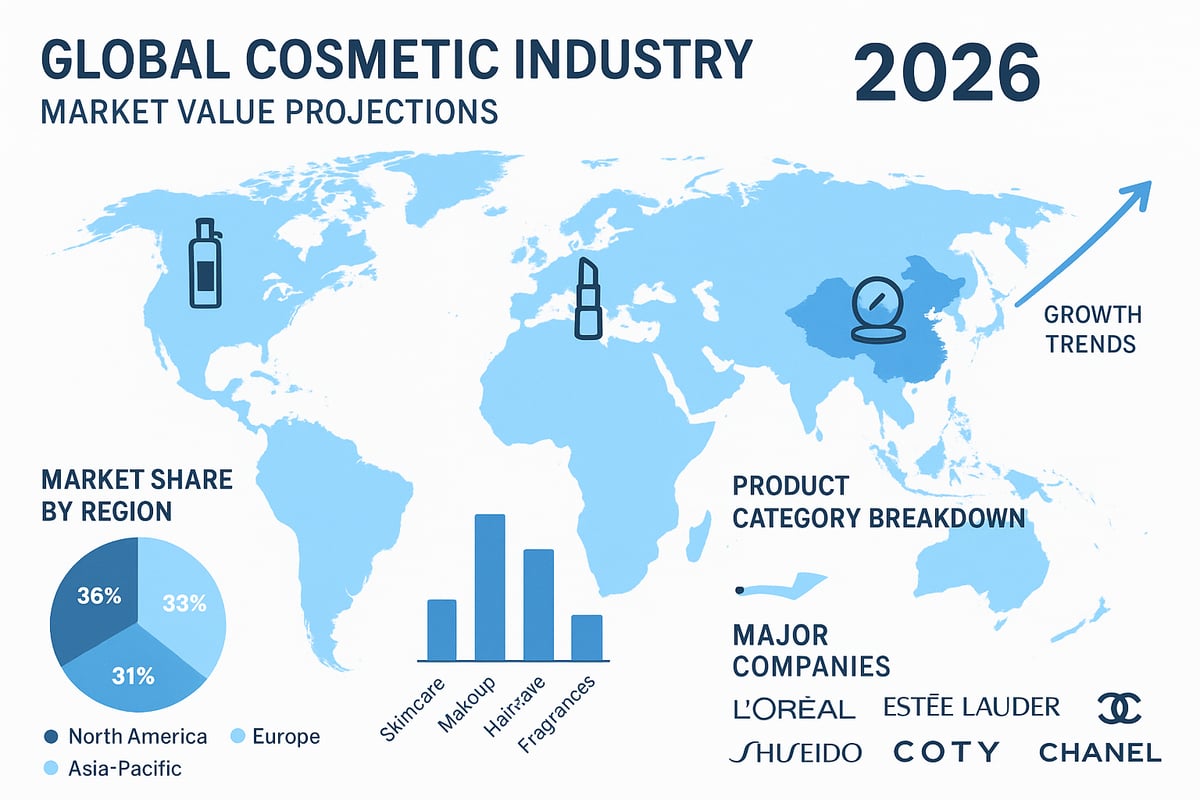
The global cosmetic industry is projected to reach nearly $430 billion in market value by 2026, reflecting robust annual growth. North America, Europe, and Asia-Pacific continue to dominate in both market share and innovation, yet their growth rates vary.
Asia-Pacific is quickly rising as a powerhouse, with China, South Korea, and Japan leading in both revenue and product innovation. North America, driven by the United States, remains a leader in luxury and mass-market segments. Europe, with France as a historical center, maintains influence through heritage brands and R&D.
Major corporations like L’Oreal, Estée Lauder, Shiseido, Coty, and Chanel shape industry standards and trends. Regional dominance is shifting as emerging markets in Asia and Latin America accelerate their growth. For instance, Korean and Japanese skincare brands are gaining notable traction in Western markets. According to global cosmetics market projections, industry turnover exceeded $170 billion in recent years, underscoring the sector’s global impact.
Market Segmentation and Product Categories
The cosmetic industry encompasses several core categories. Skincare leads as the largest revenue segment worldwide, followed by makeup, haircare, fragrances, and toiletries. Recent years have seen skincare’s share expand, driven by increased consumer focus on skin health and self-care.
Key growth segments include clean beauty, men’s grooming, and dermocosmetics. Clean beauty products, free from controversial ingredients, are growing rapidly as consumers seek safer, more natural options. Men’s grooming is experiencing double-digit growth, reflecting shifting societal attitudes and more inclusive marketing.
Hybrid products, such as skincare-makeup crossovers, are becoming increasingly popular. Multifunctional formulations that address several concerns in one product meet the demand for convenience, especially post-pandemic. The influence of wellness and holistic beauty is also evident, with brands developing products that support both appearance and overall wellbeing.
Regional preferences play a critical role in product development. For example, Asian markets often prioritize lightweight, hydrating formulas, while European consumers value tradition and luxury. The cosmetic industry is adapting quickly to these diverse needs, ensuring relevance across global markets.
A brief comparison of product categories:
| Product Category | Global Revenue Share (%) | Fastest-Growing Region |
|---|---|---|
| Skincare | ~42 | Asia-Pacific |
| Makeup | ~18 | North America |
| Haircare | ~15 | Latin America |
| Fragrances | ~13 | Middle East |
| Toiletries | ~12 | Europe |
Growth Drivers and Industry Challenges
Digitalization remains a primary growth driver for the cosmetic industry. The rise of influencer marketing, e-commerce, and social media platforms like Instagram and TikTok has transformed consumer engagement. Brands leverage these channels to reach new audiences and personalize marketing strategies.
E-commerce expansion enables direct-to-consumer sales, offering brands better control over customer experience. Social media trends, including viral product reviews and tutorials, significantly shape purchasing decisions. In California, for example, celebrity-driven beauty brands thrive by leveraging social platforms and influencer partnerships.
Despite these opportunities, the cosmetic industry faces notable challenges. Supply chain disruptions, inflation, and increased competition are pressuring margins. Global economic shifts and currency fluctuations add further complexity, especially for brands operating in multiple regions.
Market saturation in established categories forces brands to differentiate through innovation and unique value propositions. Employment trends in major markets reflect growth, yet companies must adapt quickly to remain competitive.
Ultimately, brands that embrace change, invest in digital transformation, and respond to evolving consumer needs are best positioned for success in the dynamic cosmetic industry.
Technological Innovations and Digital Transformation
The cosmetic industry is undergoing a remarkable transformation as new technologies redefine how products are developed, marketed, and experienced. In 2026, innovation drives competition, enhances consumer satisfaction, and sets the pace for future growth. Brands that leverage these advancements are poised to capture new market opportunities and build lasting connections with consumers.
Cosmetic Product Innovation and R&D
Innovation remains the cornerstone of the cosmetic industry’s evolution. In 2026, advances in biotechnology, peptides, and microbiome-based skincare have reshaped product formulation. Leading brands are investing heavily in research and development to create safer, more effective, and personalized products.
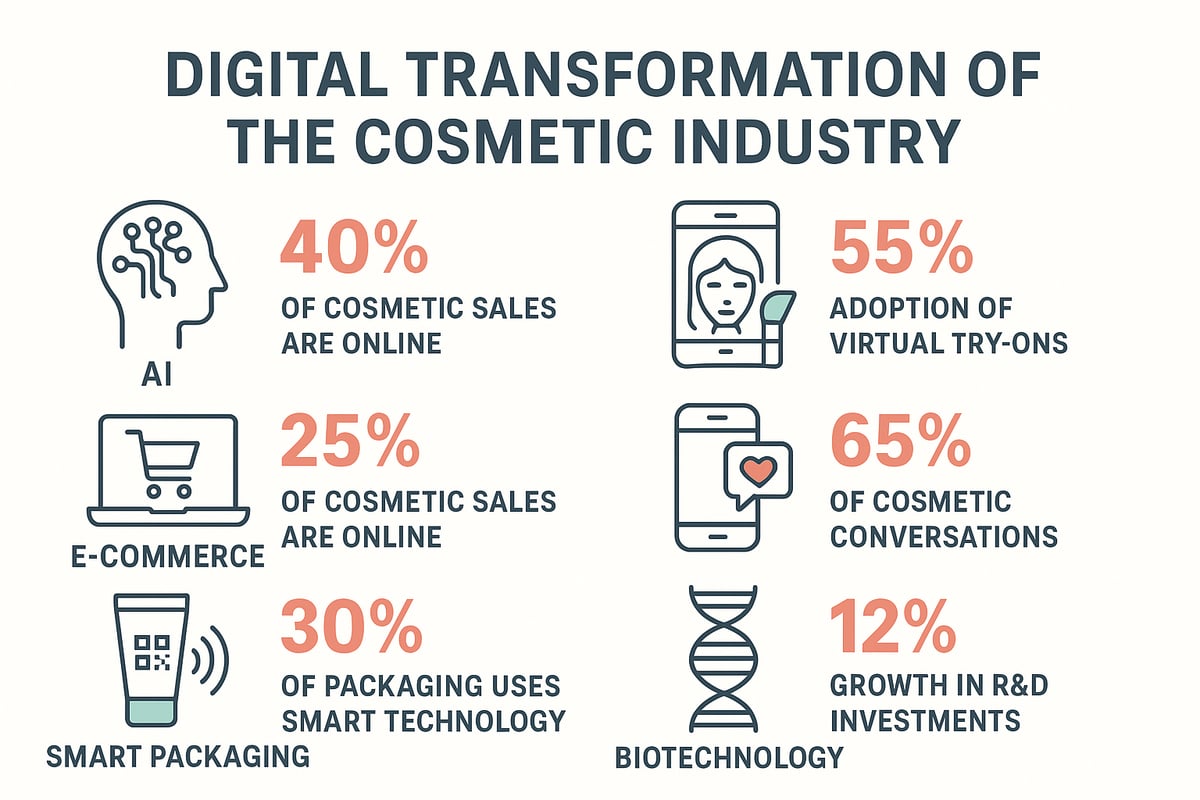
Artificial intelligence and machine learning streamline product formulation and testing. These technologies speed up ingredient analysis, predict consumer reactions, and help brands optimize their portfolios. For example, L’Oreal’s Makeup Genius app uses AR for virtual try-ons, while smart packaging and connected devices offer real-time usage feedback.
Personalization is another defining trend. Customizable skincare and DNA-based beauty solutions are gaining traction, addressing unique needs across diverse demographics. Smart packaging, such as QR-coded bottles, enhances traceability and consumer engagement.
R&D spending is at an all-time high, with major players dedicating significant resources to stay ahead. To explore more on these breakthroughs, see Technological innovations in cosmetics.
The cosmetic industry’s focus on innovation not only enhances product efficacy but also builds trust with increasingly informed consumers.
E-commerce, Social Commerce, and Digital Marketing
Digital transformation has revolutionized how the cosmetic industry reaches consumers. E-commerce continues to surge, with more shoppers preferring the convenience of online platforms. Direct-to-consumer models are now mainstream, allowing brands to build loyal communities and gather real-time feedback.
Social commerce is a powerful force. Platforms such as Instagram Shopping and TikTok Shop enable seamless product discovery and instant purchases. Live streaming, influencer collaborations, and user-generated content play a pivotal role in shaping purchasing decisions.
Omnichannel strategies are critical for success. Leading brands blend physical retail with digital experiences, offering virtual consultations and click-and-collect services. The rise of peer reviews and real-time product demos further influences buying behavior.
Kylie Cosmetics’ rapid digital-first growth exemplifies the power of these channels. Recent data shows a significant portion of cosmetic industry sales now occur online, reflecting a permanent shift in consumer habits.
Brands that master digital marketing and e-commerce position themselves for sustained growth in a competitive landscape.
Artificial Intelligence and Augmented Reality in Beauty
Artificial intelligence and augmented reality are redefining the consumer journey in the cosmetic industry. Virtual try-on tools, such as Sephora’s Virtual Artist, allow shoppers to experiment with makeup and skincare products without leaving home. AI-powered skin analysis delivers personalized recommendations, improving satisfaction and reducing product returns.
AR and VR technologies enhance retail experiences by offering interactive product demonstrations and immersive brand storytelling. Data-driven analytics enable brands to track preferences, forecast trends, and develop products that resonate with target audiences.
Consumer trust and brand loyalty are strengthened by these innovations. Shoppers appreciate the transparency, accuracy, and fun of virtual experiences. Adoption rates for AR tools in beauty shopping continue to climb, signaling broad acceptance and enthusiasm.
As the cosmetic industry embraces AI and AR, brands gain a strategic edge by delivering personalized, engaging, and efficient shopping experiences.
Evolving Consumer Preferences and Demographics
As the cosmetic industry approaches 2026, brands face a customer base that is more informed, vocal, and diverse than ever. Understanding the evolving landscape of consumer preferences is now critical for sustained growth and relevance. Rapid demographic changes, shifting values, and new expectations are reshaping everything from product development to marketing strategies.
Shifts in Consumer Behavior and Expectations
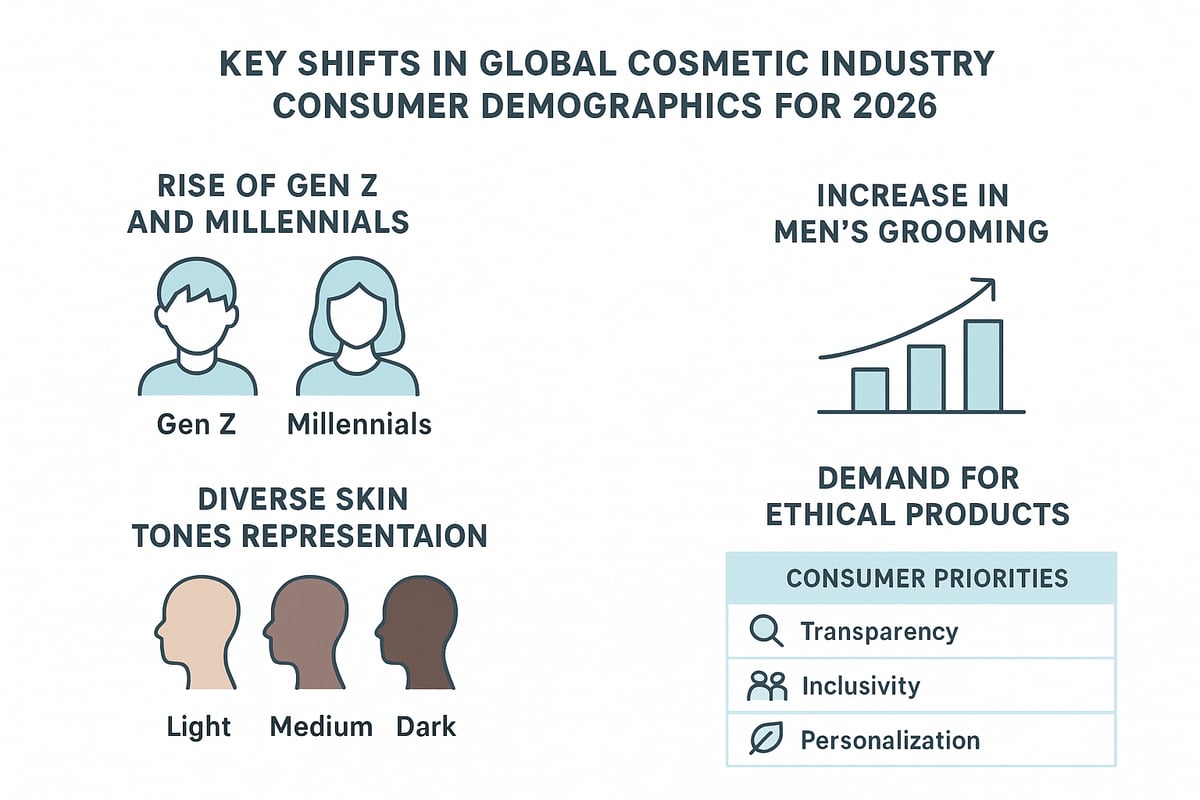
The cosmetic industry is witnessing a profound transformation in how consumers approach beauty. Today’s buyers prioritize transparency, ingredient safety, and proven efficacy. They expect brands to communicate openly about product composition and sourcing. Minimalist routines, or “skinimalism,” are gaining traction, with many consumers opting for fewer, higher-quality products.
The demand for ethical and cruelty-free options continues to surge, driven by heightened awareness and advocacy. Generation Z and Millennials are especially influential, shaping trends and amplifying their voices through digital platforms. For example, the popularity of gentle, innovative Asian skincare regimens in Western markets highlights this shift.
Surveys show that top purchasing factors now include product transparency, ethical sourcing, and sustainability. According to Consumer behavior in beauty industry, these trends are influencing global market dynamics and forcing brands to adapt quickly. In the cosmetic industry, staying attuned to these expectations is essential for building trust and loyalty.
Diversity, Inclusivity, and Personalization
Diversity and inclusivity have become non-negotiable for brands in the cosmetic industry. Companies are expanding shade ranges and formulating products for an array of skin tones and types. There is a growing emphasis on addressing the needs of underrepresented groups and respecting cultural nuances, which directly impacts brand perception.
Personalization is also redefining the consumer experience. Advances in skin diagnostics, DNA-based products, and AI-driven recommendations allow users to find solutions tailored to their individual needs. Fenty Beauty’s inclusive product lines set a benchmark, with many brands following suit to capture market share.
Market data reveals that inclusive brands are seeing notable gains in consumer loyalty and sales. The cosmetic industry recognizes that embracing diversity and offering personalization are key strategies for long-term growth. As a result, innovation in this space is accelerating, and customer expectations continue to rise.
The Rise of Men’s Grooming and Gender-Neutral Beauty
Men’s grooming is one of the fastest-growing segments in the cosmetic industry. Recent years have seen a surge in demand for skincare and grooming products designed for men. Brands are launching campaigns that celebrate self-expression and diversity, challenging traditional norms and expanding the definition of beauty.
Gender-neutral and unisex product lines are also gaining momentum. Marketing strategies are evolving to reach new demographics, including younger consumers who value authenticity and inclusivity. Societal attitudes toward beauty and self-care are shifting, with more men openly engaging in skincare routines and wellness practices.
Projections indicate that the men’s grooming market will continue to expand significantly by 2026. The cosmetic industry’s embrace of gender diversity and inclusive branding is opening new opportunities and fostering deeper connections with consumers. Brands that adapt to these changes position themselves for continued success in a rapidly evolving marketplace.
Regulatory Landscape and Compliance in 2026
As the cosmetic industry expands globally, regulatory compliance becomes increasingly complex. Brands must navigate a patchwork of evolving rules, ensuring both product safety and market access. In 2026, staying ahead of these changes is essential for growth and consumer trust.
Global Regulatory Trends and Changes
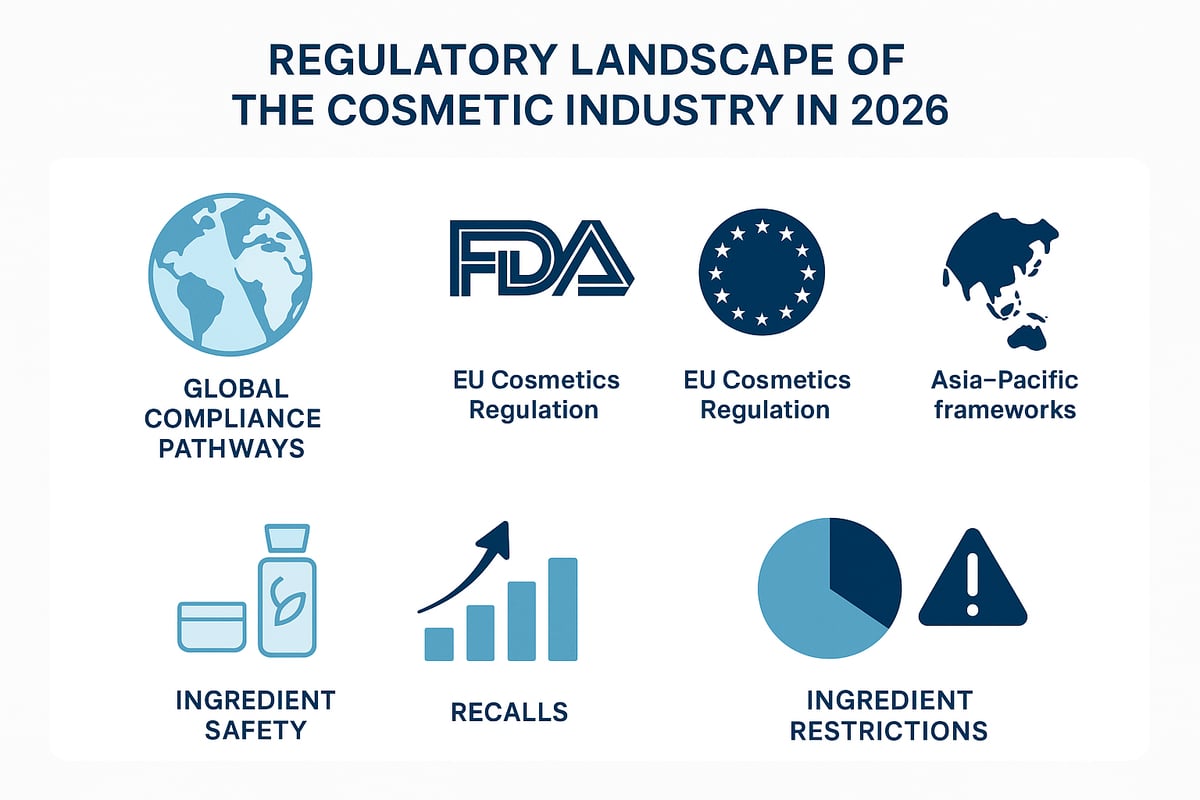
The cosmetic industry faces oversight from several major regulatory bodies. In the United States, the Food and Drug Administration (FDA) continues to enforce the Federal Food, Drug, and Cosmetic Act, with recent amendments tightening standards for safety and labeling. The European Union’s Cosmetics Regulation now includes stricter requirements on microplastics and ingredient disclosure.
Asia-Pacific markets, such as Japan, South Korea, and China, are aligning local laws with international norms. This harmonization helps streamline access, yet local nuances remain. For example, China’s updated regulations now accept alternative testing methods for certain products, reducing the need for animal testing.
Major multinational brands must monitor these shifts, as non-compliance can lead to recalls or import bans. In recent years, global cosmetic industry recalls have increased, reflecting stricter scrutiny by regulators. According to industry data, over 1,200 product recalls occurred worldwide in the last three years, highlighting the importance of proactive regulatory strategies.
Ingredient Safety, Claims, and Transparency
Ingredient safety is under the spotlight as both regulators and consumers demand greater transparency. The cosmetic industry is seeing a surge in “free-from” claims, with brands highlighting the absence of parabens, sulfates, and other controversial ingredients. Regional banned or restricted ingredient lists are expanding, particularly in the EU and California.
Third-party certifications, such as cruelty-free, vegan, and organic, are becoming standard. These labels not only build consumer trust but also help brands meet evolving legal requirements. However, greenwashing remains a concern, as some companies exaggerate sustainability or safety claims.
Transparency is now a competitive advantage. Many brands provide full ingredient disclosures and clear explanations of product benefits. According to a recent survey, 67 percent of consumers check ingredient lists before purchasing. For a more detailed look at how regulations are shaping formulation and labeling, see Regulatory changes in cosmetics.
Navigating International Trade and Supply Chain Regulations
Cross-border trade in the cosmetic industry requires careful compliance with tariffs, labeling, and documentation standards. The aftermath of the global pandemic has exposed vulnerabilities in supply chains, making regulatory agility crucial. Brands exporting to the US, EU, and Asia-Pacific must stay updated on shifting import/export requirements.
Trade agreements, like NAFTA/USMCA and EU pacts, offer some harmonization but also introduce region-specific rules. For instance, Canada’s role as a leading exporter is supported by streamlined North American trade policies, while Brexit has added complexity for UK-EU transactions.
To manage these challenges, companies invest in compliance software, regular staff training, and robust documentation. Data shows that the cosmetic industry’s export value from major producers, such as France and South Korea, continues to rise despite regulatory hurdles. Staying resilient and informed is key to thriving in this dynamic environment.
Sustainability, Ethics, and the Future of Clean Beauty
Sustainability and ethics are rapidly reshaping the cosmetic industry. As consumer expectations and regulatory pressures mount, brands must prioritize eco-friendly practices, ethical sourcing, and transparent business models. The future of clean beauty is not just a trend—it is becoming a fundamental standard for the cosmetic industry.
Eco-Friendly Formulations and Packaging
The drive toward sustainability is transforming how the cosmetic industry approaches product development. Brands are investing in biodegradable, recyclable, and refillable packaging to reduce environmental impact. This shift is not only a response to regulatory demands but also to a growing consumer base that expects responsible choices.
Innovations in waterless and solid format products are gaining traction. These formats minimize water use, lower shipping emissions, and often come in minimal packaging. Many leading companies now prioritize upcycled and sustainably sourced ingredients, further reducing their carbon footprint.
A growing number of brands are embracing zero-waste initiatives, offering refill stations and packaging take-back programs. Regulatory bodies in Europe and North America are also introducing stricter guidelines on packaging waste, pushing the cosmetic industry to adapt even faster.
According to recent reports, the market for sustainable beauty products is expanding rapidly. Consumers are increasingly drawn to brands that demonstrate clear environmental responsibility. For a deeper dive into the rise of natural ingredients and clean beauty, explore clean beauty and natural ingredients and how these trends are shaping the industry.
Ethical Sourcing, Animal Welfare, and Fair Trade
Ethical considerations are now central to the cosmetic industry’s reputation and growth. Bans on animal testing in regions such as the European Union, India, and parts of South America have set new global standards. Brands are responding by investing in alternative testing methods, such as in vitro and computer modeling, to ensure product safety without animal harm.
Fair trade certifications and ethical ingredient sourcing are also gaining momentum. Companies are mapping their supply chains for greater transparency, working closely with communities and ensuring fair wages for workers. This transparency helps build trust and loyalty among consumers who value ethical practices.
The global movement toward cruelty-free cosmetics is accelerating. More than ever, brands are proudly displaying cruelty-free, vegan, and organic certification logos on their products. In many major markets, over 50% of new product launches now carry at least one ethical certification.
Consumers in the cosmetic industry are demanding full traceability, from raw materials to finished products. Brands that embrace these values are seeing stronger differentiation and higher levels of customer trust. As regulations and consumer expectations continue to evolve, ethical sourcing will remain a vital pillar for industry leaders.
The Business Case for Sustainability in Cosmetics
Sustainability is not just an ethical imperative—it is a winning business strategy for the cosmetic industry. Brands that invest in sustainable practices often enjoy higher customer loyalty, premium pricing opportunities, and improved risk management.
Case studies reveal that companies with robust sustainability programs report faster growth and increased market share. Major industry players have made ambitious pledges, publishing annual sustainability reports and tracking their progress toward environmental goals. Consumers are willing to pay more for products that align with their values, and this willingness directly correlates with sales growth.
A growing body of data shows a strong link between sustainability claims and commercial success. According to recent projections, the market for natural and organic formulations is set to reach new heights by 2034; learn more about these sustainability trends in cosmetics and how they are driving change.
For the cosmetic industry, sustainability is a pathway to future-proofing operations. By prioritizing transparency, innovation, and consumer engagement, brands can turn ethical commitments into tangible business results.
Opportunities and Strategies for Brands in 2026
The cosmetic industry in 2026 presents a landscape full of both fierce competition and transformative growth. To thrive, brands must combine creative innovation, strategic partnerships, and agile business models. Understanding and leveraging these opportunities will be vital for long-term success in the evolving cosmetic industry.
Innovation, Differentiation, and Brand Positioning
Standing out in the cosmetic industry requires more than just high-quality products. Brands must develop a unique value proposition that resonates with today’s informed and selective consumers. This often starts with innovation, whether through advanced formulations, new textures, or unique delivery systems.
Rapid prototyping and leveraging new technologies allow brands to bring products to market faster. For example, advancements in innovations in cosmetic formulations enable companies to test and launch products that meet evolving consumer demands for efficacy and safety.
Indie brands have disrupted the cosmetic industry by focusing on niche markets, clean ingredients, and authentic storytelling. Their ability to quickly adapt and build emotional connections has shifted market share away from traditional giants. Utilizing social media and direct-to-consumer models, these brands demonstrate how agility and a strong brand story can redefine success.
To differentiate, brands should emphasize transparency, inclusivity, and sustainability. Investing in R&D, listening to customer feedback, and showcasing brand values can turn first-time buyers into loyal advocates. As the cosmetic industry becomes more crowded, these elements will be essential for building lasting competitive advantage.
Strategic Partnerships and Cross-Industry Collaboration
Strategic partnerships are reshaping the cosmetic industry and opening new avenues for growth. Collaborations with fashion designers, technology companies, and influencers have proven effective in capturing diverse audiences and generating excitement around new launches.
Co-branded collections and limited-edition releases create buzz and help brands reach new consumer segments. Private label and white-label manufacturing also offer efficient pathways to scale operations and diversify product portfolios. According to global cosmetics market trends, the number of successful collaborations has increased significantly in recent years, highlighting the value of partnership-driven strategies.
Working with digital platforms and content creators allows brands to amplify their reach and credibility. Influencer partnerships, in particular, can drive engagement and foster trust among target demographics. These collaborations often lead to faster product adoption and increased brand visibility in the cosmetic industry.
To maximize results, brands should seek partners who align with their core values and strategic goals. Cross-industry collaboration not only drives innovation but also helps brands stay relevant in a rapidly changing environment.
Future-Proofing: Agility, Resilience, and Consumer-Centricity
The future of the cosmetic industry will be defined by brands that can pivot quickly and respond to consumer needs. Building agile supply chains and adopting flexible business models are essential for managing disruptions and capitalizing on emerging trends.
Embracing consumer feedback and co-creation empowers brands to develop products that truly resonate. Investing in data analytics enables more accurate trend forecasting and personalization, giving brands a competitive edge in the cosmetic industry.
Brands that successfully weather market shifts are those that prioritize resilience and continuous learning. The ability to quickly pivot, whether in response to economic changes or evolving consumer expectations, is now a core competency.
Ultimately, future-proofing requires a commitment to innovation, adaptability, and a deep understanding of the consumer. By placing customers at the center of every decision, brands can secure their place as leaders in the cosmetic industry for years to come.
As we look ahead to 2026, it’s clear that the cosmetic industry is evolving faster than ever—driven by technological innovation, changing consumer expectations, and a growing demand for sustainability. Whether you’re an entrepreneur ready to launch your first line or an established brand aiming to stay ahead of the curve, understanding these shifts is essential. If you’re inspired by these trends and want to develop high-performance, eco-friendly products that truly stand out, now is the perfect time to take the next step. Let’s bring your vision to life—Start Your Product Journey.