
The cosmetics market is experiencing rapid growth worldwide, setting new records as we head toward 2026. With billions in projected value and dynamic shifts in consumer preferences, the stage is set for transformation.
This essential guide delivers a comprehensive, data-driven look at the evolving cosmetics market. Entrepreneurs, brands, and investors will find actionable insights to navigate trends, segmentation, consumer behavior, and innovation.
Discover the forces fueling market expansion, from digital disruption to sustainability, and learn how to seize emerging opportunities. Ready to unlock your strategy for success? Let’s dive in.
Global Cosmetics Market Overview 2026
The cosmetics market is experiencing rapid transformation as it approaches 2026. Driven by shifting consumer habits, innovation, and expanding regional markets, the industry shows robust growth signals. This overview explores the key dimensions shaping the global cosmetics market, offering a clear view of size, segmentation, and regional performance.
Market Size and Growth Projections
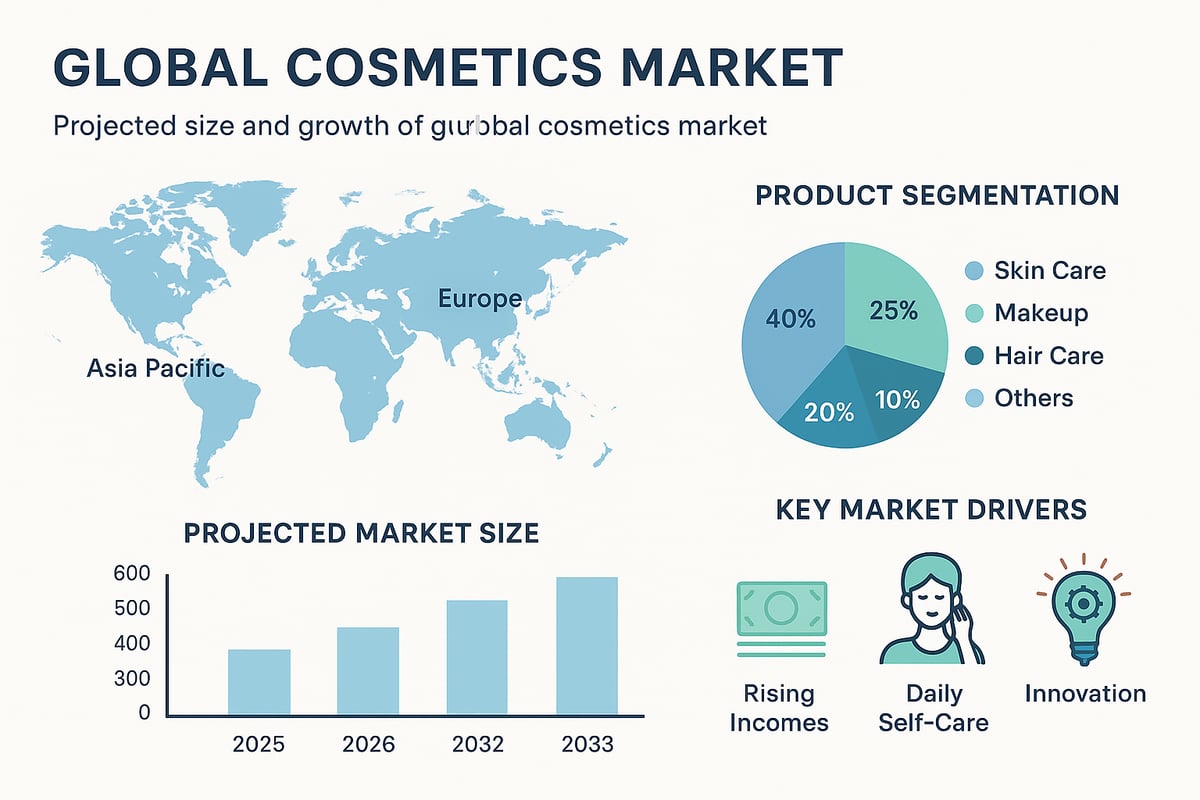
In 2026, the global cosmetics market is poised for significant expansion. According to multiple industry sources, the market is projected to reach $446.76 billion by 2032, growing at a CAGR of 5.8 percent. Estimates for 2025 place the market size at $330.10 million, with a forecast of $545.19 million by 2033.
Asia Pacific leads the cosmetics market, accounting for approximately 45 to 49 percent of global share. This dominance is fueled by rising disposable incomes, increased beauty consciousness, and the normalization of daily self-care routines. Consumers now regard cosmetics as essential items rather than occasional indulgences.
Major players such as L'Oréal, Procter & Gamble, Estée Lauder, Shiseido, and Unilever continue to drive innovation and market presence. For example, India's beauty and personal care segment is expected to reach $30 billion by 2027, largely due to the purchasing power of Gen Z and millennials. For deeper insights into these growth dynamics, you can explore Beauty industry market insights.
Market Segmentation by Product Type
The cosmetics market is segmented into several major product categories. Skin care remains the largest segment, commanding about 43 to 44 percent of the total market share. Other significant segments include hair care, color cosmetics, oral care, bath and shower products, and fragrances.
Recent trends show a surge in hybrid products that combine the benefits of makeup and skin care. Anti-aging and sun protection solutions are also gaining traction as consumers prioritize health and prevention. Premiumization is evident across both mass-market and professional product lines, with consumers seeking higher quality, efficacy, and targeted benefits.
This evolving segmentation reflects the diverse needs of global consumers and the adaptability of the cosmetics market to new demands. Brands are actively innovating to remain competitive in each segment, offering multifunctional products that meet different lifestyle requirements.
Regional Analysis
Regional dynamics play a pivotal role in shaping the cosmetics market. Asia Pacific stands out as the largest and fastest-growing region, with China, India, Japan, and South Korea leading growth. The region's market strength is driven by cultural emphasis on beauty and rapidly urbanizing populations.
In North America, growth is propelled by demand for vegan, clean, and technologically advanced products. The region also sees strong adoption of direct-to-consumer models and digital-first marketing strategies. Europe distinguishes itself with a focus on sustainability, natural ingredients, and adherence to high regulatory standards.
Emerging markets in Latin America, the Middle East, and Africa are gaining momentum as consumers become more beauty conscious and global brands expand their reach. The cosmetics market in these regions is expected to continue growing, fueled by rising incomes and localized product innovation.
Key Trends Shaping the Cosmetics Market in 2026
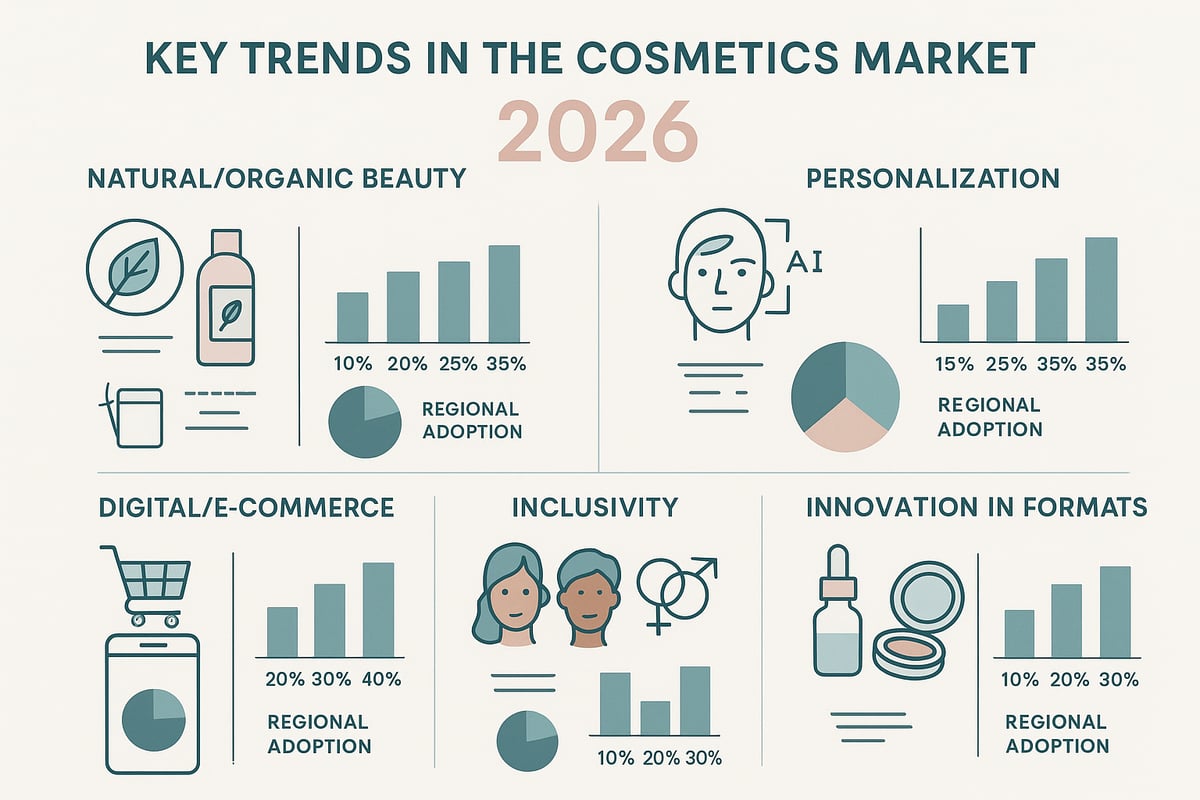
The cosmetics market in 2026 is experiencing a dynamic evolution shaped by shifting consumer values, scientific advances, and digital transformation. Understanding these trends is essential for brands aiming to lead and adapt within the global cosmetics market.
Rise of Natural, Organic, and Sustainable Beauty
A major force in the cosmetics market is the escalating demand for natural, organic, and sustainable beauty solutions. Consumers now scrutinize ingredient lists, favoring clean, vegan, and cruelty-free formulations. Transparency in sourcing and eco-friendly packaging are no longer optional but expected.
Brands such as L’Oréal and Estée Lauder have responded with dedicated product lines that emphasize botanical ingredients and minimal environmental impact. Regulatory bodies are also enforcing stricter standards, compelling reformulation for safety and sustainability.
For more on this shift, explore the focus on natural ingredients in cosmetics, which delves into why clean beauty is a dominant trend in the cosmetics market.
Personalization and Hybrid Beauty Solutions
Personalization is redefining the cosmetics market. Advanced AI technologies enable virtual try-ons, skin diagnostics, and tailored product recommendations. Consumers want regimens that reflect their individual needs, skin types, and lifestyles.
Hybrid beauty, blending skincare with makeup, is gaining momentum. Think of peptide-infused foundations or microbiome-friendly serums with cosmetic benefits. This movement responds to the desire for simplified routines and high-performance results.
Brands investing in customization and multifunctionality are poised to capture greater market share in the cosmetics market.
Digitalization and E-Commerce Expansion
Digitalization is transforming how consumers discover and purchase products in the cosmetics market. Social media platforms, influencer marketing, and viral beauty trends drive engagement and shape preferences. TikTok, Instagram, and YouTube now serve as primary channels for product discovery, reviews, and tutorials.
E-commerce and direct-to-consumer strategies are expanding accessibility, allowing brands to reach global audiences quickly. Quick commerce and subscription models further enhance convenience, fueling the growth of the cosmetics market online.
Inclusivity and Gender-Neutral Beauty
Inclusivity has become a defining principle in the cosmetics market. Brands are developing products for a broader spectrum of skin tones, types, and gender identities. Gender-neutral formulations and marketing appeal to consumers seeking authenticity and representation.
Men’s grooming is another fast-growing segment, with innovations in beard care, anti-aging, and advanced skincare. Multicultural campaigns and diverse product offerings reflect the evolving demographics and values of the cosmetics market.
Innovation in Product Formats and Delivery
Product innovation is accelerating across the cosmetics market. New textures—such as serums, mists, cushion foundations, and solid formats—offer novel user experiences. Science-backed ingredients like peptides, botanicals, and barrier-protecting actives are driving efficacy.
Brands are prioritizing dermatologically tested, sensitive-skin-friendly options to meet rising consumer expectations. These innovations position companies to meet future demand and sustain growth in the cosmetics market.
Consumer Insights and Buying Behavior in 2026
Understanding the evolving landscape of consumer behavior is central to succeeding in the cosmetics market. As we approach 2026, the industry is shaped by shifting demographics, heightened ingredient awareness, changing purchase motivations, and the growing influence of digital channels. These factors are redefining how brands connect with and retain their customers.
Demographic Shifts and Preferences
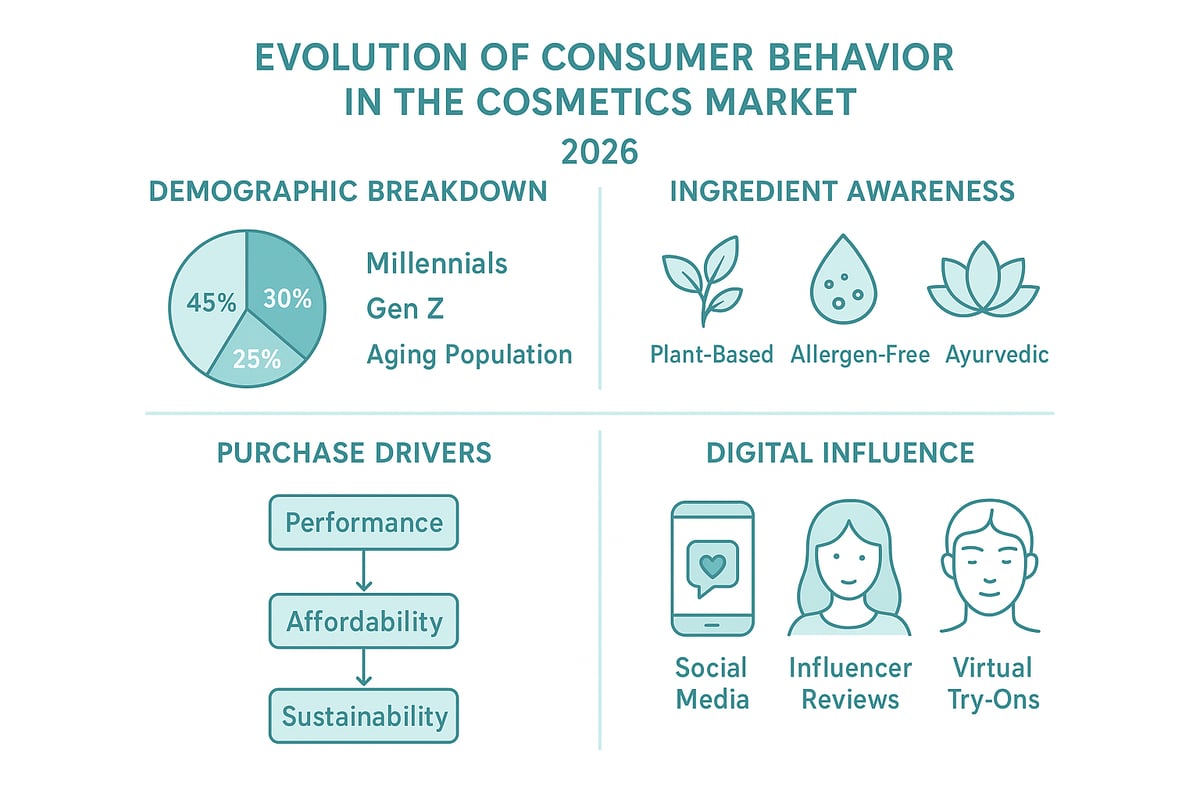
Demographics are at the core of the cosmetics market transformation. Millennials and Gen Z are the primary drivers of demand for ethical, digital-first, and innovative products. Their preferences are influenced by global beauty trends, a desire for self-expression, and a strong emphasis on sustainability.
The aging population also plays a significant role. Consumers over 45 are seeking anti-aging, skin-repair, and rejuvenation products. These consumers value efficacy and safety, often opting for dermatologist-recommended or clinically tested solutions.
Regional differences further shape preferences. In Asia Pacific, multi-step routines and a holistic approach to skincare are common, while Western consumers increasingly embrace K-beauty and J-beauty philosophies. To understand which product categories are resonating most, review the Trending cosmetic products in 2026 for insights into emerging segments within the cosmetics market.
Ingredient Awareness and Health Consciousness
Ingredient scrutiny has become a defining feature of the cosmetics market. Shoppers now read labels and prioritize products free from sulfates, parabens, and allergens. This heightened awareness is driven by concerns about long-term skin health and safety.
Plant-based, ayurvedic, and microbiome-friendly products are experiencing a surge in popularity. Consumers believe that natural ingredients offer gentle yet effective results. The demand for transparency extends to the sourcing and processing of these ingredients, with buyers expecting clear information about origin and benefits.
The cosmetics market is also seeing a rise in interest for products tailored to sensitive skin. Brands are investing in research to create formulas that balance efficacy with minimal irritation, catering to health-conscious consumers across all age groups.
Purchase Drivers and Brand Selection Criteria
Consumers in the cosmetics market are guided by a blend of rational and emotional drivers. Performance and efficacy remain the top priorities, with buyers seeking visible, measurable results from their beauty investments.
Affordability and value are also increasingly important, especially in uncertain economic times. Shoppers compare prices and consider the cost-per-use of products before making a decision.
Environmental and social responsibility have become key differentiators among brands. Especially for those aged 25 to 44, alignment with ethical values and sustainable practices influences loyalty. Transparency and authenticity are critical, as consumers expect brands to be forthright about ingredient sourcing, manufacturing, and corporate responsibility.
Influence of Digital and Social Channels
The digital revolution has fundamentally altered how consumers interact with the cosmetics market. Online reviews, tutorials, and influencer endorsements now play a pivotal role in shaping buying decisions.
Virtual try-ons and AI-powered recommendations are increasing conversion rates by personalizing the shopping experience. These technologies help consumers find products that suit their unique needs, reducing uncertainty and boosting satisfaction.
Niche and indie brands are leveraging digital platforms to gain visibility and credibility. Social media has democratized the market, allowing emerging players to compete with established giants by building loyal, engaged communities online.
Distribution Channels and Market Access
The cosmetics market is undergoing a rapid transformation in how products reach consumers. Diverse distribution channels are shaping sales, brand visibility, and customer loyalty. Understanding these evolving pathways is essential for brands aiming to compete globally and locally.
Offline vs. Online Sales
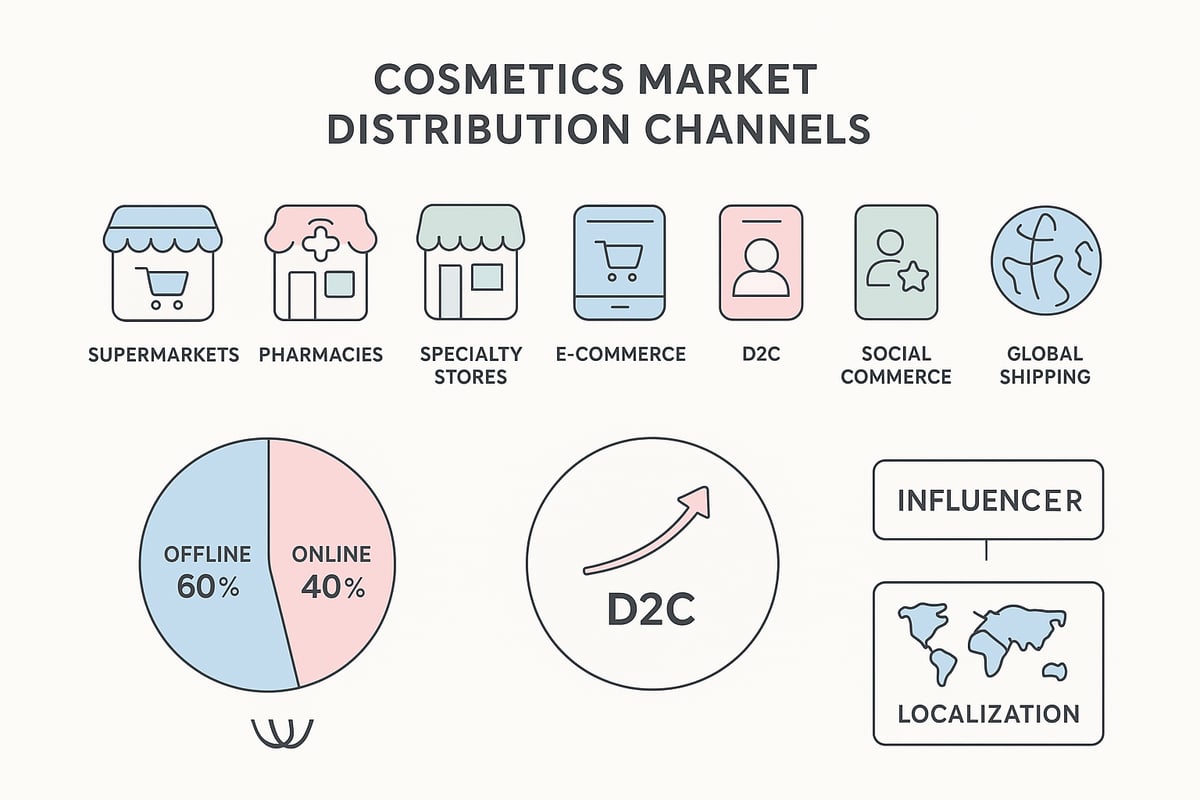
Traditional retail still holds a significant role in the cosmetics market. Supermarkets and hypermarkets account for around 35 percent of sales, providing wide reach and immediacy. Specialty beauty stores and pharmacies offer hands-on experiences, expert advice, and brand discovery.
However, online channels are growing rapidly. E-commerce has expanded accessibility, allowing consumers to compare products, read reviews, and purchase from anywhere. The cosmetics market is seeing a shift in consumer preference toward online buying, especially for convenience and variety.
Direct-to-Consumer (D2C) and Subscription Models
Direct-to-consumer strategies are redefining how brands engage with customers in the cosmetics market. More brands are launching their own e-commerce sites and offering subscription boxes, which provide personalized selections and foster loyalty.
D2C models allow brands to collect valuable data, control the customer journey, and achieve better margins. Indie and emerging brands especially benefit from rapid market entry and feedback loops. For a deeper dive into this trend, explore the Building a DTC beauty brand guide.
Subscription models are also growing, offering curated experiences and regular engagement, further driving innovation in the cosmetics market.
Role of Influencers and Social Commerce
Influencers have become a vital part of the cosmetics market, bridging discovery and purchase. Social selling via platforms like Instagram, TikTok, and YouTube allows brands to reach highly targeted audiences.
Collaborations with influencers and the launch of limited-edition products boost engagement and drive sales. Micro-influencers, with their authentic voices and niche followings, are particularly effective in building trust and community within the cosmetics market.
Social commerce is making it easier for consumers to buy directly from content, streamlining the path from inspiration to purchase.
Global Market Access and Localization
The cosmetics market is increasingly global, thanks to cross-border e-commerce and digital platforms. Brands can now reach customers worldwide, but success requires careful localization.
Adapting products, messaging, and packaging to local preferences ensures relevance and compliance with regional regulations. Localization also builds stronger connections with diverse consumer bases, helping brands stand out in crowded markets.
Global access and thoughtful adaptation are now central strategies for sustained growth in the cosmetics market.
Innovation, R&D, and Formulation Trends
Innovation is the heartbeat of the cosmetics market, driving transformation across science, sustainability, and brand differentiation. As consumer expectations shift, companies must invest in R&D and advanced formulation to remain competitive and relevant.
Advancements in Cosmetic Science
Scientific breakthroughs are reshaping the cosmetics market. New actives such as peptides, probiotics, and biotechnology-derived ingredients are at the forefront of product development. Brands now prioritize not only visible efficacy but also long-term skin health.
These innovations address skin compatibility, ensuring formulas are gentle yet effective for sensitive skin types. Microbiome-friendly and barrier-protecting products are gaining traction, meeting consumer demands for holistic care.
Dermatologically tested solutions have become the norm, with brands investing heavily in clinical validation. The integration of advanced delivery systems, like encapsulation and slow-release technologies, further elevates product performance.
Key advancements include:
- Peptides for anti-aging and skin repair
- Probiotics to balance the skin microbiome
- Botanicals and bioactives for barrier protection
The cosmetics market is set to see continued momentum as R&D teams push the boundaries of safety, performance, and innovation.
Eco-Friendly and Sustainable Formulation Practices
Sustainability is now a non-negotiable pillar in the cosmetics market. Consumers and regulators demand eco-friendly solutions, from raw materials to packaging. Brands are reformulating with biodegradable ingredients and adopting recyclable, compostable, or refillable packaging.
Waterless and solid formats are gaining ground, reducing both water usage and packaging waste. Upcycling initiatives, where byproducts are transformed into new actives, support circular beauty models. Companies are also embracing carbon-neutral manufacturing and ethical sourcing.
According to Sustainable practices in cosmetic manufacturing, these eco-innovations are shaping how brands compete and comply globally. Transparency in sourcing and lifecycle impact reporting are becoming key differentiators.
Eco-conscious consumers now expect brands to demonstrate measurable environmental responsibility. As a result, the cosmetics market is evolving toward sustainability as a core value, not just a trend.
Custom Formulation and Indie Brand Growth
Custom formulation is fueling a new wave of differentiation within the cosmetics market. Indie and startup brands, as well as established companies, are leveraging bespoke R&D to create unique, tailored products that directly address evolving consumer needs.
Owning full intellectual property rights and developing proprietary blends allow brands to stand out in a crowded field. Agile product development cycles mean indie brands can respond to trends faster than traditional competitors.
Key drivers of this growth include:
- Personalization: Custom regimens and solutions for specific skin types
- Speed to market: Rapid prototyping and small-batch launches
- Innovation: Novel textures, delivery systems, and active blends
Collaborating with specialized formulation labs empowers brands to access advanced ingredient sourcing and compliance expertise. In the evolving cosmetics market, custom innovation is a strategic advantage for those seeking to carve out a niche.
Opportunities and Challenges in the 2026 Cosmetics Market
As the cosmetics market rapidly evolves toward 2026, brands and investors face a dynamic landscape of promising opportunities and complex challenges. Understanding these forces is essential to navigating growth and risk, and to positioning for long-term success.
Market Opportunities
The cosmetics market is poised for robust expansion, driven by several high-impact trends. Sustainability and clean beauty continue to lead growth, with consumers prioritizing ethical sourcing, eco-friendly packaging, and cruelty-free formulations.
Men’s grooming and hybrid products are gaining momentum, reflecting a shift toward inclusive, wellness-oriented beauty. The integration of AI, AR, and beauty tech is transforming how brands connect with consumers, deliver personalization, and accelerate product development.
Premiumization and niche targeting present lucrative avenues for both indie and established brands. According to Global cosmetics market projected to reach $545.19 million by 2033, the sector’s trajectory remains strong, supported by rising disposable incomes, digital expansion, and evolving consumer routines.
- Growth in sustainable and ethical beauty segments
- Expansion in men’s grooming and hybrid products
- Technology integration for enhanced consumer experience
- Premiumization and niche markets
Key Challenges and Risks
Despite its potential, the cosmetics market faces growing challenges that require strategic foresight. Regulatory complexity is intensifying, as brands must navigate varying standards, ingredient restrictions, and compliance requirements across global markets.
Supply chain disruptions and raw material volatility can impact production timelines and costs. Intense competition and pricing pressure, especially in the mass market, demand continuous innovation and value delivery.
The risk of greenwashing is rising. Consumers and regulators now expect genuine sustainability commitments and transparency, not just marketing claims.
- Regulatory and compliance complexity
- Supply chain and sourcing risks
- Intense competition and price sensitivity
- Greenwashing and authenticity concerns
Strategies for Success
To thrive in the cosmetics market, brands must invest in research and development, sustainability initiatives, and digital transformation. Prioritizing consumer education and authentic communication can build loyalty and trust.
Agile, data-driven marketing and product development processes will help brands adapt quickly to trends and disruptions. Fostering partnerships with formulation experts and leveraging technology, such as those highlighted in the Top 5 beauty trends of 2026, can unlock new growth avenues.
- Invest in R&D, sustainability, and digital tools
- Engage consumers with transparency and education
- Build agile operations for rapid response
- Partner with innovators in formulation and technology
By addressing both the opportunities and risks, stakeholders can position themselves at the forefront of the cosmetics market’s next wave of innovation and growth.
Future Outlook: What to Expect Beyond 2026
As the cosmetics market moves beyond 2026, industry stakeholders must prepare for rapid transformation. New technologies, shifting consumer values, and evolving regulations will shape the next era of beauty. Navigating this landscape requires agility, insight, and a forward-thinking approach.
Projected Market Evolution
Looking ahead, the cosmetics market is poised for sustained expansion. Growth will be fueled by breakthroughs in science, the mainstreaming of inclusivity, and the seamless integration of digital tools. Expect the boundaries between beauty, health, and wellness to blur, as brands introduce products and services that cater to holistic lifestyles.
Personalized beauty experiences are set to become the norm. AI-powered diagnostics, virtual consultations, and tailor-made formulas will redefine how consumers interact with brands. For a deeper dive into these innovations, explore AI-driven personalization in cosmetics, which highlights how technology is personalizing routines and enhancing engagement.
At-home beauty devices and diagnostics will empower users to customize treatments, track progress, and achieve professional results from the comfort of home. This evolution positions the cosmetics market at the forefront of wellness and self-care.
Emerging Consumer Trends
Consumer attitudes in the cosmetics market will shift further toward holistic self-care. Multifunctional products that address beauty, wellness, and emotional wellbeing will rise in popularity. Mental wellness will become a central theme, with beauty rituals positioned as tools for stress relief and relaxation.
The demand for immersive home spa experiences will continue to grow. Consumers will seek products that transform daily routines into moments of indulgence and self-nurturing. Brands that deliver on these desires will capture new loyalty within the cosmetics market.
Anticipated Regulatory and Environmental Shifts
Stricter sustainability and safety regulations are on the horizon for the cosmetics market. Authorities worldwide will enforce greater transparency regarding ingredients, sourcing, and packaging. Companies will need to demonstrate measurable environmental and social impact.
Ingredient scrutiny will intensify, with heightened attention on allergens, microplastics, and potentially harmful additives. Packaging innovations, such as refillable systems and biodegradable materials, will become standard expectations in the cosmetics market.
Recommendations for Brands and Investors
To succeed in the evolving cosmetics market, brands and investors must prioritize agility and consumer-centric innovation. Embracing technology and sustainable practices will set leaders apart from the competition.
Monitor regional trends closely, as local preferences and regulatory landscapes will continue to diverge. Invest in transparent communication and education to build trust and foster brand loyalty. Those who adapt quickly and align with emerging values will unlock lasting growth in the cosmetics market.
As we’ve explored, the cosmetics market in 2026 is set for remarkable growth, shaped by innovation, sustainability, and evolving consumer needs. Whether you’re building a new beauty brand or looking to elevate an established line, staying ahead means understanding trends and crafting standout products. If you’re ready to turn insights into action and create high-performance, eco-friendly formulations that truly resonate, let’s take the next step together. You can Start Your Product Journey and bring your vision to life with expert support every step of the way.