

The global cosmetics market is booming, with consumers demanding safer, more sustainable, and innovative products each year. For anyone navigating the formulation chemist cosmetics landscape, staying ahead means mastering both science and strategy.
This expert guide is designed to equip professionals and brands with the latest insights, from advanced ingredient innovations to evolving regulations and sustainable formulation practices.
Discover how formulation chemist cosmetics experts drive product success, ensure compliance, and shape the future of beauty. Ready to implement proven strategies and stay competitive in 2026? Let’s dive in.
The Role of a Formulation Chemist in Cosmetics
A formulation chemist in cosmetics is the architect behind every successful beauty product. These professionals turn ideas into innovative, safe, and market-ready formulations. Their expertise bridges science, creativity, and regulatory compliance, making them indispensable to the modern cosmetics industry.
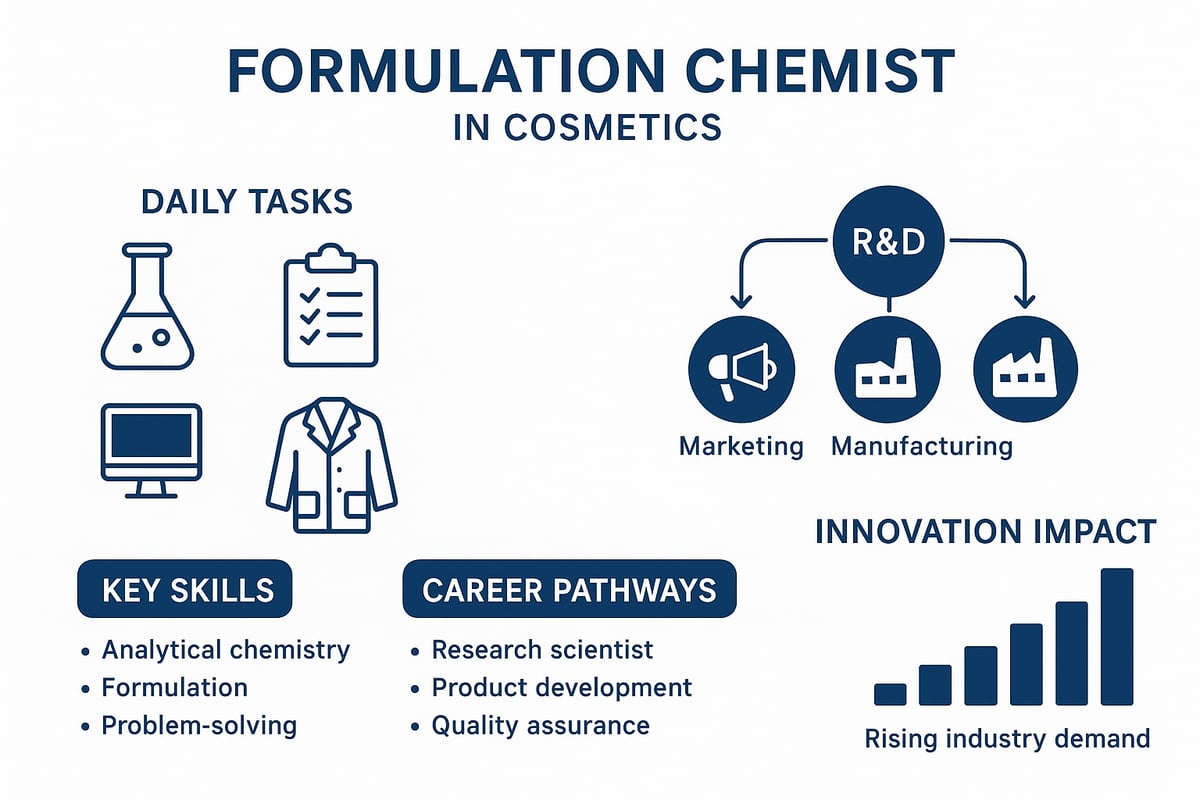
Key Responsibilities and Daily Tasks
Every day, a formulation chemist in cosmetics oversees product development from concept to finished goods. Their responsibilities include ingredient research, compatibility testing, and stability studies. Chemists also work closely with marketing, regulatory, and manufacturing teams to ensure products meet both consumer expectations and compliance standards.
Maintaining detailed documentation and strict quality control is critical. For example, chemists at leading brands juggle multiple projects with tight deadlines, ensuring each meets rigorous performance and safety benchmarks. To learn more about these core responsibilities, see this guide on the Role of a Cosmetic Chemist.
Required Skills and Educational Background
To excel as a formulation chemist in cosmetics, a strong educational foundation is essential. Most roles require at least a bachelor’s degree in chemistry, chemical engineering, or cosmetic science, along with 2 to 5 years of laboratory experience.
Key skills include:
- Analytical thinking
- Problem-solving
- Creativity
- Regulatory knowledge
Professional certifications, such as SCC or IFSCC, further distinguish candidates. Here is a quick comparison:
| Degree/Certification | Typical Requirement | Advantage |
|---|---|---|
| BSc in Chemistry | Mandatory | Foundational skills |
| SCC Certification | Preferred | Industry standards |
| Lab Experience | 2-5 years | Hands-on expertise |
Impact on Product Innovation and Brand Success
A formulation chemist in cosmetics is a driving force behind product innovation. By developing unique textures, claims, and performance attributes, chemists help brands stand out in a crowded market.
Their expertise ensures products are both safe and effective, directly influencing brand reputation. Many award-winning launches credit formulation chemists as key contributors. Their attention to detail and commitment to excellence can make or break a product’s success.
Collaboration Across Departments
Formulation chemist cosmetics professionals rarely work in isolation. They collaborate with R&D, marketing, packaging, and compliance teams to bring concepts to market efficiently. This cross-functional teamwork ensures every product aligns with the brand’s vision and meets regulatory standards.
Industry data shows that integrated teams can accelerate product launch timelines by up to 20 percent. The ability to communicate and coordinate with diverse departments is a vital aspect of the formulation chemist cosmetics role.
Career Pathways and Industry Demand
Opportunities for formulation chemist cosmetics professionals are expanding rapidly. There is growing demand for expertise in green chemistry and regulatory affairs, especially as sustainability becomes a top priority for brands.
Career paths include roles in startups, established companies, and consultancy. Job postings for cosmetic chemists rose by 18 percent from 2023 to 2025, highlighting the industry’s robust growth. As innovation and compliance become increasingly complex, skilled chemists are more valuable than ever.
Step-by-Step Cosmetic Formulation Process
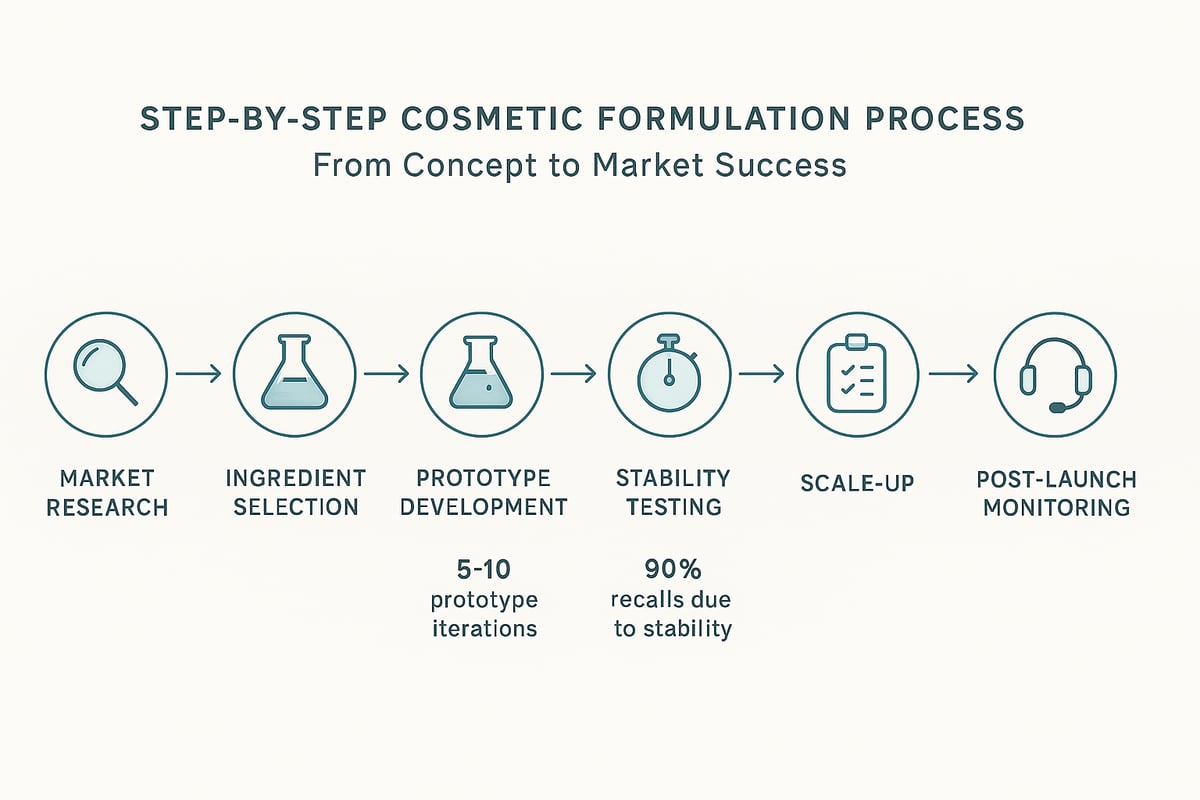
Creating a successful product in the formulation chemist cosmetics field involves following a structured, multi-stage process. Each phase, from ideation to post-launch, requires analytical rigor, creativity, and collaboration. Let us break down each critical step, so you can navigate complexities and deliver safe, innovative products.
Ideation and Market Research
The first step for any formulation chemist cosmetics project is in-depth market research and ideation. Chemists analyze emerging consumer trends, investigate competitor products, and identify gaps in the market. For example, the rise of microbiome-friendly and waterless products has shaped recent development priorities.
Utilizing AI-powered tools for trend forecasting helps pinpoint what consumers want next. This approach ensures the next formulation aligns with both customer needs and brand goals. Success at this stage sets the foundation for the following steps.
Ingredient Selection and Sourcing
Ingredient selection is a cornerstone for formulation chemist cosmetics projects. Chemists evaluate actives for safety, efficacy, sustainability, and cost. Regulatory approval is always a must, so ingredient lists are cross-checked against global standards.
Sourcing involves vetting suppliers for quality and traceability. The shift toward upcycled and biotech-derived actives is notable, as brands seek greener solutions. Transparency in sourcing strengthens both consumer trust and product compliance.
Prototype Development and Testing
With ingredients selected, the formulation chemist cosmetics professional creates initial lab batches. Each prototype is evaluated for texture, stability, and performance. Adjustments are made based on lab results, refining the formula to meet product specifications.
Brands often iterate 5-10 times before finalizing a prototype. Following best practices, as outlined in Steps to Safe and Effective Formulation, ensures that prototypes meet both safety and efficacy benchmarks. This iterative process is essential for minimizing costly revisions later.
Stability, Safety, and Efficacy Testing
Testing is crucial in the formulation chemist cosmetics workflow. Chemists perform accelerated stability tests, preservative efficacy assessments, and patch tests to confirm product safety. Each result is documented for regulatory and quality assurance purposes.
Effective testing prevents product recalls and supports robust claims. In 2024, 90% of recalls were linked to inadequate stability studies, highlighting the need for thorough evaluation. Only products passing all criteria advance to manufacturing.
Scale-Up and Manufacturing Transfer
Transitioning from lab to full-scale production is a major milestone in formulation chemist cosmetics development. Chemists adapt formulas for larger batches, addressing challenges like ingredient solubility and mixing times.
Collaboration with manufacturing partners is vital. Together, they troubleshoot issues that might arise during scale-up, ensuring consistency and efficiency. Successful scale-up protects both timeline and product integrity.
Documentation and Regulatory Dossier Preparation
Comprehensive documentation is mandatory in formulation chemist cosmetics. Every formula, test result, and safety assessment is recorded. Chemists prepare regulatory dossiers, including formula sheets and claims substantiation.
Thorough records enable smooth regulatory submissions and support global compliance. This meticulous approach safeguards against regulatory pitfalls and builds brand credibility.
Post-Launch Monitoring and Troubleshooting
The process does not end at launch for formulation chemist cosmetics experts. Post-market surveillance includes monitoring consumer feedback and addressing complaints. Chemists use real-world data to improve future iterations and resolve unexpected challenges.
Continuous improvement keeps products relevant and builds long-term consumer trust. This final step ensures brands remain competitive and responsive in a dynamic market.
Ingredient Innovations and Trends for 2026
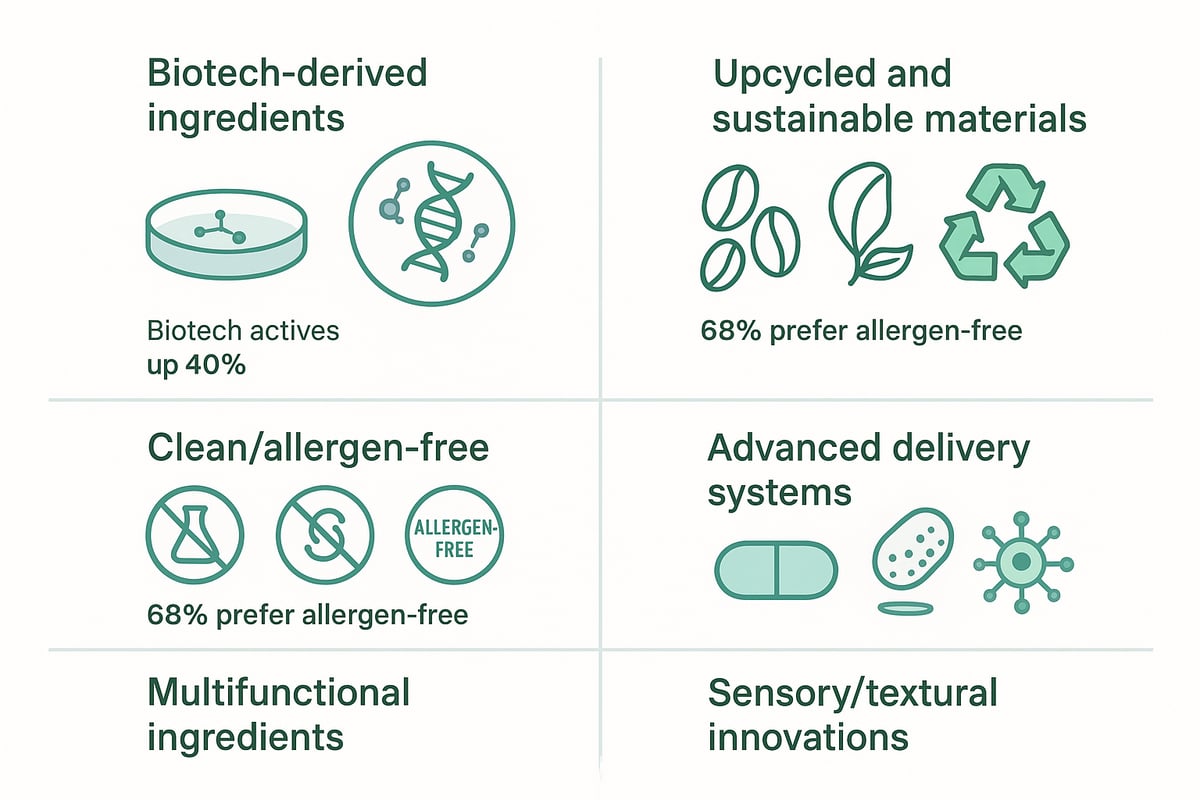
In the rapidly evolving world of formulation chemist cosmetics, ingredient innovation is the key to staying competitive. As we move into 2026, chemists are driving substantial change by embracing biotechnology, sustainability, advanced delivery systems, and sensory breakthroughs. Let’s explore the most significant ingredient trends shaping the next generation of cosmetic products.
Biotechnological and Lab-Grown Ingredients
Biotechnology is transforming formulation chemist cosmetics by enabling the creation of highly effective and sustainable ingredients. Fermentation-derived actives and lab-grown peptides are now common in advanced skincare formulas. For example, biotech hyaluronic acid and vegan collagen are replacing animal-derived counterparts, offering enhanced purity and traceability.
The use of precision fermentation allows for the production of unique molecules that were previously difficult to source. This process not only supports clean beauty claims but also reduces the environmental footprint compared to traditional extraction methods. For a deeper dive into trending ingredients, see Cosmetic Ingredient Innovations.
Expect to see more brands highlighting biotech origins in their marketing, as consumers become increasingly aware of ingredient sourcing.
Sustainable and Upcycled Raw Materials
Sustainability is a top priority for every formulation chemist cosmetics professional. The industry is shifting toward ingredients derived from food and agricultural byproducts, helping to reduce waste. Upcycled coffee oil and fruit extracts are now found in a variety of skincare and haircare products.
- Upcycled avocado oil for moisturizers
- Citrus peel extracts for brightening serums
- Grape seed oil from winemaking byproducts
These raw materials support circular economy goals and resonate with eco-conscious consumers. Brands that prioritize upcycled ingredients can differentiate themselves in a crowded market, while meeting regulatory expectations for responsible sourcing.
Clean Beauty and Allergen-Free Formulation
Consumers are more informed than ever, and clean beauty remains central to formulation chemist cosmetics. Formulators are excluding controversial ingredients like parabens and sulfates, focusing on transparency and “free from” claims. Regulatory bodies are also increasing scrutiny on allergens and safety labeling.
A recent statistic reveals that 68% of consumers in 2025 preferred allergen-free cosmetics. This trend is leading to the reformulation of many classic products to exclude common irritants. Chemists must carefully vet ingredient lists, ensuring compliance and consumer trust.
Transparency in formulation is now a non-negotiable, as shoppers demand to know what is—and isn’t—in their products.
Advanced Delivery Systems
For formulation chemist cosmetics, ingredient delivery is just as important as the actives themselves. Advanced systems like encapsulation, nanotechnology, and time-release mechanisms are being adopted to boost efficacy and reduce irritation.
- Encapsulated retinol for sensitive skin
- Liposomal vitamin C for enhanced absorption
- Time-release peptides for overnight treatments
These innovations protect sensitive ingredients until application, allowing for targeted delivery and improved results. Chemists must balance the benefits of these systems with formulation stability and regulatory compliance.
As consumer expectations rise, brands are leveraging these technologies to stand out and deliver visible benefits.
Multifunctional and Hybrid Ingredients
Efficiency is key in formulation chemist cosmetics, and multifunctional ingredients are gaining popularity. Ingredients that offer multiple benefits—such as antioxidants with added SPF or hydration with anti-aging properties—are streamlining product development.
Niacinamide is a leading example, as it supports both skin-brightening and anti-aging claims. Other hybrids include botanical extracts with antimicrobial activity and vitamins that soothe and repair the skin barrier.
This trend allows brands to create products that address several consumer needs in a single formula, enhancing value and user experience.
Texture and Sensory Innovations
The sensory experience of a cosmetic product is critical for consumer satisfaction. Formulation chemist cosmetics professionals are pioneering novel textures, from waterless sticks to transformative gels and airy foams.
- Solid cleansers and serums for travel-friendly use
- Gel-to-milk cleansers for gentle makeup removal
- Whipped creams and airy mousses for unique feel
Demand for solid and waterless products is surging, driven by sustainability and convenience. Texture innovation not only delights consumers, it also supports longer shelf life and reduced packaging waste.
As brands compete for attention, sensory innovation is becoming a key differentiator in the marketplace.
Navigating Cosmetic Regulations in 2026
Staying compliant is critical for any formulation chemist cosmetics professional aiming to bring products to market in 2026. Global regulations are evolving, and understanding these shifts is essential for both established brands and startups.
Global Regulatory Landscape Overview
The regulatory landscape for formulation chemist cosmetics is more complex than ever. The European Union enforces the Cosmetics Regulation, while the United States has implemented MoCRA, and Asia-Pacific countries maintain their own evolving standards.
Global harmonization efforts are ongoing, but significant differences remain. For instance, ingredient restrictions and allowable claims can vary greatly by region. This makes it crucial for formulation chemist cosmetics teams to adapt products for each target market.
Staying informed on regulatory updates is a core responsibility. Many organizations now dedicate entire teams to monitoring global changes in the formulation chemist cosmetics field.
New and Emerging Regulatory Changes
Recent years have brought stricter rules for formulation chemist cosmetics, especially regarding safety, labeling, and sustainability. The EU updated allergen labeling requirements, mandating clearer disclosure of potential allergens in product ingredients.
In the United States, MoCRA has introduced enhanced safety substantiation and reporting obligations. Sustainability claims are now scrutinized, requiring robust evidence to support them.
Formulation chemist cosmetics experts must stay ahead of these changes. Failing to comply can lead to costly recalls or regulatory action, impacting both brand reputation and market access.
Safety Assessment and Claims Substantiation
Rigorous safety assessments are non-negotiable for formulation chemist cosmetics. Authorities require detailed toxicological profiles for all ingredients, including impurities and byproducts.
Claims such as “dermatologist tested” or “hypoallergenic” demand robust scientific substantiation, often involving clinical trials or documented expert reviews. Regulatory bodies may audit these claims, requiring proof of efficacy and safety.
A formulation chemist cosmetics team should collaborate closely with regulatory and clinical experts to ensure all product claims are fully supported and compliant.
Documentation and Compliance Best Practices
Thorough documentation is the backbone of compliance for formulation chemist cosmetics professionals. This includes detailed ingredient lists, batch records, safety assessments, and claims substantiation files.
Many teams now use digital compliance platforms to streamline recordkeeping and ensure real-time updates. These systems help manage the growing volume of data required for regulatory submissions and audits.
For a deeper look at the responsibilities and compliance tasks of a cosmetic chemist, see the Role of a Cosmetic Chemist.
Preparing for Regulatory Audits and Inspections
With regulatory audits on the rise, formulation chemist cosmetics teams must be audit-ready at all times. Common pitfalls include incomplete safety files, missing batch records, and inadequate testing documentation.
Proactive preparation is key. Regular internal audits, up-to-date compliance checklists, and ongoing staff training can minimize the risk of non-compliance. In 2025, the frequency of audits increased by 30 percent, highlighting the need for vigilance.
Being prepared not only protects against penalties but also strengthens consumer trust in formulation chemist cosmetics products.
Sustainable Formulation Strategies for the Future
Sustainability is now a core expectation for any formulation chemist cosmetics professional. As brands and consumers demand greener products, chemists must integrate eco-conscious choices throughout every stage of product development. This section explores actionable strategies to help you align your formulations with the future of the industry.
Green Chemistry Principles in Cosmetics
Implementing green chemistry is essential for formulation chemist cosmetics to minimize environmental impact. This means prioritizing biodegradable ingredients, solvent-free processes, and energy-efficient manufacturing. For example, cold-process emulsification not only reduces carbon emissions but also preserves ingredient integrity.
Choosing renewable resources and reducing hazardous waste are key. Many leading brands now follow sustainable practices for cosmetic brands to stay ahead in the market. By adopting these principles, chemists ensure their products are both innovative and responsible.
Packaging and Lifecycle Considerations
Packaging decisions significantly affect a product’s environmental footprint. Formulation chemist cosmetics experts increasingly select recyclable, compostable, or refillable packaging to reduce waste. In 2025, 45% of new launches used eco-friendly solutions, reflecting this shift.
Consider the entire product lifecycle, from material sourcing to end-of-life disposal. Collaborate with suppliers to verify sustainable practices. This holistic approach ensures that packaging aligns with both brand values and consumer expectations.
Waterless and Low-Waste Formulations
Waterless products are revolutionizing the industry for formulation chemist cosmetics. These formats, such as powder cleansers and solid shampoos, offer longer shelf life and lower shipping weight. By eliminating water, brands cut down on preservatives and packaging bulk.
Low-waste formulations also reduce environmental impact. Adopting concentrated formulas and minimal packaging supports both cost efficiency and sustainability. This trend is expected to accelerate as consumers seek practical, eco-friendly alternatives.
Ethical Sourcing and Fair Trade
Ethical ingredient sourcing is a growing priority for formulation chemist cosmetics professionals. This involves selecting suppliers who practice transparency, fair labor, and responsible harvesting. RSPO-certified palm oil and fair trade shea butter are becoming industry standards.
Partnering with ethical suppliers helps ensure traceability and social responsibility. These choices not only protect ecosystems but also enhance a brand’s reputation. Consumers are increasingly drawn to products with verifiable ethical claims.
Communicating Sustainability to Consumers
Clear communication is vital in formulation chemist cosmetics. Brands must transparently share ingredient sourcing, sustainability efforts, and product impact. Carbon footprint labeling and detailed sourcing information build trust with eco-conscious buyers.
Statistics show that 72% of Gen Z consumers consider sustainability a top purchase driver. Highlighting your brand’s responsible practices can set you apart in a crowded marketplace. Ultimately, honest communication fosters loyalty and supports long-term growth.
How The INCI Lab Empowers Cosmetic Formulation Success
In the fast-evolving world of formulation chemist cosmetics, The INCI Lab stands out as a trusted partner for brands seeking innovation and reliability. Whether you are an emerging startup or an established label, their expertise transforms product ideas into award-winning, market-ready solutions.
The INCI Lab’s tailored approach covers every stage of the product journey. Their Accelerator service offers rapid customization, enabling brands to quickly adapt to new trends and consumer needs. For those requiring a unique identity, the Visionary pathway delivers bespoke formulation chemist cosmetics development, ensuring each product is both original and effective. The Ask The Chemist advisory provides expert technical guidance, helping brands troubleshoot challenges and refine their offerings.
A defining feature of The INCI Lab is its commitment to sustainability. They prioritize eco-friendly ingredients, green chemistry principles, and ethical sourcing. Clients also benefit from full intellectual property ownership, securing long-term control over their formulation chemist cosmetics.
Support from The INCI Lab is comprehensive, extending from concept ideation through regulatory compliance and market launch. Their team guides clients through documentation, safety assessments, and post-launch improvements, ensuring each product meets the highest standards.
Industry leaders consistently recognize The INCI Lab for its innovation in clean beauty. Brands partnering with The INCI Lab have launched high-performance, sustainable products that excel in a crowded marketplace. This track record demonstrates their ability to turn complex formulation chemist cosmetics challenges into commercial success.
Ready to take your brand to the next level? Schedule a free product strategy call with The INCI Lab today, and accelerate your journey toward cosmetic innovation and excellence.
Future Outlook: Skills, Technology, and Opportunities for Formulation Chemists
The landscape for formulation chemist cosmetics professionals is rapidly evolving as new skills, technologies, and opportunities emerge. Staying competitive requires both adaptability and a proactive approach to education and innovation. Let us explore how the future is shaping up for those in the formulation chemist cosmetics field.
Evolving Skill Sets and Continuing Education
To thrive in formulation chemist cosmetics roles, professionals must embrace continuous learning. Expertise in green chemistry, AI-driven formulation, and regulatory affairs is increasingly valuable. Staying current means attending workshops, obtaining certifications, and regularly updating technical knowledge.
For an in-depth look at the most crucial abilities shaping the industry, see The Must-Have Skills of a Cosmetic Chemist. Building these competencies ensures lasting success in formulation chemist cosmetics.
Digital Tools and Automation in Formulation
Formulation chemist cosmetics teams are leveraging digital tools like AI-powered ingredient selection, formulation software, and lab automation. These technologies reduce R&D timelines and enhance accuracy. For instance, AI can analyze trends, suggest ingredient combinations, and even predict consumer preferences.
Automation streamlines repetitive tasks, freeing chemists for creative problem-solving. Staying ahead in formulation chemist cosmetics means being comfortable with these digital platforms and integrating them into daily workflows.
Opportunities in Niche and Emerging Markets
Growth in men’s grooming, pet care, and personalized cosmetics presents new avenues for formulation chemist cosmetics professionals. Customizable skincare, in particular, is projected to surge by 30 percent by 2027, opening up exciting roles for chemists who specialize in unique product formats.
Emerging trends like microalgae-based ingredients and sustainable innovation are also shaping market demand. To learn more about these developments, visit Beauty Industry Trends to Watch for 2026 and Beyond.
Collaboration and Open Innovation
The future of formulation chemist cosmetics is collaborative. Partnerships with ingredient suppliers, technology startups, and academic institutions are driving innovation. Co-developing novel actives or delivery systems accelerates product launches and enhances performance.
Open innovation fosters creativity and offers access to cutting-edge research. Chemists who actively participate in collaborative projects gain a competitive advantage in the formulation chemist cosmetics job market.
Preparing for the Next Decade
Adaptability, creativity, and a consumer-centric mindset are essential for formulation chemist cosmetics professionals preparing for the next decade. Brands increasingly expect their chemists to contribute to sustainability and digital transformation initiatives.
A recent survey revealed that 60 percent of leading beauty companies prioritize chemists with expertise in both sustainability and technology. Those who embrace ongoing learning and innovation will shape the future of formulation chemist cosmetics.
As you’ve seen throughout this guide, the path to creating standout, sustainable cosmetic products in 2026 demands both technical expertise and a forward-thinking approach. Whether you’re refining your formulations, navigating evolving regulations, or aiming to launch a unique brand, it’s essential to have expert support at every stage. If you’re ready to put these insights into action and want to accelerate your innovation with personalized guidance, I invite you to take the next step—let’s bring your vision to life together. Start Your Product Journey

