
The beauty world is transforming rapidly, driven by innovation and shifting consumer needs. Are you prepared to navigate the trends in cosmetics that will shape the industry in 2026?
This article reveals seven essential trends, equipping brands, formulators, and beauty lovers with the insight needed to stay ahead. From AI-powered personalization and biotech advancements to the rise of holistic wellness and resilient beauty, the landscape is set for remarkable change.
Discover how technology and science are redefining expectations. Dive in to explore each trend, gain a competitive edge, and get inspired for the future of beauty.
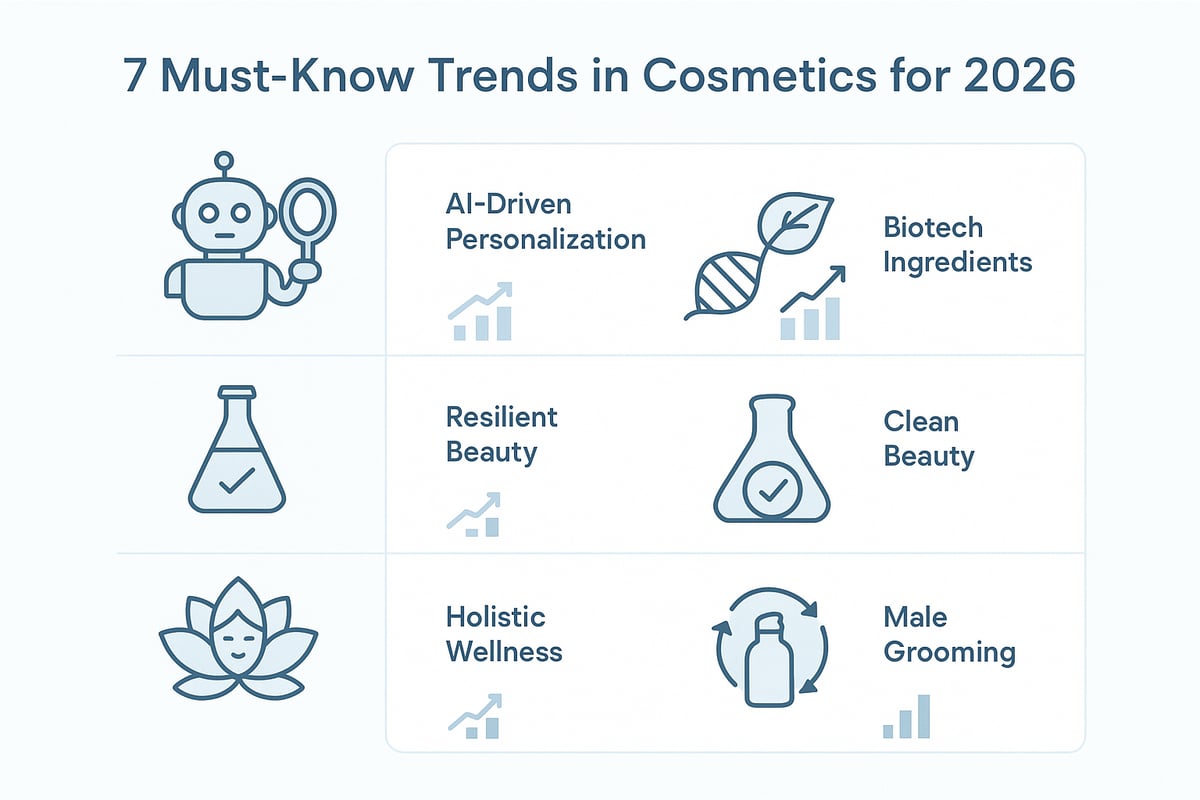
The 7 Must-Know Trends in Cosmetics for 2026
The trends in cosmetics are rapidly reshaping the beauty landscape, driven by innovation, science, and evolving consumer values. As we look to 2026, understanding these shifts is crucial for brands, formulators, and beauty enthusiasts eager to stay ahead.
For those wanting a deeper dive into industry-wide changes, the 2025 global beauty trends article provides further insights into the scientific and sustainable forces shaping our future.
1. AI-Driven Personalization and Virtual Try-On
AI is transforming trends in cosmetics by enabling tailored product experiences at scale. The AI beauty market is expected to grow from $3.72 billion in 2024 to $4.4 billion in 2025, with an impressive 18.3% CAGR. This surge is fueled by virtual try-on tools and data-driven recommendations that leverage skin imaging, lifestyle factors, and environmental data.
Generative AI allows consumers to experiment with products virtually, reducing sampling costs and boosting engagement. These advances in trends in cosmetics help brands deliver hyper-personalized recommendations, increasing satisfaction and loyalty.
AI also accelerates R&D by predicting ingredient interactions and optimizing formulations for stability. Major beauty brands are investing in AI-powered skin analysis, product matching, and even regimens that adapt to changing needs and environments.
The result? Consumers enjoy products that fit their unique needs, leading to fewer returns and stronger brand relationships. As AI becomes more integrated, expect even more dynamic, responsive trends in cosmetics that put personalization at the forefront.
Quick Facts Table
| AI in Beauty Market | 2024 Value | 2025 Projection | CAGR |
|---|---|---|---|
| $3.72B | $4.4B | 18.3% |
2. Biotech-Powered Ingredients and Microbiome Science
Biotechnology is at the core of emerging trends in cosmetics, offering sustainable, high-performance ingredient solutions. Microalgae, for instance, provide year-round production, low resource use, and carbon capture benefits. These ingredients are gaining popularity for their minimal environmental footprint and versatile applications.
Fermentation technology is enabling the creation of cruelty-free hyaluronic acid, collagen, and even rare botanicals. This shift in trends in cosmetics reduces reliance on traditional agriculture and animal-derived components, aligning with eco-conscious values.
A growing focus on microbiome science is driving probiotic and prebiotic formulations that support skin barrier health and biodiversity. At in-cosmetics Global 2025, over 200 exhibitors showcased biotech advances, underscoring the momentum of this trend.
Innovations such as Biosolar Leaf technology, which converts CO₂ into high-purity cosmetic ingredients, highlight the intersection of science and sustainability. These biotech-powered advances are setting new standards for both efficacy and environmental responsibility in trends in cosmetics.
3. Resilient Beauty: Products for Uncertain Times
Resilience is becoming a defining theme in trends in cosmetics, reflecting societal, economic, and environmental uncertainty. Consumers are seeking products that help skin and hair withstand stress, pollution, and unpredictable climates.
In skincare, there is a surge in barrier-supporting and recovery-focused formulations. Hair care now emphasizes repair, strength, and climate resistance. Makeup, too, is evolving, with long-lasting, sweat-proof, and pollution-resistant options.
Market research identifies “resilience” as a 2026 watchword among trends in cosmetics. Brands are responding with urban shield serums and anti-pollution mists that address real-world challenges.
This movement is about more than just durability. It is about empowering consumers to feel confident and protected, no matter what life throws at them. As uncertainty persists, resilient beauty will remain central to trends in cosmetics, shaping product development and marketing strategies.
4. Clean Beauty 2.0: Transparency and Science-Backed Claims
Clean beauty is evolving from a marketing buzzword into a scientifically rigorous movement within trends in cosmetics. Today’s consumers demand complete ingredient transparency, third-party testing, and clinical efficacy data.
The natural ingredient market is projected to grow from $642 million in 2022 to $1.1 billion by 2030, reflecting this shift in priorities. Regulatory bodies are also tightening guidelines on labeling and claims, pushing brands to back up their promises with science.
Brands embracing Clean Beauty 2.0 are sharing before-and-after images, third-party certifications, and detailed sourcing information. This level of transparency is now a driving force in trends in cosmetics, building trust and loyalty.
As the industry moves forward, clean beauty will be defined by proof, not just promises. Consumers will reward brands that deliver measurable results and clear, honest communication.
5. Holistic Wellness Integration: Mind-Body Beauty
Holistic wellness is increasingly intertwined with trends in cosmetics, as products now address not just skin, but also stress, sleep, and mood. Adaptogenic creams, CBD serums, and aromatherapy mists are gaining traction for their multifunctional benefits.
The mind-skin connection is informing new launches, with neurocosmetics and psychodermatology at the forefront. Trends in cosmetics now include ingredients like ashwagandha, lavender, melatonin, and probiotics, supporting both skin health and overall wellbeing.
Consumers are prioritizing rituals and self-care, driving demand for products that nurture both body and mind. Evening skincare routines, for example, are being designed to promote skin repair and relaxation simultaneously.
This holistic approach is redefining what beauty means, expanding the purpose of products beyond aesthetics. Expect trends in cosmetics to continue integrating wellness, making self-care an essential part of every beauty regimen.
6. Sustainability and Circular Beauty
Sustainability has become a non-negotiable aspect of trends in cosmetics. The industry is moving beyond greenwashing, embracing circular economy principles such as refillable packaging, ingredient upcycling, and biodegradable formulas.
Brands are investing in carbon-neutral production, renewable energy, and biodiversity protection. Environmental compliance is now a baseline requirement, driven by both regulatory pressure and consumer demand.
Take-back programs and launches featuring upcycled ingredients are becoming common as trends in cosmetics shift towards true circularity. Consumers are seeking eco-friendly solutions and rewarding brands that prioritize sustainability.
As the sustainable beauty market continues to grow, the focus will be on measurable impact and ongoing innovation. Trends in cosmetics will increasingly reflect a commitment to both people and planet.
7. Inclusive and Expanding Male Grooming Market
The male grooming segment is experiencing a boom, making it a significant part of trends in cosmetics. The global market is expected to reach $115.3 billion by 2028, fueled by new demographics and shifting attitudes.
Teen boys are now co-buying luxury fragrances and skincare, while the concept of “bromeopathy” blends beauty, wellness, and performance for men. Product innovation is thriving, with male-focused skincare, tweakments, and wellness products gaining popularity.
The CAGR for male skincare is projected at 10.5% through 2035, underscoring rapid growth in this area of trends in cosmetics. Brands are responding with gender-neutral and targeted product lines, reflecting a societal shift toward holistic wellbeing for all.
As men become more engaged in self-care, inclusivity will remain a cornerstone of trends in cosmetics. This expansion opens new opportunities for brands willing to innovate and redefine beauty for every consumer.
Technology Integration Across the Cosmetics Industry
Technology is redefining the landscape of trends in cosmetics, driving a new era of innovation across every touchpoint. From smart packaging to digital commerce, these advancements are transforming how brands and consumers interact, ensuring the industry remains agile and future-ready.
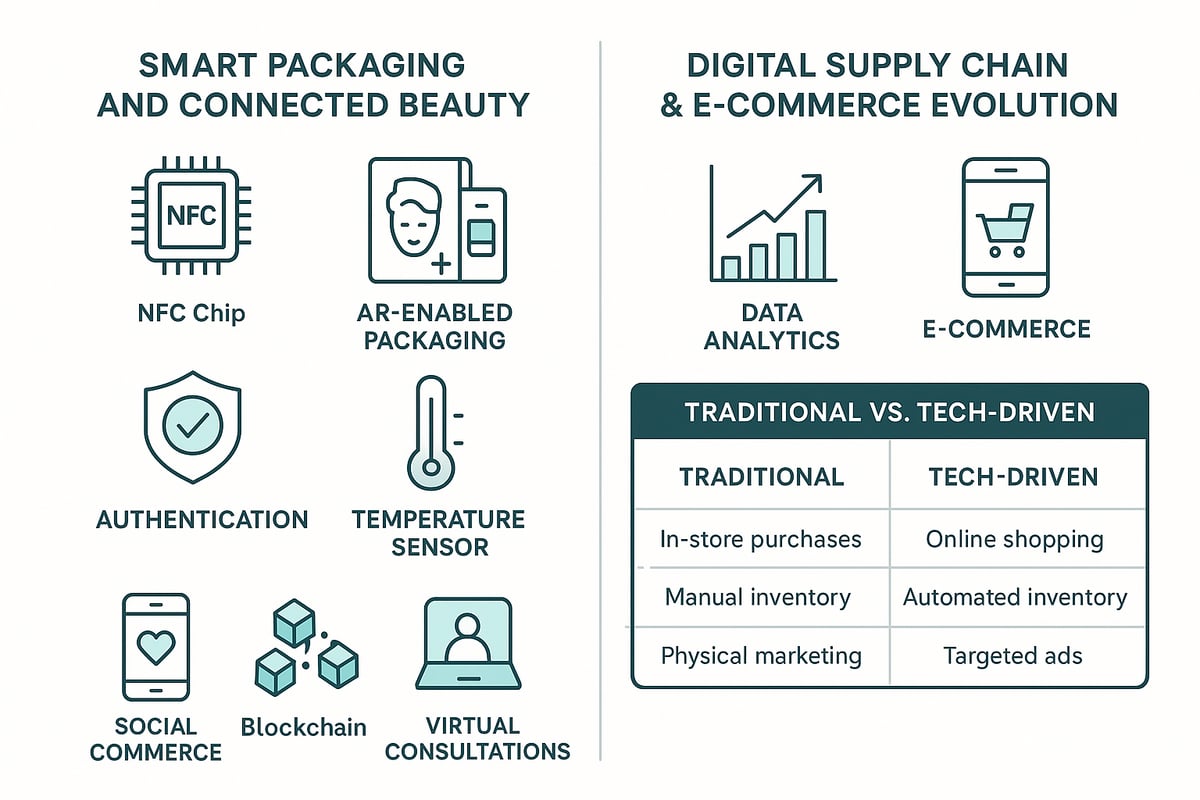
Smart Packaging and Connected Beauty
Smart packaging is rapidly reshaping the trends in cosmetics by making products interactive and secure. NFC chips embedded in packaging allow consumers to access exclusive content, verify product authenticity, and even receive usage tips with a simple tap of their device.
Augmented reality (AR) experiences bring another layer of engagement, letting customers virtually explore products or watch tutorials in real time. Temperature sensors are now integrated to protect sensitive formulations during shipping, ensuring optimal quality upon arrival.
Brands can also track how consumers use their products, gathering valuable feedback to refine future launches. Anti-counterfeiting technology, such as unique digital codes, helps guarantee that customers receive only genuine items. AR-enabled packaging is not just a novelty—it educates, entertains, and builds trust.
For more on how these innovations are shaping the future, explore innovations in cosmetics.
Digital Supply Chain and E-Commerce Evolution
Digital transformation is at the core of emerging trends in cosmetics, bringing greater transparency and efficiency to the industry. Predictive analytics helps brands anticipate demand, reducing excess inventory and minimizing waste.
Technologies like blockchain and IoT are streamlining the supply chain, making it easier to track ingredients from source to shelf. Real-time inventory management ensures products are always available when and where consumers want them.
Social commerce is fueling discovery, with influencer partnerships and shoppable content turning inspiration into instant purchases. Virtual consultations powered by AI provide personalized skincare advice and routine planning, bridging the gap between online and in-store experiences.
AI-powered e-commerce platforms offer curated product recommendations, making shopping for cosmetics more intuitive and enjoyable. These advancements ensure the industry stays competitive and aligned with evolving consumer expectations.
Market Dynamics and Consumer Behavior in 2026
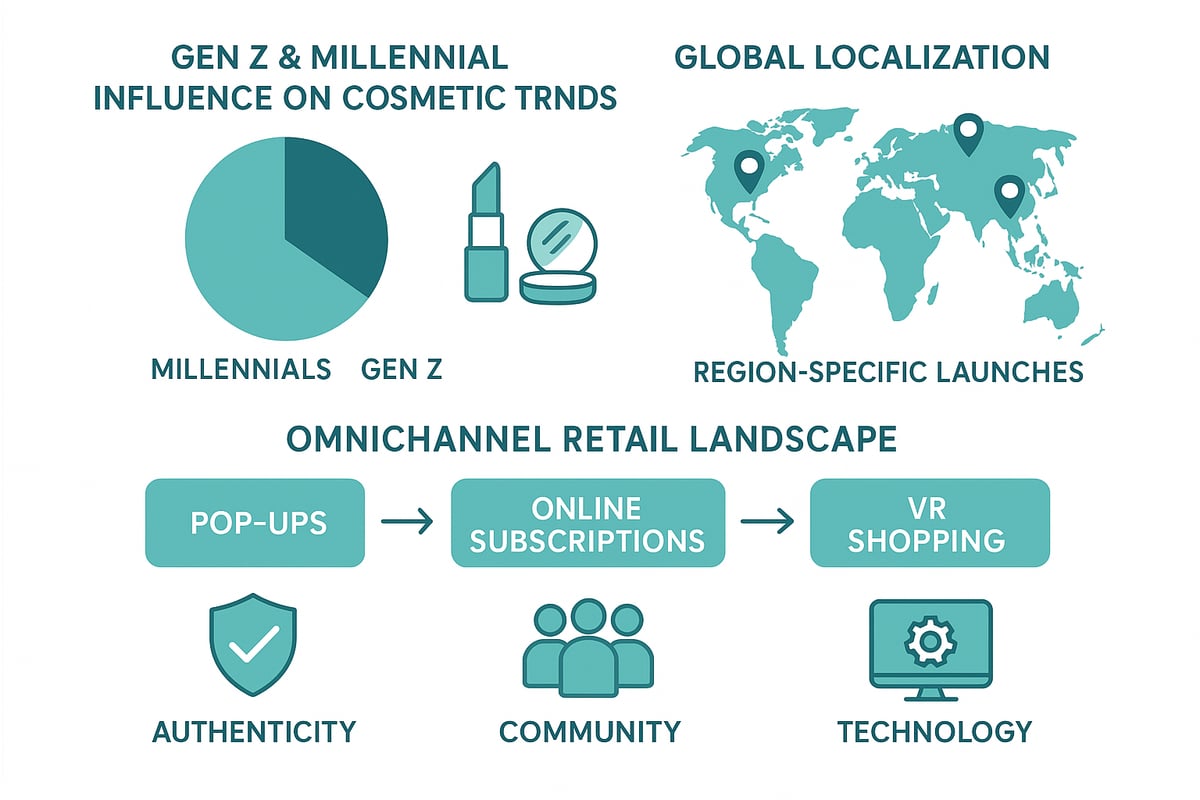
Understanding the market dynamics and evolving consumer behavior is crucial for anyone tracking the latest trends in cosmetics. As we look to 2026, three key forces are shaping the industry: generational influence, global market expansion, and the transformation of retail experiences.
Gen Z and Millennial Influence
Gen Z and Millennials are the driving force behind many emerging trends in cosmetics. They demand authenticity, expecting brands to be transparent about sourcing, ingredients, and business practices. Social responsibility is not optional for this demographic—ethical, sustainable, and inclusive brands consistently outperform competitors.
Community engagement is essential. User-generated content, peer reviews, and social media conversations shape what becomes popular. Value-driven purchasing decisions, including support for brands with strong social impact, are now the norm. For an in-depth look at how consumer values shape the beauty market, explore The dynamic landscape of skincare trends.
Global Expansion and Localization
Global expansion is reshaping the trends in cosmetics as brands adapt to diverse climates, cultures, and consumer preferences. Localization strategies include sourcing ingredients from local communities, respecting traditional beauty rituals, and developing products suited to specific environmental conditions.
Affordable access remains a priority. Companies use region-specific pricing and collaborate with local influencers to connect with new audiences. Region-specific launches and partnerships help brands establish credibility and trust in emerging markets.
Changing Retail Landscape
Retail in 2026 is defined by omnichannel experiences, blending physical stores, digital platforms, and virtual environments. Subscription models offer personalized product delivery, adding convenience and fostering brand loyalty. Pop-up shops, VR shopping, and AI chatbots are becoming standard, offering unique and interactive experiences.
The trends in cosmetics are also influenced by how consumers discover products—social commerce, virtual consultations, and influencer partnerships are central to this new landscape. Brands that leverage these tools create memorable, engaging journeys that keep customers coming back.
As you explore these seven transformative trends—from AI-driven personalization to sustainable innovation and the expanding male grooming market—you can see how the future of cosmetics is all about adaptability and leadership. Whether you’re an entrepreneur with a fresh idea or an established brand ready to evolve, staying ahead means more than just following trends; it’s about creating standout products with real impact. If you’re inspired to turn these insights into your own high-performance, eco-conscious formulations, let’s take the next step together. Start Your Product Journey