

Starting your own custom skincare line represents an exciting entrepreneurial opportunity in the beauty industry, but understanding the financial requirements is crucial for success. The cost to start a custom skincare line varies significantly based on your business model, product complexity, and market positioning. Whether you're an aspiring entrepreneur or an established brand looking to expand, having a clear picture of startup expenses helps you plan strategically and allocate resources effectively. This comprehensive guide breaks down every financial aspect you'll encounter when bringing your skincare vision to life.
Understanding the Financial Landscape
The cost to start a custom skincare line typically ranges from $8,000 to $150,000 or more, depending on your approach and scale. This wide range reflects the diverse pathways available to skincare entrepreneurs today. Your initial investment will depend heavily on whether you choose custom formulation development, work with existing stock formulations, or pursue a hybrid approach.
Budget tiers generally fall into three categories:
- Entry-level brands ($8,000-$25,000) focusing on minimal product lines with modified stock formulations
- Mid-tier brands ($25,000-$75,000) developing custom formulations with professional branding and moderate inventory
- Premium brands ($75,000-$150,000+) creating highly differentiated products with extensive testing and sophisticated marketing
The comprehensive breakdown of startup costs reveals that product development and formulation typically consume 25-40% of your initial budget. This investment ensures your products deliver genuine results and stand out in competitive markets.
Custom Formulation Development Costs
Working with professional formulators like The INCI Lab to create proprietary formulations represents one of your most significant initial investments. Custom formulation development typically costs between $2,000 and $15,000 per product, depending on complexity and ingredient requirements.
| Formulation Type | Cost Range | Timeline | Best For |
|---|---|---|---|
| Basic moisturizer/cleanser | $2,000-$5,000 | 4-8 weeks | New entrepreneurs |
| Advanced serum/treatment | $5,000-$10,000 | 8-12 weeks | Mid-tier brands |
| Innovative active formulas | $10,000-$15,000+ | 12-16 weeks | Premium positioning |
Custom formulations offer complete ownership and differentiation that private label products cannot match. When you invest in quality formulations, you're building intellectual property that competitors cannot replicate. This exclusivity justifies premium pricing and builds lasting brand value.
Product Development and Testing Expenses
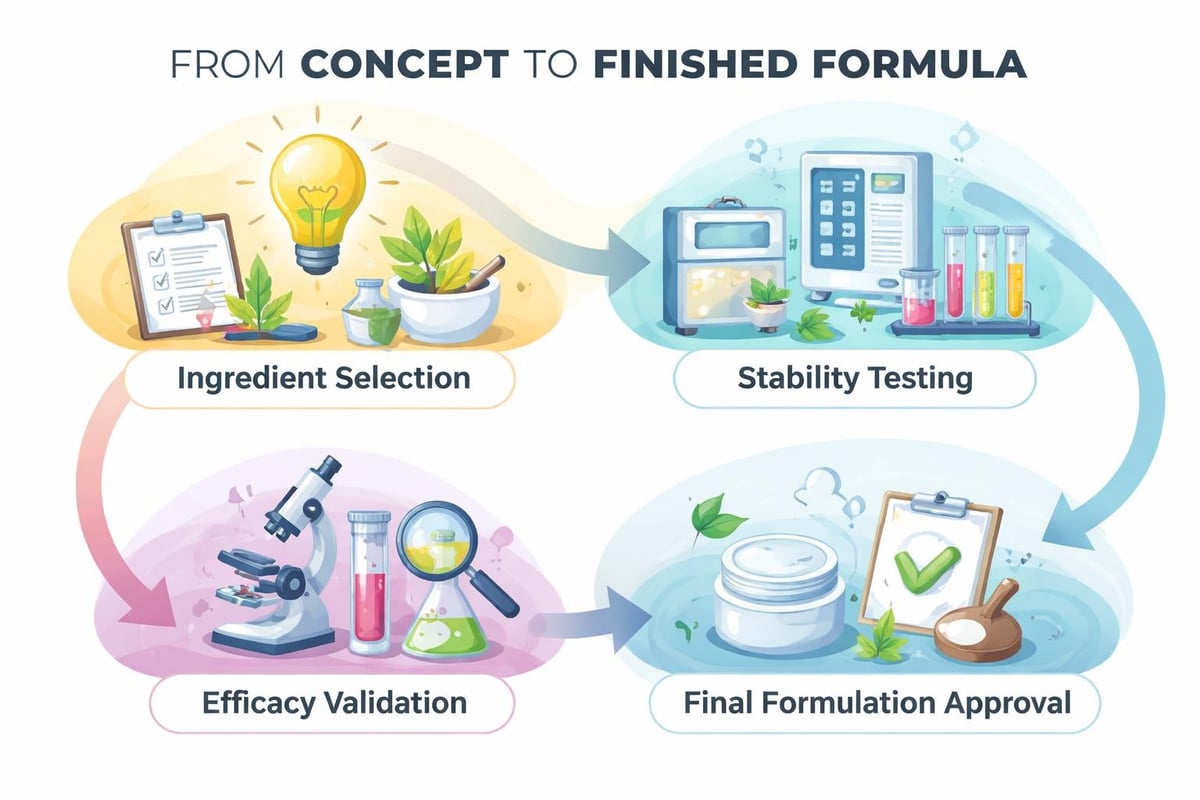
Beyond initial formulation costs, comprehensive product development includes stability testing, safety assessments, and efficacy studies. These critical steps ensure your products perform consistently and comply with regulatory standards.
Stability testing requirements include:
- Accelerated stability testing ($500-$1,500 per product)
- Real-time stability studies ($1,000-$3,000 per product)
- Microbial challenge testing ($800-$2,000 per product)
- Preservative efficacy testing ($600-$1,500 per product)
Safety assessments and cosmetic product safety reports typically cost $500-$2,500 per product depending on complexity. These documents are legally required in many markets and provide essential consumer protection. The detailed cost analysis shows that rushing through testing phases often leads to expensive reformulations later.
Ingredient Sourcing and Raw Materials
Quality ingredients form the foundation of effective skincare products. Initial ingredient purchases for small-batch production typically range from $2,000 to $10,000, depending on your product line complexity and minimum order quantities.
Premium active ingredients like peptides, growth factors, and proprietary botanical extracts command higher prices but enable superior product performance. Working with formulators who have established supplier relationships can reduce ingredient costs by 15-30% compared to sourcing independently.
Sustainable and eco-friendly ingredients increasingly drive consumer purchasing decisions. While certified organic and sustainably sourced materials may cost 20-50% more than conventional alternatives, they support premium positioning and align with modern consumer values.
Manufacturing and Production Costs
Manufacturing represents another substantial portion of the cost to start a custom skincare line. You'll need to decide between contract manufacturing and establishing your own production facility.
Contract manufacturing options:
- Small-batch specialists - Minimum orders of 100-500 units, costs $8-$25 per unit
- Mid-volume manufacturers - Minimum orders of 1,000-5,000 units, costs $4-$12 per unit
- Large-scale production - Minimum orders of 10,000+ units, costs $2-$6 per unit
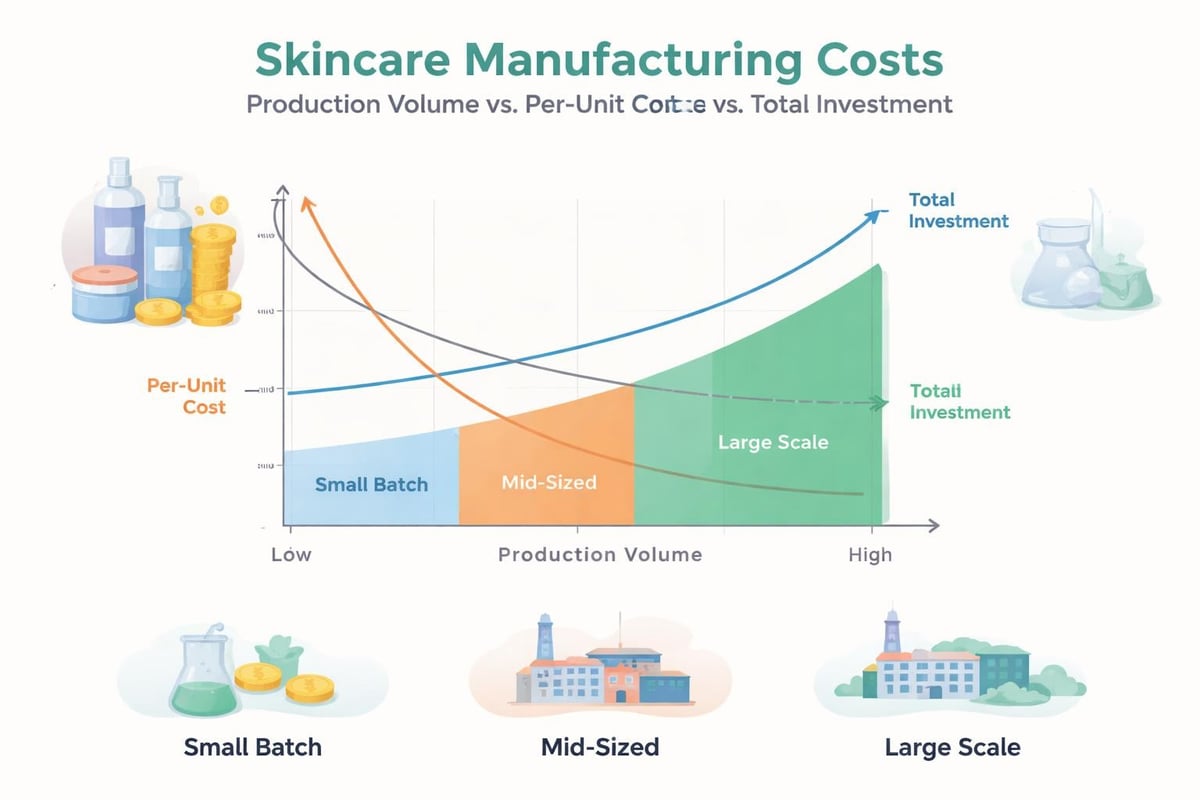
Most new brands start with contract manufacturers to minimize capital requirements. According to budget planning guidelines, expect to invest $5,000-$30,000 in your first manufacturing run depending on product complexity and order volume.
Building your own production facility requires substantially higher investment ($50,000-$200,000+) and makes sense only for established brands with proven market demand. This approach provides maximum control but demands expertise in GMP compliance, equipment maintenance, and quality systems.
| Manufacturing Model | Initial Investment | Per-Unit Cost | Best For |
|---|---|---|---|
| Contract (small batch) | $5,000-$15,000 | $8-$25 | Testing market fit |
| Contract (mid volume) | $15,000-$40,000 | $4-$12 | Growing brands |
| Own facility | $50,000-$200,000+ | $2-$6 | Established brands |
Packaging and Labeling Investment
Packaging serves dual purposes: protecting product integrity and communicating brand identity. Budget $3,000-$15,000 for initial packaging development and first production run.
Primary packaging components include:
- Bottles, jars, or tubes ($0.50-$5.00 per unit)
- Pumps, droppers, or applicators ($0.25-$2.00 per unit)
- Labels and printing ($0.10-$1.00 per unit)
- Secondary packaging and boxes ($0.50-$3.00 per unit)
Sustainable packaging options increasingly appeal to conscious consumers but typically cost 20-40% more than conventional materials. Glass, post-consumer recycled plastics, and biodegradable materials support environmental positioning while potentially commanding premium prices.
Custom packaging design requires professional expertise. Graphic design services cost $1,500-$5,000 for a complete packaging system, while custom mold development for unique containers starts at $3,000-$15,000 per mold.
Regulatory Compliance and Legal Expenses
Regulatory compliance represents a non-negotiable expense that protects both your business and consumers. Budget $2,000-$8,000 for initial compliance requirements.
Essential regulatory expenses:
- Business formation and licensing ($500-$2,000)
- Product liability insurance ($1,000-$4,000 annually)
- Trademark registration ($500-$2,000 per mark)
- Compliance consulting ($1,000-$5,000)
FDA compliance for cosmetics doesn't require pre-market approval, but you must ensure proper labeling, safe ingredients, and GMP-compliant manufacturing. The capital expenditures breakdown emphasizes that investing in compliance from the start prevents costly recalls and legal issues.
International markets impose additional requirements. EU cosmetics regulations demand Safety Assessment reports and CPNP registration, adding $2,000-$5,000 per product for market entry.
Branding and Marketing Budget
Strong branding differentiates your custom skincare line in crowded markets. Allocate 20-30% of your startup budget to brand development and initial marketing efforts.
Branding investment breakdown:
- Logo and visual identity - $1,500-$5,000
- Website development - $3,000-$15,000
- Product photography - $1,000-$5,000
- Marketing materials - $1,000-$3,000
Professional website development with e-commerce functionality typically costs $5,000-$15,000 for custom builds, though template-based solutions reduce costs to $500-$3,000. Your website serves as your primary sales channel and brand showcase, making it a critical investment area.
Digital marketing costs vary dramatically based on strategy. Social media advertising budgets of $2,000-$10,000 monthly support brand awareness campaigns, while influencer partnerships range from $500 for micro-influencers to $10,000+ for established beauty creators.
Content creation including photography, video production, and educational materials requires $3,000-$10,000 initially. High-quality visuals demonstrating product textures, application, and results drive conversion rates significantly higher than amateur content.
Working with Professional Formulators
Partnering with experienced formulation labs streamlines development while ensuring product excellence. Professional formulators bring expertise in ingredient science, stability optimization, and regulatory compliance that dramatically reduces time-to-market.
The cost to start a custom skincare line decreases when you work with formulators offering comprehensive support. Services typically include:
- Initial consultation and concept development
- Formula creation and optimization
- Stability testing coordination
- Regulatory guidance and documentation
- Manufacturer introductions and support
Small cosmetic brands particularly benefit from formulator partnerships that provide expertise without requiring full-time chemistry staff. This model allows entrepreneurs to focus on brand building and marketing while experts handle technical product development.
Technology and Infrastructure Costs
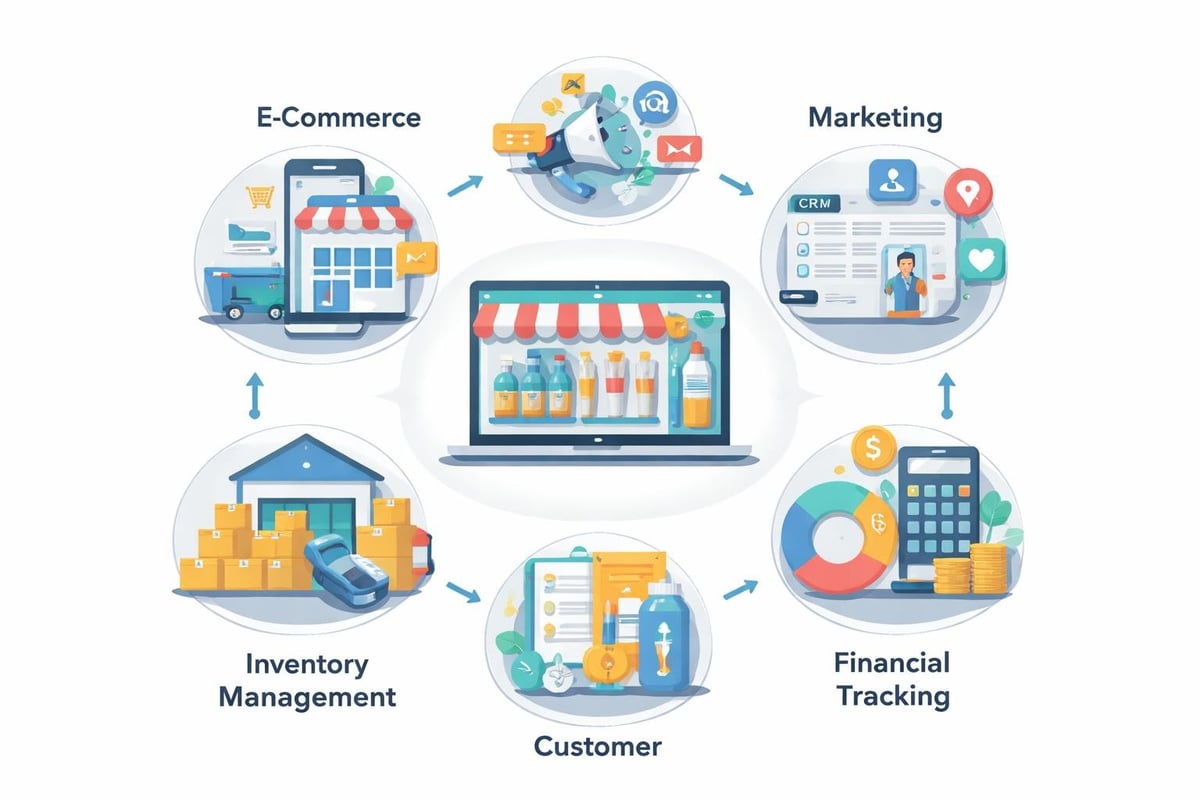
Modern skincare businesses require technology infrastructure supporting operations, sales, and customer management. Budget $3,000-$12,000 for initial technology setup.
Essential technology investments include:
- E-commerce platform and hosting ($500-$3,000 annually)
- Inventory management software ($300-$1,500 annually)
- Customer relationship management (CRM) system ($500-$2,000 annually)
- Email marketing platform ($200-$1,000 annually)
- Accounting and bookkeeping software ($300-$1,200 annually)
Cloud-based solutions reduce upfront costs while providing scalability as your business grows. Many platforms offer tiered pricing aligned with sales volume, making them accessible for startups.
Point-of-sale systems for retail operations add $1,000-$5,000 depending on sophistication. If you plan wholesale distribution, electronic data interchange (EDI) systems for major retailers require additional investment of $2,000-$10,000.
Hidden Costs and Contingency Planning
The cost to start a custom skincare line includes numerous smaller expenses that collectively impact your budget significantly. Smart entrepreneurs allocate 15-20% of their budget for contingencies and unexpected costs.
| Hidden Cost Category | Typical Range | Notes |
|---|---|---|
| Product reformulation | $1,000-$5,000 | Stability or performance issues |
| Shipping and logistics setup | $500-$2,000 | Fulfillment partnerships |
| Sample production | $500-$2,000 | PR and influencer outreach |
| Trade show attendance | $2,000-$8,000 | Per show including booth costs |
| Professional services | $1,000-$5,000 | Legal, accounting, consulting |
| Office supplies and equipment | $500-$2,000 | Often overlooked essentials |
Product liability issues, though rare with proper formulation and testing, can devastate undercapitalized businesses. Comprehensive insurance coverage ($2,000-$5,000 annually) provides essential protection against claims.
Inventory Management and Cash Flow
Initial inventory represents substantial working capital requirements. The comparison between private label and custom formulation costs reveals that custom formulations require higher minimum order quantities but provide superior margins and brand differentiation.
Calculate inventory needs based on:
- Three to six months of projected sales
- Shelf life and stability considerations
- Manufacturer minimum order quantities
- Storage capacity and costs
Undercapitalized brands frequently struggle with inventory management. Ordering insufficient quantities increases per-unit costs, while overordering ties up cash and risks product expiration. Professional forecasting and careful planning prevent both extremes.
Strategic Cost Reduction Approaches
Reducing the cost to start a custom skincare line without compromising quality requires strategic decision-making and creativity.
Effective cost reduction strategies:
- Launch with focused product lines (3-5 SKUs instead of 10+)
- Utilize stock formulations with custom modifications initially
- Share packaging components across multiple products
- Leverage digital-first marketing instead of traditional advertising
- Bootstrap operations by handling fulfillment in-house initially
Private label manufacturers offer middle-ground solutions between fully custom formulations and generic products. Modified stock formulations with custom packaging and branding reduce development costs by 40-60% while still providing differentiation.
Phased launches allow you to test market reception before committing to full product lines. Start with hero products demonstrating your brand promise, then expand based on customer feedback and sales data.
Funding Your Skincare Business
Most skincare entrepreneurs combine multiple funding sources to reach required capital levels. Understanding available options helps you structure appropriate financing.
Common funding approaches include:
- Personal savings and bootstrapping - Maintains full ownership but limits scale
- Friends and family investment - Flexible terms but potential relationship complications
- Small business loans - Traditional financing with repayment obligations
- Crowdfunding - Market validation plus capital but requires strong marketing
- Angel investors or venture capital - Substantial capital but equity dilution
The detailed expense breakdown demonstrates that sustainable businesses typically achieve profitability within 12-24 months when properly capitalized. Underfunding leads to compromised product quality, inadequate marketing, and ultimately business failure.
Grant programs supporting women entrepreneurs, minority-owned businesses, or sustainable companies provide non-dilutive capital. Research local economic development agencies, industry associations, and foundation grants aligned with your business model.
Ongoing Operating Expenses
Beyond startup costs, sustainable operations require consistent monthly expenditures. Budget for these continuing expenses from day one.
Monthly operating costs typically include:
- Marketing and advertising ($2,000-$10,000)
- Website hosting and technology ($200-$800)
- Insurance premiums ($150-$500)
- Professional services ($300-$1,500)
- Shipping and fulfillment ($500-$5,000)
- Office and administrative ($200-$1,000)
Customer acquisition costs in the beauty industry range from $20-$80 per customer depending on channels and competition. Understanding these metrics helps you calculate required marketing budgets and break-even points.
Inventory replenishment represents your largest ongoing expense. As sales grow, you'll need working capital to reorder products 30-90 days before receiving customer payments. This cash conversion cycle challenges many growing brands.
Maximizing Your Investment Return
The cost to start a custom skincare line represents significant investment, but strategic planning maximizes returns. Focus on these high-impact areas:
Invest heavily in quality formulations that deliver visible results. Products that actually work generate organic word-of-mouth marketing worth far more than paid advertising. Exceptional formulations justify premium pricing and create loyal customer bases.
Build strong brand identity from launch. Professional branding costs more initially but prevents expensive rebranding efforts later. Consistent visual identity, compelling storytelling, and authentic values connection drive customer loyalty and premium positioning.
Prioritize customer experience across all touchpoints. From packaging unboxing to customer service responsiveness, every interaction shapes brand perception. Satisfied customers provide repeat purchases and referrals that dramatically reduce acquisition costs.
Professional Partnership Benefits
Working with experienced partners like formulation specialists streamlines your path to market while controlling costs. Professional formulators provide:
- Faster development timelines reducing opportunity costs
- Technical expertise preventing expensive mistakes
- Supplier relationships lowering ingredient costs
- Regulatory knowledge ensuring compliance
- Quality assurance minimizing reformulation risks
The insights on starting cosmetic brands confirm that entrepreneurs partnering with professional formulators launch products 40-60% faster than those attempting independent development. This speed advantage provides critical competitive benefits in rapidly evolving beauty markets.
Understanding the complete financial picture empowers you to make informed decisions about launching your skincare brand. While the cost to start a custom skincare line requires substantial investment, strategic planning and expert partnerships maximize your success potential. The INCI Lab specializes in supporting entrepreneurs and established brands with award-winning custom formulations, eco-friendly practices, and comprehensive development support from concept through production. Ready to bring your skincare vision to life with formulations that deliver real results and stand out in competitive markets? Partner with experts who understand both the science and business of beauty.