

The beauty industry demands more than just effective formulations. Product design cosmetics represents a comprehensive approach that merges scientific innovation, aesthetic appeal, regulatory compliance, and consumer psychology into a cohesive brand experience. For entrepreneurs and established brands alike, understanding how to strategically design cosmetic products from formulation to final packaging determines market success. In 2026, consumers expect sustainable ingredients, transparent labeling, and products that deliver both performance and visual impact. This integrated approach to product development ensures your cosmetics stand out in an increasingly competitive landscape.
The Foundation of Product Design Cosmetics
Product design cosmetics encompasses every element that transforms raw ingredients into market-ready beauty solutions. This process extends far beyond selecting active ingredients or choosing bottle colors. It requires strategic thinking about formulation chemistry, packaging functionality, regulatory requirements, and brand positioning.
Formulation Design as the Core Element
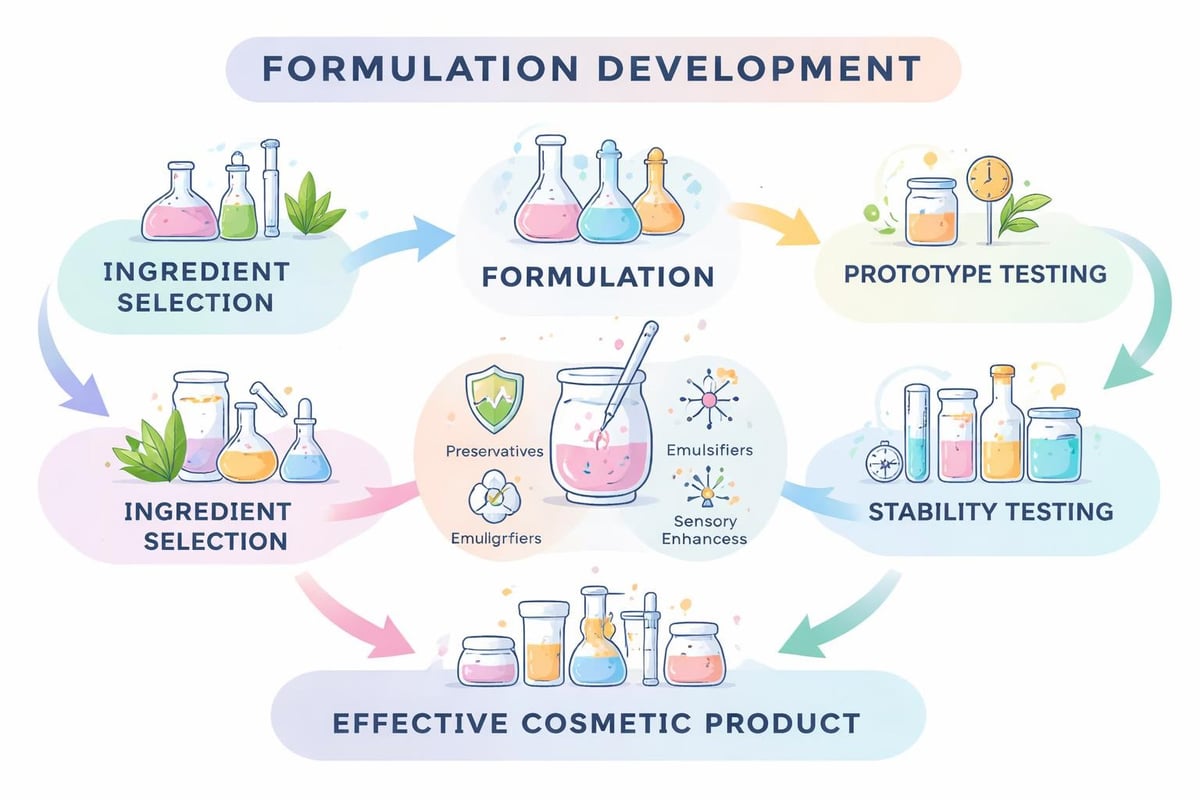
The formulation itself serves as the foundation of product design cosmetics. Custom formulations allow brands to differentiate themselves through unique textures, fragrances, and performance characteristics. When developing formulations for personal care products, chemists must balance multiple factors simultaneously.
Key formulation considerations include:
- Ingredient compatibility and stability over time
- Texture development for optimal sensory experience
- Preservation systems that maintain product integrity
- Active ingredient delivery for measurable results
- Sustainable sourcing to meet consumer expectations
The selection of each ingredient impacts not only product performance but also manufacturing processes, shelf life, and regulatory pathways. Entrepreneurs launching new cosmetic brands must work closely with formulation experts to ensure their vision translates into viable products.
Balancing Performance and Market Demands
Modern product design cosmetics requires understanding consumer expectations in 2026. Shoppers research ingredients extensively, demand transparency, and prioritize sustainability. Your formulation strategy must address these evolving preferences while maintaining product efficacy.
Research in optimizing aesthetic product design demonstrates that combining form and function creates stronger market performance. This principle applies directly to cosmetics, where products must feel luxurious, work effectively, and align with brand values.
Strategic Packaging Integration
Packaging represents a critical component of product design cosmetics that influences consumer perception, product stability, and regulatory compliance. The right packaging protects formulations, communicates brand identity, and enhances user experience.
Functional Packaging Requirements
Beyond aesthetics, cosmetic packaging must fulfill specific functional requirements. ISO 22715 standards provide guidelines for cosmetic packaging and labeling that ensure product safety and compliance across international markets.
| Packaging Function | Design Consideration | Impact on Product |
|---|---|---|
| Product Protection | Material barrier properties | Extends shelf life and maintains efficacy |
| Dosage Control | Pump or applicator design | Ensures proper usage and reduces waste |
| Regulatory Compliance | Label space and clarity | Meets legal requirements in target markets |
| Sustainability | Recyclable or refillable options | Appeals to eco-conscious consumers |
When working on product design cosmetics, packaging decisions affect manufacturing costs, shipping logistics, and environmental impact. Brands committed to sustainability must evaluate materials carefully, considering both initial production and end-of-life disposal.
The Psychology of Cosmetic Packaging
Consumer research reveals that packaging designs significantly affect purchasing decisions. Color psychology, shape associations, and material choices all communicate brand positioning before consumers even try the product.
Premium cosmetic lines often use:
- Glass containers for luxury positioning and product preservation
- Airless pumps for high-performance serums and treatments
- Minimalist designs that communicate sophistication and purity
- Sustainable materials that appeal to environmentally conscious buyers
- Innovative closures that enhance user experience and prevent contamination
The packaging you select becomes an extension of your formulation strategy. A high-performance anti-aging serum deserves packaging that protects light-sensitive ingredients while conveying scientific credibility.
Regulatory Compliance in Design
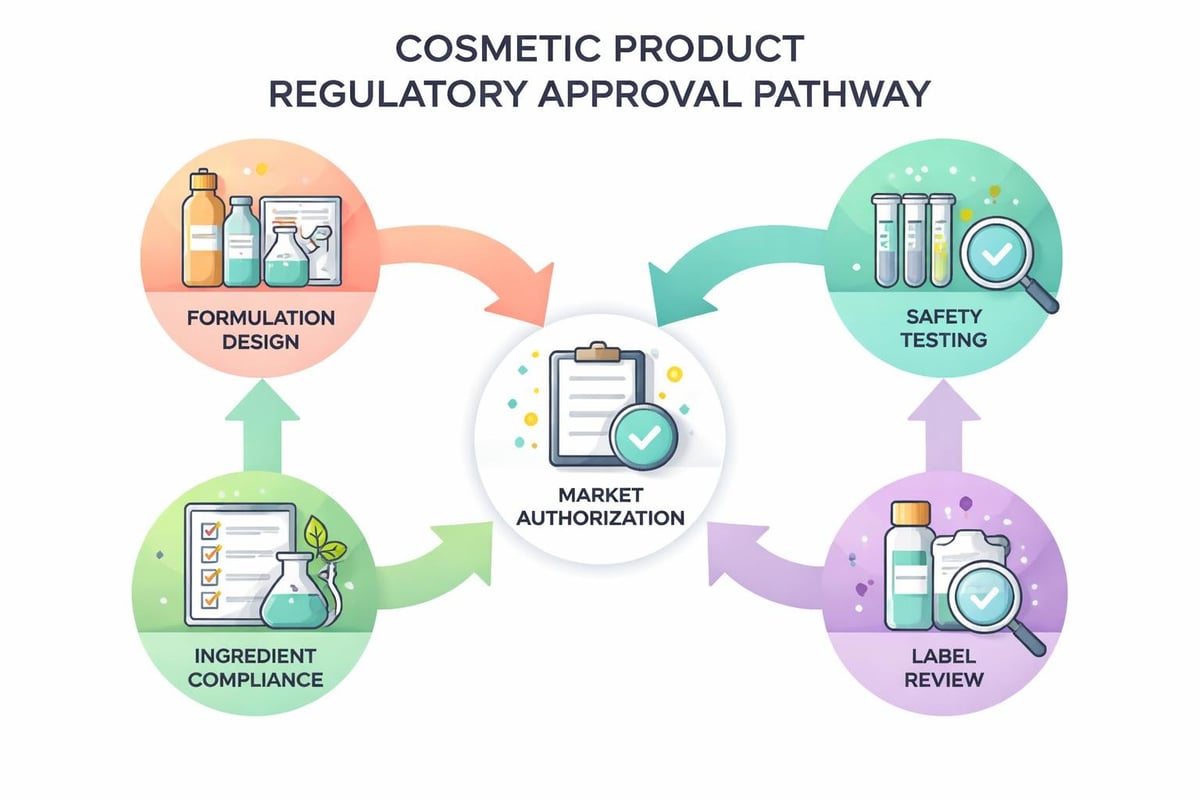
Regulatory requirements fundamentally shape product design cosmetics. Different markets impose specific regulations that affect formulation choices, ingredient concentrations, labeling requirements, and safety documentation.
Navigating Global Regulations
The EC Regulation 1223/2009 on cosmetics establishes binding requirements for cosmetic products sold in European markets. These regulations mandate safety assessments, ingredient restrictions, and labeling standards that directly impact product design decisions.
For brands planning international distribution, regulatory strategy must inform product design cosmetics from the earliest stages. Reformulating after initial development wastes time and resources. Understanding INCI naming conventions ensures your ingredient declarations meet global standards.
Design Documentation and Traceability
Professional product design cosmetics requires comprehensive documentation throughout development. This includes formulation records, stability testing data, safety assessments, and manufacturing specifications.
Essential documentation elements:
- Complete ingredient lists with INCI names and concentrations
- Manufacturing process flows and quality control checkpoints
- Stability testing results across temperature and time variables
- Safety assessments and toxicological evaluations
- Packaging compatibility studies and migration testing
Contract manufacturing partnerships often provide support with regulatory documentation, helping brands navigate complex compliance requirements while maintaining design integrity.
Technology and Innovation in Design
Emerging technologies are transforming product design cosmetics by enabling more precise formulation development, personalized products, and enhanced consumer experiences.
Generative AI in Concept Development
Tools like SketchConcept utilize generative AI to assist in conceptual design by integrating sketches and textual descriptions. This technology accelerates the creative process, allowing brands to visualize multiple design directions before committing to expensive prototyping.
For product design cosmetics applications, AI-driven tools can:
- Generate packaging concepts based on brand guidelines and target demographics
- Predict consumer responses to different design elements
- Optimize formulation parameters for desired performance characteristics
- Identify trending ingredients and formulation approaches
Virtual Try-On and Consumer Engagement
Technologies like YouCam Makeup demonstrate how augmented reality integrates with product design cosmetics. Virtual try-on capabilities allow consumers to test color cosmetics digitally, reducing purchase hesitation and return rates.
This technology influences product design by:
- Providing immediate feedback on shade ranges and finishes
- Reducing sampling costs through digital trials
- Collecting data on consumer preferences and behaviors
- Enhancing online shopping experiences for color-critical products
Sustainable Design Practices
Sustainability has evolved from a marketing differentiator to a fundamental expectation in product design cosmetics. Consumers in 2026 scrutinize ingredient sourcing, packaging materials, and manufacturing processes with unprecedented attention.
Eco-Friendly Formulation Strategies
Sustainable product design cosmetics begins with ingredient selection. Brands must evaluate the environmental impact of raw materials, from cultivation practices to extraction methods.
| Sustainability Factor | Design Approach | Business Impact |
|---|---|---|
| Ingredient Sourcing | Partner with certified sustainable suppliers | Supports ethical practices, appeals to conscious consumers |
| Water Usage | Develop waterless or concentrated formulations | Reduces environmental footprint, lowers shipping costs |
| Preservation | Use natural preservation systems where viable | Meets clean beauty standards, may require shorter shelf life |
| Manufacturing | Select facilities with renewable energy and waste reduction | Enhances brand credibility, may qualify for certifications |
Understanding the beauty INCI requirements helps brands communicate their sustainability commitments accurately through ingredient transparency.
Circular Economy Approaches
Forward-thinking product design cosmetics incorporates circular economy principles through refillable packaging systems, recyclable materials, and biodegradable formulations. These strategies reduce waste while creating opportunities for customer loyalty through refill programs.
Innovations like cosmetotextiles showcase creative intersections between cosmetics and other industries. These textiles release cosmetic active ingredients, demonstrating how product design cosmetics continues to evolve beyond traditional formats.
Brand Identity Through Design
Every element of product design cosmetics communicates brand values and positioning. Successful products maintain consistency across formulation performance, packaging aesthetics, and marketing messaging.
Creating Cohesive Product Lines
When launching a new skincare brand, establishing a clear design language creates recognition and builds consumer trust. This includes consistent color palettes, typography, packaging materials, and formulation philosophies across your entire product range.
Design coherence strategies include:
- Developing signature ingredients that appear across multiple products
- Maintaining consistent packaging architecture with variations for different product types
- Creating layerable formulations that work synergistically
- Establishing clear product hierarchies through design cues
Differentiation in Crowded Markets
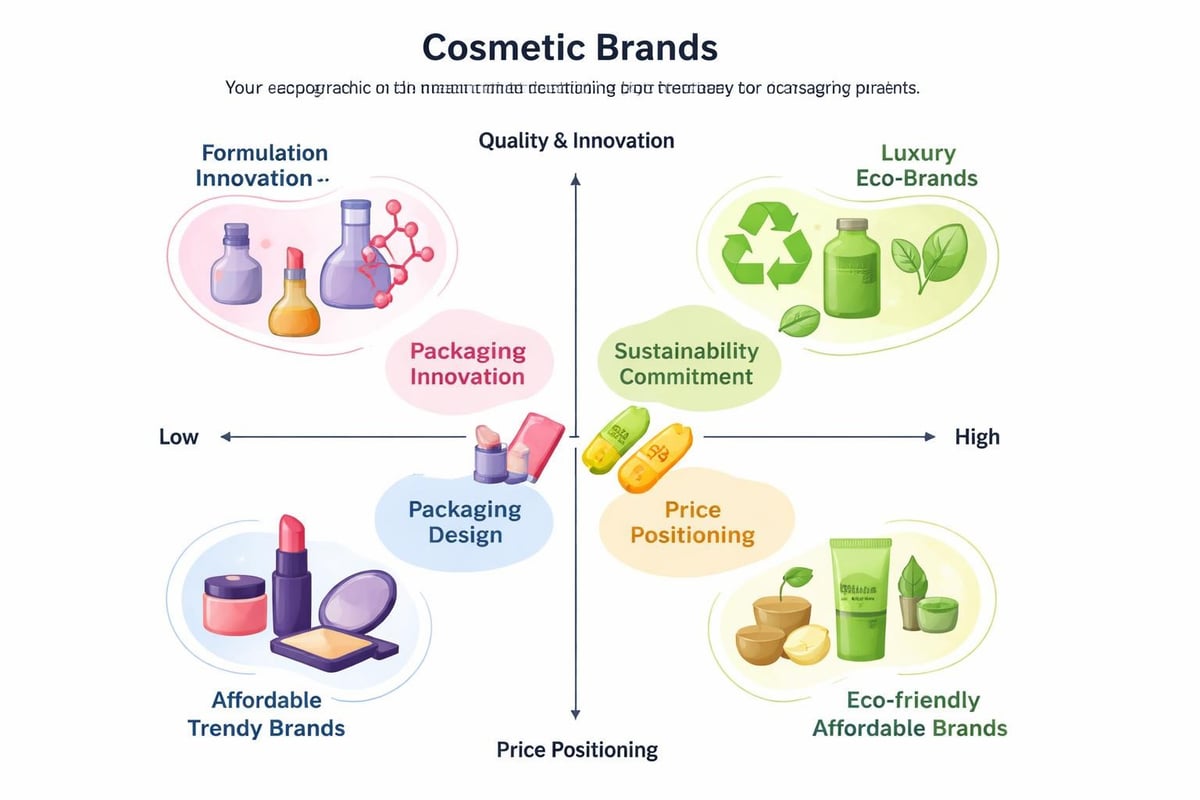
With thousands of new cosmetic brands entering the market, strategic product design cosmetics becomes essential for standing out. Differentiation emerges through unique formulation approaches, innovative delivery systems, or distinctive aesthetic choices.
Successful differentiation often combines:
- Unexpected textures that surprise and delight users
- Novel ingredient combinations that deliver unique benefits
- Distinctive packaging formats that enhance functionality
- Compelling brand narratives that connect emotionally with target consumers
- Performance claims supported by clinical testing and real results
From Concept to Market Launch
Translating product design cosmetics concepts into market-ready products requires systematic development processes and strategic partnerships. Understanding each phase prevents costly mistakes and accelerates time to market.
Development Timeline and Milestones
Professional cosmetic product development typically follows a structured timeline:
- Concept definition (2-4 weeks): Establish product vision, target market, and key benefits
- Formulation development (8-16 weeks): Create and refine formulas through iterative testing
- Stability testing (12-24 weeks): Verify product performance across temperature and time
- Packaging development (6-12 weeks): Design, prototype, and test packaging solutions
- Regulatory review (4-8 weeks): Compile documentation and obtain necessary approvals
- Manufacturing setup (4-8 weeks): Establish production processes and quality systems
- Market launch (4-8 weeks): Execute marketing campaigns and distribution strategies
These timelines overlap considerably in professional settings. Experienced formulation partners can accelerate development while maintaining quality standards.
Partnership Considerations
Most successful brands partner with specialized formulation laboratories rather than developing products internally. This approach provides access to expertise, reduces capital investment, and accelerates market entry.
When evaluating formulation partners for product design cosmetics, consider:
- Portfolio of previous work demonstrating relevant experience
- Regulatory knowledge for your target markets
- Sustainability commitments aligning with your brand values
- Manufacturing capabilities or established vendor relationships
- Intellectual property policies ensuring you retain formulation ownership
- Communication processes supporting collaborative development
Working with experts who understand cosmetic brands and their unique challenges streamlines the development process significantly.
Testing and Validation
Rigorous testing validates product design cosmetics decisions and ensures safety, efficacy, and stability. This phase protects both consumers and brand reputation while building credibility for marketing claims.
Essential Testing Protocols
Comprehensive product validation includes multiple testing types:
Stability Testing
- Accelerated aging studies at elevated temperatures
- Freeze-thaw cycling to simulate shipping conditions
- Real-time monitoring at standard storage temperatures
- Microbial challenge testing for preservation efficacy
Performance Testing
- In vitro studies measuring active ingredient activity
- Clinical trials demonstrating claimed benefits
- Consumer perception studies validating sensory characteristics
- Compatibility testing with common cosmetic products
Safety Testing
- Dermatological testing for skin irritation potential
- Ophthalmological testing for products near eyes
- Repeated insult patch testing for sensitization risk
- Preservative efficacy testing for contamination resistance
Iterative Refinement
Professional product design cosmetics embraces iteration. Initial formulations rarely achieve perfection immediately. Testing reveals opportunities for improvement in texture, fragrance, stability, or performance.
This refinement process benefits from:
- Structured feedback collection from testers representing your target demographic
- Quantitative measurements of key performance parameters
- Competitive benchmarking against successful market alternatives
- Cost optimization without compromising quality or experience
- Manufacturing feasibility ensuring scalability to commercial volumes
Manufacturing Scalability
Products designed without consideration for manufacturing often encounter expensive problems during scale-up. Strategic product design cosmetics incorporates manufacturing requirements from initial concept stages.
Production-Ready Formulations
Creating formulations that transition smoothly from laboratory to factory requires understanding manufacturing constraints and capabilities.
| Manufacturing Consideration | Design Impact | Solutions |
|---|---|---|
| Mixing Requirements | Complex formulations need specialized equipment | Simplify processes or partner with equipped manufacturers |
| Batch Size Minimums | Small brands face higher per-unit costs | Plan inventory carefully or use contract manufacturers |
| Fill Speed Limitations | Thick formulations slow production | Optimize viscosity or adjust packaging format |
| Ingredient Availability | Exotic materials create supply chain risks | Source reliable alternatives or secure supply agreements |
Understanding these factors during product design cosmetics development prevents costly reformulation after initial market launch.
Quality Control Integration
Manufacturing scale-up introduces variability that laboratory development never encounters. Robust quality control systems maintain consistency across production batches.
Effective quality systems include:
- Raw material specifications with acceptance testing protocols
- In-process controls monitoring critical parameters during manufacturing
- Finished product testing verifying specifications before release
- Stability monitoring ensuring consistent performance throughout shelf life
- Traceability systems tracking materials from suppliers through final products
Successful product design cosmetics integrates formulation science, aesthetic design, regulatory compliance, and market strategy into cohesive products that resonate with consumers. Whether you're launching your first product or expanding an established line, strategic design decisions determine competitive positioning and long-term viability. The INCI Lab provides comprehensive support throughout this journey, from initial concept through commercial production, with custom formulations that deliver both performance and market differentiation. Our expertise in sustainable ingredients and eco-friendly practices ensures your products meet the exacting standards of today's conscious consumers while standing out in competitive beauty markets.