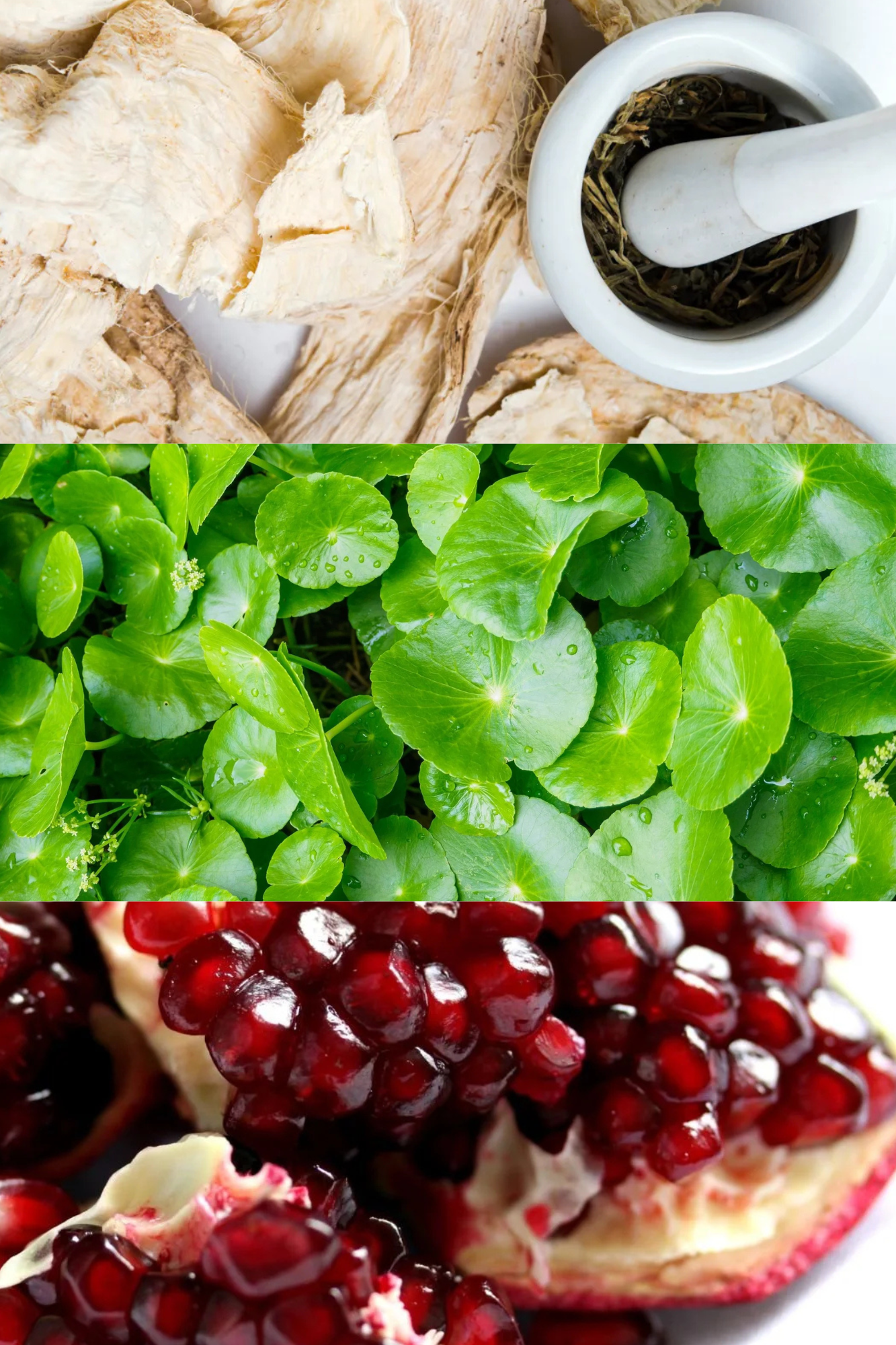

NaturTheory Scar & Wound Care is described as a “complex that contains extracts of onion (Allium cepa), gotu kola (Centella asiatica) and the herb ‘pocksa’ (likely Centella asiatica variant or regional botanical) to support skin repair of wounds and scars.” It is formulated to help soften the appearance of scars and support cutaneous healing.
In terms of functional actives, the product list mentions the botanical extract complex (at 3 % in one example formula) along with typical supporting ingredients (e.g., allantoin at 0.10%, arginine at 0.40%) for soothing and repair.
Thus this complex represents a synergistic blend of botanicals and supporting amino/hydrating compounds designed for both scar maturation (the later remodeling phase) and wound repair (the earlier healing phases).
Functional Attributes & Mechanisms of Action
Several key mechanisms underpin the utility of this ingredient complex:
-
Anti-inflammatory & antioxidant support: The botanical extracts (onion, gotu kola) contain flavonoids, phenolics and triterpenoids which help reduce oxidative stress in damaged skin and modulate inflammatory responses. While not specific to the exact blend, literature demonstrates that wound-healing botanicals reduce ROS and inflammatory cytokines, thus promoting timely progression of healing.
-
Promotion of collagen deposition and matrix remodelling: Gotu kola and onion extracts have been linked in cosmetic/dermal literature to supporting collagen type I/III expression, improving texture and firmness in post-injury skin, and organising extracellular matrix in scar regions. Such effects help transform early wound tissue into a more uniform, less noticeable scar.
-
Skin-soothing, supportive environment for healing: The formula’s inclusion of amino acid (arginine) and allantoin suggests a role in supporting cell renewal, moisturisation, and epithelialisation — all important in wound closure and scar reduction.
-
Plant-based scar-modifying action: The onion extract (Allium cepa) is known in cosmetic applications for improving appearance of scars (reducing redness, improving smoothness). Combined with other botanicals, this complex is positioned for both acute wound repair and longer-term scar improvement.
Applications & Benefits in a Formulation
In practice, this ingredient is suited for topical treatments such as gels, creams or serums aimed at post-injury, post-procedure or acne-scar skin. Benefits include:
-
Softening of scar appearance: By supporting collagen remodelling and reducing discoloration/texture irregularities, users may see smoother, more even skin surface and less visible scar lines.
-
Support for wound healing: In earlier stages (fresh wounds, healing incisions) the complex helps create a supportive skin environment for faster epithelialisation and reduced residual scarring.
-
Versatility for different scar types: Whether surgical scars, stretch marks, acne marks or generic trauma scars — the combination of botanicals and “repair” actives makes it suitable for a variety of use-cases.
-
Botanical and “clean beauty” appeal: With plant-derived ingredients and a functional repair profile, this fits trends toward nature-inspired wound and scar care.
Formulation / Usage Notes & Considerations
- The practical example formula lists the extract at 3% along with supporting ingredients; formulators should consider the botanical complex in the 1-5% range for sensitive skin applications.
-
Delivery matters: For optimal effect in scar care, the vehicle (gel or light cream) should allow good skin contact and maybe occlusion (for scar softening).
-
Timing: For wound-care use, apply once the wound is closed/epithelialised; for scar-improvement, sustained use (weeks to months) is beneficial.
-
Pairing: Combining this complex with silicone sheets/gels, sun protection, gentle massage can enhance scar-outcome.
-
Safety: As with any botanical complex, patch-testing is wise. Avoid application on actively bleeding/unjuried skin unless the formulation is explicitly approved for open wound use.
Properties
Wound healing, Scar treatment, Anti-inflammatory
INCI Name
Butylene Glycol and Allium cepa Bulb Extract and Centella Asiatica Leaf Extract and Broussonetia papyrifera Bark Extract