
In 2026, standing out in the global beauty market requires more than creativity; choosing the right chemist for cosmetics is now a mission-critical decision for brands of every size. With a surge in cosmetic startups and advanced formulation technologies, expert guidance has become essential to achieve innovation, compliance, and sustainable growth.
This expert guide will equip you with the knowledge and practical steps needed to confidently select a chemist for cosmetics who aligns with your product vision. You will discover the evolving role of cosmetic chemists, the key qualifications to seek, and a step-by-step process for making the right choice.
By following each section, you will avoid common pitfalls, accelerate your brand’s growth, and ensure a successful partnership with your chosen expert. Let’s start your journey to beauty industry success.
Understanding the Role of a Cosmetic Chemist in 2026
The role of a chemist for cosmetics has transformed dramatically by 2026. No longer limited to lab work, these professionals now drive innovation, ensure compliance, and champion sustainability across the product lifecycle.
The Evolving Scope of Cosmetic Chemistry
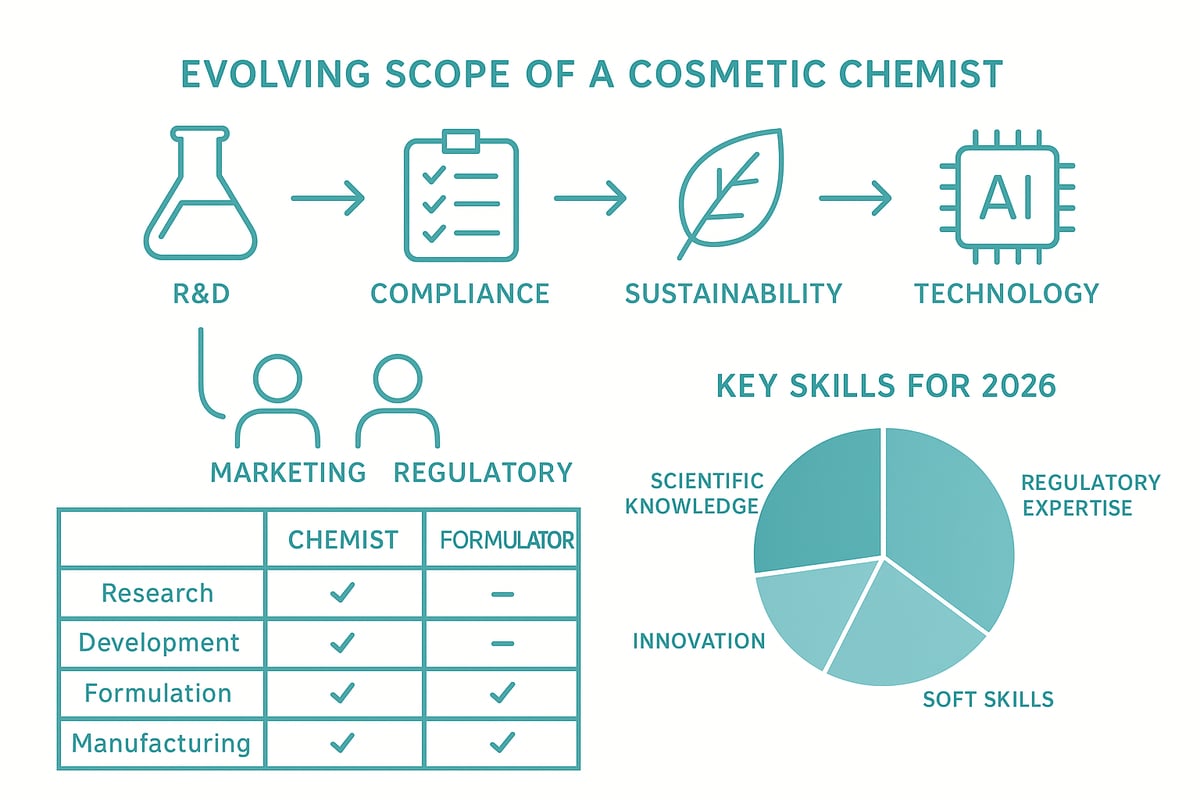
In 2026, the responsibilities of a chemist for cosmetics extend well beyond traditional formulation. Chemists are now essential partners in research and development, product compliance, and sustainable innovation. Rapid technological advancements have brought AI-driven formulation and green chemistry into the mainstream, making the role increasingly multidisciplinary.
Chemists frequently collaborate with marketing, design, and regulatory teams to ensure products are not only effective but also market-ready and compliant with global standards. The demand for chemists who can bridge science, sustainability, and business is rising fast. For a deeper look at why every beauty brand needs a skilled chemist for cosmetics, explore Why Every Beauty Brand Needs a Skilled Cosmetic Chemist.
Cosmetic Chemist vs. Cosmetic Formulator: Key Differences
Understanding the distinction between a chemist for cosmetics and a cosmetic formulator is crucial. A chemist typically holds an advanced degree in chemistry or a related field and leads scientific R&D, while a formulator focuses on the practical aspects of developing products.
Industry expectations are evolving. Large brands increasingly require a chemist for cosmetics to drive breakthrough innovations, whereas smaller brands may collaborate with experienced formulators for cost-effective solutions. Job postings reflect this trend, with more roles specifying advanced degrees and multidisciplinary expertise for chemists.
Impact of a Chemist on Product Success
A chemist for cosmetics plays a pivotal role in the efficacy, safety, and distinctiveness of beauty products. Their expertise ensures that formulations meet performance standards, pass safety assessments, and stand out in a crowded market.
Award-winning products often owe their success to the innovation and diligence of a skilled chemist for cosmetics. These professionals are also instrumental in enabling brands to meet rising consumer demands for clean beauty and sustainable ingredients, helping companies capture emerging trends and regulatory requirements.
Essential Skills and Expertise in 2026
To excel as a chemist for cosmetics in 2026, a broad set of skills is essential. Scientific knowledge in chemistry, biology, and materials science forms the foundation. Regulatory expertise is critical for navigating complex global standards and ensuring product safety.
Innovation is expected, with experience in new ingredients, advanced delivery systems, and eco-friendly processes highly valued. Soft skills such as communication, project management, and creativity enable effective collaboration across diverse teams and drive successful product launches.
Key Qualifications and Credentials to Look For
Choosing the right chemist for cosmetics is a pivotal step that shapes both your product's quality and your brand's reputation. In a saturated market, verifying credentials is no longer optional—it is essential for innovation, compliance, and long-term success.
Academic Background and Training
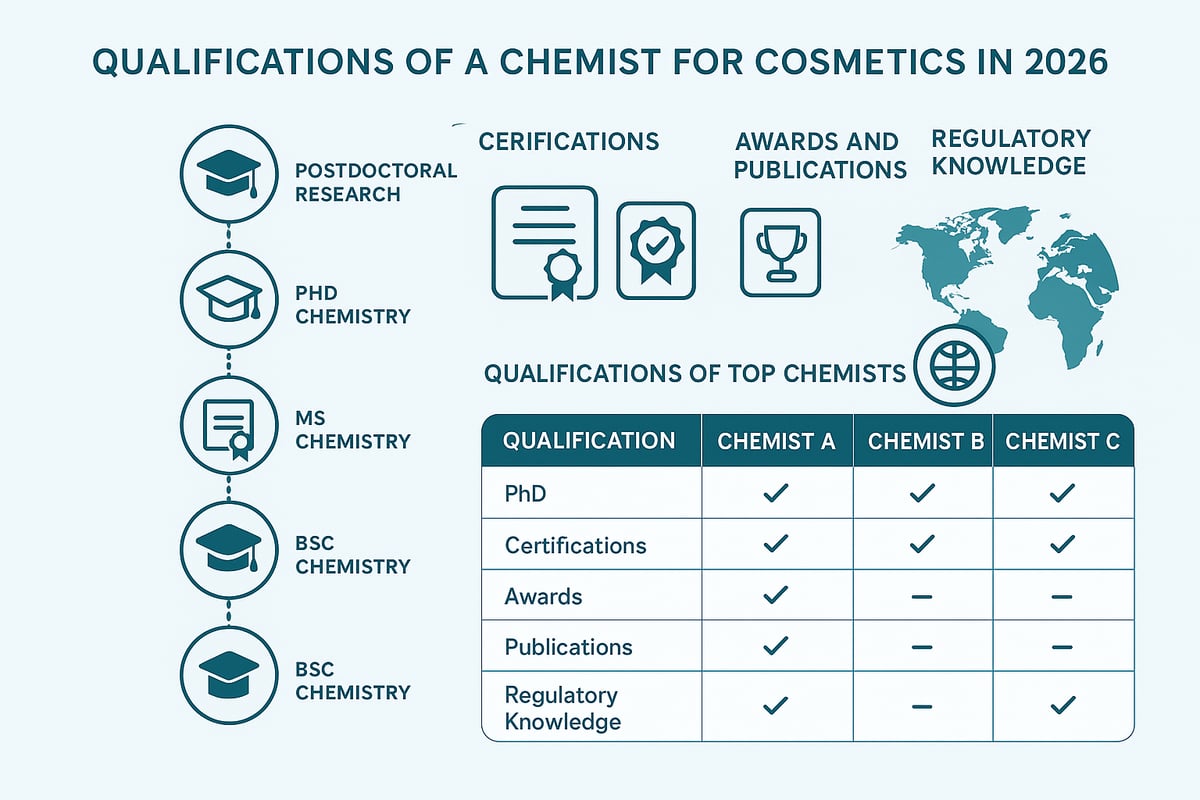
A top-tier chemist for cosmetics typically holds a BSc, MSc, or PhD in chemistry, cosmetic science, or a closely related field. Advanced degrees signal deep scientific understanding and research capability, which are vital for developing safe, effective products.
Specialized coursework—such as biocosmetics or green chemistry—demonstrates a commitment to staying ahead of evolving trends. Programs like the University of Cincinnati's cosmetic science offerings equip future leaders with relevant, up-to-date skills.
When evaluating a chemist for cosmetics, look for evidence of both foundational education and specialized training. These credentials form the backbone of technical expertise.
Professional Experience and Track Record
Experience is where credentials meet real-world results. A chemist for cosmetics with a robust portfolio reveals the ability to translate theory into market-ready products. Examine the number and diversity of products launched, noting any that have made a significant market impact.
Look for case studies that highlight successful problem-solving or innovation in formulation. Cross-sector experience, such as transitioning from skincare to color cosmetics, adds further value. For more on assessing experience and background, see this guide on How to Find a Cosmetic Chemist.
Certifications and Continuing Education
Certifications elevate a chemist for cosmetics, evidencing a proactive approach to professional growth. Recognized credentials—such as those from the Society of Cosmetic Chemists (SCC) or International Federation of Societies of Cosmetic Chemists (IFSCC)—signal mastery of industry standards.
Ongoing education is crucial in a field driven by rapid regulatory and scientific change. Regular training in new technologies, ingredient safety, and regulatory updates ensures your chemist for cosmetics remains a valuable asset.
Awards, Publications, and Industry Recognition
Industry accolades and published research set a chemist for cosmetics apart from the competition. Awards reflect peer recognition for innovation, while patents demonstrate a capacity for unique, proprietary developments.
Look for chemists featured in industry journals or conferences, as these professionals are often at the forefront of emerging trends and technologies. This level of recognition adds credibility and trust to your partnership.
Regulatory and Compliance Knowledge
A chemist for cosmetics must possess up-to-date knowledge of global regulations, including FDA, EU, and other international standards. Familiarity with documentation, ingredient restrictions, and safety assessments is critical for successful product launches.
Chemists experienced in regulatory compliance can help you navigate audits and avoid costly missteps. This expertise is vital in 2026, as regulations and consumer expectations continue to evolve.
Step-by-Step Process for Choosing the Right Chemist
Selecting the right chemist for cosmetics is a pivotal step in transforming your product vision into a market-ready reality. This process requires clarity, diligence, and a systematic approach to ensure you partner with a professional who can deliver both innovation and compliance. Let us walk through each critical stage, so you can confidently choose the best chemist for cosmetics and set your brand up for lasting success.
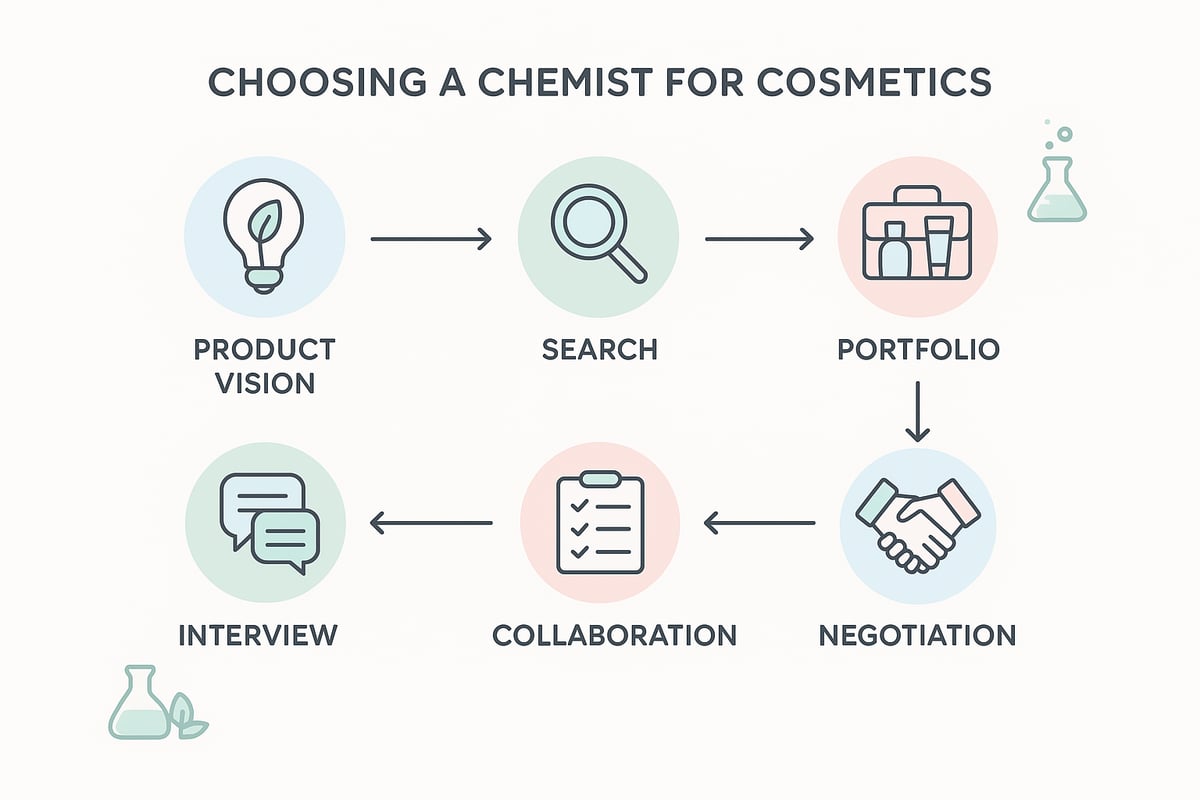
Define Your Product Vision and Requirements
Begin by articulating exactly what you want your product to achieve. Identify your target market, unique selling points, and whether your concept requires a specialist chemist for cosmetics, such as one with experience in natural ingredients, vegan formulations, or clinical actives.
- List the core product attributes you need (e.g., cruelty-free, hypoallergenic).
- Specify performance expectations and sensory qualities.
- Determine if regulatory or sustainability expertise is essential.
A clear product brief ensures your chemist for cosmetics understands your objectives from the outset, making the collaboration more efficient and aligned with your goals.
Research and Shortlist Qualified Chemists
The next step is to find chemists with relevant expertise. Use industry platforms, referrals, and professional networks to compile a list of candidates. Filtering by specialization, experience, and geographic location helps you target the most suitable chemist for cosmetics for your project.
- Search on LinkedIn, Kolabtree, and industry associations.
- Ask for referrals from trusted industry contacts.
- Use advanced filters to match your specific requirements.
Data shows that brands who invite multiple candidates significantly increase their chances of finding the ideal chemist for cosmetics for their needs.
Evaluate Portfolios and Previous Work
Reviewing a chemist's portfolio provides valuable insight into their abilities and track record. Examine case studies, product launches, and evidence of innovation. Look for a chemist for cosmetics who demonstrates expertise in formulation stability, efficacy, and market success.
- Compare products developed in your target category.
- Assess the stability and safety of previous formulations.
- Look for best-selling or award-winning projects.
For a deeper understanding of formulation steps and chemist involvement, see Steps to Formulate Safe and Effective Cosmetic Products. This can help you frame the right questions and assess the quality of a chemist for cosmetics’ work.
Conduct Interviews and Technical Assessments
Interviews allow you to gauge both technical skills and communication style. Prepare scenario-based questions that test a chemist for cosmetics on problem-solving, regulatory knowledge, and transparency in their process.
- Ask how they would troubleshoot a failed stability test.
- Discuss approaches to ingredient sourcing and compliance.
- Evaluate their ability to explain technical concepts clearly.
A strong chemist for cosmetics should articulate solutions, demonstrate up-to-date knowledge, and show openness to feedback during the interview.
Check References and Client Testimonials
References provide crucial insights into a chemist for cosmetics’ reliability, collaboration, and support post-launch. Reach out to previous clients and ask targeted questions about their experience.
- Inquire about timeliness and adherence to project milestones.
- Assess communication and responsiveness.
- Ask about support with regulatory documentation and troubleshooting.
Positive testimonials, especially those highlighting a chemist for cosmetics’ role in scaling product lines, are strong indicators of a dependable partner.
Assess Cultural Fit and Collaboration Style
Successful partnerships hinge on more than technical skill. Ensure your chemist for cosmetics shares your brand values and fits your preferred working style.
- Discuss expectations for communication and feedback frequency.
- Clarify whether you need remote or in-house collaboration.
- Ask about experience working with cross-functional teams (e.g., marketing, design).
A chemist for cosmetics who adapts to your workflow and values fosters smoother collaboration and more creative outcomes.
Negotiate Terms, IP Ownership, and Project Scope
Finalize your partnership by clearly outlining intellectual property rights, deliverables, and support expectations. Ensure your contract with the chemist for cosmetics protects your unique formulation and business interests.
- Specify ownership of formulations and prototypes.
- Set clear milestones, payment schedules, and communication channels.
- Include confidentiality clauses and post-launch support details.
A well-structured agreement ensures both you and your chemist for cosmetics are aligned, reducing risk and paving the way for a productive collaboration.
Regulatory, Safety, and Sustainability Considerations
Navigating the complex landscape of cosmetic product development in 2026 requires more than just creativity. Brands must partner with a chemist for cosmetics who deeply understands regulation, safety protocols, and sustainability. These factors are central to launching products that are not only innovative but also compliant and trusted by consumers.
Navigating Global Cosmetic Regulations in 2026
In 2026, the regulatory environment for beauty products is highly dynamic. A chemist for cosmetics must stay current on evolving requirements from authorities like the FDA in the US, EU Cosmetics Regulation, and ASEAN.
Recent regulatory updates include new ingredient restrictions and more detailed labeling standards. For example, stricter rules around allergen disclosure have impacted formulation strategies. A skilled chemist for cosmetics helps brands interpret these changes and adjust formulations accordingly.
Collaboration between R&D and regulatory experts is now essential. Brands rely on their chemist for cosmetics to proactively identify compliance risks early, ensuring smoother market entry and minimizing costly delays.
| Regulatory Body | Region | Key Focus Areas |
|---|---|---|
| FDA | USA | Safety, labeling, GMP |
| EU Regulation | Europe | Ingredient bans, claims |
| ASEAN | Asia-Pacific | Regional harmonization |
A proactive approach to regulations is a must for any successful cosmetics launch.
Ensuring Product Safety and Efficacy
Product safety and effectiveness are non-negotiable in today's market. A chemist for cosmetics conducts rigorous safety assessments, stability testing, and clinical validation to back up product claims.
Testing protocols include:
- Stability tests for shelf life and packaging compatibility
- Microbial and allergen screening
- Clinical trials for efficacy claims
Documentation is critical. Regulatory audits require detailed records of testing, formulation changes, and batch releases. A chemist for cosmetics ensures all data supports claims like "dermatologist-tested" or "hypoallergenic."
This diligence builds consumer trust and reduces the risk of recalls or legal challenges. By working closely with a chemist for cosmetics, brands can confidently bring safe, effective products to market.
Sustainable and Ethical Formulation Practices
Sustainability is shaping every stage of product development. Modern consumers expect eco-friendly, cruelty-free, and vegan options. A chemist for cosmetics brings expertise in sourcing sustainable ingredients, minimizing environmental impact, and adopting green chemistry principles.
Key strategies include:
- Using biodegradable or upcycled ingredients
- Selecting suppliers with ethical certifications
- Designing formulas for minimal waste
According to Beauty Industry Trends 2026, upcycling and circularity are now mainstream, pushing chemists to innovate with repurposed materials and packaging solutions.
A chemist for cosmetics plays a vital role in helping brands achieve sustainability goals while maintaining performance and compliance.
Intellectual Property and Confidentiality
Protecting your unique formulations is essential in a competitive market. When working with a chemist for cosmetics, clear agreements around intellectual property (IP) and confidentiality are critical.
Best practices include:
- Signing robust non-disclosure agreements (NDAs)
- Defining IP ownership in contracts
- Outlining procedures for patent applications
A chemist for cosmetics with experience in proprietary blends can guide brands through the patent process. This ensures your innovations remain exclusive and protected from imitation.
Real-world examples show that brands who secure their IP early often gain a competitive edge and attract greater investor interest.
Risk Management and Quality Assurance
Even with the best planning, unexpected challenges can arise. A chemist for cosmetics is instrumental in developing risk management protocols and maintaining strict quality assurance (QA) standards.
Key QA steps:
- Batch testing for consistency
- Continuous monitoring for adverse reactions
- Documented recall procedures
Regular audits, process checks, and transparent reporting help brands respond quickly to any issues. By prioritizing quality and risk management, a chemist for cosmetics safeguards both the brand's reputation and consumer safety.
A structured QA approach ensures products remain reliable from lab sample to store shelf.
How The INCI Lab Supports Cosmetic Brands with Expert Chemists
Selecting the right chemist for cosmetics can define a brand’s future. The INCI Lab stands out as an award-winning, science-led partner dedicated to helping brands—from ambitious startups to global leaders—bring their cosmetic visions to life. With a deep bench of expert chemists for cosmetics, The INCI Lab bridges the gap between innovation and market success.
Tailored Pathways for Every Brand
The INCI Lab offers three clear pathways to support diverse brand needs:
- Accelerator: Rapid customization for those wanting to launch quickly with a unique edge.
- Visionary: Full bespoke formulation and complete IP ownership, ideal for brands seeking a signature product.
- Ready-to-Go: Fast-track solutions leveraging proven formulas for speedy market entry.
Each pathway connects brands with the right chemist for cosmetics, ensuring specialized expertise at every project phase.
Eco-Friendly Innovation and Full-Service R&D
Sustainability is at the heart of The INCI Lab’s approach. Their chemists for cosmetics prioritize eco-friendly, cruelty-free, and high-performance formulations. From ingredient sourcing to packaging choices, every step is designed to minimize environmental impact.
The INCI Lab provides full-service R&D, guiding brands from concept through regulatory compliance, troubleshooting, and market launch. Their team’s regulatory knowledge ensures global standards are met, reducing risks and accelerating approvals.
Unique Benefits and Client Success Stories
What sets The INCI Lab apart? Brands retain full intellectual property ownership, enjoy flexible engagement models, and receive comprehensive support throughout the journey. Chemists for cosmetics at The INCI Lab collaborate closely with marketing and design teams, ensuring product-market fit and technical excellence.
Real-world success stories highlight this impact. For example, one indie skincare brand scaled nationally after launching a best-selling serum formulated by The INCI Lab’s expert team. For a closer look at how a chemist for cosmetics can create a truly unique product, explore their Unique Custom Formulations for Cosmetics page.
How to Get Started
Launching your next cosmetic innovation is simple. Begin with a free strategy call, receive tailored project scoping, and benefit from ongoing guidance from a dedicated chemist for cosmetics. The INCI Lab’s expert-led process gives brands the confidence to innovate, comply, and grow.
Building a Successful, Long-Term Partnership with Your Chemist
Creating a thriving relationship with your chemist for cosmetics is foundational to product innovation and brand growth. A strong partnership balances clear communication, mutual respect, and shared goals, ensuring every project phase—from ideation to launch—runs smoothly.
Setting Clear Expectations and Communication Channels
Begin by establishing precise expectations with your chemist for cosmetics. Detailed briefs outlining your product goals, performance criteria, and target audience set a clear foundation. Open communication channels, such as regular video calls, emails, or project management tools, foster transparency and rapid feedback.
- Use shared documentation platforms for easy access to formulas and updates.
- Schedule weekly or biweekly check-ins to monitor progress.
- Encourage honest feedback to resolve minor issues before they escalate.
A chemist for cosmetics who understands your vision and communicates proactively will help you avoid misunderstandings and accelerate development.
Managing Timelines, Budgets, and Milestones
Effective project management is essential when working with a chemist for cosmetics. Develop a realistic timeline for research, formulation, testing, and scale-up, accounting for potential delays like ingredient shortages or regulatory reviews.
- Break the project into clear milestones, such as prototype completion or first stability test.
- Utilize tools like Gantt charts or Trello boards to track progress.
- Set a flexible budget, allowing for unexpected expenses.
Transparent discussions about timelines and finances with your chemist for cosmetics will keep projects on track and minimize costly surprises.
Supporting Innovation and Continuous Improvement
Encourage your chemist for cosmetics to contribute fresh ideas and adopt emerging technologies. Foster a culture of ongoing education, enabling exploration of novel ingredients, formulation techniques, and digital tools.
For example, many brands now leverage AI-driven formulation and data analytics to fast-track product development. Referencing AI in Cosmetics Industry Statistics can provide insight into how technology is shaping innovation and competitiveness in the sector.
- Host regular brainstorming sessions to discuss trends.
- Support attendance at industry conferences and training.
- Evaluate new processes that enhance product performance or sustainability.
A forward-thinking chemist for cosmetics will keep your brand at the forefront of market trends.
Scaling Up: From Lab Sample to Commercial Production
The transition from laboratory prototype to commercial scale is a critical phase for any brand working with a chemist for cosmetics. Your chemist should guide the tech transfer, pilot batching, and manufacturing processes to ensure consistency and quality.
- Confirm that all documentation and test results meet regulatory standards.
- Collaborate on batch testing and quality assurance protocols.
- Plan for post-launch support to address potential production issues.
With a reliable chemist for cosmetics, you can confidently scale up, knowing your product quality and brand reputation are protected.
Future Trends in Cosmetic Chemistry and Formulation
The future of cosmetic chemistry is rapidly evolving. As brands compete for market share, staying ahead means anticipating the trends shaping tomorrow’s beauty products. Understanding how a chemist for cosmetics adapts to these shifts is essential for long-term brand success.
The Rise of AI and Digital Tools in Formulation
Artificial intelligence is revolutionizing how a chemist for cosmetics approaches product development. AI-powered platforms now assist with ingredient selection, simulate stability, and predict consumer preferences. This technology accelerates R&D cycles, reduces trial-and-error, and helps brands create products tailored to precise needs.
Many leading chemists are reskilling to keep pace with these digital advances. Programs like the SCC Certificate Program equip professionals with expertise in new formulation software and regulatory tech tools. These skills empower chemists to deliver smarter, safer, and more innovative solutions for brands.
Personalization and Niche Formulation
Consumers now expect products customized for their unique skin, hair, and lifestyle. A chemist for cosmetics is at the forefront of developing adaptive formulas for diverse needs, including sensitive skin, inclusive shade ranges, and region-specific concerns.
This personalized approach relies on data-driven insights and advanced ingredient libraries. The surge in personalized skincare is driving demand for chemists skilled in rapid prototyping and niche product development. Brands working with a chemist for cosmetics can quickly respond to microtrends and launch targeted collections that stand out in crowded markets.
The Expanding Role of Sustainability and Clean Beauty
Sustainability is no longer optional. A chemist for cosmetics must prioritize eco-friendly ingredients, green chemistry, and transparent sourcing. Regulatory bodies and consumers alike demand clear proof of environmental responsibility, pushing brands to innovate at every step.
Chemists are embracing lifecycle analysis, biodegradable packaging, and upcycled materials to reduce environmental impact. Ongoing education, such as graduate certificates in cosmetic science, supports the chemist for cosmetics in adopting best practices for clean beauty. These efforts help brands achieve ambitious goals like “zero waste” and foster lasting consumer trust.
After exploring what sets expert cosmetic chemists apart and how the right partnership can elevate your formulations, you’re better equipped to turn your product vision into reality. At The INCI Lab, we’re passionate about guiding both new and established brands through every step of the journey, from concept to shelf ready solutions. If you’re ready to build high performance, eco friendly products that stand out in the 2026 beauty landscape, let’s take the next step together. You can Start Your Product Journey and see how expert support makes all the difference.