
The beauty industry in 2026 is not just about looking good, it is a dynamic, high-tech, and rapidly evolving global powerhouse. With billions in growth and an ever-expanding influence, the beauty industry is capturing the world’s attention like never before.
This guide uncovers how technology, shifting consumer values, and powerful new market forces are redefining everything from product innovation to brand strategy. Explore the latest on market growth, consumer trends, technological advancements, sustainability, new business models, and future predictions.
Curious how brands and entrepreneurs can thrive in this competitive space? Dive in for actionable insights and data-driven analysis designed to help you succeed in the beauty industry today.
The Global Beauty Market Landscape in 2026
The beauty industry in 2026 stands at a pivotal juncture, fueled by innovation, shifting consumer behaviors, and global expansion. With a projected market value between $590 billion and $677 billion, the sector commands attention as one of the most dynamic forces in the global economy. This remarkable growth, though slightly tempered compared to previous years, reflects both the maturity and the resilience of the beauty industry.
Global Beauty Market at a Glance
| Metric | Value (2026 Projection) |
|---|---|
| Market Size | $590–$677 billion |
| Annual Growth Rate | 5% (down from 7% in 2022–24) |
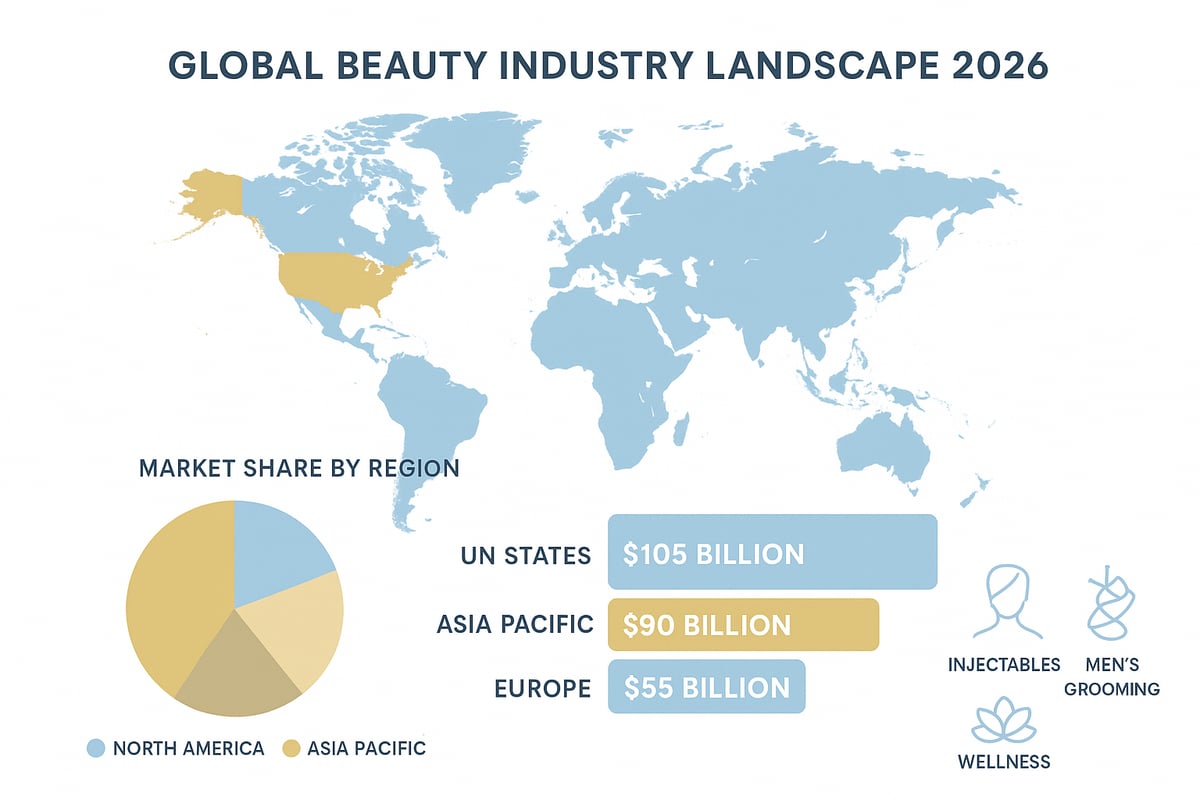
| North America + APAC | 70% of global market share |
| US Market Size | $105 billion |
| Adjacent Categories | +$820 billion (ecosystem) |
| Non-surgical Procedures | Up 40% since 2020 |
The annual growth rate of the beauty industry has moderated to 5%, a shift from the rapid 7% seen in the years prior. This deceleration signals growing market saturation, especially in established regions. North America and Asia Pacific together command an impressive 70% of global market share, with the United States alone accounting for $105 billion in sales.
Adjacent categories are fueling further expansion. Esthetic injectables, men’s grooming, and wellness services collectively add an estimated $820 billion to the broader beauty industry ecosystem. These segments appeal to a diverse consumer base, driving both volume and innovation.
Notably, the beauty industry is witnessing a significant shift as mass and “masstige” brands gain share over traditional prestige labels. Consumers are increasingly seeking high quality at accessible price points, prompting legacy companies to adapt. For instance, industry giants like L’Oréal, Estée Lauder, and Unilever have accelerated acquisitions of science-backed and indie brands to diversify their portfolios and stay ahead of evolving trends.
Economic factors also shape the landscape. During downturns, the “lipstick effect” becomes evident, as consumers indulge in affordable luxuries instead of high-ticket items. This phenomenon supports continued spending within the beauty industry, even as overall discretionary budgets tighten.
A striking trend is the rise in non-surgical cosmetic procedures. According to the International Society of Aesthetic Plastic Surgery, these procedures increased by 40% between 2020 and 2024. This growth underscores the integration of wellness, aesthetics, and personal care within the broader beauty industry.
For a comprehensive analysis of market projections, growth dynamics, and regional trends, refer to the Global beauty market projected to reach $580 billion by 2027, which provides detailed insights into the evolving beauty industry.
Evolving Consumer Behavior and Demographics
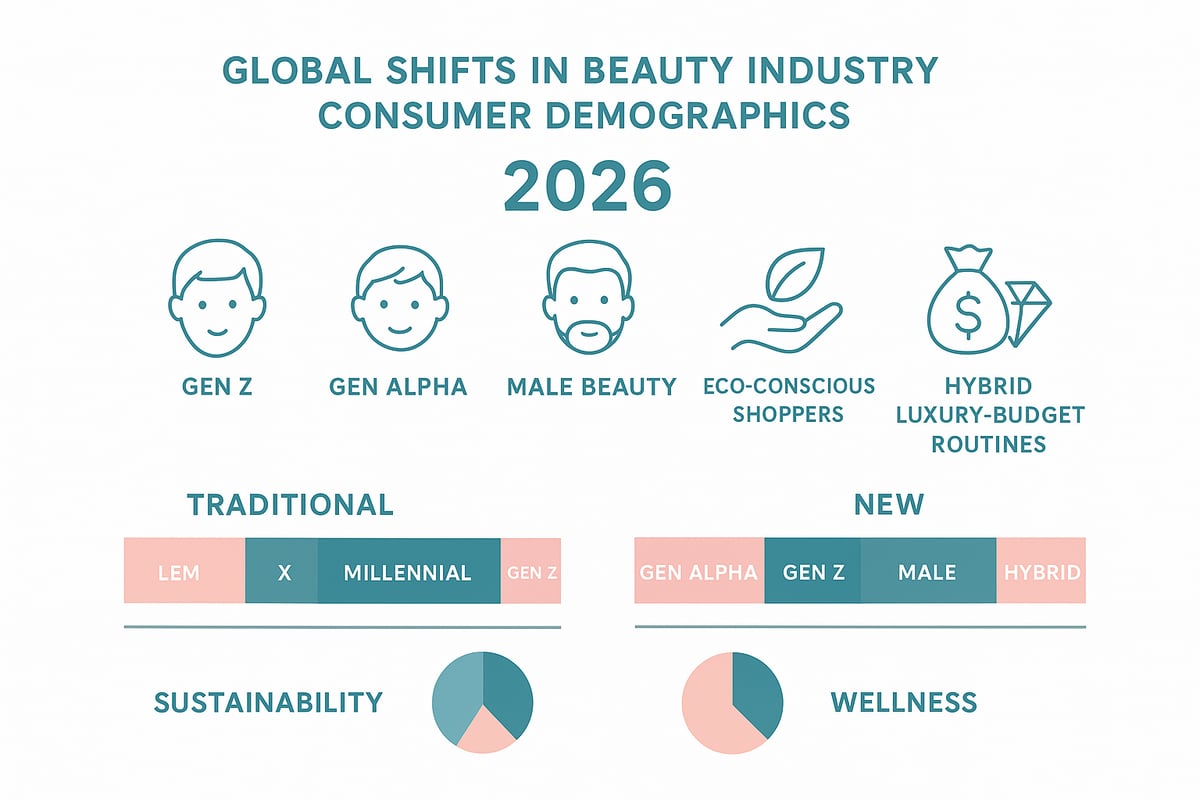
The beauty industry in 2026 is witnessing a remarkable transformation in consumer behavior and demographics. Traditional segmentation by age, gender, or income is no longer a reliable predictor of purchasing patterns. Instead, the market is defined by deeply personal values, lifestyle priorities, and evolving attitudes.
A notable trend is the rise of male consumers actively engaging with skincare and even subtle makeup, signaling a shift in what self-care means across genders. Early adoption is also happening among Generation Alpha, with children as young as eight incorporating skincare routines, as seen in retailers like Ulta Beauty.
Consumers today are increasingly segmented by attitude rather than demographics. Values such as sustainability, scientific credibility, and inclusivity drive purchasing decisions. For example, 90% of Gen Z consider a brand's societal impact essential, and 75% seek sustainable options. This trend is not limited to younger generations; wellness and beauty are merging, with skincare now viewed as an integral part of holistic health routines.
Hybrid shopping habits are also redefining the beauty industry. Many consumers mix luxury and budget-friendly products, prioritizing performance, ethics, and price-to-benefit over brand prestige. Mass and masstige segments have gained five percentage points globally in the last five years, reflecting this shift. Interestingly, only 67% of consumers view fragrances as affordable, compared to 83% for hair care.
For a deeper dive into these generational shifts and what drives modern beauty shoppers, unlock the secrets of consumer behavior explores the nuanced preferences of Gen Z and Gen Alpha.
Social Media and Digital Influence
Social media platforms have become the epicenter of trend discovery and product recommendations in the beauty industry. Influencers, especially micro-influencers, and peer-generated content now play a leading role in shaping consumer perceptions and driving sales.
The rapid pace of trend cycles on platforms like TikTok and Instagram means consumers are always seeking the next viral product. This constant churn has made traditional influencer partnerships less effective, with brands shifting focus toward authentic peer reviews and community-driven engagement. Social commerce has surged, allowing direct purchasing through livestreams and shoppable posts.
Brands like Charlotte Tilbury and Bubble are prime examples of those leveraging social media's influence to achieve growth. They engage users with interactive content, tutorials, and real-time feedback, making the beauty industry more accessible and dynamic.
Consumers now expect immediate access to product information, reviews, and even virtual try-ons. This digital shift ensures that the beauty industry remains agile, responsive, and closely attuned to consumer desires.
Inclusivity and Personalization
Inclusivity is now a core expectation rather than a differentiator in the beauty industry. Consumers demand diverse shade ranges, gender-neutral products, and adaptive marketing that reflects real-world diversity.
Personalized beauty experiences are also gaining ground. Advances in AI and digital diagnostics allow brands to offer tailored product recommendations and customizable routines. For example, Sephora has expanded its advisory team to include male beauty experts, and many brands now provide bespoke formulations.
This focus on inclusivity and personalization not only broadens the beauty industry's appeal but also builds deeper consumer trust. Brands that embrace these values are positioned to thrive, setting new standards for what it means to feel seen and catered to in the beauty industry.
Technology and Innovation Transforming Beauty
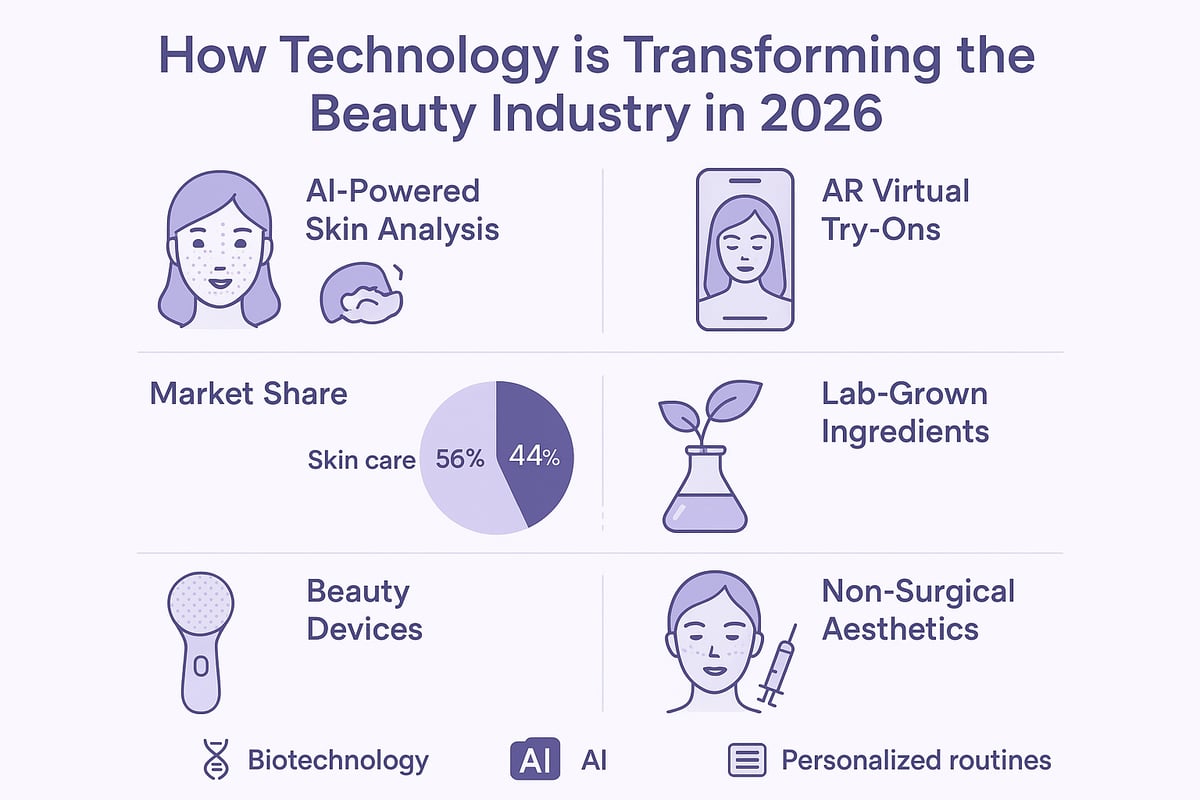
Technology is redefining the beauty industry at a pace never seen before. In 2026, innovation is not an option but a necessity for brands aiming to remain competitive. From AI-driven solutions to biotech breakthroughs, the entire beauty ecosystem is undergoing a digital transformation.
AI-Driven Personalization and Augmented Reality
Personalization is at the core of the modern beauty industry. Artificial intelligence now powers everything from virtual try-ons to real-time skin analysis, making product recommendations more accurate than ever. Consumers can upload a selfie and instantly see how a lipstick shade or foundation will look on their skin, reducing guesswork and returns.
Augmented reality further elevates the customer journey. Shoppers interact with digital mirrors in stores and immersive apps at home, experiencing products before purchase. This fusion of AI and AR is increasing conversion rates and boosting consumer satisfaction.
The impact of artificial intelligence extends to product development as well. Brands are leveraging data from millions of skin profiles to create formulas tailored to diverse needs. For a deeper dive into how AI is revolutionizing personalized beauty, explore AI-driven personalization in cosmetics.
Biotechnology and Science-Forward Brands
Biotechnology is rewriting the rules of the beauty industry. Lab-grown ingredients and precision fermentation are enabling the creation of clean, consistent, and sustainable formulations. This not only reduces reliance on traditional supply chains but also minimizes the environmental footprint.
Consumers are demanding proof of efficacy. Transparency around ingredient sourcing and safety is now standard. Brands like The Ordinary have set benchmarks by highlighting clinical evidence and clear labeling, making science a key selling point.
A growing number of companies are investing in research and development to deliver products that offer both performance and peace of mind. Biotech-driven brands are quickly gaining market share, as consumers seek authenticity and visible results in their routines.
Beauty Ingestibles, Devices, and Non-Surgical Aesthetics
Innovation in the beauty industry is expanding beyond topical products. Beauty ingestibles, such as collagen pills and skin-boosting supplements, are becoming mainstream. Consumers are integrating these solutions as part of holistic wellness routines.
At-home beauty devices are also surging in popularity. LED face masks, microcurrent tools, and smart cleansing gadgets bring professional-grade results to the comfort of home. Demand for efficacy and convenience is fueling this growth.
Non-surgical aesthetics like botox, fillers, laser treatments, and chemical peels are seeing a sharp uptick. Data shows a 40 percent increase in non-surgical procedures from 2020 to 2024, reflecting a shift toward minimally invasive solutions. Clinics are blending dermatology, diagnostics, and wellness, creating new experiences for consumers seeking both beauty and health benefits.
Blurring Lines: Beauty, Medicine, and Regulation
The boundaries between the beauty industry and medicine are becoming less distinct. Clinics now offer services that combine traditional skincare with medical diagnostics, including blood and stool testing for skin health. This integrated approach delivers personalized, data-driven recommendations.
With the rise of AI-powered diagnostics and digital health tools, privacy and regulatory compliance are top priorities. Authorities in the US, EU, and Asia are tightening rules to ensure safety, efficacy, and data protection.
As technology continues to evolve, brands must balance innovation with responsibility. Staying ahead requires agility, investment in research, and a commitment to ethical practices. The beauty industry’s future will be shaped by those who adapt quickly and prioritize consumer trust.
Sustainability, Ethics, and the New Definition of Value
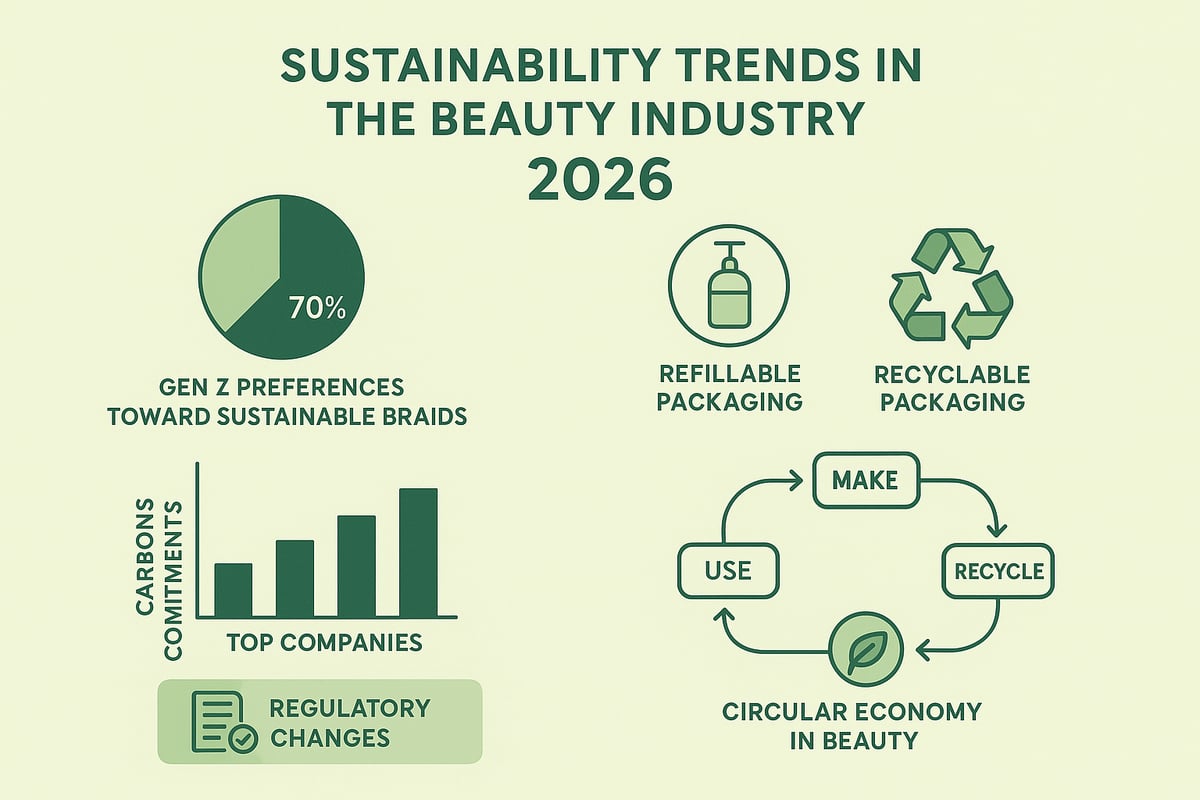
Sustainability is no longer an optional add-on in the beauty industry. Today’s consumers, led by Gen Z, expect brands to prioritize eco-friendly practices as a baseline standard. This shift has redefined what value means for shoppers, who increasingly weigh ethical and environmental impact alongside product performance.
A major transformation in the beauty industry is the evolution of clean beauty. It is moving beyond simple “free-from” claims toward products that offer proven safety, efficacy, and scientific validation. Brands must now back up marketing with robust data and transparent ingredient sourcing, addressing concerns about both personal health and planetary well-being. According to recent research, 75% of Gen Z prefer sustainable brands, and 44% see beauty as a key part of their overall wellness routines.
Packaging innovation is another area reshaping the beauty industry. Companies are developing refillable, recyclable, and zero-waste packaging to reduce their environmental footprint. Some brands are investing in circular economy models, designing products and operations that minimize waste and support long-term resource cycles. For example, L’Oréal and Estée Lauder have rolled out refill stations and carbon-neutral initiatives in flagship stores.
| Brand | Packaging Innovation | Circular Economy | Carbon Neutrality |
|---|---|---|---|
| L’Oréal | Refillable pods | Yes | Yes |
| Estée Lauder | Recyclable bottles | Yes | Yes |
| P&G | Zero-waste initiatives | Yes | Yes |
Ethical sourcing and transparency are now essential pillars in the beauty industry. Consumers demand to know where ingredients come from and how workers are treated. Regulatory bodies in the EU, U.S., and Asia are tightening rules on ingredient safety, labeling, and greenwashing, making compliance a competitive advantage. Brands must now substantiate their sustainability and ethical claims to avoid reputational risks.
Brand accountability is also under the microscope. Authenticity and purpose-driven marketing are critical for building trust, especially as more consumers research a company’s impact before making a purchase. Leading players such as L’Oréal, Estée Lauder, and P&G now spotlight sustainability not only in product development but also in their storytelling and campaigns. The rise of indie and science-backed brands is accelerating this change, as these newcomers leverage transparency and innovation to win market share.
For a deeper look at how science and sustainability are shaping the future, explore this guide on 2025 global beauty trends. If you want to understand the growing importance of ethics and cruelty-free practices, see why cruelty-free in the beauty industry matters more than ever.
The beauty industry is entering a new era where sustainability, ethics, and value are inseparable. Companies that lead in these areas are not just meeting consumer demands, they are setting the standards for the industry’s future.
The Future of Beauty: Business Models, Retail, and Predictions for 2026
The beauty industry in 2026 is a landscape shaped by agility, innovation, and a relentless focus on consumer experience. Brands must navigate a marketplace where digital, physical, and social channels are seamlessly integrated, and success hinges on adaptability and values alignment.
Omnichannel Evolution and DTC Acceleration
Consumers now expect a unified shopping journey across every touchpoint. The beauty industry has responded by blending online and offline experiences, with brands investing in seamless omnichannel platforms. Direct-to-consumer (DTC) models have surged, enabling brands to collect valuable data and personalize offerings.
Social commerce is a critical piece of this puzzle. Platforms like Instagram and TikTok allow brands to engage directly, driving conversion through interactive content and shoppable posts. This integration is reshaping loyalty programs and building stronger customer relationships, keeping the beauty industry at the forefront of retail innovation.
Retail Innovation: Experiential and Tech-Enabled Stores
Physical retail is not fading, but evolving. The beauty industry is investing in experiential stores and pop-ups that immerse customers in brand storytelling. AI-powered consultations, smart mirrors, and virtual try-ons are standard features, enhancing both discovery and personalization.
Brands like Sephora set the benchmark with tech-enabled counters and customized services. This approach creates memorable in-store experiences, bridging the gap between traditional retail and digital convenience. As a result, the beauty industry continues to attract diverse consumer segments and drive higher engagement.
Adaptive Pricing and Fragmented Marketing
Inflation and economic uncertainty have forced the beauty industry to rethink pricing strategies. Dynamic pricing models and value-driven promotions are becoming standard. Brands must balance affordability with perceived value, especially as consumers scrutinize every purchase.
Marketing is now highly fragmented. Micro-communities and niche influencers wield significant influence, and authentic storytelling outperforms mass campaigns. The beauty industry thrives on agility, using real-time data and feedback to tailor messages and offers for maximum impact.
M&A, Consolidation, and New Entrants
The beauty industry is witnessing a wave of mergers and acquisitions as established players seek growth and relevance. Major brands are acquiring innovative startups, celebrity-backed lines, and science-driven companies. For example, e.l.f. Beauty’s billion-dollar acquisition of celebrity brands demonstrates the scale of consolidation.
Non-traditional entrants are also making waves. Tech firms, luxury fashion houses, and wellness brands are launching beauty lines, bringing fresh perspectives and intensifying competition. This dynamic environment is redefining what it means to be a leader in the beauty industry.
Regulatory Outlook and Predictions
Stricter regulations are on the horizon for the beauty industry. Authorities in the EU, US, and Asia are tightening rules around product claims, data privacy, and sustainability disclosures. Brands must adapt quickly to avoid compliance risks and maintain consumer trust.
Looking ahead, the beauty industry is expected to grow, but at a slower pace. Agility, scientific credibility, and alignment with evolving consumer values will determine which brands stand out. For a visual perspective on upcoming trends, watch this 2026 cosmetic trend predictions video to see where the industry is headed.
Opportunities for Entrepreneurs and Emerging Brands
The beauty industry in 2026 offers unprecedented opportunities for entrepreneurs. Digital tools, contract manufacturing, and social selling have lowered barriers to entry. Success requires a unique value proposition, whether in science, sustainability, or personalization.
Startups are leveraging R&D partners and custom formulation labs to deliver innovative products. Learn how you can revolutionize your brand with custom formulations and stand out in a crowded marketplace. Navigating compliance and scaling globally remain challenges, but the potential for impact is greater than ever.
As you explore how innovation, sustainability, and shifting consumer values are shaping the beauty industry in 2026, you might be wondering how to carve out your own space in this dynamic market. Whether you’re an entrepreneur or an established brand, the next step is about turning insights into action. If you’re ready to translate these trends into a high performance, eco friendly product that truly stands out, let’s take the first step together. Your journey to create something remarkable starts here—Start Your Product Journey.