
Selling a cosmetic product in Australia requires three things: every ingredient must be on the AICIS Inventory or introduced under one of the AICIS categories, the product must not make therapeutic claims that move it into TGA territory, and the label must comply with the Trade Practices Cosmetic Information Standard. Miss any of these and your launch stalls — or worse, retailers reject your product after you have already manufactured it. This guide breaks down what indie beauty founders actually need to do, in the order you need to do it.
What is AICIS and why does it apply to my cosmetic brand?
AICIS — the Australian Industrial Chemicals Introduction Scheme — is the Australian Government regulator for industrial chemicals, which includes every ingredient in a cosmetic product. AICIS replaced NICNAS in July 2020 and is administered by the Department of Health, Disability and Ageing. If you introduce (manufacture or import) a cosmetic ingredient into Australia, AICIS applies to you — even if you are a brand owner buying finished product from a contract manufacturer.
AICIS uses a five-category introduction system based on the risk profile of each chemical. The categories are Listed, Exempted, Reported, Assessed, and Commercial Evaluation. Most cosmetic ingredients used by indie brands fall under Listed (the ingredient is already on the AICIS Inventory) or Exempted (the ingredient meets criteria for low-risk introduction without pre-registration). You can search the AICIS Inventory for free at industrialchemicals.gov.au.
Practical takeaway: before you finalise a formula, every INCI on your ingredient list should be checked against the AICIS Inventory. If an ingredient is not listed, you cannot use it in your product until you have introduced it through one of the other categories — which can take weeks to months and cost thousands of dollars.
What is the TGA and when does it apply to skincare?
The Therapeutic Goods Administration (TGA) regulates medicines, medical devices, and any product that makes a therapeutic claim. The line between a cosmetic (regulated by AICIS) and a therapeutic good (regulated by TGA) is drawn based on the claims you make, not the ingredients themselves.
A moisturiser that says "hydrates skin" is a cosmetic. The same moisturiser saying "treats eczema" becomes a therapeutic good and must be registered on the Australian Register of Therapeutic Goods (ARTG) before it can be sold. SPF claims, anti-acne claims, anti-fungal claims, and any claim to treat, cure, or prevent a disease or condition all move a product into TGA territory.
For indie skincare brands, the safest position is to write claims that describe what the product does cosmetically — brightens, hydrates, soothes the appearance of, supports skin barrier — rather than what it treats or cures. If you genuinely want to make therapeutic claims (for example, an SPF or an anti-dandruff shampoo), budget for TGA registration: it typically adds NZ$15,000–50,000 and 6–18 months to launch timelines.
What about labelling — what must be on an Australian cosmetic label?
The Australian Consumer Law Cosmetic Information Standard requires the ingredient list, the country of origin, and net contents to be visible on every cosmetic sold in Australia. The ingredient list must use INCI naming (or the common name if no INCI exists), be in descending order of weight down to 1%, and list ingredients under 1% in any order.
Allergen declarations — the 26 fragrance allergens recognised internationally — should be called out when they exceed 0.001% in leave-on products or 0.01% in rinse-off products. While Australia does not yet have an enforceable 26-allergen labelling rule the way the EU does, retailers like Mecca, Adore Beauty and Sephora AU now require it as a condition of stocking your product.
What are the most common compliance mistakes indie brands make?
Across the brands we work with at The INCI Lab, five mistakes appear over and over:
1. Using an ingredient that is not on the AICIS Inventory. Often a hero active sourced from an overseas supplier turns out to be unregistered for the AU market. The formula has to be rebuilt around an alternative.
2. Writing therapeutic claims by accident. Words like "treats," "heals," "cures," "prevents," "anti-bacterial," "anti-fungal" all trigger TGA classification. Even "clinically proven to repair the skin barrier" can be challenged.
3. Translating an EU-compliant label directly to AU without checks. EU INCI lists and AU INCI lists overlap heavily but not perfectly. AU also has its own requirements around country-of-origin claims ("Made in Australia" vs "Australian Made" are legally different).
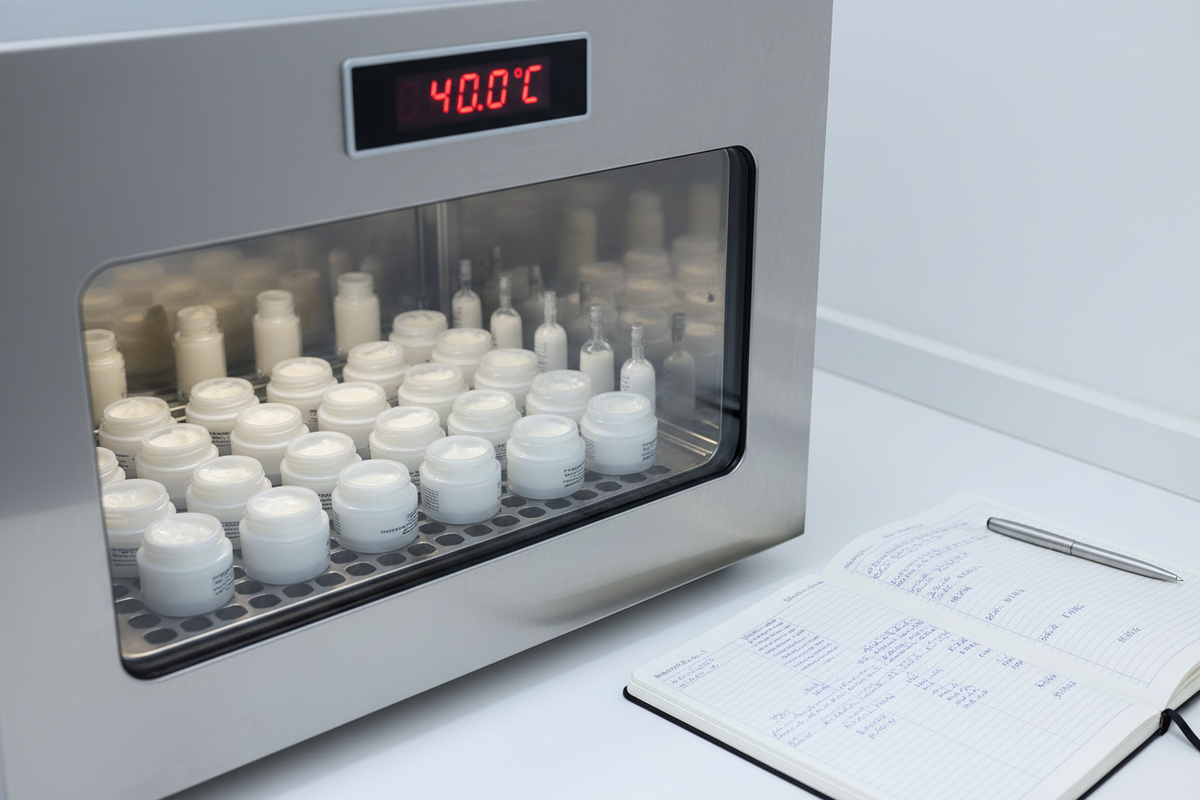
4. Skipping micro-challenge and stability testing. Retailers will not stock your product without a Certificate of Analysis (COA) and stability data. Skipping these saves money up front and adds NZ$10,000+ in recall costs if the product separates or contaminates.
5. Putting compliance off until production. By the time you have 3,000 units sitting in a warehouse, fixing a non-compliant label means restickering thousands of bottles or recalling them entirely. Compliance check at formulation stage is roughly 100× cheaper than at production stage.
What is the fastest path to AU compliance for an indie brand?
The cleanest sequence for any indie brand selling into Australia is: AICIS ingredient check → claims review → stability testing → label review → retailer compliance pack. Done in that order, total external cost typically sits between NZ$2,500 and NZ$6,000 depending on product complexity. Done in reverse — that is, formulating first and dealing with compliance at the end — the cost easily triples.
At The INCI Lab we built our Formula Review service exactly for this stage. We take your existing formula, check every ingredient against the AICIS Inventory, flag any potential TGA triggers in your draft claims, and deliver a written report with recommended ingredient swaps if needed — all within 7–10 business days. If you also need lab-validated stability data and a prototype batch, Formula Supplied takes the same formula into our Auckland lab for 12-week accelerated stability testing.
Final takeaway
AU compliance is not optional and not as expensive as most founders fear — but it is sequence-sensitive. Get your ingredients AICIS-cleared before you finalise your formula. Write claims that stay on the cosmetic side of the TGA line. Test stability before you order packaging in bulk. And get your label reviewed before you print 5,000 copies. Indie brands that respect the sequence launch in 4–6 months. Indie brands that don't, launch in 12 — or never.
References
Australian Industrial Chemicals Introduction Scheme (AICIS). Department of Health, Disability and Ageing, Australian Government. industrialchemicals.gov.au
Cosmetics and the difference between a cosmetic and a therapeutic good. Therapeutic Goods Administration. tga.gov.au
Cosmetic Information Standard. Australian Competition and Consumer Commission (ACCC). accc.gov.au
Australian Register of Therapeutic Goods (ARTG). Therapeutic Goods Administration. tga.gov.au/resources/artg