
The global beauty landscape is undergoing a seismic shift as 2026 approaches, with innovation and changing values at the forefront. New technologies, eco-conscious solutions, and evolving consumer expectations are redefining what success looks like in cosmetics.
This article uncovers the eight essential cosmetic industry trends set to shape the future, giving leaders and innovators a clear roadmap for adapting and thriving. Discover how AI-powered personalization, biotech breakthroughs, clean beauty standards, circular economy strategies, and immersive digital experiences are rewriting the rules.
Prepare to be inspired by bold advances, actionable insights, and the opportunities these trends offer. The future of beauty starts now.
The AI-Powered Personalization Revolution
Artificial intelligence is redefining what consumers expect from beauty brands. As cosmetic industry trends evolve, personalization is no longer a luxury but the baseline for success. AI-driven solutions are equipping brands to deliver highly tailored experiences, setting a new standard for product discovery and satisfaction.
AI-Driven Personalization: The New Standard
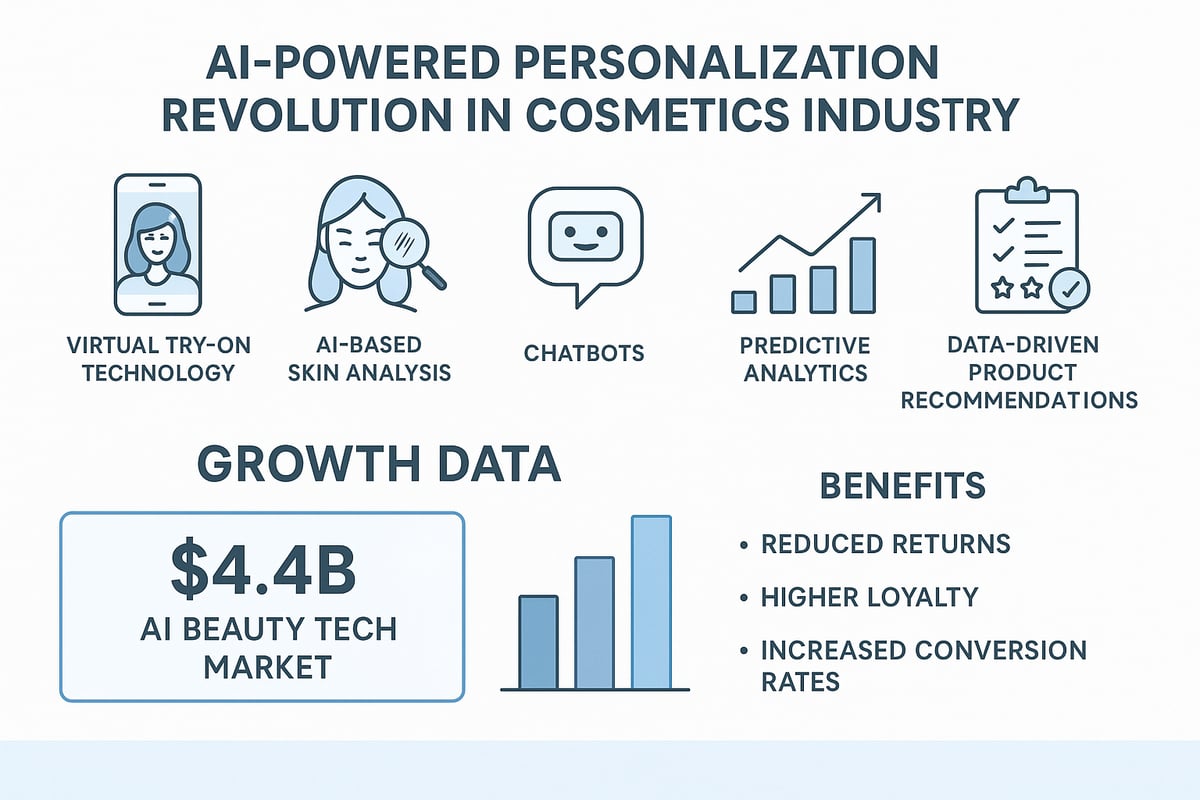
AI is at the forefront of cosmetic industry trends, enabling brands to move beyond generic product suggestions. By analyzing vast datasets, AI systems understand individual preferences, concerns, and skin types. This empowers brands to recommend products that truly fit each customer, increasing satisfaction and loyalty.
Personalization is not limited to online recommendations. In-store kiosks and mobile apps now collect and process user data in real time, delivering custom beauty routines. This shift is transforming how brands connect with their audiences, making every interaction feel bespoke.
Advanced Skin Analysis and Diagnostics
Cutting-edge skin analysis tools are revolutionizing cosmetic industry trends by leveraging computer vision and machine learning. These technologies assess skin tone, hydration, and texture with remarkable precision. The result is a diagnostic process that goes far beyond traditional consultations.
Consumers benefit from targeted solutions that address their unique skin needs. Brands, in turn, see a reduction in product returns and an increase in customer satisfaction. This scientific approach helps bridge the gap between consumer expectations and product performance.
Virtual Try-On and Enhanced Engagement
Virtual try-on technologies are another leap forward in cosmetic industry trends. Powered by generative AI, these tools let users experiment with makeup and skincare products digitally. Shoppers can see how different shades and formulas appear on their own faces before making a purchase.
This risk-free experimentation boosts engagement and conversion rates. It also provides valuable data on consumer preferences, helping brands refine their offerings. As a result, online shopping becomes more interactive and confidence-inspiring.
Table: Benefits of AI-Powered Virtual Try-On
| Benefit | Impact |
|---|---|
| Increased Engagement | Longer time spent on site |
| Higher Conversions | More purchases, less hesitation |
| Fewer Returns | Better product fit |
Predictive Analytics and Hyper-Personalization
Predictive analytics are accelerating innovation within cosmetic industry trends. By analyzing real-time data from lifestyle, environment, and even genetics, AI systems refine product formulations and marketing strategies.
This level of hyper-personalization ensures that products not only suit demographic profiles but also adapt to individual routines and climates. Brands can now anticipate consumer needs, reducing time-to-market and boosting efficacy. The result is a more agile, responsive approach to product development.
AI-Powered Support and Brand Impact
AI chatbots and virtual beauty advisors are enhancing the customer experience across all touchpoints. These digital assistants provide 24/7 support, answering questions and offering product recommendations tailored to each user.
Brands that embrace these AI tools see measurable benefits, including higher customer loyalty and reduced sampling costs. According to the latest AI in cosmetic branding insights, the beauty tech market is projected to reach $4.4 billion by 2025, growing at an 18.3% CAGR. This surge highlights the critical role of personalization in shaping the future of beauty.
Biotechnology and the Next-Gen Ingredient Revolution
Biotechnology is rapidly redefining cosmetic industry trends, unlocking a new era of ingredient innovation. Once limited by nature’s pace and the environmental cost of traditional sourcing, brands now turn to biotech for high-purity, sustainable solutions. This shift is not just a technological upgrade; it is a fundamental transformation in how beauty products are created, validated, and experienced.
The Rise of Biotech in Beauty
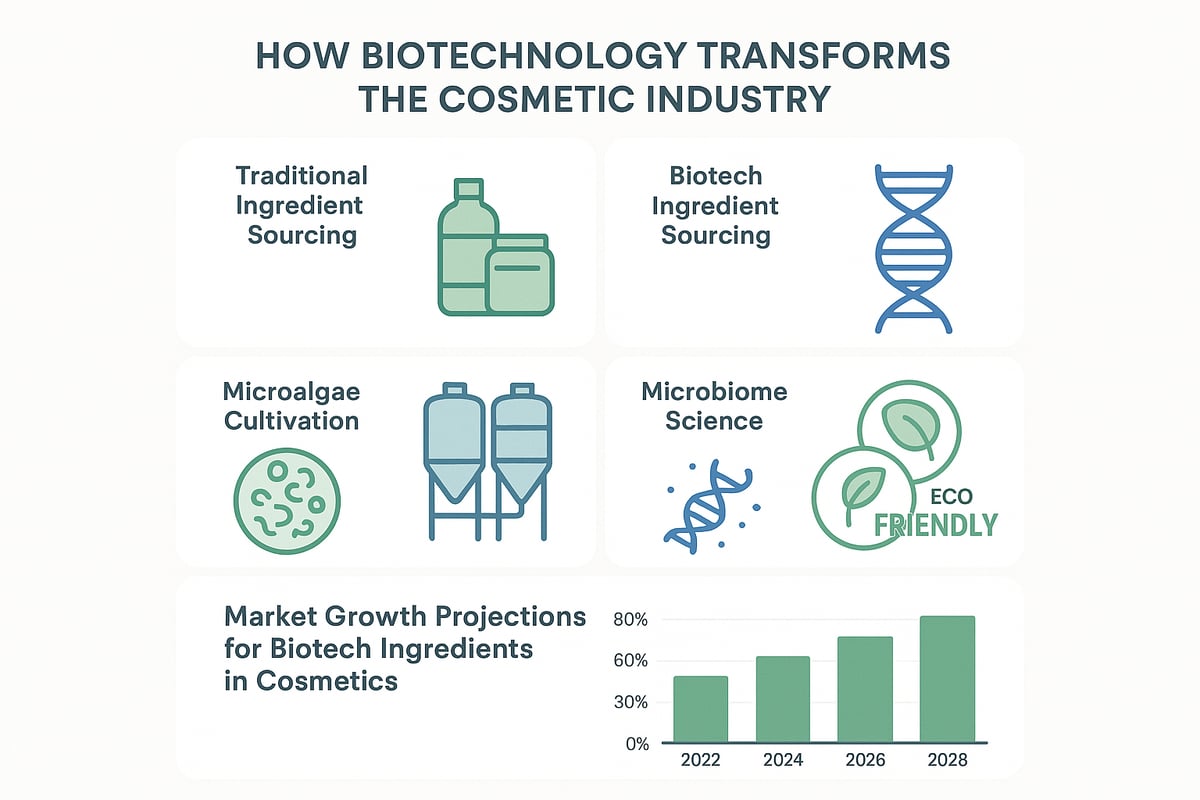
Today’s cosmetic industry trends are shaped by the need for sustainable, high-performance ingredients. Biotechnology delivers on this promise by harnessing microalgae, fermentation, and engineered microorganisms to produce actives once considered rare or resource-intensive.
Consider microalgae cultivation. This process requires minimal land and water, captures carbon from the atmosphere, and protects natural biodiversity. Fermentation, using precision bioprocessing, enables the creation of hyaluronic acid, collagen, and exotic botanicals without relying on animal or unsustainable plant sources.
| Ingredient Source | Traditional Method | Biotech Method |
|---|---|---|
| Hyaluronic Acid | Animal extraction | Fermentation |
| Squalene | Shark liver oil | Microbial synthesis |
| Rare Botanicals | Wild harvesting | Cultured in bioreactor |
These advances support the industry’s shift toward greener, more ethical production.
Microbiome Science: A New Frontier
Another breakthrough shaping cosmetic industry trends is the growing understanding of the skin’s microbiome. Advanced biotech techniques now allow brands to formulate with targeted probiotics and prebiotics, strengthening the skin barrier and promoting balance.
This scientific approach addresses consumer demand for both efficacy and transparency. By leveraging DNA sequencing and biofermentation, companies can develop formulations tailored to unique skin ecosystems, setting a new standard for product performance.
Probiotic skincare, for example, helps maintain a resilient barrier, while prebiotic ingredients nourish beneficial skin microbes. This not only improves results but also builds trust through data-driven claims.
Biotech’s Impact on Market Growth and Transparency
The momentum behind biotechnology in cosmetic industry trends is evident at global events. The In-cosmetics Global Show 2025 featured 225 new exhibitors, many focused on biotech-driven actives and formulations.
Biotech innovations enable scalable production of rare ingredients, meeting rising consumer expectations for clean, effective, and ethical products. According to industry data, the natural ingredients market is projected to reach $1,095 million by 2030, with biotech advances as a significant growth driver.
For a deeper look at how biotechnology is driving sustainable beauty innovation, see this Biotechnology in Sustainable Beauty special report.
Differentiation Through Science-Backed, Eco-Friendly Claims
Brands that embrace biotechnology within cosmetic industry trends gain a clear competitive edge. By combining scientific validation with eco-friendly sourcing, these companies appeal to a new generation of informed, values-driven consumers.
Transparency around ingredient origin, production methods, and environmental impact is no longer optional. It is essential for building credibility, loyalty, and long-term growth.
In summary, biotechnology is not just a trend but a cornerstone of the future beauty landscape. Its ability to deliver sustainable, high-efficacy ingredients positions it at the heart of cosmetic industry trends shaping 2026 and beyond.
Clean Beauty and Science-Backed Transparency
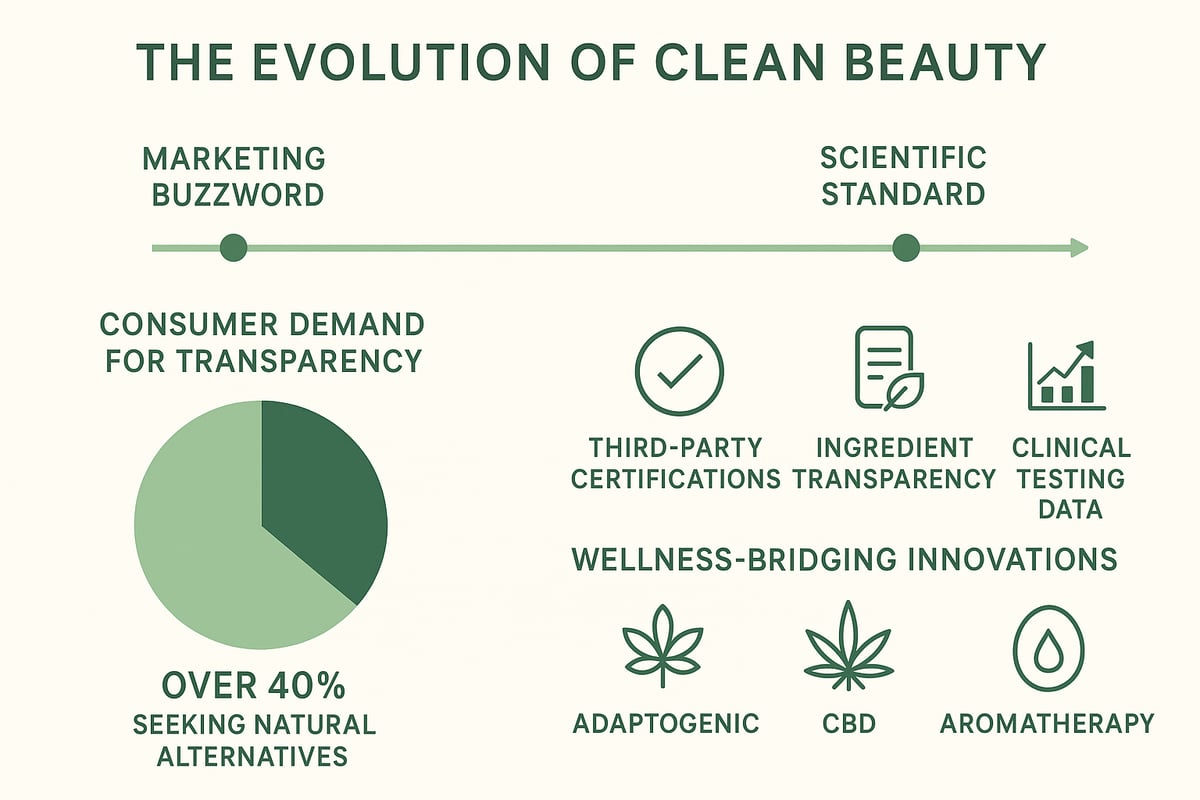
Clean beauty is rapidly shifting from a marketing catchphrase to a measurable, science-driven movement within cosmetic industry trends. Today’s consumers are more informed and discerning, demanding products that are not just labeled as natural, but are also backed by rigorous scientific validation and ethical sourcing.
The Shift to Evidence-Based Clean Beauty
As cosmetic industry trends evolve, clean beauty now requires brands to go beyond surface-level claims. Shoppers expect third-party safety certifications and detailed environmental impact reports, pushing companies to disclose every ingredient’s origin and function. This new era of transparency is a direct response to widespread skepticism over greenwashing, where vague sustainability claims once dominated marketing.
Brands are responding by investing in scientific research and partnering with independent labs to validate product efficacy. Clinical studies are increasingly standard, offering proof that natural alternatives can deliver results equal to or surpassing synthetic options.
Transparency and Consumer Trust
Transparency is a cornerstone of modern cosmetic industry trends. Brands that openly share sourcing information, supply chain details, and clinical data are rewarded with higher consumer trust and long-term loyalty. Shoppers want to know not only what is in their products, but also where those ingredients come from and how they impact both health and the environment.
This demand for openness is fueling innovation in extraction methods, responsible sourcing, and safety testing. Companies that prioritize full disclosure are setting a new benchmark for the industry, making clean beauty synonymous with accountability and traceability.
Market Growth and Innovation Drivers
The clean beauty segment is experiencing robust growth, as more than 40% of consumers actively seek natural alternatives to traditional ingredients. This surge is reshaping cosmetic industry trends, with brands that invest in clean, science-backed products gaining a premium edge in the marketplace.
According to the Clean Beauty Market Expansion, the sector’s rise is supported by data showing increased demand for transparency and validated efficacy. Brands that deliver on these expectations are not only capturing new customers but also building lasting brand equity.
Wellness Ingredients: Bridging Beauty and Health
Innovation within clean beauty extends beyond safe formulations. The latest cosmetic industry trends see the integration of wellness-focused ingredients like adaptogens, CBD, and aromatherapy botanicals. These products blur the line between personal care and holistic wellness, appealing to consumers who want their beauty routines to support overall health, stress relief, and emotional balance.
The convergence of wellness and clean beauty is creating new opportunities for brands to differentiate, fostering loyalty among health-conscious shoppers who value both efficacy and transparency.
Sustainability as a Business Imperative
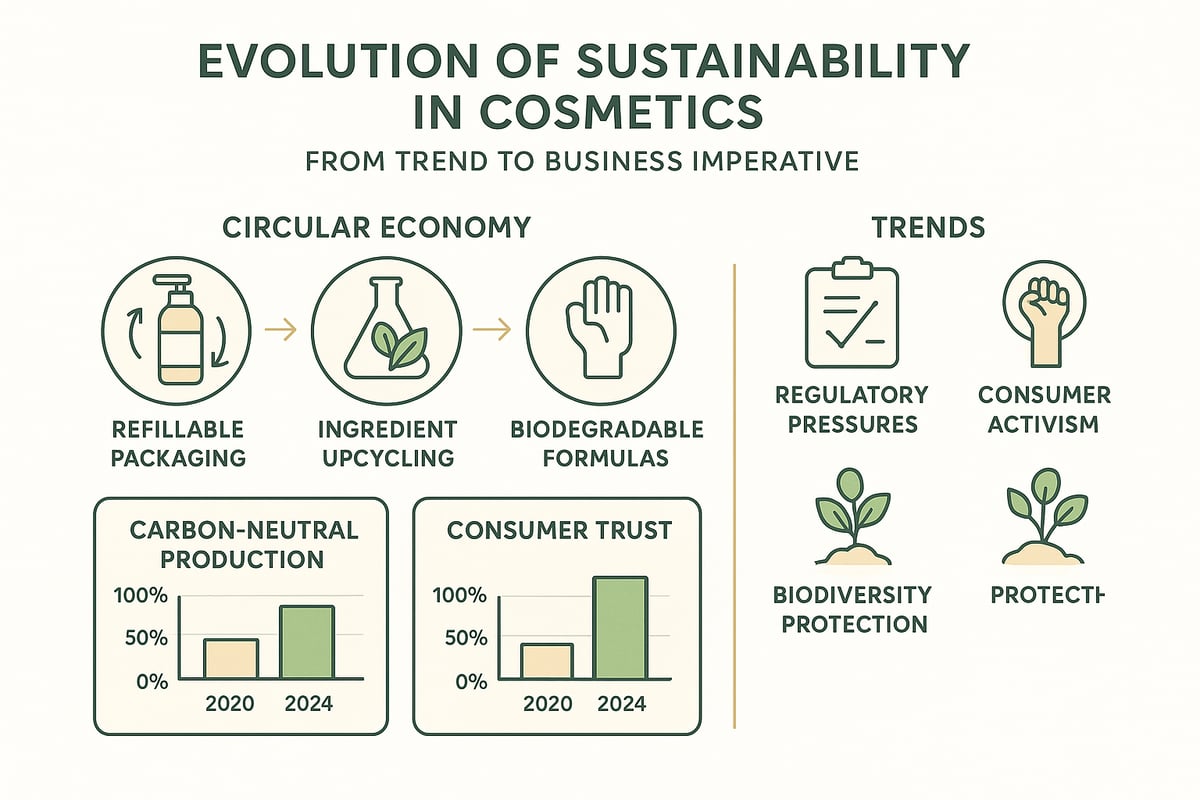
Sustainability has evolved from a buzzword into a core requirement for success in the cosmetic industry trends. Today’s brands face mounting pressure from both regulators and consumers to prove their environmental responsibility, making sustainable practices non-negotiable. This shift is redefining how companies source ingredients, design packaging, and manage supply chains.
Circular Economy in Action
Embracing the circular economy is one of the defining cosmetic industry trends for 2026. Brands are redesigning packaging to be refillable, biodegradable, or made from upcycled materials. Ingredient upcycling transforms waste from food and agriculture into valuable actives, reducing overall environmental impact.
Take-back and recycling programs are becoming standard, enabling brands to minimize waste and foster a closed-loop system. These efforts not only reduce landfill contributions but also resonate strongly with eco-conscious consumers.
Carbon-Neutral and Biodiversity Initiatives
Achieving carbon neutrality is now a key target across the cosmetic industry trends landscape. Companies are shifting to renewable energy, optimizing logistics for lower emissions, and investing in verified carbon offset projects.
Biodiversity protection is also critical. Responsible ingredient sourcing supports habitat restoration and strengthens partnerships with local communities. These initiatives ensure that product innovation does not come at the expense of the planet’s ecological balance.
Regulation and Consumer Pressure
Stricter environmental regulations and increased consumer activism are accelerating sustainable transformation in cosmetic industry trends. Governments are introducing tougher standards for packaging waste, emissions, and ingredient transparency. Meanwhile, consumers demand proof of genuine commitment through certifications and transparent reporting.
Brands with robust sustainability credentials consistently outperform competitors in trust, retention, and market share. As highlighted in Eco-friendly cosmetic brands, companies leading in eco-conscious practices are seeing measurable business benefits.
Integrating Sustainability Across the Value Chain
To future-proof their position in cosmetic industry trends, brands must weave sustainability into every aspect of their value chain. This includes sustainable product development, ethical sourcing, efficient manufacturing, and transparent marketing.
Success requires collaboration across departments and with suppliers, as well as ongoing investment in innovation. Companies that embed sustainability at their core are not only meeting regulatory demands but also building lasting relationships with increasingly values-driven consumers.
Technology Integration Across the Cosmetic Value Chain
Technology is rapidly redefining every stage of the cosmetic industry value chain. From packaging to supply chain management and digital consumer experiences, innovation is driving new standards of quality, efficiency, and engagement. As the pace of change accelerates, staying ahead of cosmetic industry trends has become essential for brands seeking to future-proof their strategies.
Smart Packaging and Consumer Engagement
Smart packaging is transforming how brands connect with consumers and protect product integrity. NFC chips and temperature sensors embedded in packaging provide real-time authentication and safety monitoring, which is crucial for maintaining the reputation of brands tracking cosmetic industry trends. Interactive packaging allows consumers to access product information, usage tips, and authenticity verification with a simple smartphone tap.
Brands using these innovations report increased consumer trust and loyalty. Smart packaging also supports sustainability initiatives, as it enables refill tracking and encourages recycling through digital reminders. For companies aiming to stand out in the crowded marketplace, leveraging packaging technology is a clear competitive advantage.
Digital Supply Chains and Automation
The integration of IoT devices and predictive analytics in the supply chain is revolutionizing inventory management and operational efficiency. Blockchain solutions ensure transparency and traceability from ingredient sourcing to finished product delivery, which addresses growing consumer demands for ethical practices within cosmetic industry trends.
Automation reduces manual errors, prevents stockouts, and minimizes waste by enabling real-time responses to shifts in demand. IoT-enabled quality control systems monitor manufacturing conditions, ensuring consistent product quality and safety. These advances allow brands to quickly adapt to market feedback and regulatory changes, making the supply chain more resilient and responsive.
Immersive Tech Across the Value Chain
Virtual and augmented reality technologies are creating immersive experiences that redefine how consumers shop for beauty products. AR-powered try-ons boost online conversion rates by letting customers visualize products on their own faces, reducing the uncertainty that often leads to returns. Virtual consultations and ingredient education deepen consumer engagement and build trust in brands that embrace emerging cosmetic industry trends.
According to the 2025 beauty trends report, forward-thinking brands are integrating these technologies to enhance both in-store and online experiences. Data-driven insights from these platforms empower brands to tailor offerings, respond to market shifts, and deliver personalized value at every touchpoint.
8 Must-Know Cosmetic Industry Trends Shaping 2026
The cosmetic industry trends emerging for 2026 are reshaping the entire beauty landscape. These trends are driven by innovation, consumer demands, and a global push towards sustainability and personalization. Let’s explore the eight pivotal cosmetic industry trends every brand leader and entrepreneur should watch.
1. AI-Driven Hyper-Personalization
AI is at the forefront of cosmetic industry trends, transforming how consumers interact with beauty brands. Advanced skin analysis, AI-powered virtual try-ons, and machine learning create custom recommendations based on individual skin data, lifestyle, and even genetics.
Brands using these technologies see higher customer satisfaction and loyalty, with AI beauty platforms reducing product returns by up to 30%. Predictive analytics also help optimize product formulations, accelerating innovation cycles.
For a deeper dive into the growth and future of AI in beauty, see the latest insights on AI in Cosmetics Market Growth. As AI becomes more sophisticated, hyper-personalization will set new standards in the cosmetic industry trends landscape.
2. Biotechnology-Enabled Sustainable Ingredients
Biotechnology is revolutionizing ingredient sourcing within cosmetic industry trends. Companies now use microalgae and fermentation to create high-performance actives like hyaluronic acid and collagen, eliminating the need for animal-derived components.
This shift supports biodiversity and reduces resource consumption. At major industry events, biotech-driven ingredient launches are accelerating, meeting consumer demand for efficacy, transparency, and sustainability.
Biotech also enables the scalable production of rare botanicals, making innovative formulations more accessible. These developments ensure that cosmetic industry trends remain focused on eco-friendly and science-backed solutions.
3. Science-Backed Clean Beauty
Clean beauty is evolving into a measurable standard within cosmetic industry trends. Consumers expect full ingredient transparency, third-party certifications, and clinical evidence of efficacy.
Brands are responding with detailed sourcing information, environmental reports, and lab-tested claims. Over 40% of shoppers now actively seek natural, science-validated products, shifting clean beauty from a buzzword to a requirement.
Products infused with adaptogens, CBD, and aromatherapy ingredients are merging wellness and beauty, further validating the importance of clean, science-backed formulations in the cosmetic industry trends narrative.
4. Circular Economy and Eco-Conscious Packaging
Circular economy principles are now central to cosmetic industry trends. Refillable systems, biodegradable materials, and ingredient upcycling help brands reduce waste and environmental impact.
Major beauty brands are launching take-back and recycling programs, reporting up to 20% reductions in packaging waste. For a comprehensive look at packaging innovation, explore Sustainable Cosmetic Packaging Trends.
These initiatives are not only essential for regulatory compliance but also drive consumer trust and loyalty, positioning sustainability at the core of cosmetic industry trends.
5. Wellness-Driven Beauty Solutions
Wellness is now intertwined with cosmetic industry trends, as consumers seek products that address stress, sleep, and holistic health. Brands are formulating with adaptogens, CBD, and aromatherapy to support mind-body wellness.
This trend reflects a broader movement where beauty and self-care merge, resulting in double-digit growth for wellness-focused beauty products. Companies that prioritize holistic benefits are gaining traction within the evolving landscape of cosmetic industry trends.
6. Smart Technology Integration
Technology is becoming indispensable across cosmetic industry trends. Smart packaging equipped with NFC chips and sensors enhances product authenticity and safety. IoT-enabled supply chains and blockchain technology improve traceability and operational efficiency.
Brands adopting smart solutions report increased consumer trust and higher repeat purchase rates. These innovations are critical for standing out in a competitive market and are redefining the future of cosmetic industry trends.
7. Immersive Digital Experiences
Immersive technology is a defining force in cosmetic industry trends. Augmented reality (AR) and virtual reality (VR) power virtual try-ons, ingredient education, and personalized consultations.
E-commerce platforms are leveraging these tools to provide interactive shopping journeys, boosting consumer confidence and conversion rates by up to 50%. As digital experiences become more sophisticated, they will remain a cornerstone of cosmetic industry trends.
8. Gen Z and Millennial Influence on Market Dynamics
Gen Z and millennials are shaping cosmetic industry trends with their demand for authenticity, sustainability, and ethical practices. Brands are adapting by embracing transparent storytelling, community engagement, and inclusive campaigns.
This demographic shift is driving rapid growth in sustainable and inclusive beauty brands, proving that future success depends on aligning with the values of younger consumers. Their influence will continue to redefine cosmetic industry trends for years to come.
Market Dynamics and Global Expansion
The evolving landscape of cosmetic industry trends is being shaped by the values and expectations of Gen Z and millennial consumers. These younger demographics prioritize authenticity, sustainability, and social responsibility, pushing brands to rethink their strategies. Companies that align with these values are seeing stronger loyalty and faster adoption of new products. As cosmetic industry trends shift, brands must communicate transparently and demonstrate genuine ethical commitments to capture this influential audience.
Community engagement is a powerful driver within cosmetic industry trends, fostering brand loyalty and discovery through user-generated content and interactive platforms. Social commerce is flourishing, with consumers sharing reviews, tutorials, and experiences that influence peers’ purchasing decisions. Brands are leveraging these trends by creating collaborative campaigns and encouraging customer participation. This approach not only builds trust but also turns loyal customers into brand advocates, amplifying reach and impact.
Global expansion is unlocking new growth opportunities, with brands adapting cosmetic industry trends to local markets and cultures. Emerging markets demand climate-specific formulations, locally sourced ingredients, and affordable pricing structures. Successful companies invest in cultural integration and community partnerships, supporting local economies and ensuring products resonate with diverse audiences. To explore more about how these shifts are driving innovation worldwide, see Global beauty trends and innovation.
E-commerce innovation continues to transform cosmetic industry trends, with AI-powered recommendations, virtual consultations, and social commerce platforms enhancing the online shopping experience. Subscription services and influencer partnerships accelerate product discovery and improve retention rates. Data shows online beauty retail maintains double-digit growth, fueled by digital advances and personalized experiences. Brands that embrace technology and adapt to changing behaviors are positioned for sustainable global success.
As we look ahead to 2026, it’s clear that the beauty industry is evolving at an unprecedented pace—from AI-powered personalization and sustainable biotech ingredients to immersive digital experiences and eco-conscious packaging. If you’re inspired to create a product that stands out in this dynamic landscape, why not take the next step? With The INCI Lab’s expertise in custom formulation and support for both emerging and established brands, you can turn these trends into real opportunities. Ready to bring your vision to life? Start Your Product Journey