

The cosmetic personal care industry has undergone remarkable transformation over the past decade, driven by heightened consumer awareness, technological advancement, and an unwavering commitment to sustainability. Today's consumers demand transparency, efficacy, and ethical production practices from brands across all product categories. Understanding the complexities of modern cosmetic personal care formulation requires knowledge of ingredient science, regulatory compliance, market trends, and consumer behavior. For entrepreneurs and established brands alike, navigating this landscape presents both exciting opportunities and significant challenges that require expert guidance and innovative solutions.
The Foundation of Modern Cosmetic Personal Care Products
Cosmetic personal care encompasses a vast array of products designed to cleanse, protect, enhance, and maintain the health and appearance of skin, hair, and nails. This category includes everything from basic cleansers and moisturizers to sophisticated serums and treatment products.
The formulation process begins with understanding the intended purpose and target demographic. Each product category requires specific considerations:
- Skincare products: Focus on skin barrier protection, hydration, anti-aging, and targeted treatment
- Haircare formulations: Address cleansing, conditioning, styling, and scalp health
- Body care items: Emphasize moisturization, protection, and sensory experience
- Specialty treatments: Target specific concerns like acne, hyperpigmentation, or sensitivity
Modern personal care products must balance efficacy with safety, requiring extensive knowledge of ingredient interactions and stability testing. The complexity increases when incorporating natural, sustainable, or novel ingredients that consumers increasingly seek.
Consumer Safety and Regulatory Considerations
While safety concerns in personal care products have prompted increased scrutiny, responsible formulation practices ensure consumer protection. The regulatory landscape varies globally, with regions like the European Union maintaining stringent requirements compared to other markets.
Understanding INCI (International Nomenclature of Cosmetic Ingredients) labeling is fundamental. Learning about INCI standards helps brands communicate transparently with consumers who scrutinize ingredient lists before purchasing.
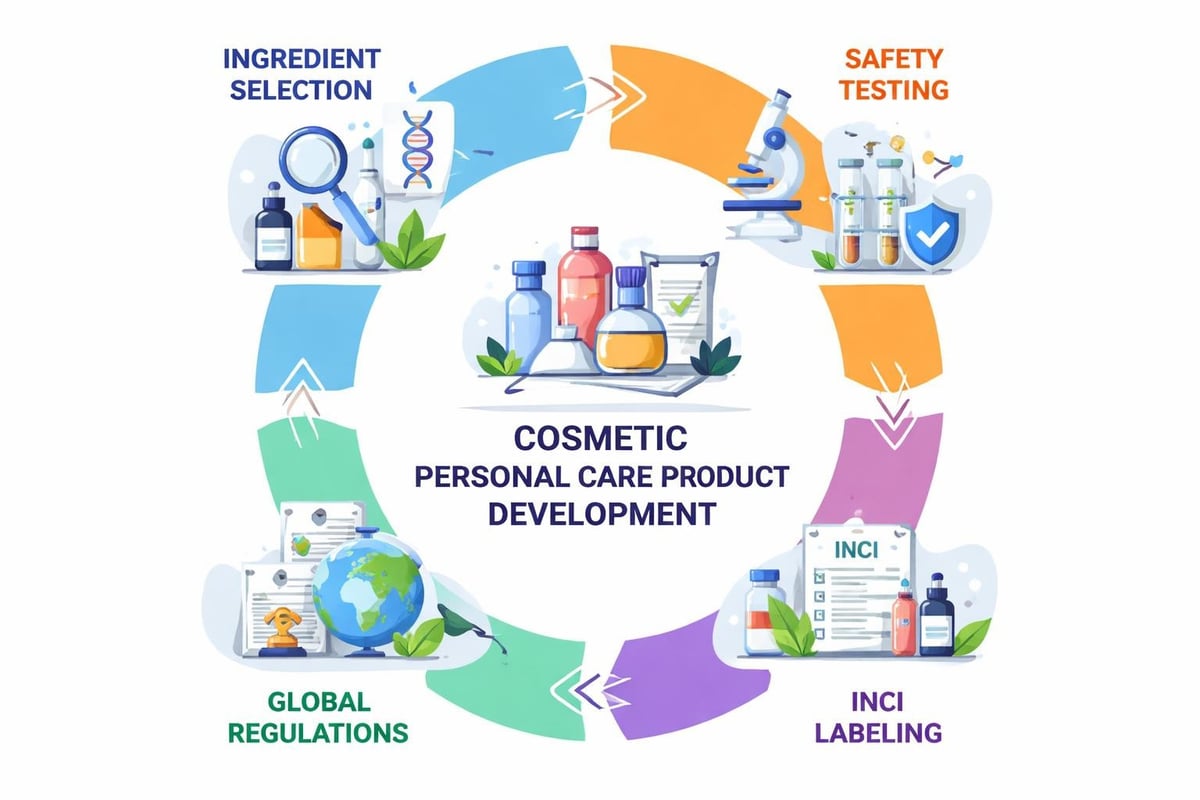
| Regulatory Aspect | Key Requirement | Impact on Formulation |
|---|---|---|
| Ingredient Approval | Pre-market safety assessment | Limits available ingredient options |
| Labeling Standards | INCI nomenclature compliance | Requires accurate ingredient disclosure |
| Claims Substantiation | Scientific evidence for marketing claims | Demands efficacy testing protocols |
| Preservation Systems | Microbial safety standards | Influences formulation pH and composition |
Ingredient Innovation in Cosmetic Personal Care
The ingredients landscape has evolved dramatically, with personal care ingredients now sourced from biotechnology, sustainable agriculture, and advanced chemistry. This shift reflects consumer preferences for clean, effective, and environmentally responsible formulations.
Natural and Plant-Based Ingredients
Botanical extracts, plant oils, and phytoactive compounds dominate current formulation trends. These ingredients offer multiple benefits while appealing to consumers seeking natural alternatives. However, natural doesn't automatically mean superior or safer, requiring careful evaluation and testing.
Biotechnology-Derived Actives
Fermentation technology and bioengineering produce highly effective ingredients with minimal environmental impact. These innovations include peptides, growth factors, and bio-identical compounds that deliver targeted results without synthetic processing concerns.
Sustainable Sourcing Practices
Ethical ingredient procurement has become non-negotiable for modern cosmetic personal care brands. This includes:
- Fair trade certification and equitable supplier partnerships
- Biodiversity protection and habitat conservation
- Carbon-neutral or carbon-negative ingredient production
- Water conservation throughout the supply chain
- Zero-waste or circular economy ingredient systems
Market Trends Shaping Ingredient Selection
Current cosmetics and personal care ingredients market trends reveal consumer preferences driving formulation decisions. Microbiome-friendly formulations, waterless products, and adaptogenic ingredients represent significant growth areas.
The clean beauty movement continues expanding, though definitions vary across markets. Brands must establish clear standards for what constitutes "clean" within their product lines, balancing consumer expectations with scientific validity.
Formulation Development Process for Success
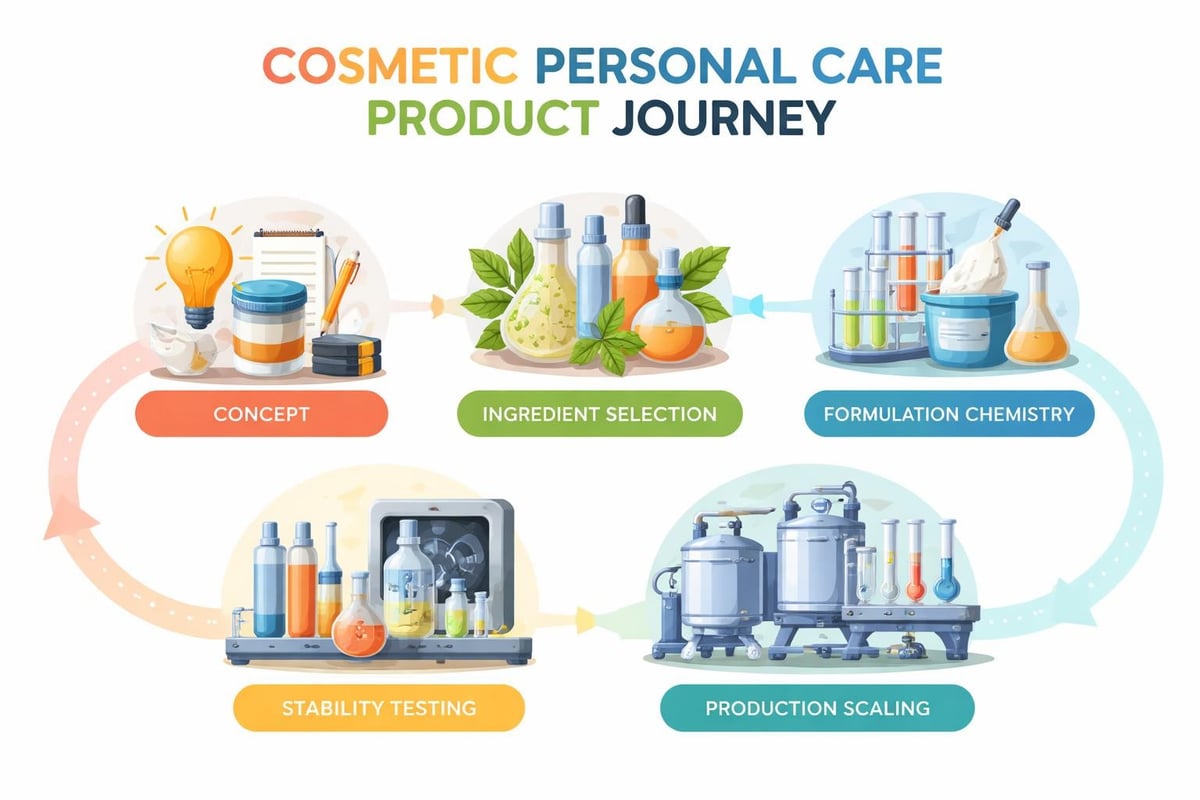
Creating exceptional cosmetic personal care products requires systematic development combining scientific expertise with market understanding. The process involves multiple stages, each critical to final product success.
Phase One: Concept and Research
- Market analysis: Identify gaps, opportunities, and competitive positioning
- Target audience definition: Understand demographic needs, preferences, and purchasing behaviors
- Ingredient research: Evaluate available materials for efficacy, safety, and sustainability
- Regulatory review: Confirm compliance requirements for target markets
- Budget establishment: Determine cost parameters and pricing strategies
Phase Two: Prototype Development
Laboratory work transforms concepts into tangible formulations. This stage requires technical expertise in emulsion chemistry, preservation science, and stability optimization. Starting a new skincare brand demands particular attention to differentiation during this phase.
Testing protocols include:
- Stability testing: Temperature cycling, freeze-thaw, and accelerated aging
- Compatibility testing: Packaging interaction and ingredient stability
- Sensory evaluation: Texture, scent, absorption, and user experience
- Efficacy testing: Clinical or laboratory validation of product claims
- Safety assessment: Dermatological testing and preservative challenge
Phase Three: Refinement and Optimization
Initial prototypes rarely achieve perfection immediately. Iterative refinement addresses performance issues, cost optimization, and sensory improvements. This phase separates adequate products from exceptional ones that build loyal customer bases.
Technology Integration in Cosmetic Personal Care
Digital innovation transforms how consumers discover, evaluate, and use cosmetic personal care products. AI-assisted skincare recommendations represent emerging technologies changing personalization approaches.
Personalization Technologies
Customization extends beyond marketing into actual formulation adjustments based on individual needs. Advanced diagnostic tools, including skin analysis apps and genetic testing, inform product recommendations and formula modifications.
Smart Packaging Solutions
Connected packaging provides usage instructions, authenticity verification, and expiration monitoring. These features enhance user experience while protecting brand integrity against counterfeiting.
Virtual Try-On and Testing
Augmented reality applications allow consumers to visualize product effects before purchase, reducing return rates and increasing confidence in selection decisions.
Building Sustainable Cosmetic Personal Care Brands
Environmental responsibility has shifted from competitive advantage to baseline expectation. Cosmetic brands incorporating sustainability throughout operations strengthen market position while contributing positively to planetary health.
| Sustainability Practice | Implementation Strategy | Brand Benefit |
|---|---|---|
| Eco-friendly packaging | Recycled, recyclable, or compostable materials | Reduced environmental footprint, appeal to conscious consumers |
| Carbon-neutral operations | Renewable energy, carbon offset programs | Climate leadership positioning |
| Waterless formulations | Concentrated products, powder formats | Resource conservation, shipping efficiency |
| Refillable systems | Durable containers with replacement options | Customer loyalty, waste reduction |
| Transparent sourcing | Supply chain disclosure, traceability | Consumer trust, ethical compliance |
Ingredient Transparency and Clean Formulation
Modern consumers research ingredients before purchasing, making transparency essential. Clear communication about what ingredients accomplish and why they're included builds credibility.
The clean beauty movement, while sometimes scientifically ambiguous, reflects genuine consumer desire for simplicity and safety. Brands succeed by establishing defensible clean standards rather than following undefined trends.
Navigating Competitive Markets
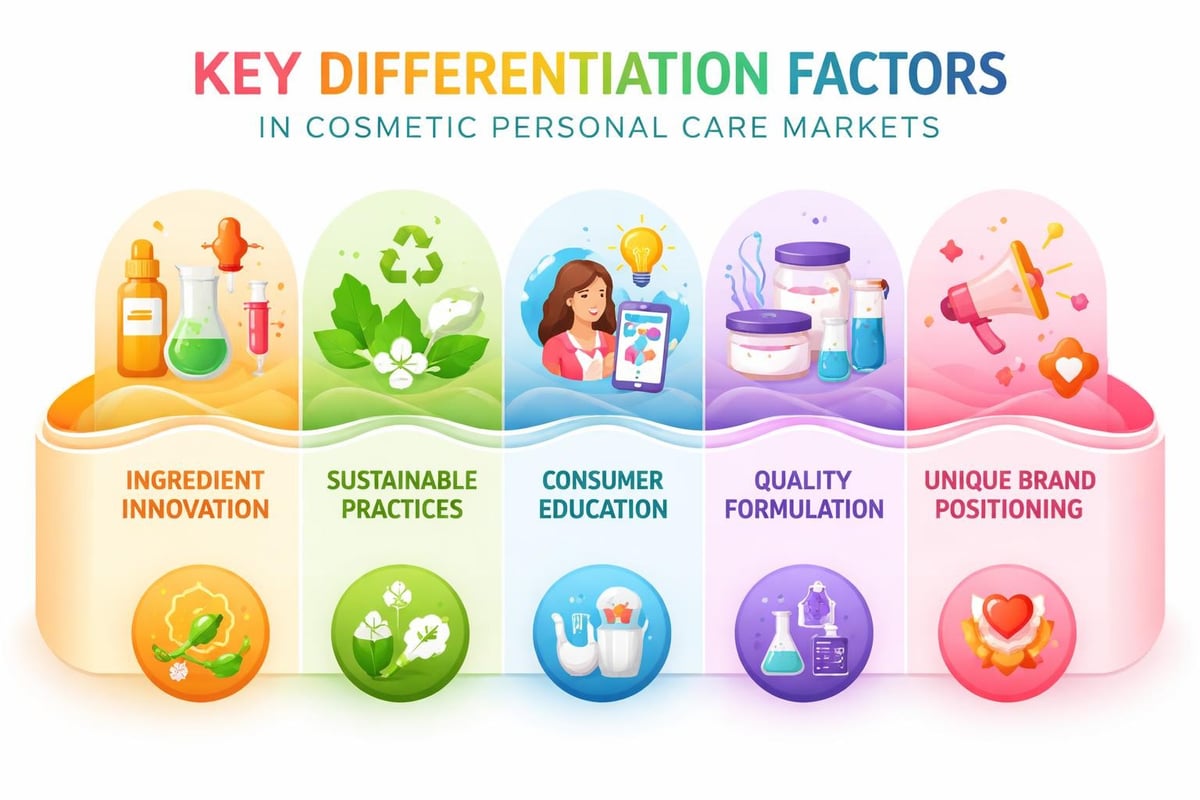
The cosmetic personal care industry's competitive intensity requires strategic differentiation. Success factors include:
Unique Value Proposition Development
Identify what makes your brand genuinely different. This might involve proprietary ingredients, innovative delivery systems, specific target demographics, or unique brand values that resonate emotionally with consumers.
Quality Over Quantity
Launching fewer, exceptional products outperforms flooding markets with mediocre offerings. Each formulation should solve specific problems better than existing alternatives.
Strategic Partnerships
Collaborating with ingredient suppliers, manufacturers, and formulators accelerates development while maintaining quality. Experienced partners provide invaluable insights that prevent costly mistakes.
Consumer Education
Educating audiences about ingredients, formulation science, and proper usage builds authority and trust. Content marketing demonstrating expertise attracts customers seeking knowledgeable brands.
Quality Control and Testing Standards
Ensuring consistent quality across production batches protects brand reputation and consumer safety. Comprehensive testing protocols should include:
- Raw material verification and certificate of analysis review
- In-process quality checks during manufacturing
- Finished product testing for specifications compliance
- Microbial testing and preservative effectiveness validation
- Package compatibility and seal integrity verification
Many brands benefit from reformulating existing products to improve performance, reduce costs, or align with evolving standards. Regular formulation review ensures products remain competitive and compliant.
Scaling Production Successfully
Transitioning from small-batch development to commercial production presents challenges requiring careful planning. Formulations performing beautifully in laboratory settings sometimes encounter issues when scaled.
Manufacturing Considerations
- Equipment compatibility with formulation requirements
- Batch size impact on ingredient dispersion and emulsion stability
- Temperature control during larger production runs
- Mixing time and shear requirements for consistent results
- Filling speed effects on product integrity
Working with experienced formulation partners helps navigate scaling challenges. The INCI Lab's custom formulations provide production-ready formulas designed for commercial manufacturing success.
Emerging Categories and Opportunities
Innovation continues creating new cosmetic personal care product categories. Current opportunities include:
Wellness-Focused Formulations
Products addressing stress, sleep quality, and mental wellness through aromatherapy, adaptogenic ingredients, and sensory experiences represent growing segments.
Men's Grooming Expansion
Male consumers increasingly embrace skincare and personal care beyond basic hygiene, creating opportunities for targeted formulations addressing specific concerns.
Inclusive Beauty
Products formulated for diverse skin tones, types, and conditions expand market reach while demonstrating social responsibility and cultural awareness.
Probiotic and Microbiome Products
Formulations supporting skin's natural bacterial balance gain popularity as understanding of microbiome importance increases.
Professional Formulation Support
Developing exceptional cosmetic personal care products requires specialized expertise many entrepreneurs and brands lack internally. Professional formulation services provide technical knowledge, regulatory guidance, and market insights that accelerate success while reducing risks.
Benefits of partnering with formulation experts include:
- Access to proprietary ingredient libraries and supplier relationships
- Regulatory compliance expertise across multiple markets
- Stability and compatibility testing capabilities
- Manufacturing coordination and quality oversight
- Formula ownership and intellectual property protection
Understanding what's new in cosmetics helps brands remain competitive, but implementing innovations requires technical capabilities that professional formulators provide.
The cosmetic personal care industry rewards brands that combine scientific excellence with consumer understanding and sustainability commitment. Whether launching a new line or enhancing existing products, success depends on formulation quality, ingredient innovation, and strategic market positioning. The INCI Lab delivers award-winning custom formulations designed specifically for your brand vision, providing complete ownership and expert support from concept through production. Transform your cosmetic personal care ideas into market-leading products that resonate with today's conscious consumers.

