
The beauty industry continues to expand at an unprecedented rate, creating opportunities for entrepreneurs and established brands to enter or expand their presence in the skincare market. When developing a product line, one of the most critical decisions you'll face is choosing between private label skincare versus custom cosmetic formulation. This choice will fundamentally shape your brand's identity, market positioning, investment requirements, and long-term growth potential. Understanding the nuances between these two approaches enables you to make an informed decision that aligns with your business goals, budget constraints, and vision for your brand's future.
Understanding Private Label Skincare
Private label skincare refers to pre-formulated products manufactured by a third party that you can rebrand and sell under your own company name. These ready-made formulations are developed by manufacturers who produce them in bulk for multiple brands.
The process is straightforward: you select from existing formulations, customize the packaging and branding, and launch products without investing in formulation development. This approach has gained significant traction among new entrepreneurs because it offers faster time-to-market and lower financial barriers compared to developing products from scratch.
Key Advantages of Private Label Solutions
Speed to market represents the most compelling benefit of private label skincare. You can launch products within weeks rather than months, capitalizing on trending ingredients or seasonal demands before competitors.
- Lower initial investment requirements
- Reduced risk with proven formulations
- Minimal technical knowledge needed
- Established manufacturing relationships
- Faster inventory turnover
Cost efficiency makes private label an attractive option for bootstrapped businesses. Without formulation development expenses, testing fees, or lengthy research periods, your upfront costs remain manageable.
Limitations of Private Label Approaches
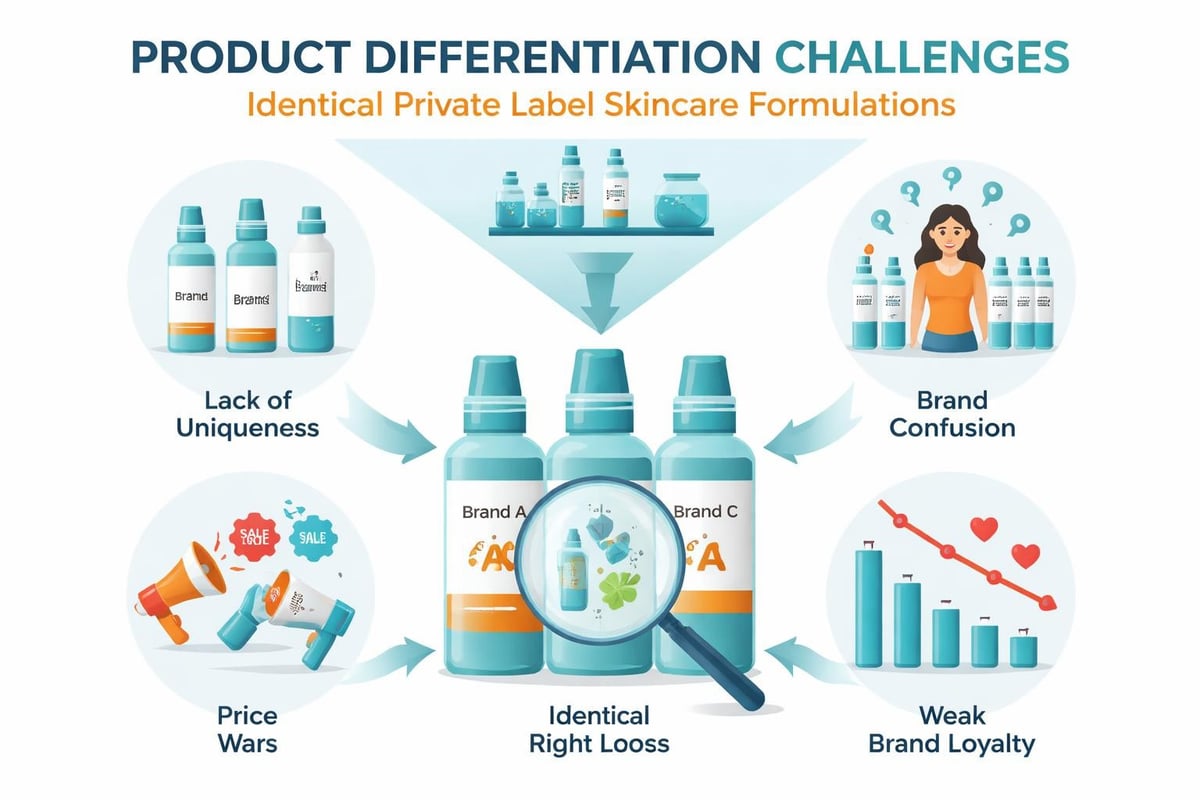
The primary drawback of private label skincare versus custom cosmetic formulation lies in differentiation challenges. When multiple brands sell identical or similar formulations, competing becomes a matter of marketing and pricing rather than product superiority.
| Limitation | Impact on Business |
|---|---|
| Formula ownership | Manufacturer retains rights |
| Exclusivity | Competitors may use same products |
| Customization | Minimal to moderate changes only |
| Innovation | Limited to existing catalog |
| Brand story | Generic formulations harder to market |
Intellectual property concerns create long-term vulnerabilities. You don't own the formulation, which means you're dependent on the manufacturer's continued availability and pricing structure.
Exploring Custom Cosmetic Formulation
Custom cosmetic formulation involves creating unique products specifically designed for your brand, incorporating your chosen ingredients, textures, and performance characteristics. This approach requires working with experienced cosmetic chemists who develop formulations from concept to completion.
The process begins with defining your product vision, target audience, and desired outcomes. Professional formulators translate these requirements into scientifically sound, stable formulations that deliver measurable results.
Benefits of Custom Development
Complete brand differentiation stands as the cornerstone advantage of custom formulation. Your products become truly unique assets that competitors cannot replicate, creating sustainable competitive advantages in crowded markets.
When you invest in custom development, you gain full ownership of your formulations. This intellectual property becomes a valuable business asset that increases your company's valuation and protects your market position.
- Formulations tailored to target demographics
- Unique ingredient combinations
- Proprietary performance claims
- Exclusive texture and sensorial experience
- Protected intellectual property rights
Innovation opportunities flourish with custom formulation. You can incorporate cutting-edge ingredients, address unmet market needs, and position your brand as an industry leader rather than a follower.
Investment Considerations for Custom Formulation
Custom formulation requires greater financial commitment than private label options. Development costs, stability testing, regulatory compliance, and minimum order quantities typically exceed private label investments.
The timeline extends considerably as well. Developing, testing, and perfecting custom formulations can take three to six months or longer, depending on complexity and testing requirements. This extended development period delays revenue generation and market entry.
Resource requirements include not just capital but also technical expertise and project management capabilities. Successful custom formulation partnerships require clear communication, understanding of quality formulation principles, and patience throughout the development process.
Comparing Private Label Skincare Versus Custom Cosmetic Formulation
Making the right choice between private label skincare versus custom cosmetic formulation depends on multiple factors specific to your business situation, goals, and resources. Understanding these key differences helps clarify which path serves your brand best.
Financial Investment Analysis
Initial capital requirements differ dramatically between approaches. Private label typically requires $5,000 to $20,000 to launch a basic product line, while custom formulation often starts at $15,000 to $50,000 or more, depending on complexity and quantity.
| Factor | Private Label | Custom Formulation |
|---|---|---|
| Development costs | Minimal | $5,000-$25,000+ |
| Minimum order quantity | 50-500 units | 500-3,000 units |
| Testing expenses | Included | $2,000-$10,000 |
| Time to market | 2-8 weeks | 3-6 months |
| Formula ownership | Manufacturer | Your business |
However, long-term profitability calculations reveal different dynamics. Custom formulations often command higher retail prices due to perceived value and unique positioning, potentially offsetting higher initial investments through improved margins.
Brand Building and Market Position
Your choice between private label skincare versus custom cosmetic formulation fundamentally influences how consumers perceive your brand. Custom formulations enable authentic storytelling around ingredient selection, formulation philosophy, and brand values.
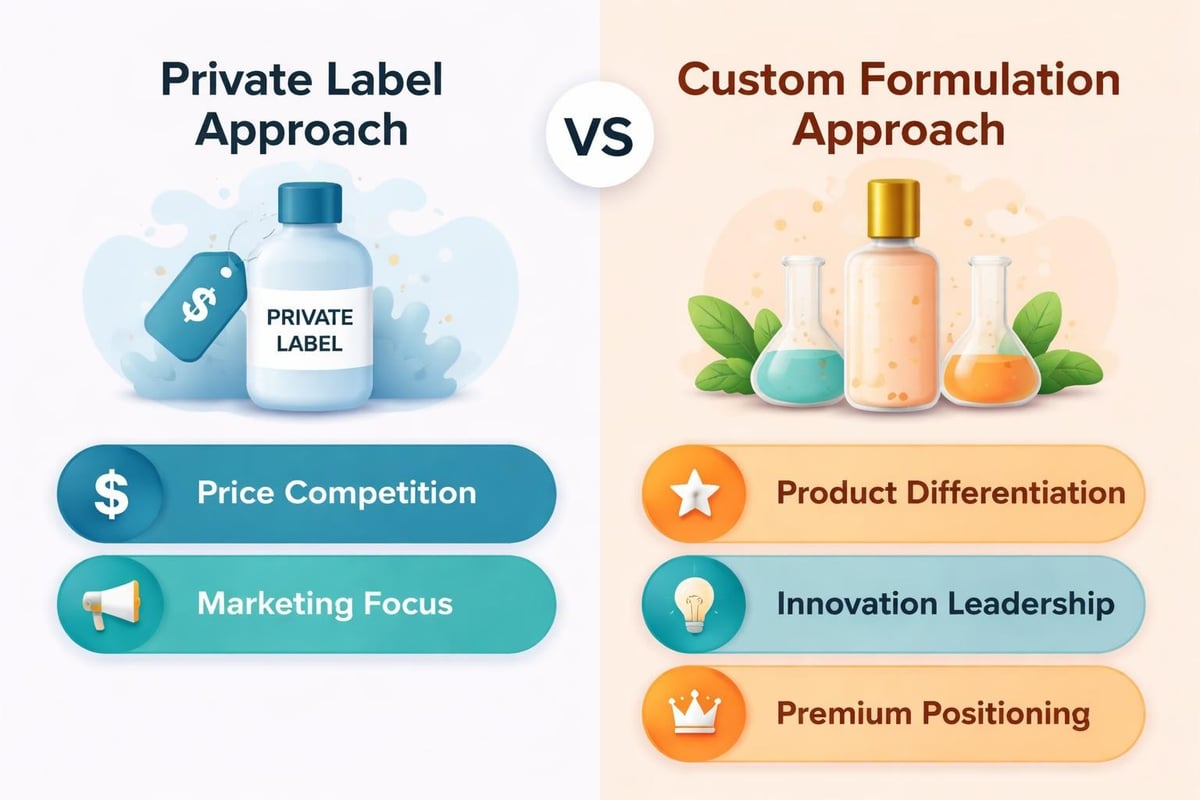
Market positioning becomes easier with proprietary products. Rather than competing solely on price and marketing, you offer genuine product differentiation that justifies premium pricing and builds customer loyalty.
For small cosmetic brands aiming to establish strong market presence, custom formulation provides clearer pathways to brand recognition and authority within specific niches.
Scalability and Growth Trajectories
Long-term business growth requires different strategies depending on whether you choose private label skincare versus custom cosmetic formulation as your foundation.
Expansion Possibilities with Private Label
Private label offers straightforward scalability. As your sales increase, you simply order larger quantities from your manufacturer. Adding new products means selecting additional formulations from existing catalogs.
This simplicity facilitates rapid expansion but creates dependencies. Your growth remains tied to manufacturer capabilities, availability, and pricing stability. If your supplier discontinues a popular product or significantly raises prices, your business faces immediate challenges.
Transitioning from private label to custom formulation represents a common growth strategy. Many successful brands start with private label to validate market demand, then invest in custom development once they've established sales and customer bases.
Growth Through Custom Formulation
Custom formulation positions your brand for sustainable, defensible growth. Your proprietary products become increasingly valuable as you build reputation, customer loyalty, and market share.
Competitive moats strengthen over time with custom formulations. As your brand gains recognition for specific products, replicating your success becomes exponentially harder for competitors, even those with larger marketing budgets.
- Develop signature products with unique benefits
- Build brand equity around proprietary formulations
- Expand into complementary product categories
- License formulations to other markets or brands
- Command premium pricing with proven performance
Innovation cycles also differ significantly. Custom formulation partners can reformulate, improve, or adapt products based on consumer feedback and emerging trends, keeping your brand relevant and dynamic.
Regulatory Compliance and Quality Control
Both private label skincare versus custom cosmetic formulation require strict adherence to cosmetic regulations, but the responsibility distribution differs substantially between approaches.
Compliance Responsibilities in Private Label
Private label manufacturers typically handle most regulatory compliance aspects, including safety assessments, ingredient restrictions, and labeling requirements. This reduces your administrative burden but also limits your control over compliance processes.
You remain legally responsible for products sold under your brand name, even if you didn't formulate them. Understanding compliance requirements becomes essential despite manufacturer involvement.
Quality Assurance with Custom Formulations
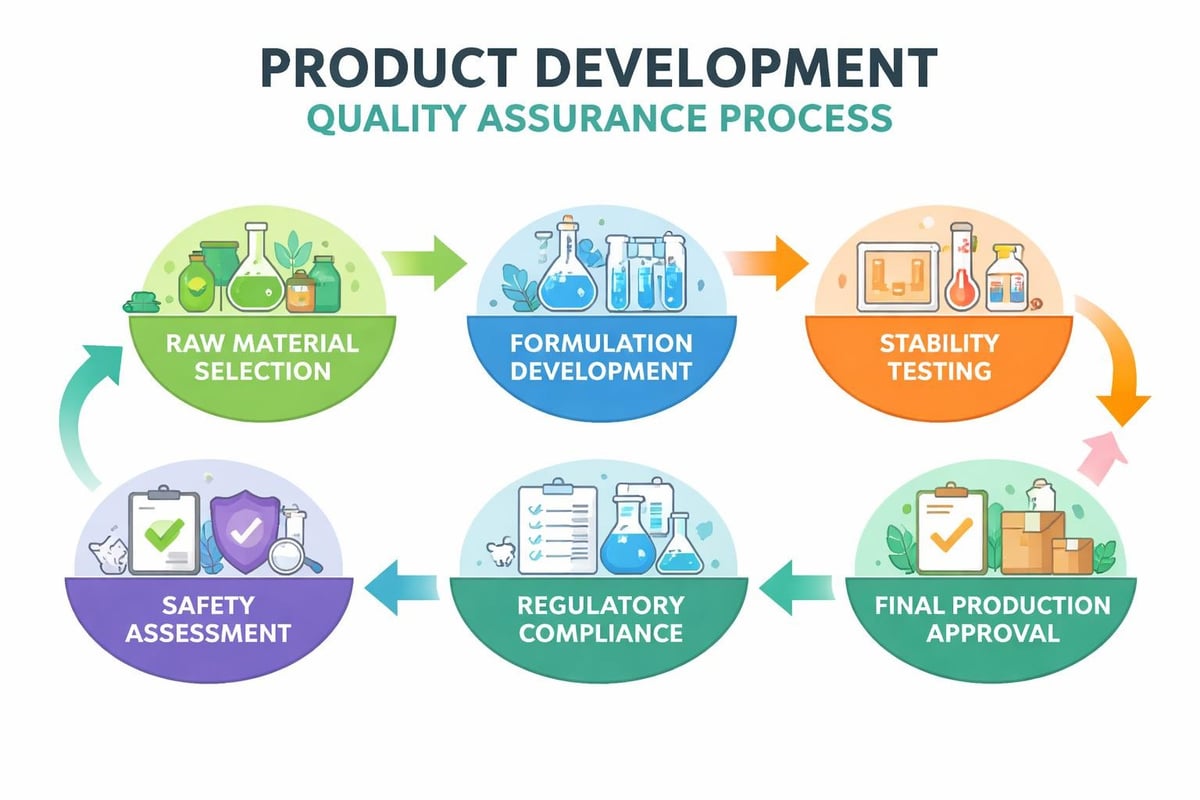
Custom formulation requires more direct involvement in quality control and regulatory compliance. Working with professional formulators like The INCI Lab ensures that your products meet all necessary standards while giving you transparency into ingredients, concentrations, and testing protocols.
Documentation ownership provides greater control over your supply chain and quality standards. You maintain complete records of formulations, testing results, and compliance documentation, essential for audits, international expansion, or potential acquisitions.
- Full ingredient transparency and documentation
- Custom stability and safety testing protocols
- Tailored preservation systems for product integrity
- Direct control over raw material sourcing
- Comprehensive quality assurance procedures
Making the Strategic Decision
Choosing between private label skincare versus custom cosmetic formulation requires honest assessment of your current situation, resources, and long-term vision for your brand.
When Private Label Makes Sense
Testing market viability represents an excellent use case for private label. If you're exploring a new market segment or validating consumer interest in specific product types, private label minimizes risk while providing real market feedback.
Budget-conscious entrepreneurs often find private label provides the only realistic path to market entry. The lower financial barriers enable you to start generating revenue, learning about your customers, and building cash flow before making larger investments.
Rapid trend capitalization favors private label approaches. When a trending ingredient or product category emerges, private label enables you to participate in the trend cycle before it peaks, maximizing short-term revenue opportunities.
When Custom Formulation Delivers Greater Value
Building a premium brand with sustainable, eco-friendly credentials requires formulation control that only custom development provides. Consumers increasingly demand transparency and authenticity, which generic private label products cannot deliver convincingly.
Long-term brand building invariably benefits from custom formulation. If you envision your brand as a lasting market presence rather than a quick venture, investing in proprietary products establishes stronger foundations for growth and valuation.
Addressing specific market gaps or underserved demographics often requires custom solutions. When existing products don't meet your target audience's needs, custom formulation becomes necessary to deliver appropriate solutions.
Hybrid Approaches and Strategic Combinations
The choice between private label skincare versus custom cosmetic formulation isn't always binary. Many successful brands employ hybrid strategies that leverage advantages from both approaches.
Starting with Private Label, Transitioning to Custom
This progressive approach minimizes initial risk while building toward product differentiation. Launch with private label to establish market presence and generate revenue, then invest profits into custom formulation for hero products or signature items.
Market intelligence gathered during your private label phase informs smarter custom formulation decisions. Understanding which products sell best, what customers request most frequently, and which price points work best guides effective custom development investment.
Portfolio Diversification Strategies
Sophisticated brands often maintain both private label and custom products within their portfolios. Custom formulations comprise signature, high-margin items that define brand identity, while private label products fill out the range with complementary items at various price points.
| Product Role | Formulation Type | Strategic Purpose |
|---|---|---|
| Signature hero products | Custom | Brand differentiation, premium pricing |
| Core product line | Custom | Competitive advantage, loyalty building |
| Seasonal or trending items | Private label | Rapid market response, trend participation |
| Entry-level products | Private label | Customer acquisition, lower price points |
| Gift sets and bundles | Mixed | Inventory management, margin optimization |
This balanced approach provides flexibility, risk management, and optimized resource allocation across your product development initiatives.
Industry Trends Shaping Future Decisions
The beauty industry's evolution influences how private label skincare versus custom cosmetic formulation decisions impact long-term success. Emerging trends favor certain approaches over others in specific market segments.
Personalization and Customization Demands
Consumer expectations for personalized products continue rising. Custom formulation positions brands to meet these demands through targeted solutions for specific skin types, concerns, or preferences.
Advanced custom formulation can incorporate innovative ingredients that address emerging consumer concerns, from microbiome support to pollution protection, creating products that resonate with health-conscious consumers.
Sustainability and Transparency Requirements
Consumers demand increasing transparency about ingredient sourcing, manufacturing processes, and environmental impact. Custom formulation provides greater control over these factors, enabling authentic sustainability claims.
Traceability requirements favor custom formulation partnerships with manufacturers who prioritize sustainable practices and provide detailed documentation about ingredient origins and processing methods.
Digital-First Brand Strategies
Direct-to-consumer brands built on digital platforms benefit differently from private label versus custom formulation. While private label enables quick launches for testing social media marketing approaches, custom products create more compelling content and authentic brand narratives.
Social media success increasingly depends on genuine product differentiation and compelling brand stories that custom formulation supports more effectively than generic private label offerings.
Selecting between private label skincare versus custom cosmetic formulation represents one of the most significant strategic decisions for your beauty brand, influencing everything from market positioning to long-term profitability. While private label offers speed and lower barriers to entry, custom formulation delivers differentiation, ownership, and sustainable competitive advantages. The INCI Lab specializes in creating award-winning custom formulations that transform your brand vision into high-performance products with complete ownership and comprehensive support from concept to production. Whether you're launching your first product or expanding an established line, our expertise in sustainable, eco-friendly formulations ensures your products stand out in competitive markets.