
Launching a successful cosmetic brand requires more than just innovative ideas and compelling marketing strategies. The foundation of any beauty business rests on partnering with a manufacturer who can bring your vision to life while maintaining consistent quality, regulatory compliance, and ethical production standards. Whether you're an entrepreneur with your first product concept or an established brand looking to scale, understanding how to find a reliable cosmetic manufacturer is critical to your success. The wrong partnership can result in delayed launches, inconsistent product quality, and damage to your brand reputation. This comprehensive guide will walk you through the essential criteria, verification processes, and strategic considerations that separate exceptional manufacturing partners from mediocre ones.
Understanding Manufacturing Certifications and Compliance Standards
The cosmetics industry operates under strict regulatory frameworks designed to protect consumers and ensure product safety. When evaluating potential manufacturing partners, certifications serve as the first checkpoint in your vetting process.
ISO 22716 Good Manufacturing Practices
ISO 22716 represents the international standard for Good Manufacturing Practices (GMP) in cosmetics production. This certification demonstrates that a manufacturer has implemented systematic quality management processes covering everything from raw material sourcing to final product packaging. Facilities with ISO 22716 compliance maintain rigorous documentation, facility cleanliness protocols, and employee training programs that minimize contamination risks and ensure batch-to-batch consistency.
Key elements covered by ISO 22716 include:
- Personnel hygiene and training requirements
- Facility design and maintenance standards
- Equipment qualification and calibration
- Raw material testing and traceability
- Production process controls and monitoring
- Quality control laboratory operations
- Documentation and record-keeping systems
Additional Quality Certifications
Beyond ISO standards, various cosmetic certifications provide additional assurance of a manufacturer's commitment to specific quality attributes. Organic Natural Certified™, Green Certified™, and Clean Certified™ designations indicate that facilities have met stringent requirements for ingredient sourcing, environmental practices, and product purity.
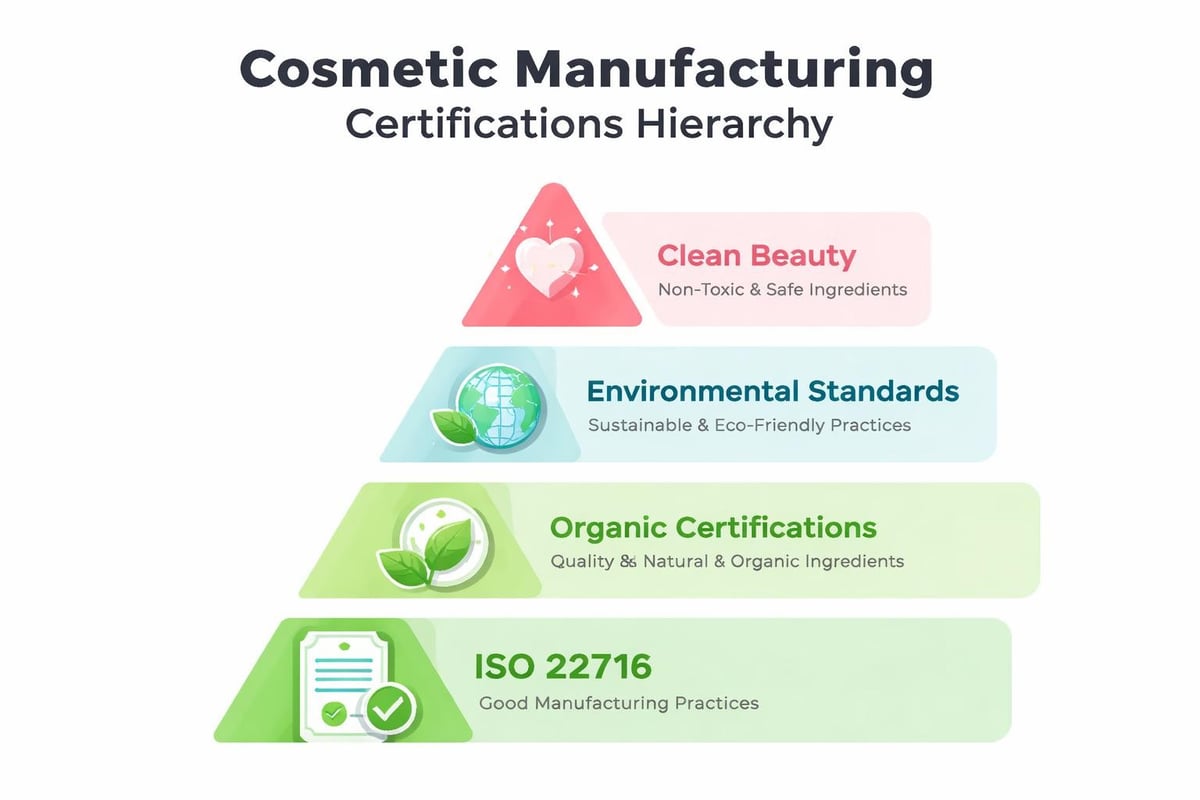
For brands focused on sustainability, manufacturers holding these certifications align with eco-friendly cosmetic brand values and can support your positioning in the conscious beauty market. When you're learning how to find a reliable cosmetic manufacturer, these certifications serve as objective third-party validation of operational excellence.
Evaluating Manufacturing Capabilities and Capacity
Certifications provide the baseline for quality assurance, but practical manufacturing capabilities determine whether a facility can actually fulfill your specific needs. A thorough assessment of production capacity prevents future bottlenecks and ensures scalability as your brand grows.
Production Volume Flexibility
Different manufacturers specialize in different production scales. Some excel at small-batch artisanal production with minimum order quantities (MOQs) as low as 500-1,000 units, while others focus exclusively on large-scale commercial production requiring MOQs of 10,000 units or more. Understanding where a manufacturer's sweet spot lies helps you avoid mismatched partnerships.
| Production Scale | Typical MOQ Range | Best For | Considerations |
|---|---|---|---|
| Micro-batch | 100-500 units | Product testing, limited editions | Higher per-unit costs, limited automation |
| Small-batch | 500-5,000 units | Emerging brands, niche products | Moderate pricing, flexible formulations |
| Mid-scale | 5,000-25,000 units | Growing brands, retail expansion | Balanced economics, established processes |
| Large-scale | 25,000+ units | Established brands, mass retail | Lowest per-unit costs, longer lead times |
For small cosmetic brands just entering the market, partnering with a manufacturer that accommodates lower MOQs provides the flexibility to test products and refine formulations without committing to excessive inventory.
Equipment and Technology Infrastructure
The sophistication of manufacturing equipment directly impacts product quality and innovation potential. When researching how to find a reliable cosmetic manufacturer, inquire about specific machinery and technological capabilities:
- Emulsification systems for creating stable creams and lotions
- Filling and packaging lines with precision dosing capabilities
- Quality control laboratories equipped for microbial testing, stability studies, and analytical verification
- Climate-controlled storage for temperature-sensitive ingredients
- Advanced mixing technology for complex formulations
Manufacturers investing in modern equipment demonstrate a commitment to quality and efficiency. This infrastructure also indicates their ability to handle diverse formulation challenges and accommodate custom product development requests.
Assessing Formulation Expertise and Development Support
The relationship between brands and manufacturers extends far beyond basic production services. The most valuable partnerships involve manufacturers who contribute formulation expertise and product development guidance throughout the creation process.
In-House Formulation Capabilities
Top-tier manufacturers employ experienced cosmetic chemists who understand ingredient interactions, stability challenges, and performance optimization. These technical experts can transform your product concept into a commercially viable formulation that meets regulatory requirements while delivering the sensory experience your customers expect.
Quality formulations require balancing multiple factors including efficacy, stability, safety, and aesthetic appeal. A manufacturer with strong formulation capabilities can guide ingredient selection, recommend preservation systems, optimize texture and fragrance, and troubleshoot potential issues before they impact production.
Questions to assess formulation expertise:
- How many cosmetic chemists are on staff?
- What is their experience level and educational background?
- Can they provide case studies of previous formulation projects?
- Do they offer reformulation services to improve existing products?
- What is their process for stability testing and shelf-life determination?
Custom Formulation vs. Private Label Options
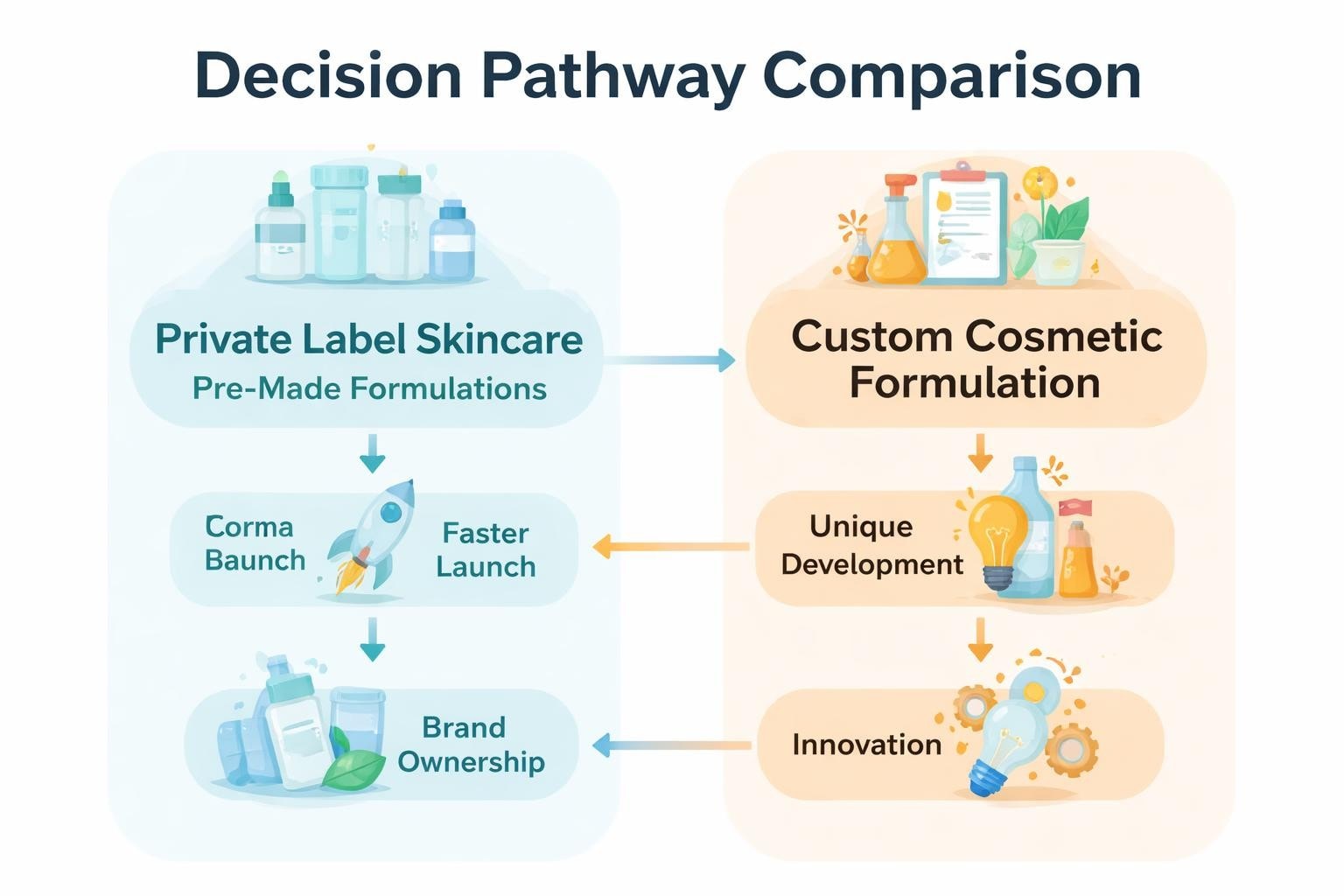
Understanding the difference between custom formulation and private label manufacturing helps you select the right approach for your brand. Private label involves selecting from pre-existing formulations that multiple brands may use, often with customization limited to fragrance, color, or packaging. Custom formulation creates unique, proprietary products developed specifically for your brand.
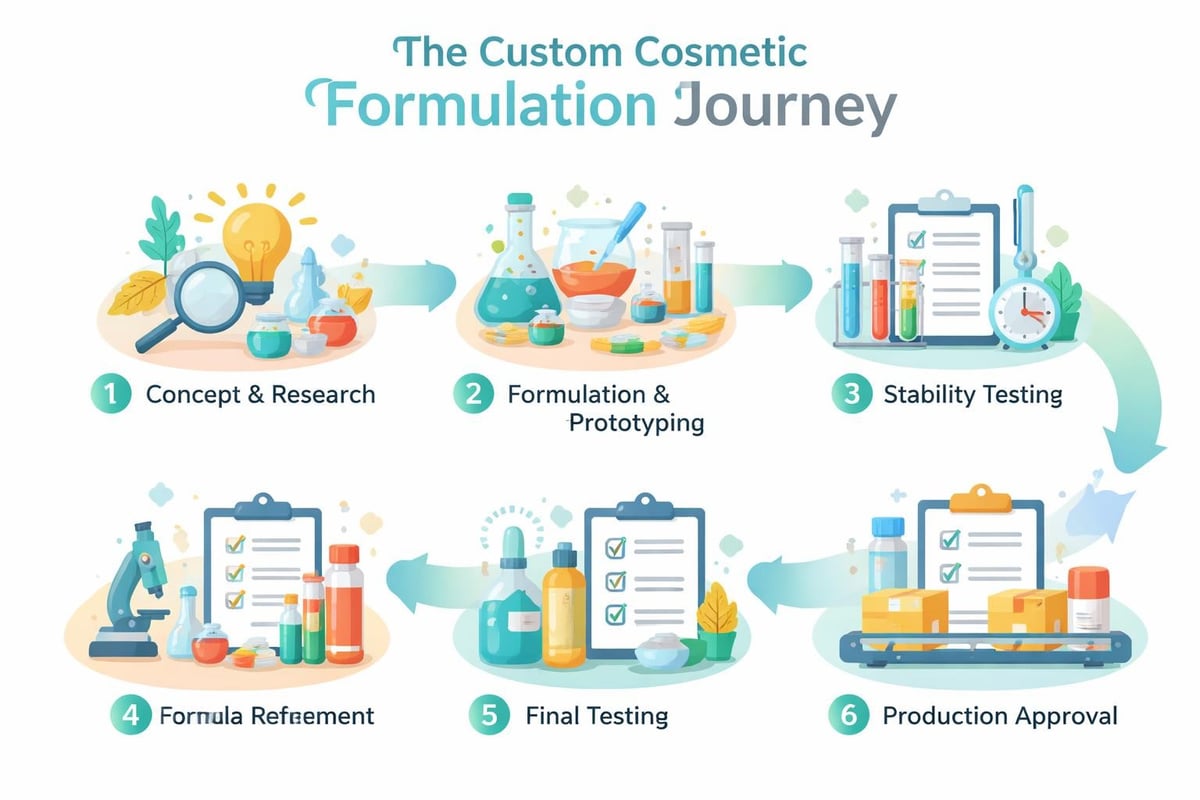
While private label offers faster time-to-market and lower development costs, custom formulation provides true product differentiation and intellectual property ownership. For brands serious about standing out in competitive markets, partnering with manufacturers offering comprehensive custom formulation services delivers long-term strategic advantages.
Verifying Regulatory Compliance and Safety Protocols
Regulatory compliance isn't optional in the cosmetics industry. Manufacturers must navigate complex requirements that vary by market, product category, and ingredient composition. Partnering with a manufacturer who prioritizes compliance protects your brand from costly recalls, legal challenges, and reputational damage.
Regional Regulatory Knowledge
Different markets impose distinct regulatory frameworks for cosmetic products. The European Union's cosmetics regulations differ significantly from FDA requirements in the United States, while markets like China, Canada, and Australia each maintain unique standards. When evaluating how to find a reliable cosmetic manufacturer, prioritize facilities with demonstrated expertise in your target markets.
A competent manufacturer should:
- Maintain current knowledge of regulations in relevant markets
- Provide guidance on ingredient restrictions and labeling requirements
- Conduct or coordinate necessary safety assessments and testing
- Prepare required documentation for product registration or notification
- Stay updated on regulatory changes that may impact existing products
Safety Testing and Documentation
Comprehensive safety testing validates that products are safe for consumer use under normal and reasonably foreseeable conditions. ISO 22716 compliance testing ensures manufacturers follow systematic approaches to quality control and safety verification.
Essential safety testing components include:
- Microbial challenge testing to verify preservative efficacy
- Stability testing under various temperature and humidity conditions
- Compatibility testing between formulations and packaging materials
- Patch testing or human repeat insult patch tests (HRIPT) for irritation and sensitization assessment
- Heavy metal testing and contaminant screening
Documentation of these tests becomes part of your product's safety file, a critical component for regulatory compliance and liability protection.
Investigating Supply Chain Transparency and Ingredient Sourcing
The integrity of finished products begins with the quality of raw materials. Understanding a manufacturer's ingredient sourcing practices reveals their commitment to transparency, sustainability, and consistent quality.
Supplier Vetting and Qualification
Reputable manufacturers implement rigorous supplier qualification programs that verify the quality, authenticity, and regulatory compliance of all ingredients. This process includes reviewing supplier certifications, conducting audits, testing incoming materials, and maintaining approved vendor lists.
When exploring how to choose reliable cosmetic ingredient suppliers, manufacturers should demonstrate established relationships with reputable suppliers and willingness to accommodate your preferences for specific ingredient sources, particularly for specialty or signature components.
Traceability and Documentation
Complete traceability allows manufacturers to track every ingredient from its source through final product distribution. This capability proves essential during quality investigations, enables targeted recalls if necessary, and supports sustainability claims by verifying ethical and environmental sourcing practices.
Request information about:
- Batch record systems and documentation practices
- Certificate of Analysis (CoA) requirements for raw materials
- Traceability protocols for tracking ingredients through production
- Supplier diversity and backup sourcing strategies
- Sustainability certifications for key ingredients
For brands emphasizing natural or sustainable positioning, manufacturers who can document ingredient origins and environmental credentials enable authentic storytelling and transparent marketing communications.
Conducting Site Visits and Facility Inspections
Virtual communications and documentation reviews provide valuable information, but nothing replaces firsthand observation of manufacturing facilities. Site visits reveal operational realities that may not emerge through remote evaluation.
What to Observe During Facility Tours
Schedule comprehensive facility tours that include production areas, quality control laboratories, warehousing, and packaging operations. Pay attention to cleanliness, organization, equipment maintenance, and employee professionalism. These observations provide insights into the manufacturer's operational culture and attention to detail.
Critical areas to evaluate:
- Facility cleanliness and organization throughout all areas
- Separation between different production zones to prevent cross-contamination
- Employee hygiene practices and protective equipment usage
- Equipment condition and maintenance evidence
- Raw material storage conditions and inventory management
- Finished goods warehousing and quality segregation practices
- Documentation systems and record accessibility
Meeting the Production Team
Interactions with production staff, quality managers, and technical personnel reveal the depth of expertise and communication effectiveness you can expect throughout your partnership. Assess their responsiveness to questions, willingness to explain processes, and genuine interest in understanding your brand's unique requirements.
Understanding how to find a reliable cosmetic manufacturer requires evaluating both technical capabilities and cultural fit. The best manufacturing partnerships involve collaborative problem-solving, transparent communication, and shared commitment to excellence.
Reviewing References and Portfolio Examples
Past performance often predicts future results. Examining a manufacturer's track record with previous and current clients provides valuable insights into their reliability, quality consistency, and partnership approach.
Client References and Testimonials
Request references from brands similar to yours in terms of product categories, production volumes, or market positioning. Speaking directly with current clients reveals practical insights about working relationships, problem resolution, communication effectiveness, and overall satisfaction.
Questions for reference conversations:
- How long have you worked with this manufacturer?
- What has been your experience with quality consistency across batches?
- How does the manufacturer handle problems or quality issues?
- What is their typical lead time from order to delivery?
- How responsive are they to communication and requests?
- Would you choose this manufacturer again for new product launches?
Portfolio and Case Studies
Review the manufacturer's portfolio to assess their experience with products similar to yours. Facilities specializing in skincare may lack expertise in color cosmetics or hair care formulations. Manufacturers experienced with personal care and cosmetic products across categories demonstrate versatility and breadth of technical knowledge.
Case studies provide detailed information about specific projects, highlighting how manufacturers approached formulation challenges, met tight timelines, or achieved particular performance objectives. These examples illustrate their problem-solving capabilities and innovation potential.
Evaluating Communication and Customer Service
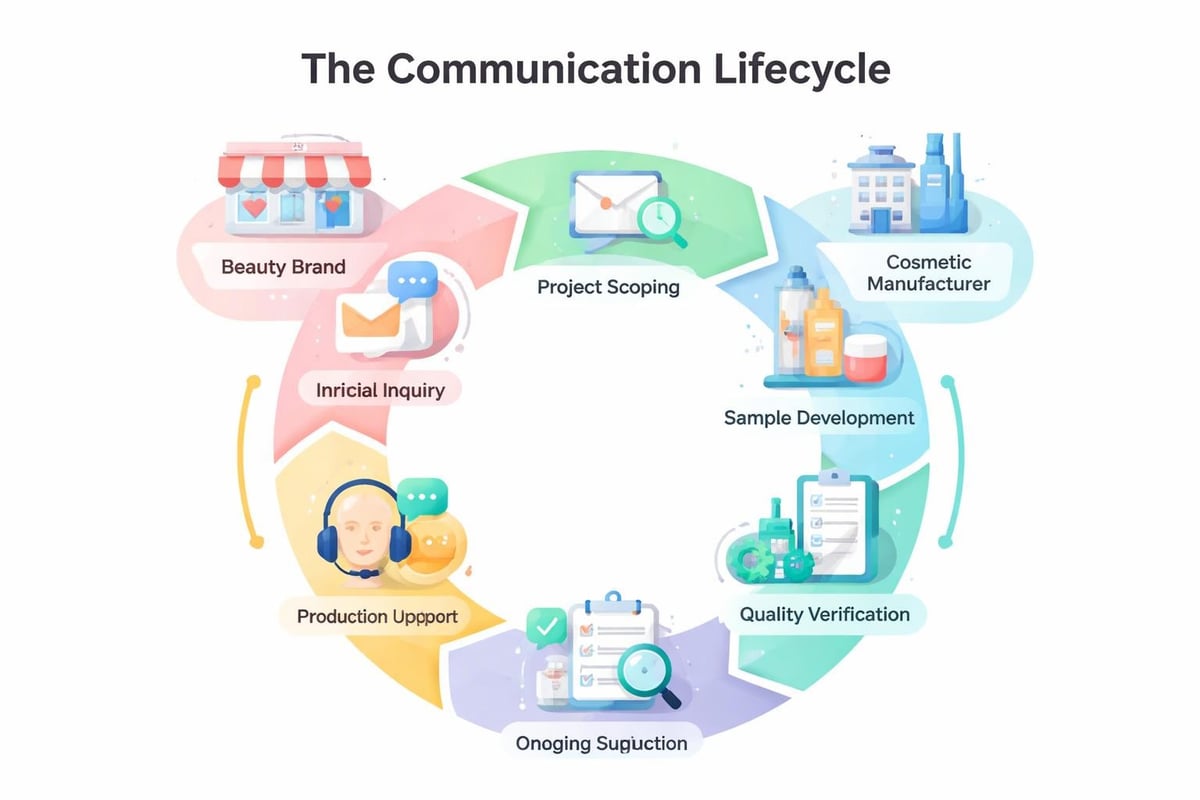
Technical capabilities matter immensely, but effective communication determines whether those capabilities translate into successful partnerships. Manufacturers with poor communication create frustration, delays, and misalignment that undermine even the best formulations.
Responsiveness and Accessibility
From initial inquiries through ongoing production, evaluate how quickly and thoroughly manufacturers respond to questions and requests. Delays in communication during the evaluation phase often foreshadow challenges throughout the partnership. Reliable manufacturers maintain accessible points of contact and provide clear timelines for responses and deliverables.
Professional manufacturers assign dedicated account managers or project coordinators who understand your brand, maintain continuity across communications, and proactively address potential issues before they impact production schedules.
| Communication Aspect | Green Flags | Red Flags |
|---|---|---|
| Initial Response Time | Within 24-48 business hours | One week or longer without response |
| Detail in Responses | Comprehensive answers addressing all questions | Vague or incomplete information |
| Project Updates | Proactive status communications | Only responsive when prompted |
| Problem Resolution | Transparent about issues with proposed solutions | Defensive or dismissive of concerns |
| Documentation | Clear written confirmations and specifications | Reliance on verbal agreements only |
Collaborative Approach
The best manufacturing partnerships feel collaborative rather than transactional. Manufacturers who ask thoughtful questions about your brand vision, target market, and product positioning demonstrate genuine interest in your success beyond simply fulfilling production orders.
Understanding Pricing Structures and Payment Terms
Cost considerations significantly influence manufacturer selection, but focusing exclusively on the lowest price often leads to compromised quality or hidden expenses. Understanding pricing structures and what they include ensures accurate comparisons and budget planning.
Cost Components and Pricing Models
Cosmetic manufacturing costs typically include raw materials, labor, overhead, packaging components, and quality testing. Some manufacturers quote all-inclusive prices while others separate formulation development fees, setup charges, and per-unit production costs.
Common pricing models include:
- Per-unit pricing based on production volume with tiered discounts
- Project-based pricing for custom formulation development
- Setup fees for new product launches covering equipment configuration and validation
- Minimum order charges when orders fall below standard MOQs
- Testing and documentation fees for regulatory compliance activities
Request detailed quotations that itemize all costs, allowing transparent comparisons between manufacturers. Be cautious of unusually low quotes that may indicate compromised ingredient quality, inadequate testing, or hidden fees that emerge later.
Payment Terms and Financial Stability
Payment terms reflect both industry standards and individual manufacturer policies. Common structures include deposits upon order confirmation (typically 30-50%), with balance due before shipment or within specified periods after delivery. Flexible payment terms may indicate financial stability and confidence, while rigid advance payment requirements sometimes signal cash flow challenges.
Verify the manufacturer's financial stability through industry references, credit reports, or business longevity. Partnerships with financially unstable manufacturers risk production delays, quality compromises, or incomplete orders if facilities encounter operational difficulties.
Exploring Value-Added Services and Long-Term Support
Beyond core manufacturing capabilities, many facilities offer supplementary services that streamline product development and market entry. These value-added services can differentiate manufacturers and provide comprehensive support for brand growth.
Packaging and Labeling Services
Some manufacturers provide turnkey solutions that include packaging design, sourcing, filling, labeling, and fulfillment services. These integrated capabilities simplify logistics, reduce coordination complexity, and ensure compatibility between formulations and packaging materials.
Manufacturers offering packaging services can:
- Recommend appropriate packaging formats for specific formulations
- Source sustainable or premium packaging components
- Coordinate printing and labeling to meet regulatory requirements
- Provide assembly services for complex packaging configurations
- Arrange fulfillment and distribution to retailers or end customers
Regulatory and Marketing Support
Progressive manufacturers recognize that brand success depends on more than just quality products. Some facilities offer regulatory consulting, stability studies, marketing claims substantiation, and even guidance on brand positioning within competitive markets.
These extended services prove particularly valuable for emerging brands lacking internal expertise in regulatory compliance or product marketing. Manufacturers who provide comprehensive support demonstrate investment in long-term partnerships rather than transactional production relationships.
Leveraging Industry Networks and Resources
Connecting with qualified manufacturers requires knowing where to look. Industry-specific platforms, trade associations, and professional networks provide curated access to verified manufacturers with proven track records.
Manufacturing Directories and Platforms
Specialized platforms like CheckYourLab connect beauty brands with verified cosmetic manufacturers based on specific requirements, production capabilities, and geographic preferences. These curated directories streamline the search process by pre-qualifying facilities and providing detailed capability profiles.
For brands prioritizing domestic production, resources like Makers Row's cosmetic manufacturer directory focus specifically on USA-based facilities, emphasizing the benefits of local manufacturing including faster communication, easier facility visits, and simplified logistics.
Industry Events and Trade Shows
Cosmetics industry trade shows provide opportunities to meet manufacturers face-to-face, observe product samples, and initiate relationships with potential partners. Events like in-cosmetics, Cosmoprof, and regional beauty industry gatherings attract manufacturers actively seeking new brand partnerships.
These venues allow you to:
- Compare multiple manufacturers' capabilities in concentrated timeframes
- See finished product examples demonstrating quality standards
- Discuss custom requirements directly with technical teams
- Collect information materials and contact details for follow-up
- Observe how manufacturers present themselves professionally
Protecting Intellectual Property and Ownership Rights
Product formulations represent valuable intellectual property that differentiates your brand in competitive markets. Clear agreements regarding formula ownership, confidentiality, and exclusivity protect your investments in product development.
Formula Ownership Agreements
Some manufacturers retain ownership of formulations they develop, licensing them to brands for production. This arrangement limits your ability to switch manufacturers or prevents taking formulations in-house if you eventually build internal production capabilities.
Prefer manufacturers who grant complete formula ownership upon development completion and final payment. Full ownership ensures you control your intellectual property, can modify formulations as needed, and aren't locked into single-source manufacturing relationships.
Confidentiality and Non-Disclosure
Before sharing proprietary information, product concepts, or market strategies, establish formal confidentiality agreements protecting your intellectual property. Non-disclosure agreements (NDAs) should cover:
- Proprietary formulation information and ingredient combinations
- Market research and consumer insights
- Brand positioning and marketing strategies
- Pricing structures and business models
- Future product development plans
Reputable manufacturers readily sign appropriate confidentiality agreements, understanding they protect both parties' interests and establish professional relationship boundaries.
Finding the right cosmetic manufacturer represents one of the most consequential decisions for beauty brands, influencing product quality, market competitiveness, and long-term growth potential. By systematically evaluating certifications, capabilities, communication, compliance, and cultural fit, you can identify manufacturing partners who align with your brand vision and operational requirements. The INCI Lab specializes in award-winning custom formulations for cosmetics, personal care, and pet care products, offering entrepreneurs and established brands complete formula ownership, eco-friendly practices, and comprehensive support from concept through production. Partner with experts who understand how to transform your vision into high-performance products that stand out in competitive markets.