

The world of beauty products manufacturing is rapidly changing as we look toward 2026. Consumer demand for smart, sustainable, and high-performing products is driving this transformation.
Manufacturers, entrepreneurs, and established brands all face new challenges and opportunities. This guide explores the trends, technologies, and strategies that will shape the future of beauty products manufacturing.
Gain expert insights, discover data-backed market outlooks, and learn actionable steps to future-proof your product development. Use this knowledge to optimize your manufacturing strategy and stay ahead in the evolving beauty landscape.
The Evolving Beauty Products Market: 2026 Outlook
The landscape of beauty products manufacturing is evolving rapidly as we move toward 2026. Shifting consumer preferences, new market entrants, and demographic changes are all influencing where and how growth will occur. This section examines the market’s size, segmentation, and the larger forces shaping demand, providing a detailed snapshot of what manufacturers can expect in the coming year.
Market Size, Growth, and Segmentation
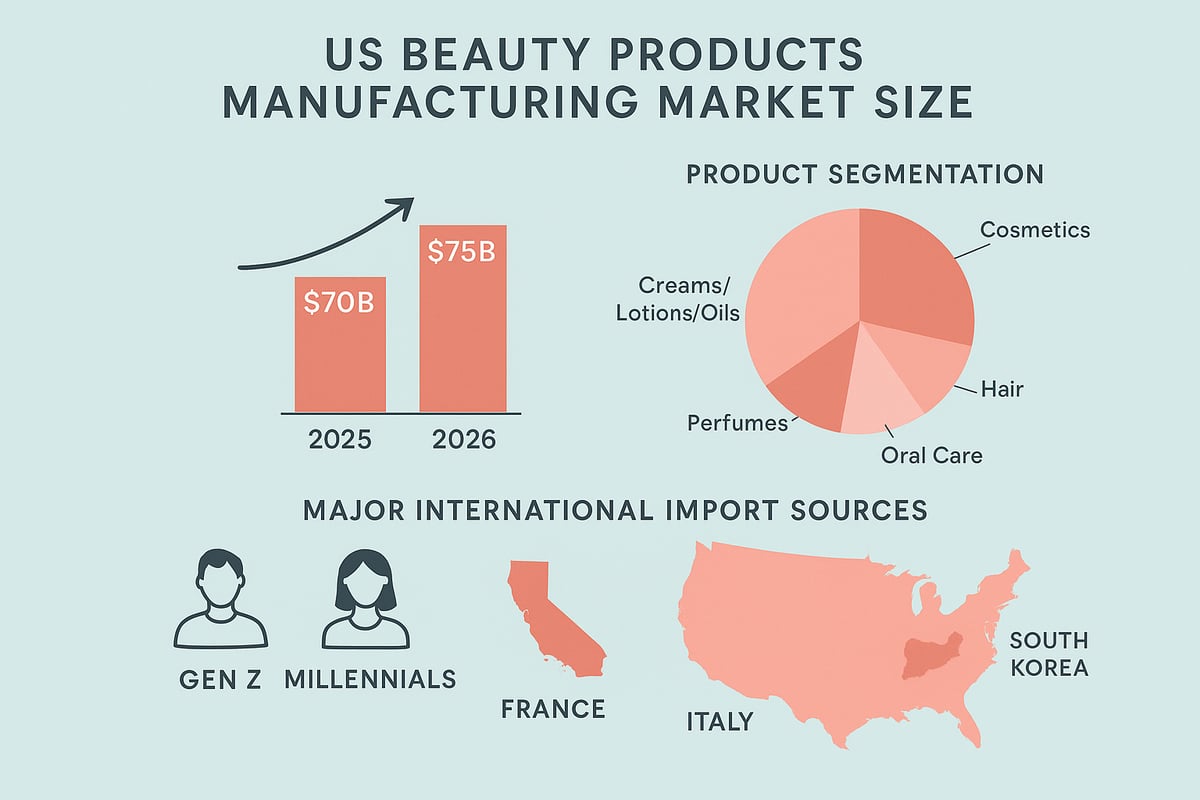
The US beauty products manufacturing sector is poised for a rebound in 2026, with revenue projected at $39.3 billion for 2025 and a modest uptick expected the following year. This recovery signals renewed energy in the industry after several challenging years.
Product segmentation remains diverse, with five primary categories:
- Cosmetics (makeup, powders, color products)
- Creams, lotions, and oils
- Hair preparations
- Perfumes and fragrances
- Oral care products
Consumers are becoming more selective, often choosing to splurge on premium items while seeking value in everyday essentials. This trend toward premiumization and value-driven purchases is especially evident among younger buyers.
Demographically, Gen Z and Millennials are now the dominant beauty consumers. They value authenticity, inclusivity, and innovative features in their products. California continues to lead as the hub for beauty products manufacturing, hosting over 20 percent of all US manufacturers due to its economic scale and fashion-forward culture.
International competition is intensifying, with substantial imports from China, Mexico, France, Italy, and South Korea. These global players influence both pricing and product trends, making adaptability crucial. Leading companies like L'Oréal USA, Unilever N.V., and Procter & Gamble collectively generate multi-billion-dollar revenues, setting benchmarks for quality and innovation.
For a deeper dive into market segmentation and future growth, consult the beauty industry growth forecasts through 2026, which offers valuable insights on emerging trends and competitive dynamics.
| Segment | Share (%) | Key Trends |
|---|---|---|
| Cosmetics | 28 | Premiumization, innovation |
| Creams/Lotions | 24 | Natural, multifunctional |
| Hair Preparations | 20 | Customization, scalp care |
| Perfumes | 15 | Niche, artisanal scents |
| Oral Care | 13 | Whitening, clean labels |
Macroeconomic and Consumer Behavior Trends
Macroeconomic factors are playing a significant role in beauty products manufacturing as inflation, fluctuating disposable incomes, and economic uncertainty continue to affect consumer spending. During times of economic stress, consumers often shift to affordable alternatives or reduce discretionary purchases, challenging brands to find new ways to maintain loyalty.
Despite a 3.9 percent decline in industry revenue between 2020 and 2025, the outlook for beauty products manufacturing is optimistic. As the economy stabilizes, rising disposable incomes and renewed consumer confidence are expected to drive demand upward through 2026 and beyond.
Manufacturers are responding by offering value-focused lines alongside premium products, ensuring that all demographics remain engaged. The rise of digital shopping and direct-to-consumer models has also made it easier for brands to adapt quickly to trend shifts and reach new audiences.
Post-pandemic, consumers are more conscious of health, sustainability, and authenticity, influencing purchasing decisions and product development. Beauty products manufacturing must now balance innovation with affordability and ethical sourcing to capture market share in this dynamic environment.
The next wave of growth will favor brands that can quickly interpret consumer signals, adjust product lines, and leverage data-driven insights. By staying attuned to macroeconomic shifts and evolving preferences, manufacturers can position themselves for long-term success.
Key Trends Shaping Beauty Product Manufacturing in 2026
The landscape of beauty products manufacturing in 2026 is rapidly evolving. Brands, manufacturers, and entrepreneurs must stay ahead by embracing the latest trends and innovations. These shifts are not only driven by consumer expectations but also by regulatory, technological, and global market forces.
Sustainability and Eco-Friendly Manufacturing
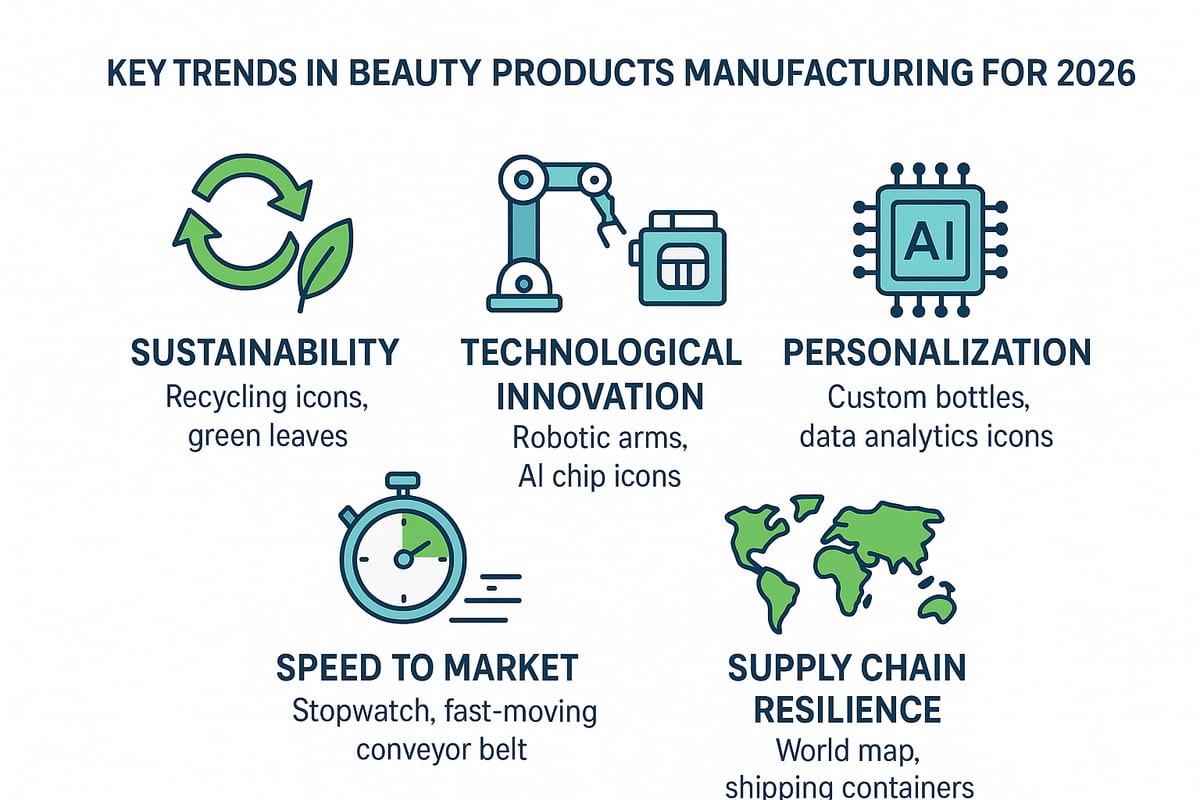
Sustainability is at the heart of beauty products manufacturing in 2026. Consumers are seeking clean, green, and ethical products, pushing brands to adopt eco-friendly practices. From sustainable ingredient sourcing to biodegradable and refillable packaging, every stage of the process reflects this shift.
Regulations and retailers demand transparency, and brands are reformulating to remove microplastics and harmful chemicals. For an in-depth look at sustainable innovations, explore the sustainable skincare manufacturing secrets shaping the industry.
- Biodegradable packaging materials
- Waterless and concentrated formulas
- Eco-certifications and third-party audits
In beauty products manufacturing, sustainability is now a competitive necessity, not just a trend.
Technological Innovation and Digitalization
The rise of technology is transforming beauty products manufacturing at every level. Artificial intelligence streamlines formulation and ingredient tracking, while supply chains are automated for efficiency and quality control.
Smart factories use IoT-enabled production lines to minimize waste and optimize processes. Digital twins and virtual product testing accelerate research and development, allowing brands to launch products faster and with greater confidence.
Blockchain technology is gaining ground for ingredient traceability and anti-counterfeiting, building consumer trust. Beauty products manufacturing in 2026 thrives by integrating these advanced systems.
Personalization and Customization
Personalization is reshaping beauty products manufacturing as consumers demand products tailored to their unique skin types and preferences. Brands are leveraging data analytics and direct-to-consumer platforms to deliver custom solutions at scale.
Examples include custom-blended skincare, personalized makeup, and adaptive haircare routines. These offerings increase consumer loyalty and differentiate brands in a crowded market.
- AI-powered skin analysis
- Online quizzes for product recommendations
- On-demand manufacturing for small batches
By focusing on personalization, beauty products manufacturing can address evolving consumer needs and create memorable experiences.
Speed to Market and Agile Manufacturing
In 2026, speed is a defining factor in beauty products manufacturing. Trends move quickly, and brands must adapt with rapid product development cycles.
Modular manufacturing setups and flexible production lines enable quick changeovers. Collaboration with contract manufacturers and private label partners offers scalability and agility.
- Fast prototyping and testing
- Limited-edition product drops
- Responsive supply chain management
Agility ensures beauty products manufacturing stays relevant and competitive in a dynamic market.
Globalization and Supply Chain Resilience
Globalization brings both opportunities and challenges to beauty products manufacturing. Navigating tariffs, supply chain disruptions, and raw material shortages is essential for sustained growth.
Manufacturers diversify suppliers and explore nearshoring to reduce risk and improve responsiveness. Sourcing alternatives for packaging and ingredients helps mitigate international uncertainties.
- Multi-region supplier networks
- Inventory optimization strategies
- Local sourcing initiatives
Building resilient operations ensures beauty products manufacturing can weather global market shifts and deliver consistent value.
Step-by-Step Guide: Modern Beauty Product Manufacturing Process
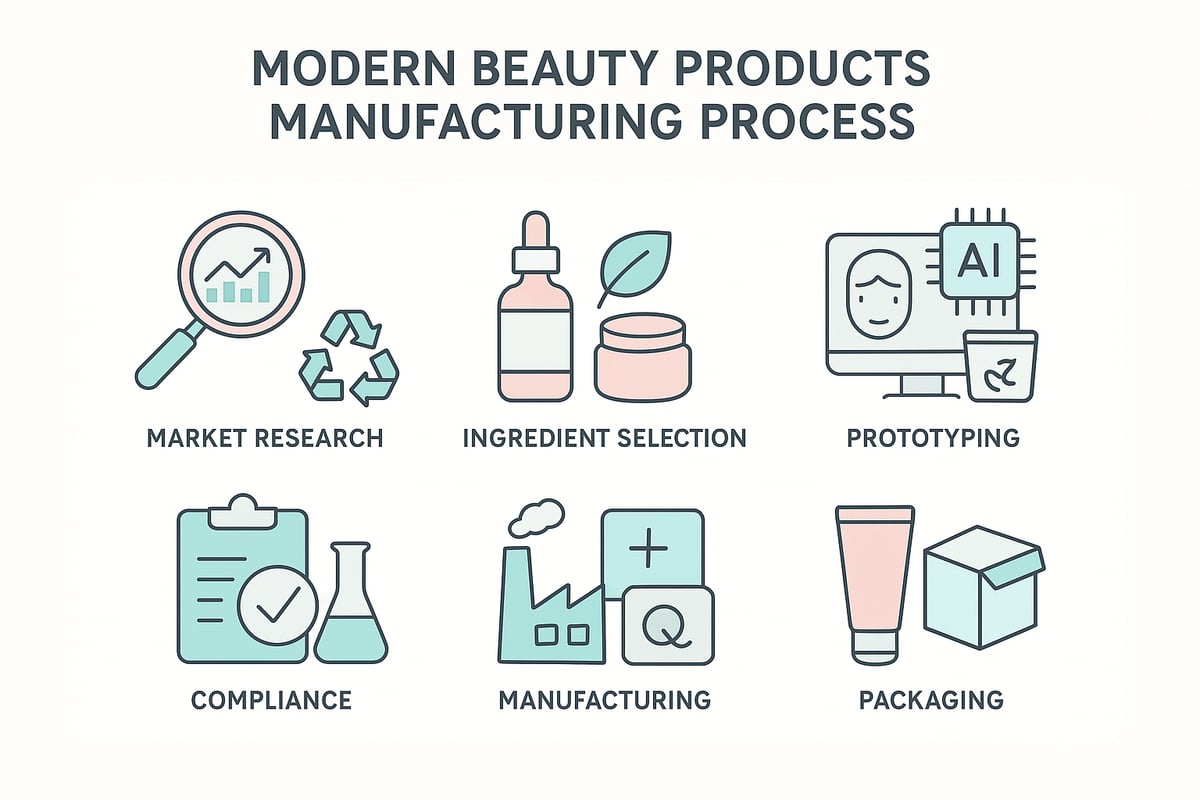
Navigating the landscape of beauty products manufacturing in 2026 requires a precise, methodical approach. Each phase, from concept to consumer, involves unique challenges and opportunities. This step-by-step guide demystifies the process, empowering brands to achieve innovation, compliance, and commercial success.
Step 1: Market Research and Concept Development
A successful beauty products manufacturing journey begins with in-depth market research and sharp concept development. Brands must identify emerging trends, consumer pain points, and gaps in the current market landscape. Social listening tools and trend reports shed light on evolving preferences, while competitor analysis helps benchmark expectations.
- Analyze consumer demographics and psychographics
- Study regulatory shifts and ingredient bans
- Use data to spot rising categories and white spaces
Effective concept development turns insights into actionable product ideas. Teams brainstorm, validate, and refine concepts based on feasibility, projected demand, and alignment with brand values. In 2026, beauty products manufacturing is data-driven, with brands leveraging analytics to inform every step. The right foundation here sets the stage for innovation and growth.
Step 2: Formulation and Ingredient Selection
With a clear concept, the next focus is formulation and sourcing the right ingredients. Safety, efficacy, and sustainability are now non-negotiable in beauty products manufacturing. Brands prioritize plant-based actives, biotech-derived components, and ingredients with clean, transparent supply chains.
- Select ingredients that meet global compliance standards
- Balance performance with sensorial appeal and skin compatibility
- Prioritize eco-friendly and cruelty-free options
AI-driven tools and R&D partnerships accelerate the formulation process, enabling rapid iteration and testing. For a deeper dive into strategies that can revolutionize your approach, explore the custom cosmetic formulation process. The right formulation strategy builds the bridge between concept and commercial viability.
Step 3: Prototyping and Testing
After formulation, prototyping and rigorous testing validate the product. Lab-scale batches are created to assess stability, texture, and compatibility. Clinical and consumer trials are vital for proving claims and ensuring safety.
- Conduct stability and shelf-life assessments
- Use digital twins for virtual prototyping and accelerated R&D
- Gather feedback through focus groups and beta testing
In 2026, beauty products manufacturing integrates AI for predictive testing, reducing time to market. Real-world trials remain essential, especially for products with active claims. Documenting results establishes credibility with both regulators and consumers.
Step 4: Regulatory Compliance and Safety Assessment
Navigating compliance is a critical checkpoint in beauty products manufacturing. Global regulations evolve constantly, and brands must stay current with requirements from the FDA, EU, and Asia-Pacific authorities.
- Verify ingredient lists against regulatory databases
- Prepare clear, compliant product labels
- Conduct comprehensive safety and allergen assessments
Transparency is key. Ingredient disclosures and proper labeling protect brands from legal risks and build consumer trust. Adapting quickly to bans or new safety standards ensures smooth product launches across multiple markets.
Step 5: Manufacturing and Quality Control
Scaling production requires robust systems and strict quality control. Modern beauty products manufacturing facilities use smart automation and IoT-enabled monitoring to optimize efficiency and maintain batch consistency.
- Transition from pilot batch to full-scale manufacturing
- Implement Good Manufacturing Practices (GMP)
- Use automated quality checks to detect deviations early
Quality control checkpoints verify texture, appearance, and microbial safety. Digital tracking systems support traceability, which is crucial for recalls or audits. Reliable manufacturing and QC uphold brand reputation and enable rapid scaling.
Step 6: Packaging, Sustainability, and Distribution
The final phase in beauty products manufacturing is packaging and distribution, now inseparable from sustainability. Brands select eco-friendly materials, such as recyclable plastics or biodegradable options, and design for minimal waste.
- Choose packaging that protects and preserves formulas
- Incorporate refillable or reusable designs
- Plan logistics to minimize carbon footprint
Distribution strategies balance cost, speed, and reach. Sustainable packaging and efficient logistics not only appeal to eco-conscious consumers but also future-proof brands against evolving regulations. The journey from concept to shelf is complete, but ongoing optimization keeps brands ahead in a dynamic market.
Regulatory Landscape and Compliance in 2026
Navigating the regulatory landscape is more critical than ever for beauty products manufacturing in 2026. As the market expands and consumers demand greater safety and transparency, compliance is not just a legal requirement but a key differentiator.
Global Regulatory Trends
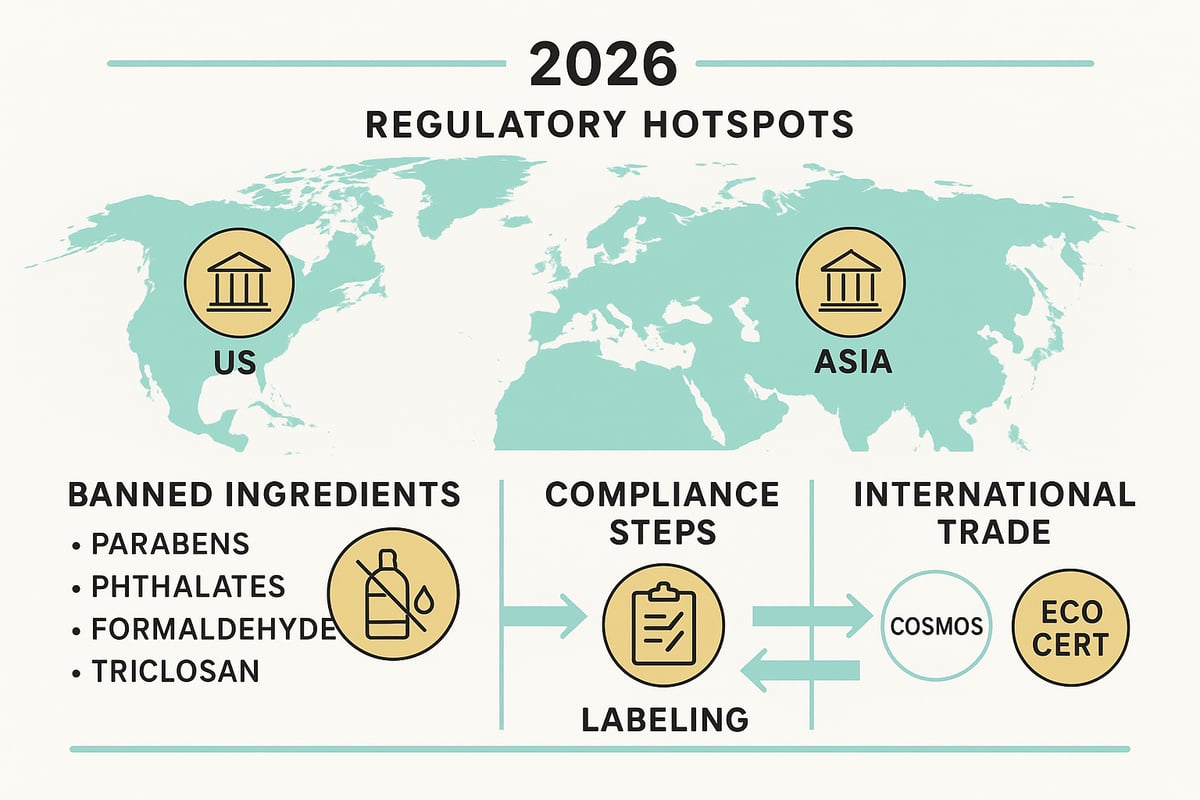
Global regulatory frameworks for beauty products manufacturing are tightening as 2026 approaches. Authorities in the US, EU, and Asia-Pacific are enforcing stricter ingredient bans, comprehensive safety assessments, and more rigorous transparency requirements. Harmonization of standards across these major markets is accelerating, making it essential for manufacturers to stay informed and agile.
Microplastic bans, broader fragrance allergen disclosures, and enhanced animal testing restrictions are reshaping product development. Manufacturers must implement robust compliance protocols, ensuring every ingredient and finished product meets evolving local and international guidelines. For a detailed breakdown of compliance steps and safety protocols, refer to the Cosmetic product safety and compliance guide, which outlines best practices for regulatory success.
Staying ahead of these trends is vital for beauty products manufacturing, as non-compliance can result in costly recalls, reputational damage, and restricted market access.
Labeling, Claims, and Certifications
Labeling requirements have become more complex in the beauty products manufacturing sector. Brands must navigate increased scrutiny over "clean beauty," "natural," and sustainability-related claims. Regulators and retailers now demand verifiable proof for all product assertions, making transparency a fundamental expectation.
Third-party certifications such as COSMOS and ECOCERT are increasingly necessary to validate ingredient sourcing, manufacturing processes, and overall brand integrity. These certifications not only help with regulatory compliance but also build consumer trust, which is critical for market competitiveness.
Manufacturers should regularly review evolving labeling laws to avoid inadvertent violations. In beauty products manufacturing, clear, accurate labeling and credible certifications distinguish responsible brands from competitors and support smoother entry into global markets.
Import/Export and Trade Considerations
International trade dynamics are shaping the future of beauty products manufacturing. Tariffs, shifting trade agreements, and new documentation requirements all influence raw material sourcing and finished goods distribution. The impact of changes like Brexit and US-China tariffs requires manufacturers to continuously assess their supply chains and compliance processes.
Proper documentation remains essential for cross-border sales, as regulatory discrepancies can delay shipments or lead to product seizures. Manufacturers adapting to higher tariffs or sudden regulatory changes are increasingly diversifying suppliers and exploring local sourcing options.
For beauty products manufacturing businesses, proactive monitoring of trade policies and regulatory shifts ensures ongoing access to key markets and minimizes supply chain disruptions.
Manufacturing Challenges and Solutions for 2026
Beauty products manufacturing in 2026 faces a rapidly shifting landscape. As the industry evolves, manufacturers must overcome a mix of global supply chain issues, economic pressures, fierce competition, and the need for speed. Addressing these challenges with strategic solutions is essential for success.
Supply Chain Disruptions and Raw Material Sourcing
Unpredictable supply chains continue to impact beauty products manufacturing. Post-pandemic volatility, geopolitical tensions, and shipping delays disrupt ingredient availability. To stay resilient, manufacturers are diversifying suppliers, increasing local sourcing, and optimizing inventory management.
- Build relationships with regional suppliers
- Invest in digital supply chain tracking
- Maintain safety stock of critical ingredients
Adopting sustainable practices in cosmetic manufacturing also helps secure reliable, ethical sources while meeting consumer expectations. These strategies support a more robust beauty products manufacturing process.
Rising Costs and Economic Pressures
Inflation and fluctuating energy prices are driving up production costs in beauty products manufacturing. Manufacturers must balance quality with cost control to protect margins. Automation and process optimization are key solutions.
- Implement energy-efficient equipment
- Automate repetitive production tasks
- Reduce waste through lean manufacturing
Exploring alternative ingredients and packaging can also lower expenses. By embracing innovation, beauty products manufacturing companies can maintain competitiveness even as costs rise.
Competition and Differentiation
The beauty products manufacturing sector is more crowded than ever, with indie brands and multinational giants vying for attention. Standing out requires unique formulations, transparent storytelling, and alignment with consumer trends.
- Focus on niche ingredients or claims
- Share authentic brand stories and values
- Leverage trend insights for timely launches
Consulting the 2025 beauty trends report can help brands identify emerging opportunities for differentiation. Innovating in both product and marketing is essential for beauty products manufacturing success.
Speed to Market and Innovation
Consumers expect rapid responses to trends, making speed to market a top priority in beauty products manufacturing. Agile R&D, flexible production lines, and close partnerships with contract manufacturers enable quick pivots.
- Use modular manufacturing setups
- Collaborate with private label partners
- Employ digital tools for faster prototyping
Investing in these areas allows beauty products manufacturing teams to launch new products swiftly, capturing demand before trends shift.
Future Opportunities and Strategic Insights for Beauty Manufacturers
The future of beauty products manufacturing is shaped by dynamic shifts in consumer preferences, technology, and sustainability demands. As the industry evolves, manufacturers must identify new opportunities and develop strategies that ensure long-term growth and relevance.
Emerging Product Categories and White Spaces
Beauty products manufacturing is experiencing rapid diversification, with hybrid products at the forefront. Skincare-makeup combinations, wellness-infused beauty, and SPF-enhanced cosmetics are fueling growth. The rise of men’s and gender-neutral segments is also unlocking new consumer bases.
According to global beauty market growth projections, these categories will see significant expansion through 2030. Microbiome-friendly formulas and functional beauty offerings are gaining traction, creating ample space for innovation. Capitalizing on these trends will be crucial for brands focused on beauty products manufacturing.
- Hybrid skincare-makeup launches
- Men’s and gender-neutral product lines
- Microbiome-focused and wellness-infused solutions
Sustainability as a Competitive Advantage
Sustainability is no longer optional in beauty products manufacturing. Brands that prioritize authentic eco-initiatives are building lasting loyalty. Circular economy models, such as refill stations and take-back programs, are helping reduce waste and differentiate brands.
Innovative packaging solutions, including advancements in cosmetic packaging technology, are driving consumer engagement and supporting green commitments. Upcycled ingredients and zero-waste packaging are becoming industry standards. To remain competitive, manufacturers must embed sustainability throughout their operations.
Digital Transformation and Direct-to-Consumer (DTC) Models
Digital transformation is reshaping beauty products manufacturing from concept to consumer. E-commerce, AI-powered personalization, and virtual try-ons are enhancing the buying experience and deepening consumer relationships.
Direct-to-consumer brands are leveraging data to inform product development and optimize marketing strategies. Subscription models and influencer collaborations are accelerating market reach. Embracing digital tools will be essential for manufacturers seeking agility in beauty products manufacturing.
Strategic Partnerships and Innovation Ecosystems
Collaboration is key to unlocking new value in beauty products manufacturing. Partnerships with biotech startups, ingredient suppliers, and universities provide access to cutting-edge technologies and novel actives.
Joint ventures enable brands to co-develop unique packaging or breakthrough formulations. This ecosystem approach accelerates innovation and helps manufacturers adapt quickly to market trends. For sustained success, companies must actively participate in these networks and integrate them into their beauty products manufacturing strategy.
Preparing for the Next Wave of Regulatory and Consumer Shifts
The regulatory landscape for beauty products manufacturing is becoming more complex. Proactive monitoring of evolving ingredient bans, safety standards, and sustainability requirements is essential.
Consumers are increasingly demanding transparency and ethical sourcing. Brands that anticipate changes, invest in R&D, and adopt alternatives ahead of regulatory deadlines will secure a competitive edge. Staying ahead of these shifts ensures compliance and strengthens consumer trust in beauty products manufacturing.
Actionable Steps for Manufacturers
To thrive in the next era of beauty products manufacturing, brands should:
- Invest in sustainable innovation and transparent supply chains
- Build agile, resilient operations
- Foster a culture of continuous learning and consumer-centricity
Data consistently shows that companies adapting quickly to trends and regulations outperform peers in revenue and brand equity. By embracing future-focused strategies, manufacturers can lead the next wave of beauty products manufacturing.
As you’ve seen throughout this guide, navigating the evolving landscape of beauty product manufacturing in 2026 takes more than just knowing the trends—it’s about making informed choices, embracing sustainable innovation, and building a brand that truly stands out. If you’re inspired to turn these insights into your own success story, why not take the next step? Whether you’re refining an existing line or launching something entirely new, you can tap into expert support and tailored solutions from concept to launch. Ready to bring your vision to life? Start Your Product Journey