
Understanding the language of beauty and personal care starts with mastering the system that governs how every ingredient in your product must be identified. For entrepreneurs launching their first skincare line or established brands reformulating for new markets, navigating inci cosmetic ingredients represents a critical foundation for success. The International Nomenclature of Cosmetic Ingredients (INCI) system provides standardized names that transcend language barriers and regional differences, ensuring clear communication across the global cosmetics industry. Whether you're developing a groundbreaking anti-aging serum or formulating sustainable pet care solutions, comprehending how this naming convention works directly impacts product development, regulatory compliance, and consumer trust.
The Foundation of INCI Naming Standards
The standardized approach to naming cosmetic ingredients emerged from a practical necessity. Before the INCI system was established, manufacturers faced confusion when ingredients appeared under different names across various markets, creating regulatory challenges and consumer uncertainty. The Personal Care Products Council developed this nomenclature to create universal consistency.
Every ingredient used in cosmetics, skincare, and personal care products receives an official INCI name that must appear on product labels. These names follow specific conventions that blend scientific accuracy with practical functionality. Botanical ingredients typically use their Latin binomial names, while chemical compounds employ systematic nomenclature based on their molecular structure. This approach ensures that a consumer in Tokyo can identify the same ingredient as someone shopping in New York, regardless of the local language on the packaging.
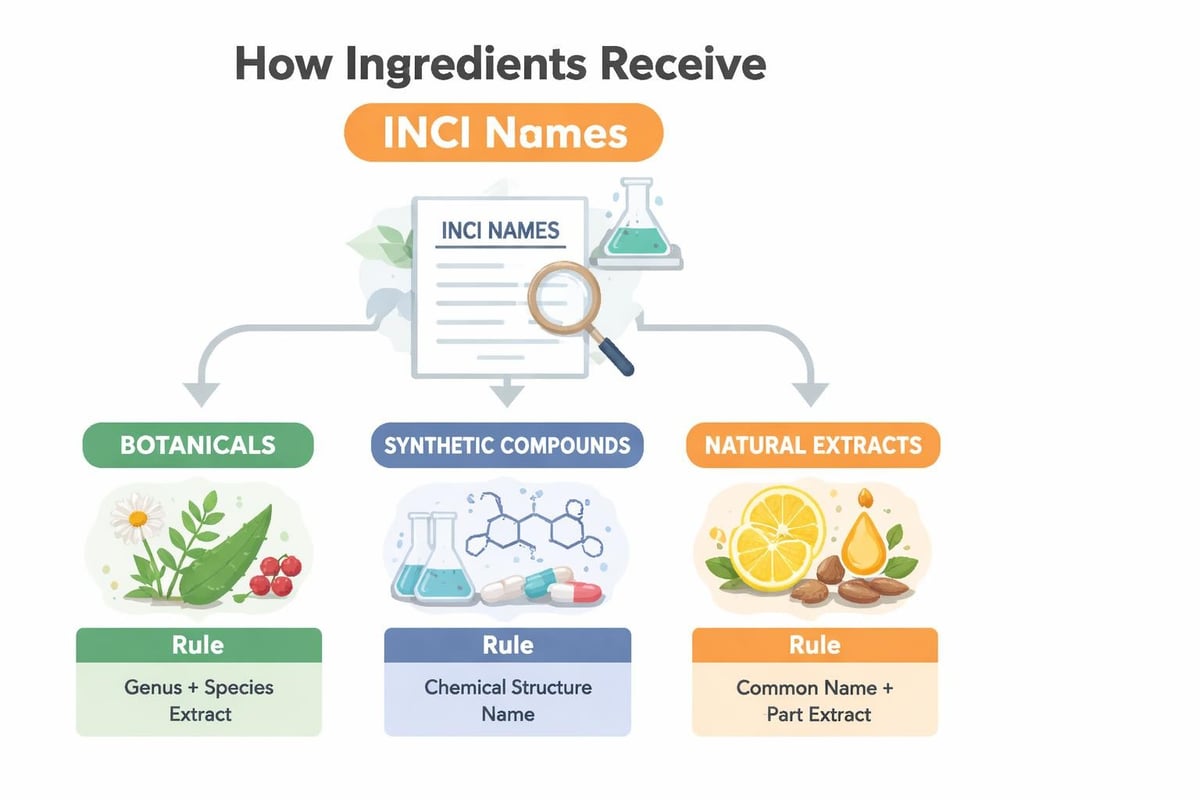
The system distinguishes between various ingredient categories with remarkable precision:
- Plant extracts appear with their genus and species names (for example, Camellia Sinensis for green tea)
- Synthetic polymers follow chemical nomenclature conventions
- Oils and fats use their traditional common names when widely recognized
- Colorants receive Color Index (CI) numbers for universal identification
- Fragrance components may be listed simply as "Parfum" or "Fragrance" with certain exceptions
How INCI Names Support Formulation Development
When developing custom formulations for cosmetics, understanding inci cosmetic ingredients accelerates the entire development process. Formulators communicate precisely about ingredients without ambiguity, ensuring that specifications match exactly between initial concept and final production. This precision becomes particularly valuable when working with contract manufacturers or scaling from prototype to commercial production.
The standardized naming system also facilitates ingredient sourcing across multiple suppliers. A formulator seeking Sodium Hyaluronate can evaluate offerings from suppliers worldwide, confident that the INCI name represents the same molecular compound regardless of the supplier's location or marketing terminology. This global consistency reduces errors, streamlines quality control, and supports transparent supply chain management.
Decoding INCI Ingredient Lists for Product Development
Reading and interpreting INCI lists requires understanding the specific order and presentation rules that govern cosmetic labeling. Ingredients must appear in descending order by weight concentration, with those present at one percent or less potentially listed in any order after the higher concentration ingredients. This regulatory requirement provides valuable competitive intelligence when analyzing successful products in your category.
| Concentration Level | Listing Requirement | Strategic Implications |
|---|---|---|
| Above 1% | Must be in descending order | Reveals primary active ingredients and base formulation |
| At or below 1% | May appear in any order | Includes preservatives, fragrances, and minor additives |
| Colorants | Listed separately after other ingredients | Identified by CI numbers or INCI names |
For brands launching new skincare products, this knowledge transforms how you approach competitive analysis. By examining the INCI lists of market leaders, you can identify formulation strategies, understand ingredient trends, and position your products with differentiated ingredient profiles. However, the INCI list alone doesn't reveal concentrations for ingredients below the one percent threshold, maintaining some proprietary protection for formulators.
Navigating Ingredient Transparency Expectations
Modern consumers increasingly demand transparency about what they apply to their skin, hair, and bodies. The standardized nature of inci cosmetic ingredients supports this transparency by providing consistent, searchable names that consumers can research. Resources like INCIpedia and the INCI dictionary empower consumers to understand ingredient functions and safety profiles.
This transparency trend creates both opportunities and challenges for brands. Educating consumers about ingredient benefits using their INCI names builds credibility and trust. Addressing misconceptions about certain ingredients requires clear communication rooted in scientific evidence. Brands that embrace transparency and provide accessible information about their ingredient choices typically build stronger customer loyalty.

Smart brands leverage this transparency by highlighting hero ingredients with proven efficacy. When your formulation includes powerhouse ingredients backed by clinical research, using the correct INCI name alongside consumer-friendly explanations creates marketing advantage. For instance, describing both "Niacinamide" and its benefits for skin barrier function helps consumers connect the scientific ingredient with tangible results.
Regulatory Compliance and INCI Requirements
Compliance with INCI naming standards extends beyond simple labeling accuracy. The International Cosmetic Ingredient Nomenclature Committee evaluates and assigns official names to new ingredients, ensuring the system evolves with innovation. When formulating with emerging ingredients, understanding this approval process becomes essential.
Different markets maintain varying regulatory requirements around ingredient disclosure:
- United States: FDA requires ingredient declaration using INCI names in descending order of predominance
- European Union: Cosmetics Regulation mandates INCI listing with specific requirements for nanomaterials
- Canada: Similar requirements with additional specifications for bilingual labeling
- Asia-Pacific: Markets like China, Japan, and South Korea each maintain specific ingredient disclosure rules
Working with experienced formulators who understand these regional nuances prevents costly reformulation or relabeling when expanding into new markets. The INCI system provides the foundation, but each jurisdiction may add specific requirements for allergen disclosure, nanomaterial identification, or restricted ingredient warnings.
Quality Control Through Standardized Nomenclature
The precision of inci cosmetic ingredients supports rigorous quality control throughout the production process. When specifications use exact INCI names, manufacturers can verify that received materials match purchase orders, ensuring formulation integrity from batch to batch. This consistency becomes crucial for brands building reputations on reliable product performance.
Documentation systems built around INCI names also facilitate safety assessments and regulatory submissions. Toxicologists and safety assessors can efficiently evaluate ingredient safety profiles when working with standardized nomenclature, accessing existing research and safety data more readily. This efficiency reduces time to market for new product launches while maintaining rigorous safety standards.
Strategic Ingredient Selection Using INCI Knowledge
Selecting ingredients for your formulation requires balancing efficacy, safety, sustainability, and market positioning. Understanding how inci cosmetic ingredients communicate on labels influences these strategic decisions. Some considerations for ingredient selection include:
Consumer perception factors:
- Recognizability of ingredient names to target consumers
- Alignment with clean beauty or specific formulation philosophies
- Potential for negative associations or "free from" marketing claims
- Opportunity to educate consumers about innovative ingredients
Formulation performance criteria:
- Proven efficacy supported by clinical or laboratory testing
- Compatibility with other ingredients in the formula
- Stability across expected shelf life and storage conditions
- Sensory properties that enhance product experience
Sustainability and sourcing:
- Availability of sustainably sourced or certified ingredients
- Supply chain reliability and consistency
- Environmental impact of ingredient production
- Alignment with brand values around eco-friendly practices
The expertise required for custom formulation involves navigating these considerations while creating products that perform exceptionally in their category. Experienced formulators understand that an ingredient list tells a story about your brand's values, scientific approach, and commitment to results.
Leveraging INCI for Competitive Differentiation
Market analysis of competitor INCI lists reveals opportunities for differentiation. By identifying gaps in current offerings or overused ingredient combinations, brands can position new products with distinctive formulation approaches. For example, if leading anti-aging products all feature similar actives, introducing a formulation with alternative, clinically-proven ingredients creates a differentiated market position.
This analysis extends to understanding emerging trends in personal care products. Tracking which new ingredients appear in innovative formulations helps brands stay ahead of market shifts. The appearance of novel botanical extracts, biotechnology-derived actives, or sustainable alternatives signals where the industry is moving and where early-mover advantage exists.
Working With Formulators and Understanding INCI Documentation
Professional formulation development involves extensive documentation where inci cosmetic ingredients appear throughout every stage. From initial concept briefs to final production specifications, precise ingredient naming ensures accuracy and accountability. Understanding this documentation helps brand owners collaborate effectively with formulators and manufacturers.
Key documents where INCI names prove essential:
- Formula specifications detailing exact ingredients and concentrations
- Safety assessments evaluating product safety for intended use
- Stability testing protocols tracking ingredient performance over time
- Manufacturing instructions guiding production procedures
- Quality control standards establishing acceptance criteria for finished products
- Regulatory submissions supporting market authorization requests
When starting a cosmetic brand, new entrepreneurs sometimes underestimate the complexity of proper ingredient documentation. Working with experienced partners who maintain rigorous documentation standards protects your brand from compliance issues and supports smooth scaling as production volumes increase.
Intellectual Property Considerations
While INCI lists must appear on product labels, they represent only part of the formulation story. The specific concentrations, processing methods, and ingredient interactions that create your product's unique performance remain proprietary. This balance between transparency and trade secret protection allows brands to comply with labeling requirements while maintaining competitive advantage.
Smart formulation agreements clarify intellectual property ownership from the project's start. Brands should retain full ownership of their custom formulations, ensuring freedom to manufacture with different partners or bring production in-house as the business grows. This ownership includes not just the formulation document but also the knowledge of why specific ingredients and concentrations were selected.
Future Trends in INCI and Ingredient Innovation
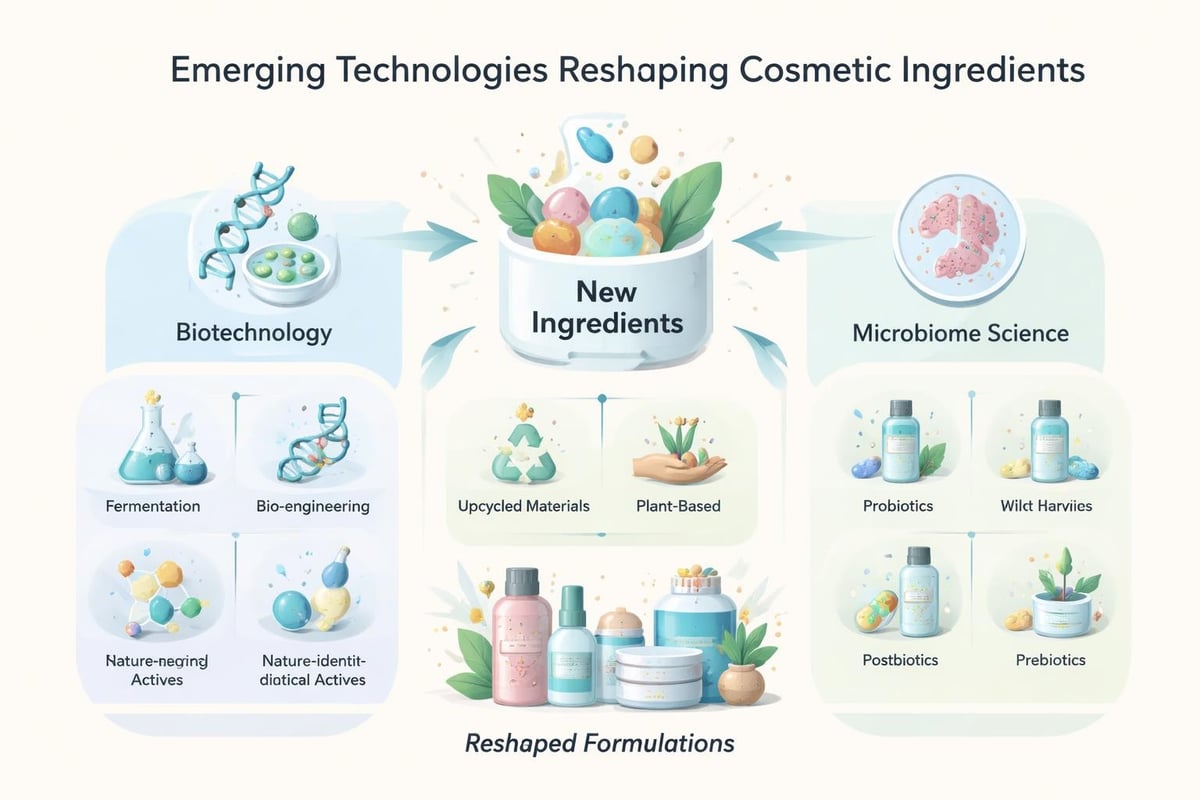
The landscape of inci cosmetic ingredients continues evolving as new technologies and scientific discoveries expand what's possible in cosmetic formulation. Biotechnology-derived ingredients, upcycled materials from food industry byproducts, and novel extraction methods all require INCI names as they enter commercial use. The nomenclature system adapts to accommodate these innovations while maintaining its core standardization principles.
Several trends are reshaping ingredient conversations:
- Biotechnology and fermentation producing sustainable alternatives to traditional ingredients
- Microbiome science introducing probiotics and prebiotics for skin health
- Clean beauty movements driving demand for ingredients perceived as natural or safe
- Transparency technology like QR codes linking to detailed ingredient information
- Personalization trends requiring flexible formulation platforms
Brands positioning themselves for long-term success must balance innovation with ingredient safety and regulatory compliance. The INCI system provides the stable foundation that allows creative formulation while maintaining the consistency that regulators and consumers expect.
Sustainability and Ingredient Sourcing Evolution
Environmental considerations increasingly influence ingredient selection beyond basic formulation requirements. Consumers want to know not just what ingredients appear in products but also how those ingredients were sourced, processed, and delivered. While INCI names don't inherently convey sustainability information, brands can build narratives around their ingredient choices that highlight environmental commitments.
For instance, palm oil derivatives carry sustainability concerns despite being effective cosmetic ingredients. Brands committed to eco-friendly practices might select alternative emulsifiers or source RSPO-certified sustainable palm derivatives, then communicate these choices to environmentally conscious consumers. The INCI name provides the starting point, but the sourcing story creates differentiation.
Practical Application for Brand Builders
Translating INCI knowledge into successful product development requires systematic approaches. Brand builders should develop ingredient evaluation frameworks that consider multiple factors beyond simply following trends. Questions to guide ingredient selection include:
Does this ingredient serve a clear functional purpose in the formulation? Every ingredient should contribute to product performance, stability, or sensory experience. Ingredient lists padded with unnecessary materials dilute efficacy and increase costs without providing value.
Is there robust safety data supporting this ingredient's use? Particularly for newer ingredients or higher concentration applications, safety documentation protects both consumers and brand reputation. Resources like the Cosmetic Ingredient Review provide independent safety assessments.
Can you source this ingredient reliably at the quality and scale your brand requires? Supply chain disruptions can force reformulation if key ingredients become unavailable. Building relationships with reliable suppliers and considering alternative sources prevents production interruptions.
How will this ingredient resonate with your target consumer? Understanding whether your audience prefers familiar ingredients or values innovation shapes selection strategy. Beauty industry expertise helps identify which ingredients build credibility with specific consumer segments.
Building Your Ingredient Knowledge Base
Continuous learning about inci cosmetic ingredients supports better decision-making throughout your brand's evolution. Successful brand builders invest time understanding ingredient functions, safety profiles, and market perceptions. This knowledge enables productive conversations with formulators and helps evaluate new opportunities as they emerge.
Practical steps for building ingredient expertise:
- Regularly review competitor INCI lists to understand category conventions
- Study ingredient monographs to understand functional benefits and limitations
- Attend industry events where ingredient suppliers present innovations
- Consult with experienced formulators who can explain ingredient interactions
- Follow reputable industry publications covering ingredient trends and research
Mastering inci cosmetic ingredients transforms how brands approach product development, from initial concept through production and marketing. This standardized system provides the common language that connects formulators, manufacturers, regulators, and consumers in meaningful dialogue about product composition and safety. Whether you're launching your first product or expanding an established line, The INCI Lab brings award-winning formulation expertise and comprehensive support from concept to production. Our team specializes in creating high-performance, sustainable formulations with full ownership rights, ensuring your products stand out with innovative ingredient profiles backed by scientific excellence.