

The beauty industry continues to expand at a remarkable pace, with the global skincare market projected to reach unprecedented heights. Entrepreneurs are increasingly drawn to launching their own skincare brands, driven by consumer demand for personalized, effective, and sustainable products. Whether you're a passionate formulator or a business-minded innovator, understanding the steps to create your own skincare brand is essential for transforming your vision into a successful reality. This comprehensive guide will walk you through the critical phases of building a skincare brand that resonates with consumers and stands out in a competitive marketplace.
Define Your Brand Identity and Target Market
Before diving into product development, establishing a clear brand identity forms the foundation of your skincare business. Your brand identity encompasses your mission, values, aesthetic, and the unique promise you make to customers. This strategic framework guides every decision from formulation to packaging design.
Conduct Thorough Market Research
Understanding your target audience is non-negotiable when following the steps to create your own skincare brand. Research demographics, psychographics, and purchasing behaviors of potential customers. Identify gaps in the current market where your products can provide solutions.
- Analyze competitor offerings to identify differentiation opportunities
- Survey potential customers about their skincare concerns and preferences
- Study industry trends in ingredients, sustainability, and product formats
- Evaluate pricing strategies across different market segments
Consumer preferences in 2026 increasingly favor transparency, sustainability, and proven efficacy. Understanding cosmetic brands that successfully navigate these expectations provides valuable insights for positioning your own line. The market research phase typically requires 4-8 weeks but delivers critical intelligence that shapes your entire business strategy.
Establish Your Unique Value Proposition
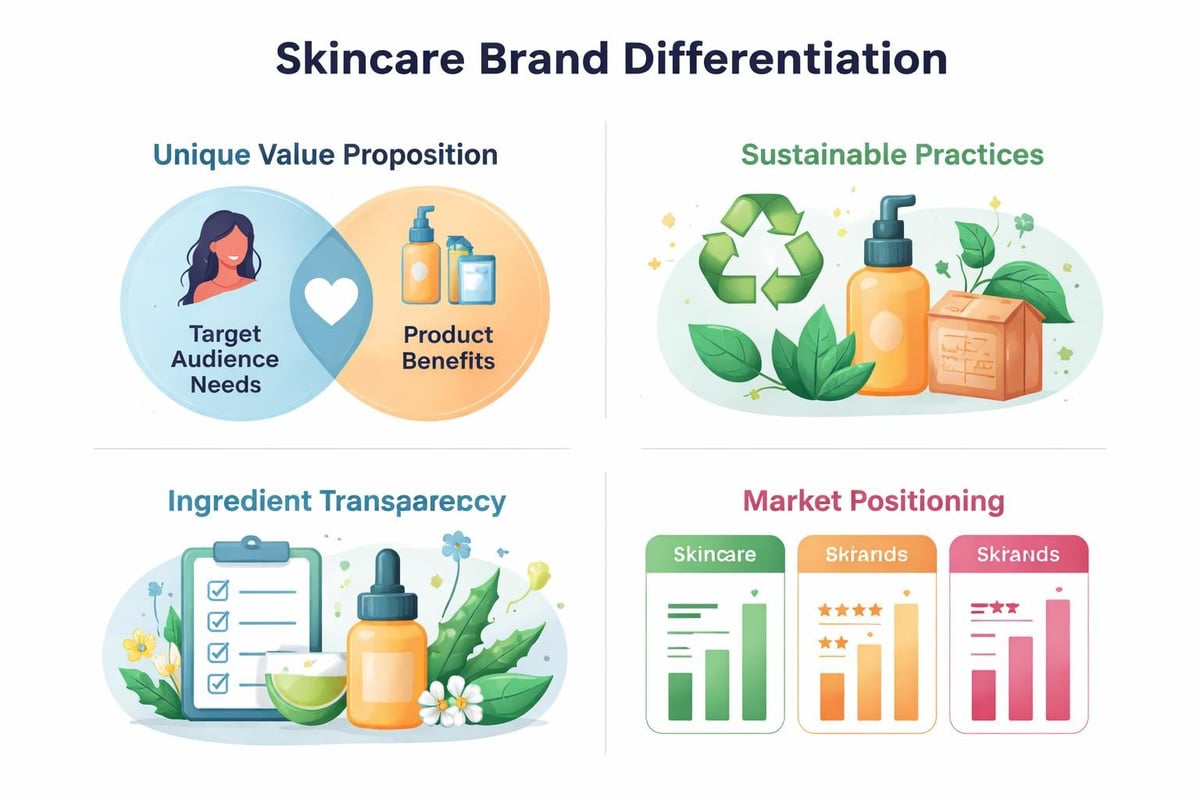
Your unique value proposition (UVP) distinguishes your brand from countless competitors. This statement should clearly communicate what makes your skincare products different and why customers should choose you. Whether you focus on sustainable sourcing, innovative ingredients, specific skin concerns, or a particular demographic, your UVP becomes the cornerstone of your marketing message.
Consider these elements when crafting your UVP:
- Specific skin concerns you address (aging, acne, sensitivity, hyperpigmentation)
- Ingredient philosophy (clean beauty, organic, science-backed actives)
- Sustainability commitments (eco-friendly packaging, carbon-neutral shipping)
- Price positioning (luxury, premium, accessible)
- Customer experience (personalization, education, community)
Develop Your Product Formulations
Product formulation represents the technical heart of the steps to create your own skincare brand. This phase transforms your vision into tangible products that deliver results. Partnering with experienced formulators ensures your products meet safety standards, perform as promised, and remain stable throughout their shelf life.
Choose Between Custom and Stock Formulations
Entrepreneurs face a critical decision between developing custom formulations or utilizing existing stock formulations. Custom formulations offer complete uniqueness and intellectual property ownership, while stock formulations provide faster time-to-market and lower initial investment.
| Aspect | Custom Formulations | Stock Formulations |
|---|---|---|
| Development Time | 3-6 months | 2-4 weeks |
| Initial Investment | $5,000-$25,000+ | $500-$3,000 |
| Uniqueness | Completely unique | Industry-standard |
| IP Ownership | Full ownership | Shared formulation |
| Minimum Orders | Often higher | Typically flexible |
Working with The INCI Lab provides access to both custom formulation services and ready-to-go options, offering flexibility based on your budget and timeline. Their expertise in quality formulations ensures your products meet industry standards and deliver exceptional performance.
Select Ingredients and Active Components
Ingredient selection directly impacts product efficacy, safety, and market appeal. Modern consumers scrutinize ingredient lists, seeking recognizable components backed by scientific research. Understanding INCI ingredients helps you make informed decisions about what goes into your formulations.
Priority considerations for ingredient selection include:
- Efficacy data supporting claimed benefits
- Safety profiles and potential allergen concerns
- Sustainability credentials of sourcing and production
- Regulatory compliance across target markets
- Stability within your chosen formulation base
- Cost implications for final product pricing
The growing demand for eco-friendly cosmetic brands has elevated the importance of sustainable ingredient sourcing. Consumers in 2026 expect brands to demonstrate environmental responsibility throughout their supply chain.
Navigate Regulatory Requirements and Compliance
Regulatory compliance protects both your customers and your business. The steps to create your own skincare brand must include thorough understanding of regulations governing cosmetic products in your target markets. Requirements vary significantly between regions, making expert guidance invaluable.
Understanding FDA and International Regulations
In the United States, the Food and Drug Administration (FDA) regulates cosmetics under the Federal Food, Drug, and Cosmetic Act. While cosmetics don't require pre-market approval, brands must ensure products are safe and properly labeled. Legal considerations for starting a skincare business include facility registration, ingredient restrictions, and labeling requirements.
Key compliance areas include:
- Ingredient restrictions and prohibited substances
- Good Manufacturing Practices (GMP) adherence
- Product safety assessments and stability testing
- Accurate labeling with required disclosures
- Claims substantiation for marketing statements
- International regulations for export markets
European markets require compliance with EU Cosmetics Regulation, which mandates safety assessments, responsible persons, and product information files. Planning for international expansion requires understanding these varied regulatory landscapes from the beginning.
Conduct Safety Testing and Stability Studies
Professional testing validates that your products remain safe and effective throughout their intended shelf life. Stability testing evaluates how formulations respond to temperature fluctuations, light exposure, and time. Microbial challenge testing ensures preservative systems adequately protect against contamination.
Standard testing protocols include:
- Stability testing (3-12 months at various temperatures)
- Preservative efficacy testing to prevent microbial growth
- Compatibility testing with packaging materials
- Patch testing for skin irritation assessment
- Claims substantiation studies for marketing purposes
Create Your Brand Assets and Packaging
Visual identity brings your skincare brand to life in the marketplace. Professional branding and packaging design communicate quality, attract target customers, and differentiate your products on crowded shelves. This investment pays dividends through enhanced perceived value and customer loyalty.
Design Your Visual Brand Identity
Your visual brand identity extends beyond a logo to encompass color palettes, typography, imagery style, and overall aesthetic. Consistency across all touchpoints builds brand recognition and trust. Establishing an effective online presence requires cohesive visual elements that translate seamlessly across digital and physical platforms.
Work with professional designers to create:
- Primary logo and alternative variations
- Brand color palette (3-5 signature colors)
- Typography system for various applications
- Packaging design templates for product lines
- Photography style guide for consistent imagery
- Social media templates and digital assets
Select Packaging Materials and Suppliers
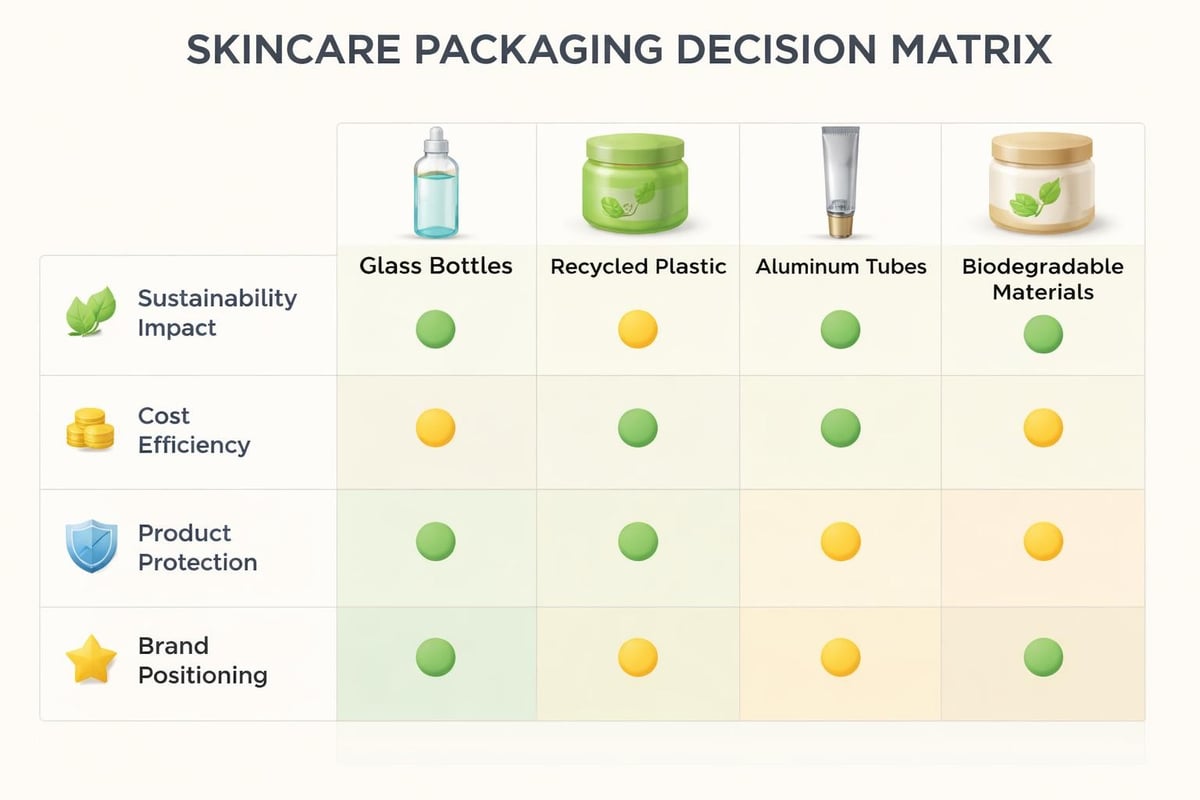
Packaging serves dual purposes: protecting product integrity and attracting customers. Material selection balances functionality, sustainability, aesthetics, and cost. Glass offers premium appeal and recyclability but increases shipping costs and breakage risk. Plastic provides versatility and durability while raising environmental concerns that eco-conscious consumers notice.
| Material | Benefits | Considerations | Sustainability |
|---|---|---|---|
| Glass | Premium feel, inert, recyclable | Heavy, fragile, expensive shipping | High recyclability |
| PET Plastic | Lightweight, versatile, cost-effective | Environmental concerns | Recyclable but lower rate |
| Aluminum | Durable, infinitely recyclable | Limited shapes, higher cost | Excellent sustainability |
| PCR Plastic | Reduces virgin plastic use | Higher cost than virgin | Good sustainability choice |
Establish Production and Manufacturing
Manufacturing decisions significantly impact product quality, scalability, and profitability. The steps to create your own skincare brand include choosing between in-house production, contract manufacturing, or private label options. Each approach offers distinct advantages suited to different business models and growth stages.
Evaluate Manufacturing Options
In-house manufacturing provides maximum control over quality and formulation but requires substantial investment in equipment, facilities, and regulatory compliance. Most new brands lack the capital and expertise for this approach initially.
Contract manufacturing partners handle production while you maintain formulation ownership. This option offers professional-grade equipment, established quality systems, and scalability without massive capital investment. Choosing the best skincare manufacturer requires evaluating minimum order quantities, lead times, quality standards, and communication practices.
Private label arrangements allow you to brand existing formulations, offering the fastest path to market with minimal investment. While limiting differentiation, this approach suits entrepreneurs testing market viability before committing to custom development.
Determine Production Quantities and Costs
Minimum order quantities (MOQs) significantly impact initial investment and inventory management. Manufacturers typically require MOQs ranging from 500 to 10,000 units per SKU, depending on product complexity and production processes. Strategic planning around production costs prevents cash flow challenges and overstock situations.
Calculate total production costs including:
- Raw materials and active ingredients
- Manufacturing labor and facility costs
- Packaging components and assembly
- Quality testing and certifications
- Shipping to your warehouse or fulfillment center
- Buffer for waste and quality rejections (typically 5-10%)
Build Your Distribution and Sales Channels
Strategic distribution decisions determine how customers access your products and significantly influence profit margins. The steps to create your own skincare brand in 2026 increasingly emphasize direct-to-consumer (DTC) channels, though multi-channel approaches often deliver optimal results.
Develop Your E-commerce Platform
Building a successful DTC beauty brand starts with a robust e-commerce platform. Your website serves as brand headquarters, sales channel, and customer education hub. Shopify, WooCommerce, and BigCommerce offer user-friendly platforms with beauty-specific features.
Essential e-commerce elements include:
- Professional product photography showing texture, packaging, and application
- Detailed product descriptions highlighting benefits and ingredients
- Customer reviews and testimonials building social proof
- Educational content explaining how to use products effectively
- Subscription options encouraging repeat purchases
- Seamless checkout process minimizing cart abandonment
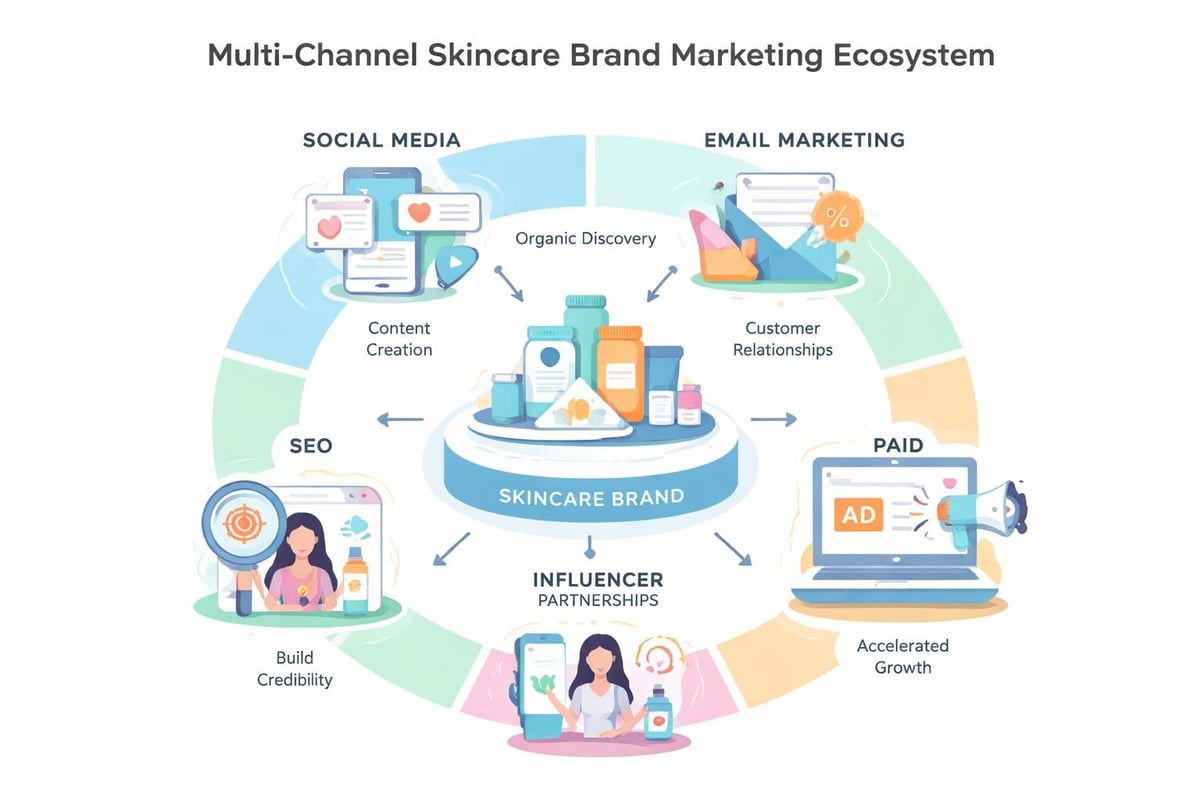
Email marketing remains one of the highest-ROI channels for beauty brands. Build your subscriber list from day one through website pop-ups, social media promotions, and valuable content offers. Segment your audience based on purchase history, skin concerns, and engagement levels to deliver personalized communications.
Explore Retail and Wholesale Opportunities
While DTC provides higher margins, retail presence builds credibility and expands customer reach. Beauty retailers, boutiques, and spas offer opportunities to showcase products to new audiences. Wholesale partnerships typically require 40-50% discounts off retail pricing, affecting your profit structure.
When approaching retailers, prepare:
- Line sheets with product details, pricing, and MOQs
- Brand story and differentiation explanation
- Marketing support plans for in-store promotion
- Sample products for buyer evaluation
- Terms and conditions clearly outlining partnership expectations
Implement Marketing and Customer Acquisition Strategies
Effective marketing transforms unknown brands into customer favorites. The digital landscape of 2026 offers unprecedented opportunities to reach target audiences through authentic storytelling, influencer partnerships, and data-driven campaigns. Understanding market insights for skincare formulation success informs not only product development but also marketing message development.
Leverage Social Media and Content Marketing
Social platforms serve as discovery engines for beauty products, with Instagram, TikTok, and YouTube driving purchase decisions. Authentic content showcasing real results, ingredient education, and behind-the-scenes brand stories resonates with modern consumers who value transparency.
Content pillars for skincare brands:
- Educational content explaining skincare science and ingredient benefits
- User-generated content featuring customer testimonials and results
- How-to tutorials demonstrating proper product application
- Ingredient spotlights building trust through transparency
- Sustainability initiatives highlighting eco-friendly practices
- Brand story sharing your journey and values
Influencer partnerships amplify reach when aligned with authentic brand values. Micro-influencers (10,000-100,000 followers) often deliver better engagement rates and more genuine advocacy than mega-influencers, while costing significantly less. Developing effective marketing strategies requires testing various approaches and measuring results consistently.
Invest in Search Engine Optimization
Organic search traffic provides sustainable customer acquisition without ongoing advertising costs. Optimize product pages, blog content, and category pages for relevant keywords that potential customers use when searching for skincare solutions. Long-tail keywords like "hydrating serum for sensitive skin" often convert better than generic terms.
Manage Operations and Scale Your Business
Operational excellence separates thriving brands from those that struggle despite great products. The steps to create your own skincare brand extend into ongoing management of inventory, fulfillment, customer service, and financial oversight. Systems established early create scalability as your business grows.
Implement Inventory Management Systems
Proper inventory management prevents stockouts that disappoint customers and overstock that ties up capital. Modern inventory software integrates with e-commerce platforms, providing real-time visibility into stock levels, sales velocity, and reorder points. Plan inventory purchases based on:
- Historical sales data and seasonal trends
- Lead times from manufacturing to warehouse receipt
- Storage capacity and costs
- Cash flow availability for new orders
- Product shelf life to prevent expired inventory
Establish Customer Service Excellence
Exceptional customer service transforms one-time buyers into loyal advocates. Respond promptly to inquiries, resolve issues with empathy, and gather feedback that informs product development. Small cosmetic brands often excel in customer service because they maintain personal connections with their community.
Customer service best practices include:
- Respond within 24 hours to all customer inquiries
- Offer easy returns and satisfaction guarantees
- Gather feedback systematically through surveys
- Personalize communications when possible
- Exceed expectations with thoughtful touches
- Build community through exclusive groups or forums
Monitor Financial Performance
Financial discipline ensures long-term sustainability. Track key metrics including customer acquisition cost (CAC), lifetime value (LTV), gross margin, and cash runway. Many skincare startups underestimate the time required to achieve profitability, making conservative financial planning essential.
Critical financial metrics:
| Metric | Target Range | Importance |
|---|---|---|
| Gross Margin | 60-75% | Covers overhead and marketing |
| CAC to LTV Ratio | 1:3 or better | Sustainable growth indicator |
| Inventory Turnover | 4-6 times/year | Capital efficiency |
| Marketing Spend | 25-40% of revenue | Growth investment level |
Plan for Growth and Product Line Expansion
Strategic growth planning prevents the chaos that often accompanies success. The final steps to create your own skincare brand involve establishing frameworks for introducing new products, entering new markets, and scaling operations sustainably. Identifying trending cosmetic products helps prioritize development efforts toward market opportunities.
Expand Your Product Portfolio Strategically
Product line expansion should respond to customer demand while maintaining brand coherence. Analyze customer feedback, purchase patterns, and market trends to identify gaps your brand can fill authentically. Avoid the temptation to launch too many products simultaneously, which dilutes marketing efforts and strains operations.
Smart expansion approaches:
- Complementary products that enhance existing offerings (cleanser, then toner, then moisturizer)
- Adjacent categories serving the same customer (from face care to body care)
- Premium tiers for customers seeking luxury options
- Value sets bundling products for specific routines
- Limited editions creating urgency and testing new concepts
Successful brands maintain focus on core competencies while thoughtfully expanding. Understanding personal care and cosmetics trends across broader categories reveals opportunities that align with your brand strengths.
Consider International Expansion
International markets offer substantial growth potential but require careful planning around regulatory compliance, logistics, and cultural adaptation. Start with markets sharing similar regulatory frameworks, such as Canada for US-based brands or EU countries for those already compliant with European regulations.
International expansion considerations include:
- Regulatory compliance costs and timelines for new markets
- Shipping logistics and duties affecting pricing
- Payment processing for international transactions
- Currency fluctuations impacting profitability
- Cultural preferences in ingredients, packaging, and marketing
- Language localization for product information and marketing
Building a skincare brand requires strategic planning, quality formulation, regulatory knowledge, and effective marketing working in concert. While the steps to create your own skincare brand present challenges, partnering with experienced formulation experts streamlines the journey significantly. The INCI Lab specializes in transforming entrepreneurial visions into award-winning products through custom formulations, sustainable practices, and comprehensive support from concept to production. Whether you're launching your first product or expanding an established line, expert guidance ensures your formulations deliver exceptional results that build lasting customer loyalty.
