

Growing a cosmetic brand brings exciting opportunities, but scaling production volume introduces complex challenges. Many beauty entrepreneurs and established brands struggle to maintain the same quality standards that made their products successful when moving from small batches to larger manufacturing runs. Understanding how to scale cosmetic production without losing quality requires strategic planning, robust systems, and the right partnerships. This comprehensive guide explores proven methodologies to expand your production capacity while preserving the integrity, consistency, and performance that your customers expect.
Understanding the Core Challenges of Scaling Production
When brands transition from small-batch to high-volume manufacturing, several operational obstacles emerge. Operational challenges beauty brand owners face when scaling production include maintaining formulation consistency, managing increasingly complex supply chains, and ensuring regulatory compliance across larger production volumes.
The shift in scale fundamentally alters production dynamics. Equipment differences between pilot batches and commercial-scale manufacturing can affect mixing patterns, heat distribution, and ingredient interaction timing. Raw material sourcing becomes more complicated as volume requirements increase, potentially introducing variations in ingredient quality or supplier reliability.
Quality Control Variables That Change With Volume
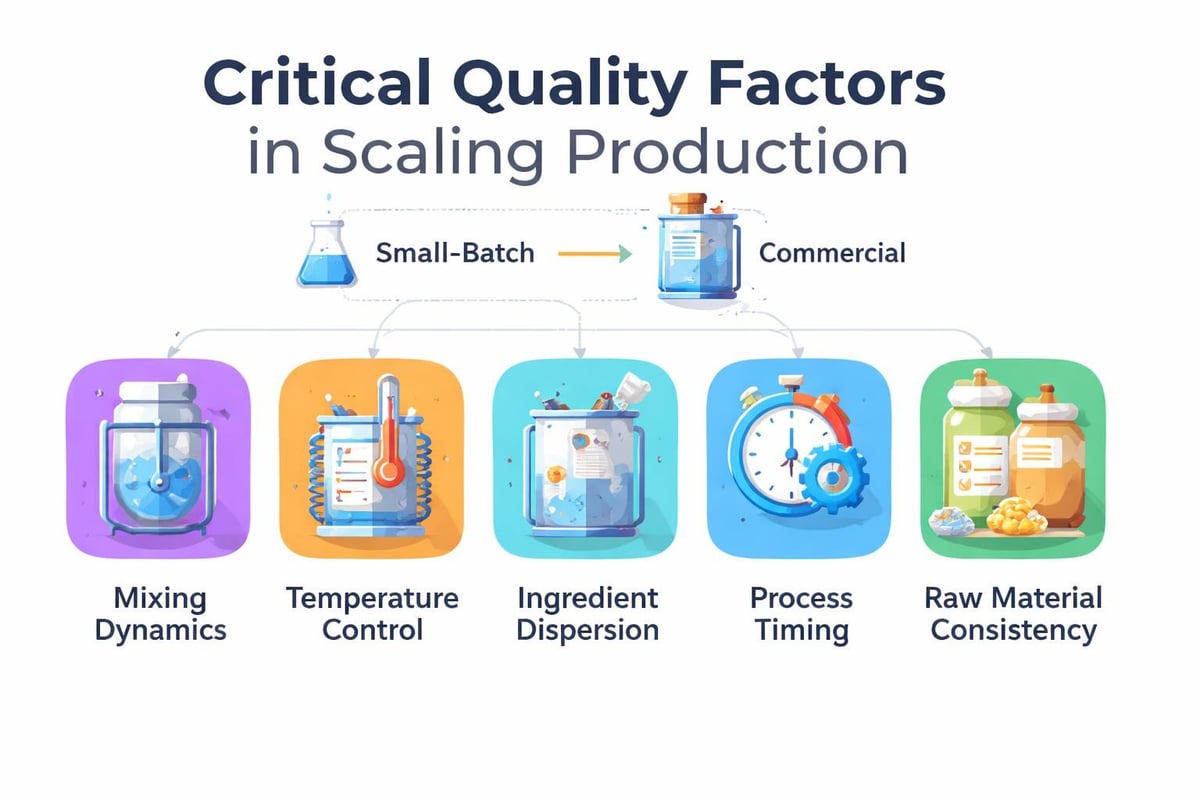
Several critical factors shift when production volumes increase:
- Mixing dynamics: Large-scale equipment creates different shear forces and blending patterns than small batches
- Temperature control: Heating and cooling larger volumes requires precise control to prevent formulation degradation
- Ingredient dispersion: Active ingredients may distribute differently in 1000-liter batches versus 10-liter test batches
- Process timing: Extended processing times for larger volumes can impact time-sensitive ingredients
- Raw material lot variation: Sourcing ingredients in bulk increases exposure to supplier inconsistencies
Understanding these variables helps brands prepare comprehensive strategies for how to scale cosmetic production without losing quality. The INCI Lab recognizes these challenges and builds scalability considerations directly into custom formulation development, ensuring products perform consistently across different production scales.
Establishing Robust Standard Operating Procedures
Documentation forms the foundation of consistent production quality. Standard Operating Procedures (SOPs) translate formulation expertise into repeatable manufacturing processes that maintain quality regardless of batch size. Every step from raw material inspection through final packaging requires detailed documentation specifying parameters, tolerances, and verification checkpoints.
Effective SOPs for scaled production should include precise specifications for mixing speeds, temperature ranges, processing durations, and ingredient addition sequences. These documents must account for equipment-specific variables while maintaining formulation integrity. When working with contract manufacturers for beauty products, clear SOPs ensure your quality standards transfer seamlessly to their facilities.
Creating Manufacturing Instructions That Scale
Developing comprehensive manufacturing instructions requires technical precision:
- Define critical control points: Identify process steps where deviations most impact quality
- Establish measurement tolerances: Specify acceptable ranges for temperatures, pH levels, and viscosity
- Document verification methods: Detail how to confirm each parameter meets specifications
- Create decision trees: Provide clear guidance for handling out-of-specification situations
- Include equipment specifications: Note specific equipment requirements and settings
- Detail sampling protocols: Specify when, where, and how to collect quality control samples
This systematic approach enables consistent execution across different production teams and facilities. Maintaining product quality in high-volume cosmetics manufacturing depends heavily on digitized batch records and automated quality triggers that these detailed SOPs enable.
Implementing Comprehensive Testing Protocols
Quality assurance testing becomes exponentially more important as production volumes increase. A comprehensive testing strategy includes raw material verification, in-process monitoring, and finished product validation. Each testing layer catches potential quality issues before they affect large production runs.
Raw material testing should verify that every ingredient batch meets specifications before entering production. This includes identity testing, purity analysis, microbial screening, and performance verification for critical actives. Suppliers should provide Certificates of Analysis (COAs), but independent verification provides additional security when scaling up production volumes.
Multi-Stage Quality Verification
| Testing Stage | Key Parameters | Frequency | Purpose |
|---|---|---|---|
| Raw Material | Identity, purity, microbial limits | Every lot | Prevent contaminated inputs |
| In-Process | pH, viscosity, temperature, appearance | Multiple checkpoints | Catch deviations early |
| Finished Product | Stability, performance, safety, sensory | Every batch | Confirm specifications met |
| Retention Testing | Long-term stability, packaging compatibility | Ongoing | Monitor shelf-life performance |
In-process testing during manufacturing provides real-time quality monitoring. Parameters like pH, viscosity, and temperature should be measured at critical control points throughout production. This approach allows immediate corrective action rather than discovering problems only after batch completion.
The importance of quality formulations in cosmetic products extends through every production stage, requiring vigilant testing protocols that scale proportionally with production volumes.
Selecting Manufacturing Partners Strategically
Choosing the right manufacturing partner fundamentally impacts your ability to scale cosmetic production without losing quality. The ideal partner possesses appropriate equipment capacity, proven quality systems, relevant category experience, and cultural alignment with your brand values.
Evaluate potential manufacturers based on their track record with similar product types and scale transitions. Request facility tours to assess equipment capabilities, cleanliness standards, and quality control infrastructure. Ask for references from brands that have successfully scaled with their support.
Critical Manufacturer Evaluation Criteria
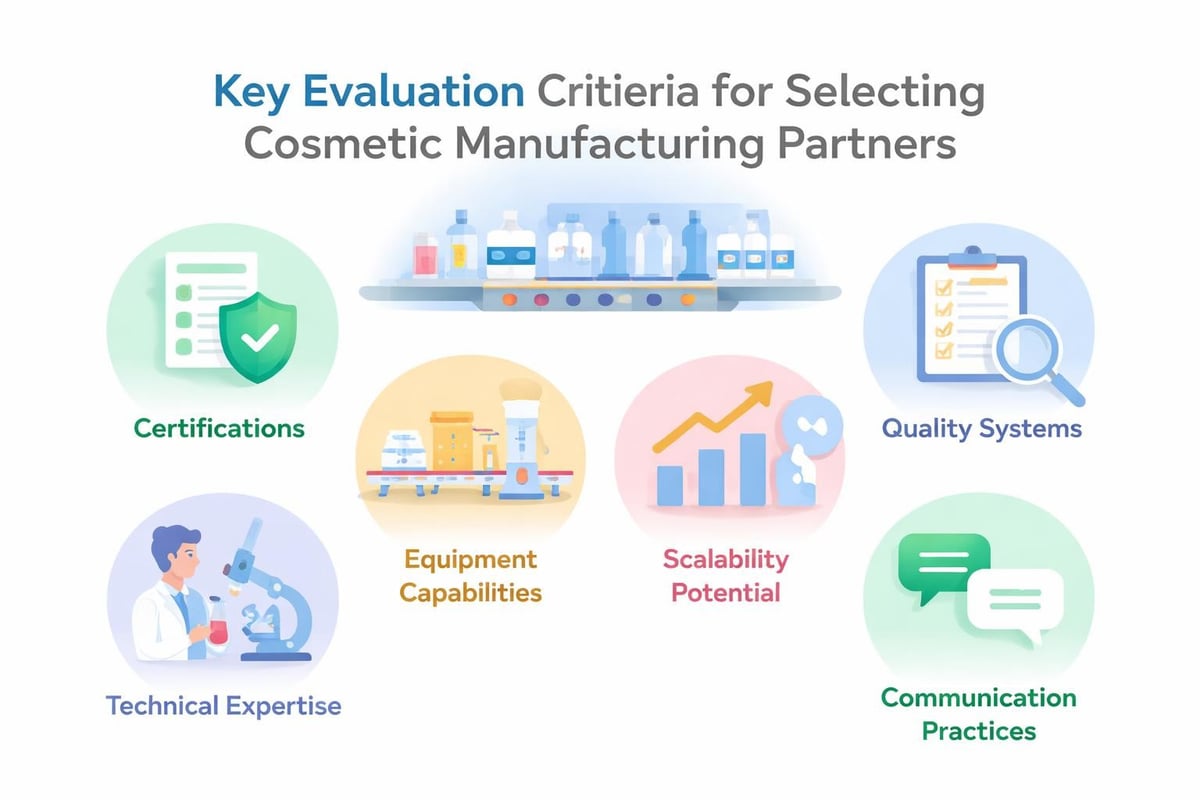
When vetting manufacturing partners, consider these essential factors:
- Certifications and compliance: GMP certification, ISO standards, and relevant regulatory approvals
- Equipment capabilities: Appropriate vessel sizes, specialized mixing equipment, and filling machinery
- Quality infrastructure: Laboratory facilities, testing equipment, and documented quality systems
- Scalability range: Ability to support current needs while accommodating future growth
- Technical expertise: Formulation troubleshooting skills and process optimization experience
- Communication practices: Responsiveness, transparency, and collaborative problem-solving approach
Skincare brands scale production without compromising quality by establishing strong partnerships with manufacturers who understand their quality requirements and growth trajectories. The relationship should feel collaborative rather than transactional, with manufacturers actively contributing to quality maintenance strategies.
Optimizing Formulation Design for Scalability
Not all formulations scale equally well from laboratory to production. Designing formulations with manufacturing realities in mind prevents quality issues during scale-up. This requires collaboration between formulators and manufacturing teams to identify potential production challenges before they impact batch quality.
Formulation complexity directly affects scalability. Products with numerous ingredients, narrow processing windows, or unstable emulsions present greater scaling challenges than simpler formulations. Strategic ingredient selection can improve manufacturing consistency without compromising performance. What cosmetic chemists actually do includes designing formulations that deliver results while remaining commercially viable at scale.
Formulation Features That Support Quality at Scale
Consider these design principles when developing scalable formulations:
- Ingredient stability: Select raw materials with consistent quality across suppliers and lots
- Processing flexibility: Build tolerance into temperature and mixing requirements
- Robust emulsions: Design systems that remain stable despite minor process variations
- Clear visual indicators: Include characteristics that signal proper mixing or potential issues
- Simplified manufacturing steps: Reduce complexity where possible without sacrificing performance
- Compatible packaging: Ensure formulation stability in intended containers across shelf-life
Eco-friendly cosmetic brands face additional considerations when scaling, as sustainable ingredients may have greater lot-to-lot variation than conventional alternatives. Working with experienced formulators who understand these nuances ensures quality maintenance during growth phases.
Managing Raw Material Supply Chains
Supply chain management becomes increasingly critical as production volumes grow. Securing consistent, high-quality ingredients requires strategic supplier relationships, qualification processes, and contingency planning. A single ingredient quality issue can compromise entire production runs when manufacturing at scale.
Develop relationships with multiple qualified suppliers for critical ingredients to prevent disruptions from supply shortages or quality problems. Implement supplier qualification programs that verify manufacturing capabilities, quality systems, and reliability before approving new sources.
Building Resilient Ingredient Networks
| Strategy | Implementation | Benefit |
|---|---|---|
| Multi-sourcing | Qualify 2-3 suppliers per critical ingredient | Prevents single-point failures |
| Supplier audits | Annual facility reviews and capability assessments | Verifies ongoing quality standards |
| Ingredient banking | Maintain strategic reserves of critical materials | Buffers against supply disruptions |
| Performance testing | Compare batches across suppliers regularly | Ensures interchangeable quality |
| Long-term contracts | Secure pricing and allocation commitments | Provides supply predictability |
Ensuring product consistency across diverse cosmetics while scaling requires meticulous attention to raw material sourcing strategies. Even minor ingredient variations can create noticeable differences in final product performance, texture, or sensory characteristics.
Addressing Batch-to-Batch Consistency Challenges
Batch consistency represents one of the most significant challenges in learning how to scale cosmetic production without losing quality. Scaling cosmetics without batch inconsistency requires addressing variables like raw material lot variation, process energy differences, and environmental condition fluctuations.
Create detailed batch records that document every parameter for each production run. This documentation enables pattern identification when consistency issues emerge and provides reference standards for troubleshooting. Record temperatures, mixing times, ingredient lot numbers, equipment used, and operator notes for comprehensive traceability.
Statistical Process Control Methods
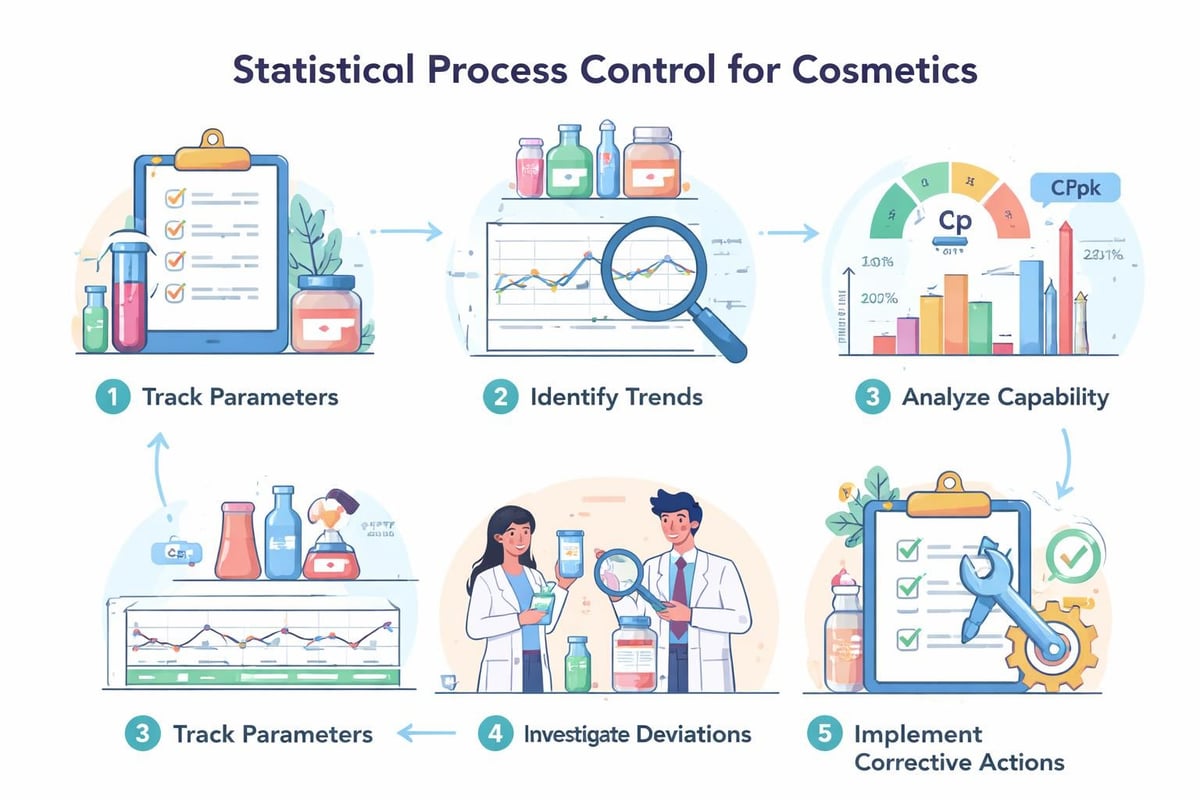
Implement statistical process control to monitor production consistency:
- Control charts: Track key parameters across batches to identify trends before they become problems
- Specification limits: Define acceptable ranges based on formulation requirements and customer expectations
- Capability analysis: Assess whether manufacturing processes consistently meet specifications
- Root cause analysis: Investigate out-of-specification results systematically to prevent recurrence
- Corrective action protocols: Document and implement improvements when issues are identified
This data-driven approach provides objective quality assessment beyond subjective evaluation. When integrated with quality control in large-scale cosmetic manufacturing, these methods create powerful quality assurance systems that scale efficiently with production growth.
Investing in Training and Knowledge Transfer
Production quality depends heavily on the people executing manufacturing processes. Comprehensive training programs ensure that operators understand not just what to do, but why each step matters. This deeper knowledge enables better decision-making and more effective problem-solving when unexpected situations arise.
Develop training programs that cover formulation fundamentals, quality requirements, equipment operation, safety protocols, and troubleshooting procedures. Include hands-on practice with supervision before operators work independently. Regular refresher training maintains skill levels and introduces process improvements.
Knowledge Management Systems
Create repositories that preserve institutional knowledge:
- Video documentation: Capture proper techniques for critical processes visually
- Troubleshooting guides: Document common issues and proven solutions
- Formulation rationale: Explain why specific processes or ingredients are critical
- Case studies: Share lessons learned from past quality incidents
- Expert interviews: Record insights from experienced formulators and manufacturing specialists
Personal care and cosmetics manufacturing requires specialized knowledge that develops over time. Systematic knowledge capture prevents quality degradation when experienced team members transition to new roles or leave the organization.
Scaling Production Incrementally
Gradual capacity increases reduce risk compared to dramatic production jumps. Incremental scaling allows time to identify and resolve quality issues before they affect large inventory volumes. Start with modest volume increases, validate quality maintenance, then expand further once confidence is established.
Scaling production as your cosmetic brand grows should follow a staged approach that balances growth ambitions with quality preservation. Each scale increment provides learning opportunities that inform subsequent expansions.
Phased Scaling Approach
Consider this progression when expanding production capacity:
- Phase 1: Double current batch sizes while maintaining existing equipment and processes
- Phase 2: Implement process improvements identified during Phase 1 volume increases
- Phase 3: Transition to larger-scale equipment with overlap period using both scales
- Phase 4: Optimize new equipment processes and validate quality equivalence
- Phase 5: Expand production frequency rather than individual batch sizes initially
- Phase 6: Increase batch sizes on new equipment after process stabilization
This methodical approach provides quality checkpoints throughout expansion. Each phase generates data confirming that quality standards remain intact before proceeding to greater scale.
Leveraging Technology for Quality Assurance
Modern manufacturing technology offers powerful tools for maintaining quality during scaling. Automated monitoring systems, digital batch records, and advanced analytics provide real-time quality insights that manual processes cannot match.
Consider implementing manufacturing execution systems (MES) that track production in real-time, automatically recording parameters and flagging deviations. These systems create comprehensive digital batch records while reducing transcription errors inherent in manual documentation.
Technology Investment Priorities
| Technology | Quality Benefit | ROI Timeline |
|---|---|---|
| Automated temperature monitoring | Prevents thermal degradation incidents | Immediate |
| Digital batch recording | Eliminates documentation errors | 3-6 months |
| Inline pH/viscosity testing | Catches deviations during production | 6-12 months |
| Inventory management systems | Ensures FIFO rotation and traceability | 6-12 months |
| Statistical process control software | Identifies quality trends proactively | 12-18 months |
Technology investments should align with specific quality challenges and production volumes. Scaling production without compromising quality for growing personal care brands increasingly relies on technological solutions that provide consistent oversight regardless of production complexity.
Building Quality Culture Throughout Organizations
Quality maintenance during scaling requires organization-wide commitment extending beyond manufacturing teams. Everyone from product development through customer service contributes to quality outcomes. Creating a culture where quality is genuinely valued rather than simply claimed requires leadership commitment, clear communication, and appropriate incentive structures.
Empower team members to identify and report quality concerns without fear of negative consequences. Celebrate quality successes and treat quality issues as learning opportunities rather than failures. This psychological safety encourages proactive problem identification before minor issues become major crises.
Cultural Elements That Support Quality
Foster these organizational characteristics:
- Transparent communication: Share quality data openly across departments
- Customer focus: Connect quality metrics to customer experience and satisfaction
- Continuous improvement: Encourage suggestions for quality enhancement from all team members
- Accountability: Clearly define quality responsibilities at every organizational level
- Resource commitment: Allocate adequate budget for quality systems, training, and testing
- Long-term thinking: Resist short-term compromises that undermine sustained quality
Understanding how to scale cosmetic production without losing quality ultimately depends on embedding quality consciousness into organizational DNA. When quality becomes intrinsic to company culture rather than an external requirement, scaling becomes significantly more manageable.
The journey of learning how to scale cosmetic production without losing quality presents challenges, but strategic planning and systematic execution make successful growth achievable. By implementing robust SOPs, comprehensive testing protocols, strategic manufacturing partnerships, scalable formulation designs, and quality-focused culture, brands can expand production capacity while maintaining the standards that built their reputation.
Successfully scaling cosmetic production while preserving quality requires expertise in formulation science, manufacturing processes, and quality systems. The INCI Lab specializes in creating custom formulations designed for commercial scalability, ensuring your products maintain consistent performance from pilot batches through full-scale production. With award-winning formulation expertise and comprehensive support from concept through manufacturing, The INCI Lab helps beauty brands navigate growth challenges while maintaining the quality standards that distinguish them in competitive markets.

