

Navigating new zealand cosmetic regulations and product safety compliance requires a comprehensive understanding of evolving standards and rigorous attention to detail. As the beauty industry continues to expand globally, manufacturers and brands looking to enter the New Zealand market must familiarize themselves with the country's unique regulatory landscape. The Environmental Protection Authority (EPA) oversees cosmetic safety standards, while the Commerce Commission enforces product safety requirements that protect consumers from potential harm. For formulators and brands working with custom formulations, understanding these regulations is not just about legal compliance but also about building consumer trust and creating products that meet the highest safety standards.
Understanding the New Zealand Regulatory Framework
The regulatory environment governing cosmetics in New Zealand operates under a dual framework that addresses both chemical safety and consumer protection. The EPA's Cosmetic Products Group Standard establishes the foundation for managing cosmetic products containing hazardous substances. This framework underwent significant updates effective January 1, 2026, reshaping how brands must approach product development and market entry.
The EPA's Role in Cosmetic Safety
The Environmental Protection Authority serves as the primary regulatory body for hazardous substance management in cosmetics. Their jurisdiction covers products that contain ingredients classified as hazardous under New Zealand law, even when those ingredients are present in low concentrations typical of cosmetic formulations.
Key EPA responsibilities include:
- Maintaining the approved substances list for cosmetic use
- Updating prohibited and restricted ingredient schedules
- Enforcing labeling requirements for hazardous substances
- Providing guidance on compliance pathways for manufacturers
- Monitoring market surveillance and product recalls
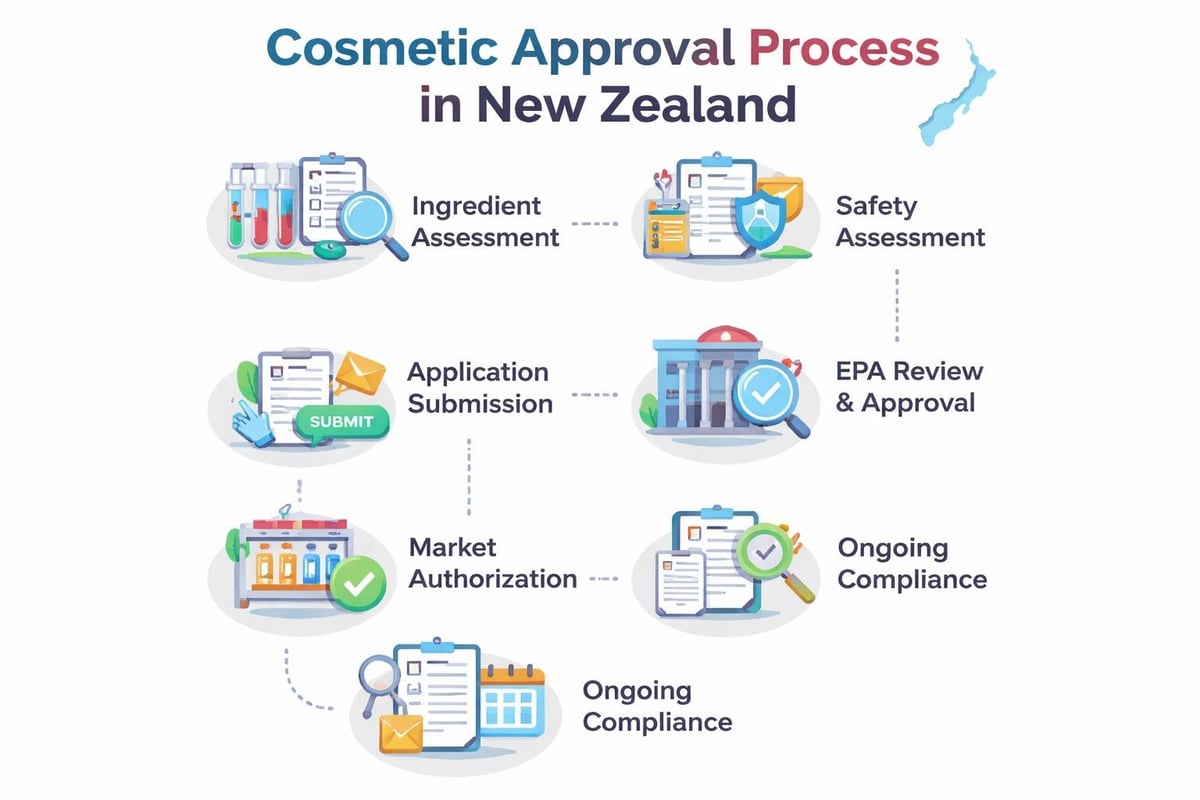
The updated rules for cosmetics that took effect in January 2026 introduced stricter controls on ingredient disclosure and expanded the list of substances requiring specific safety assessments. These changes reflect international trends toward greater transparency and align New Zealand more closely with European Union and Australian regulatory standards.
Product Safety Standards and Business Obligations
Beyond chemical safety oversight, new zealand cosmetic regulations and product safety compliance also encompasses broader consumer protection measures administered by the Commerce Commission. The product safety standards that apply to cosmetics ensure that products are safe for their intended use and properly labeled to inform consumer choice.
Mandatory Safety Requirements
All cosmetic products sold in New Zealand must meet fundamental safety criteria regardless of their hazardous substance content. These requirements establish baseline expectations for product integrity and consumer information.
| Safety Requirement | Description | Compliance Method |
|---|---|---|
| Product Safety Testing | Verification that products are safe under normal use conditions | Stability testing, microbial challenge testing, safety assessments |
| Accurate Labeling | Clear identification of ingredients, warnings, and usage instructions | INCI nomenclature, allergen disclosure, batch coding |
| Quality Manufacturing | Production under controlled conditions with documented processes | GMP certification, quality control protocols |
| Traceability Systems | Ability to track products and ingredients through supply chain | Batch records, supplier documentation |
Businesses must also implement systems that allow for rapid product recalls if safety issues emerge. The mandatory product safety standards framework provides specific guidance on recall procedures and consumer notification requirements.
Consumer Information Standards
The Commerce Commission enforces consumer information standards that require truthful, non-misleading product claims. For cosmetic brands, this means substantiating any performance claims with appropriate evidence and avoiding exaggerated marketing language that could mislead consumers about product benefits or safety profiles.
When developing custom formulations for the cosmetic industry, brands must build evidence for their claims during the product development phase. This proactive approach ensures compliance with both advertising standards and safety regulations.
Navigating the 2026 Regulatory Changes
The January 2026 updates to new zealand cosmetic regulations and product safety compliance represent the most significant regulatory shift in recent years. These changes impact ingredient selection, formulation strategies, and market authorization processes for brands operating in or entering the New Zealand market.
Key Changes to Ingredient Schedules
The EPA revised its schedules of prohibited and restricted substances to address emerging safety concerns and align with international best practices. Several ingredient categories faced new restrictions:
- Microplastic ingredients now subject to phase-out requirements
- Certain preservatives requiring lower maximum concentrations
- Fragrance allergens with expanded disclosure obligations
- UV filters with updated safety assessment requirements
- Nanomaterials requiring specific risk assessments
For brands working with eco-friendly cosmetic formulations, these changes often align with existing sustainability goals. However, reformulation may be necessary for products previously compliant under the old standards.
Transition Periods and Compliance Timelines
The regulatory updates include structured transition periods allowing businesses to adjust their product portfolios without immediate market disruption. Products manufactured before January 1, 2026, under the previous rules can remain on shelves until existing inventory depletes, provided they were compliant at the time of manufacture.
Timeline for compliance:
- January 1, 2026 - New rules take effect for all newly manufactured products
- June 30, 2026 - Final date for importing products under old standards
- December 31, 2026 - All products on retail shelves must meet new standards
- March 31, 2027 - Enhanced enforcement and penalties begin
This structured approach recognizes the complexity of reformulation and the need for brands to conduct appropriate safety testing on modified formulations. Companies working with contract manufacturers should ensure their partners understand these timelines and can deliver compliant formulations within required timeframes.
Formulation Strategies for Compliance
Creating cosmetic products that meet new zealand cosmetic regulations and product safety compliance requires strategic formulation decisions from the earliest concept stages. Working with experienced formulators who understand both regulatory requirements and performance expectations is essential for market success.
Ingredient Selection and Safety Assessments
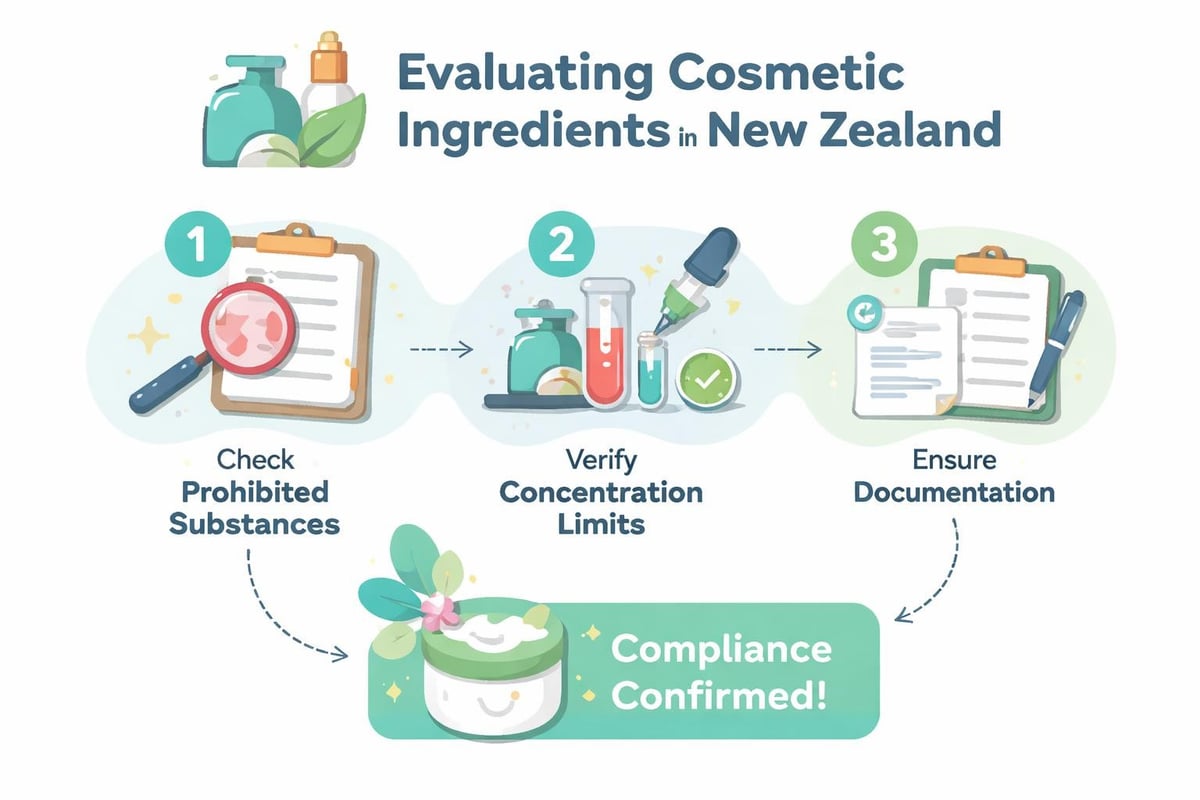
The foundation of regulatory compliance begins with careful ingredient selection. Every component in a cosmetic formulation must be evaluated for its regulatory status, safety profile, and contribution to product performance.
Ingredient evaluation criteria include:
- Regulatory approval status in New Zealand and key export markets
- Concentration limits and use restrictions
- Allergen potential and sensitization risk
- Stability characteristics and interaction potential
- Sustainability credentials and environmental impact
- Supply chain reliability and quality consistency
Brands focusing on natural and sustainable ingredients must verify that botanical extracts and natural materials meet the same safety standards as synthetic ingredients. Natural origin does not exempt ingredients from safety assessment or regulatory scrutiny.
Documentation and Safety Dossiers
Comprehensive product documentation forms the backbone of regulatory compliance. The Product Information File (PIF) or safety dossier compiles all evidence supporting a product's safety and regulatory status.
Essential PIF components:
- Product formulation with complete ingredient listing
- Safety assessment reports from qualified professionals
- Stability testing data demonstrating shelf-life claims
- Microbial challenge testing results
- Manufacturing process descriptions
- Packaging compatibility testing
- Evidence supporting product claims
- Good Manufacturing Practice certifications
For award-winning cosmetics, this documentation also serves marketing purposes by demonstrating the rigorous development process behind product innovation. Transparent documentation builds credibility with both regulators and discerning consumers.
Quality Manufacturing and GMP Compliance
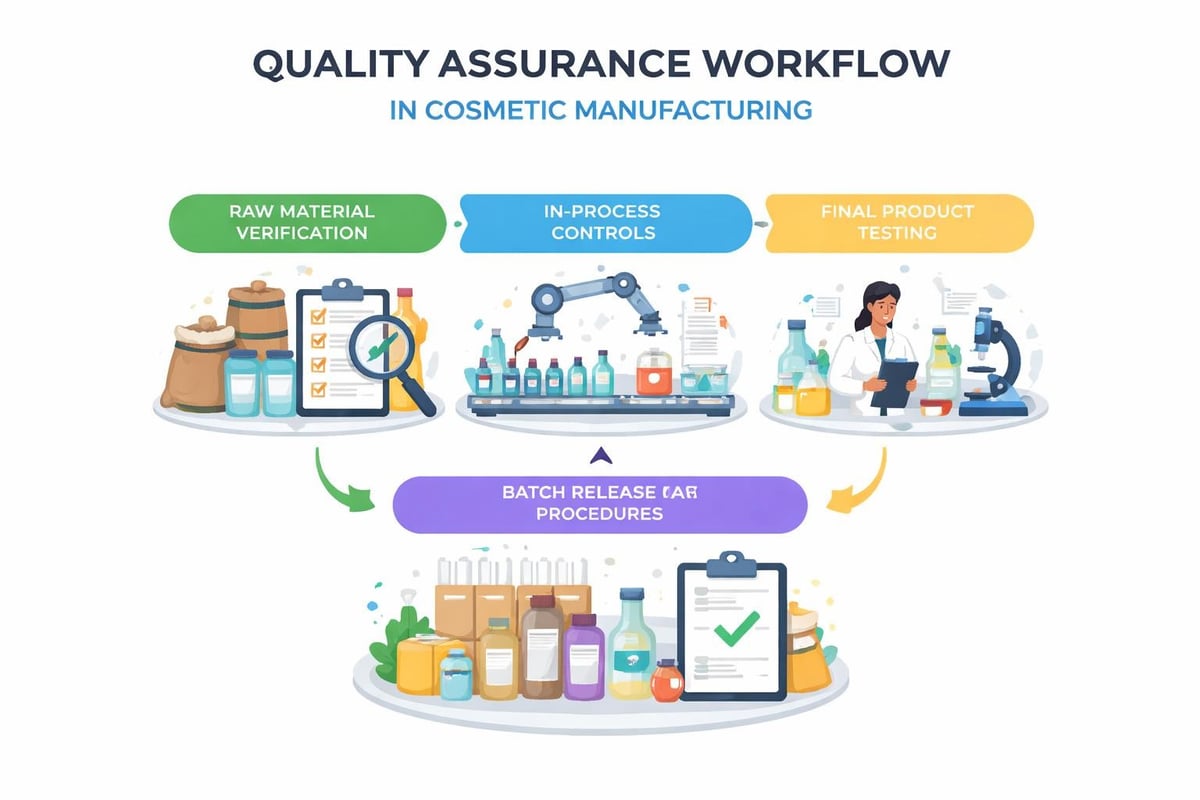
Manufacturing standards directly impact product safety and regulatory compliance. New zealand cosmetic regulations and product safety compliance expectations include requirements that products be manufactured under conditions ensuring consistent quality and safety.
Good Manufacturing Practices
Good Manufacturing Practices (GMP) represent the internationally recognized standard for cosmetic production. While New Zealand does not currently mandate specific GMP certification for cosmetics, adherence to GMP principles is considered evidence of due diligence in meeting safety obligations.
| GMP Element | Purpose | Implementation Example |
|---|---|---|
| Facility Design | Prevent contamination and ensure hygiene | Separate raw material and finished product areas |
| Equipment Qualification | Ensure consistent production | Regular calibration and maintenance schedules |
| Personnel Training | Maintain competency and awareness | Annual GMP training and hygiene protocols |
| Process Validation | Confirm reproducible results | Batch consistency verification |
| Quality Control Testing | Detect non-conforming products | In-process and final product testing |
Brands partnering with cosmetic product manufacturers should verify their partners maintain robust GMP systems. Site audits and quality agreement negotiations ensure manufacturing partners understand and meet your quality expectations.
Batch Records and Traceability
Complete batch records enable product traceability throughout the supply chain. These records document exactly what went into each production batch, when it was made, who made it, and where it went.
Effective traceability systems support rapid response if safety issues emerge. The product safety requirements emphasize business responsibility for maintaining systems that protect consumers and enable efficient recalls when necessary.
Labeling Requirements and Consumer Communication
Product labels serve dual purposes: regulatory compliance and consumer communication. New zealand cosmetic regulations and product safety compliance mandates specific labeling elements while allowing creative freedom in packaging design.
Mandatory Label Information
All cosmetic products sold in New Zealand must display certain information clearly and legibly on their packaging. Primary display panels and secondary information panels work together to provide complete product information.
Required label elements:
- Product name and product category
- Net contents by weight or volume
- Name and address of responsible party
- Country of origin
- Batch code or lot number
- Best before date (if shelf life under 30 months)
- Complete ingredient list in descending order
- Warnings and precautions for safe use
- Directions for use when necessary for safety
Ingredient lists must use International Nomenclature of Cosmetic Ingredients (INCI) names, the standardized naming system recognized globally. This technical terminology may seem complex to consumers, but it enables ingredient comparison across products and helps individuals with specific allergies identify suitable products.
Special Warnings and Precautions
Products containing certain ingredients or intended for specific uses require additional warnings. Hair dyes, chemical exfoliants, and products containing potential allergens need clear precautionary statements.
The updated EPA cosmetic rules expanded warning requirements for several ingredient categories. Essential oil-rich products, for example, now require more specific allergen disclosures even when total fragrance concentration falls below traditional thresholds.
Import and Market Authorization Processes
Brands manufactured overseas and imported into New Zealand must navigate additional compliance layers. Import regulations ensure foreign-manufactured products meet the same standards as domestically produced cosmetics.
Import Approval Pathways
The import pathway depends on whether products contain substances classified as hazardous under New Zealand law. Non-hazardous cosmetics face simpler entry requirements than products containing regulated substances.
Import compliance steps:
- Determine product classification under New Zealand hazardous substance regulations
- Verify ingredient compliance with EPA schedules and restrictions
- Prepare required documentation and safety assessments
- Register as an importer with relevant authorities
- Ensure labeling meets New Zealand requirements
- Establish post-market surveillance systems
- Implement traceability and recall capabilities
Understanding these requirements early in product development prevents costly delays when products are ready for market launch. For entrepreneurs starting cosmetic brands, regulatory planning should parallel product development rather than following it.
Working with Regulatory Consultants
Complex regulatory landscapes often benefit from specialist expertise. Regulatory consultants who understand new zealand cosmetic regulations and product safety compliance can accelerate market entry and reduce compliance risk.
These professionals assist with safety assessments, documentation preparation, label review, and regulatory submissions. Their expertise proves particularly valuable when dealing with novel ingredients, complex formulations, or products making advanced claims.
Risk Management and Post-Market Monitoring
Regulatory compliance extends beyond initial market authorization. Ongoing monitoring ensures products continue meeting safety standards throughout their market lifecycle.
Adverse Event Reporting
Brands must establish systems for receiving, investigating, and responding to adverse event reports. Consumer complaints about skin reactions, allergic responses, or other safety concerns require systematic evaluation.
The Commerce Commission's product safety guidance outlines business obligations for addressing safety issues. Prompt response to emerging safety signals protects consumers and demonstrates responsible corporate citizenship.
Effective adverse event management includes:
- Clear consumer communication channels for reporting issues
- Standardized investigation protocols
- Expert evaluation of reported problems
- Trend analysis to identify systematic issues
- Communication with regulatory authorities when required
- Product modification or recall when safety concerns warrant action
Continuous Improvement Systems
The most successful brands treat regulatory compliance as a continuous improvement opportunity rather than a static checklist. Regular formulation reviews, ingredient safety updates, and manufacturing process evaluations ensure products not only maintain compliance but continually improve.
Market intelligence about regulatory trends helps brands anticipate future requirements. The 2026 regulatory updates, for example, were telegraphed years in advance through EPA consultation processes. Forward-thinking brands adapted formulations proactively rather than reactively.
Building Compliance into Product Development
Integrating regulatory considerations throughout the product development lifecycle creates better products and smoother market launches. New zealand cosmetic regulations and product safety compliance should inform decisions from initial concept through commercial production.
Concept Development with Regulatory Awareness
Early-stage product concepts benefit from regulatory feasibility assessment. Understanding which ingredients face restrictions, which claims require substantiation, and which product categories involve enhanced scrutiny helps focus development on viable opportunities.
Brands working with cosmetic formulation specialists should ensure their partners integrate regulatory knowledge into creative development. The best formulators balance innovation with pragmatic regulatory awareness.
Testing and Validation Protocols
Appropriate testing validates both product safety and performance claims. The testing strategy should address regulatory requirements while generating marketing-relevant data demonstrating product benefits.
Core testing programs include:
- Stability testing under accelerated and real-time conditions
- Microbial challenge testing to verify preservation adequacy
- Safety testing including patch testing for sensitization potential
- Performance testing substantiating product claims
- Compatibility testing with packaging materials
- User trials gathering real-world performance feedback
Results from these studies populate the safety dossier while providing compelling evidence for marketing communications. Quality formulations emerge from rigorous testing and iterative refinement.
Sustainability and Regulatory Alignment
Environmental considerations increasingly overlap with regulatory compliance. New zealand cosmetic regulations and product safety compliance now incorporates environmental protection alongside human safety.
Ingredient Sustainability Verification
The 2026 regulatory changes reflect growing concern about cosmetic ingredients' environmental impacts. Microplastic restrictions, biodegradability assessments, and sustainable sourcing verification represent regulatory trends that will likely expand in coming years.
Brands committed to eco-friendly practices find regulatory and market forces aligning. Consumers demand sustainable products, and regulators increasingly require environmental safety data alongside traditional human safety assessments.
Packaging and Environmental Impact
While packaging regulations remain primarily focused on safety and consumer information, environmental packaging standards are evolving. Recyclability, use of post-consumer materials, and minimization of excess packaging increasingly influence regulatory discussions.
Forward-thinking brands consider whole-product environmental footprints, addressing formulation sustainability, packaging impact, and supply chain emissions. This comprehensive approach positions brands favorably as regulations continue evolving toward circular economy principles.
Successfully navigating new zealand cosmetic regulations and product safety compliance requires expertise, attention to detail, and commitment to continuous improvement. By understanding EPA requirements, implementing robust quality systems, and building compliance into every development stage, brands create products that protect consumers while performing exceptionally. Whether you're an emerging entrepreneur or an established brand expanding into new markets, The INCI Lab provides the formulation expertise and regulatory knowledge needed to bring compliant, high-performance cosmetics to market. With comprehensive support from concept through production and full formulation ownership, we help you create award-winning products that meet the highest safety standards while standing out in competitive markets.

