

Cosmetic product instability represents one of the most costly challenges facing beauty brands and formulators. When products separate, change color, develop off-odors, or lose efficacy, the financial impact extends beyond wasted ingredients to include customer dissatisfaction, returns, and brand reputation damage. Understanding how to fix and reformulate unstable cosmetic products requires a systematic approach that addresses both immediate symptoms and underlying formulation weaknesses. This comprehensive guide explores proven strategies for identifying instability causes, implementing corrective measures, and creating robust formulations that maintain integrity throughout their shelf life.
Understanding the Root Causes of Cosmetic Instability
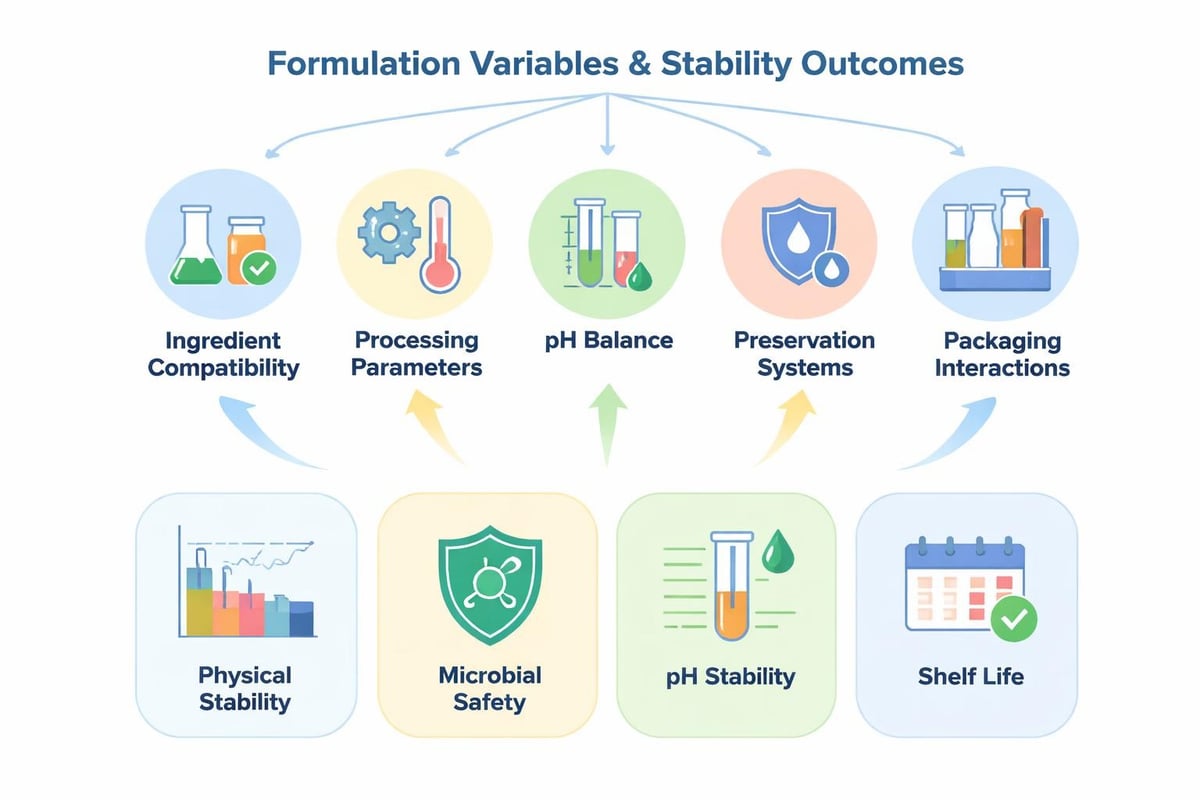
Cosmetic formulations fail for specific, identifiable reasons. The first step in learning how to fix and reformulate unstable cosmetic products involves diagnosing the precise cause of instability. Physical instability manifests through separation, sedimentation, or phase splitting in emulsions and suspensions. Chemical instability appears as color changes, oxidation, hydrolysis, or active ingredient degradation. Microbiological instability results from inadequate preservation systems allowing bacterial or fungal growth.
Temperature fluctuations represent a primary destabilizing factor. Products exposed to extreme heat or cold during storage and shipping often experience irreversible structural damage. pH shifts can trigger ingredient incompatibilities, enzyme activation, or preservative system failures. The stability testing of cosmetic formulations reveals how environmental stressors impact product integrity over time.
Critical Factors That Compromise Formulation Stability
Several technical factors contribute to product failure:
- Incompatible ingredient combinations that react chemically or physically
- Improper emulsifier selection for the oil-water ratio and system type
- Insufficient or inappropriate preservative levels for product pH and packaging
- Raw material quality variations between suppliers or batches
- Inadequate processing parameters including temperature, mixing speed, and homogenization
Ingredient sourcing significantly impacts stability. Brands focusing on cosmetics with natural ingredients face unique challenges, as botanical extracts vary in composition based on growing conditions, harvest timing, and extraction methods. This variability demands robust formulation strategies that accommodate natural ingredient fluctuations.
Diagnostic Testing for Identifying Instability Issues
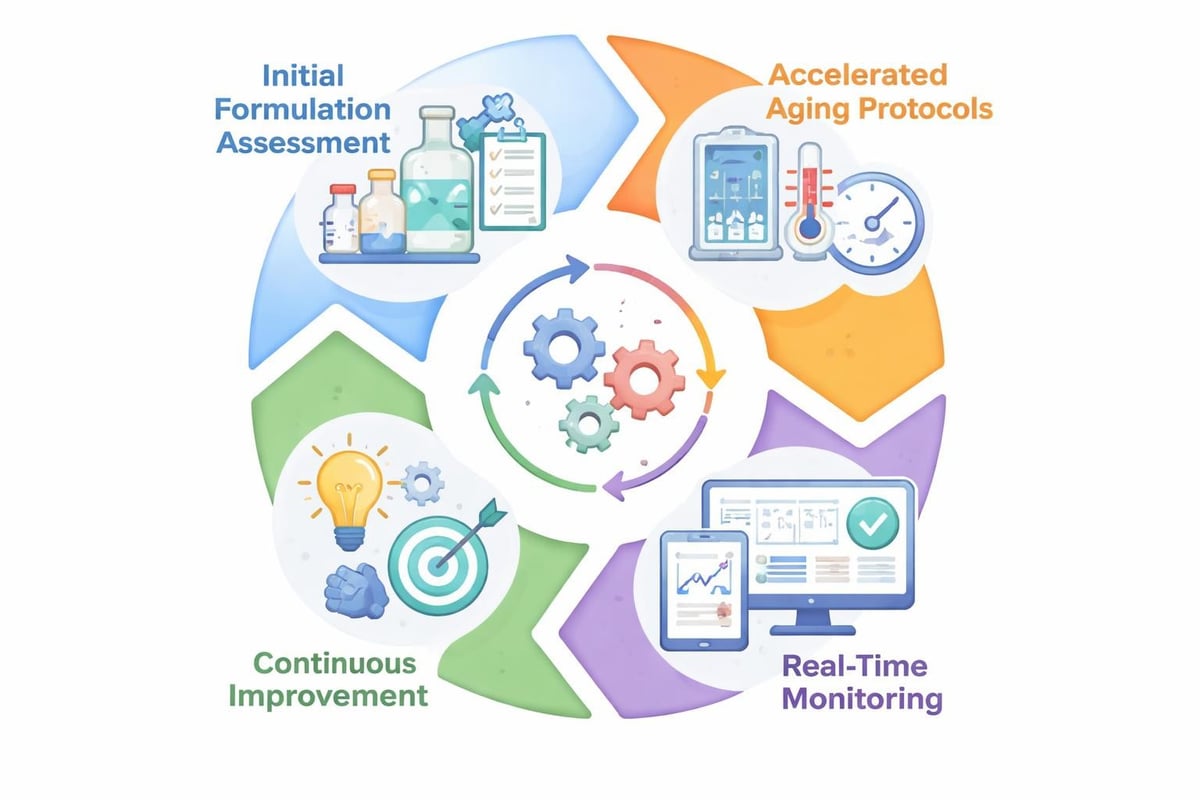
Before implementing corrections, formulators must conduct systematic diagnostic testing. Accelerated stability testing exposes products to elevated temperatures (typically 40-45°C) for 4-12 weeks, simulating months of real-time aging. Freeze-thaw cycling tests formulation resilience to temperature extremes by alternating between freezing and room temperature conditions.
Visual assessment tracks changes in appearance, color, texture, and homogeneity. Microscopic examination reveals emulsion droplet size distribution, crystal formation, or phase separation at the molecular level. Rheological testing measures viscosity changes that indicate structural breakdown. According to pH stability testing in cosmetic formulations, monitoring pH shifts helps identify chemical reactions and preservative system degradation.
Creating a Comprehensive Testing Protocol
| Test Type | Frequency | Parameters Monitored | Acceptance Criteria |
|---|---|---|---|
| Visual Inspection | Weekly | Color, separation, crystallization | No visible changes |
| pH Measurement | Bi-weekly | pH value | ±0.5 from initial |
| Viscosity Testing | Monthly | Brookfield viscosity | ±10% variation |
| Microbial Challenge | Initial & 3-month | Bacterial/fungal count | <100 CFU/g |
Establishing baseline measurements at time zero proves essential. Document initial pH, viscosity, color values, particle size, and active ingredient concentrations. These benchmarks enable precise tracking of degradation over time and help identify when reformulation becomes necessary.
Strategic Approaches to Fixing Unstable Formulations
Learning how to fix and reformulate unstable cosmetic products requires methodical problem-solving. When addressing emulsion instability, start by evaluating the hydrophilic-lipophilic balance (HLB) of your emulsifier system. Creaming or separation typically indicates incorrect HLB values for your specific oil phase composition.
Adjusting emulsifier concentration often resolves mild instability. Increase emulsifier levels by 0.5-1% increments, testing after each adjustment. Consider switching to more robust emulsifier systems, such as combining primary and secondary emulsifiers or incorporating polymeric emulsifiers that provide enhanced stability.
For pH-related instability, buffer systems maintain consistent pH levels despite environmental variations or ingredient interactions. Common buffering agents include citric acid/sodium citrate systems for acidic formulations and triethanolamine for neutral to slightly alkaline products. The guide on avoiding unstable formulations explores innovative stabilizers including cellulose fibrils.
Correcting Common Instability Problems
Oxidation issues require reformulation with antioxidant systems. Vitamin E (tocopherol), BHT, or rosemary extract protect oil-soluble ingredients, while sodium metabisulfite or ascorbic acid derivatives stabilize water-soluble actives. Consider opaque or UV-protective packaging to minimize light-induced degradation.
Preservative system failures demand immediate attention. Broad-spectrum preservatives like phenoxyethanol combinations, natural preservative blends, or traditional parabens must be optimized for product pH and water activity. Challenge testing confirms antimicrobial efficacy against bacteria, yeast, and mold.
When dealing with formulation mistakes and how to fix them faster, systematic variable testing proves most effective. Change only one parameter at a time, thoroughly testing each modification before implementing additional changes.
Complete Reformulation Strategies for Persistent Issues
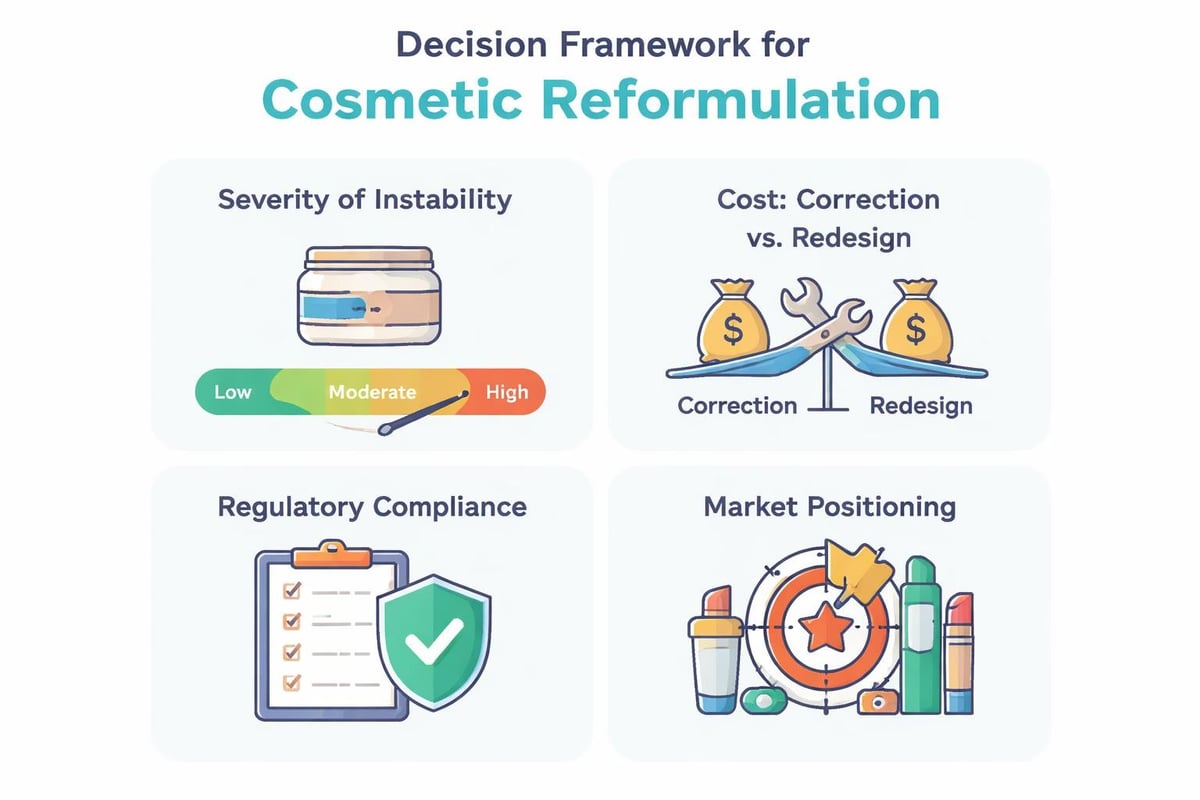
Sometimes fixing existing formulations proves impractical or impossible. Recognizing when to reformulate your products prevents extended development timelines and resource waste. Complete reformulation becomes necessary when fundamental ingredient incompatibilities exist, when regulatory changes ban key components, or when multiple instability issues compound.
The reformulation process begins with comprehensive failure analysis. Document every instability symptom, environmental condition, and temporal pattern. This data informs ingredient selection for the new formula. Many brands partner with experienced formulators who understand how to fix and reformulate unstable cosmetic products efficiently.
Building Stability into New Formulations
Proactive formulation design prevents future instability:
- Select compatible ingredients based on pH requirements, solubility profiles, and chemical reactivity
- Use quality raw materials from reputable suppliers with consistent specifications
- Optimize processing procedures including proper heating/cooling rates and adequate homogenization
- Incorporate redundant stabilizing systems such as multiple thickeners or emulsifier combinations
- Design for worst-case conditions considering temperature extremes and long shelf life requirements
Working with award-winning custom formulations specialists ensures access to proven stability-enhancing techniques and ingredient innovations. Professional formulators leverage years of experience to anticipate potential issues before they occur.
The importance of quality formulations in cosmetic products cannot be overstated. Investment in proper formulation development prevents costly product recalls, customer complaints, and brand damage.
Advanced Techniques for Stability Enhancement
Modern formulation science offers sophisticated approaches to stability challenges. Encapsulation technology protects sensitive actives from degradation by isolating them within protective matrices. Liposomes, microspheres, and cyclodextrin complexes deliver ingredients while preventing unwanted interactions.
Rheology modification using advanced polymers creates stable suspension systems that prevent settling or separation. Carbomers, xanthan gum, and cellulose derivatives provide structure while maintaining elegant sensory properties. Understanding how these thickeners interact with other formulation components determines long-term stability.
Material Science Solutions
| Stability Challenge | Advanced Solution | Mechanism | Benefits |
|---|---|---|---|
| Active degradation | Microencapsulation | Physical isolation | Extended shelf life, controlled release |
| Emulsion separation | Pickering emulsifiers | Particle stabilization | Superior stability, natural positioning |
| Color fading | Chelating agents | Metal ion sequestration | Prevents oxidative discoloration |
| Microbial growth | Hurdle technology | Multiple preservation mechanisms | Reduced preservative levels, broader protection |
Chelating agents like EDTA or phytic acid prevent metal-catalyzed oxidation and color changes. These ingredients bind trace metals that accelerate degradation reactions. Even minute concentrations (0.01-0.1%) significantly improve stability in formulations containing oxidation-prone ingredients.
The cosmetic industry increasingly adopts green chemistry principles, which sometimes create stability challenges when replacing traditional synthetic stabilizers with natural alternatives. This transition requires careful attention to preservative efficacy and antioxidant systems.
Testing Protocols for Reformulated Products
After implementing corrections or completing reformulation, rigorous testing validates improvements. Real-time stability studies under normal storage conditions provide definitive data but require 12-36 months. Accelerated testing compresses this timeline by stressing products under elevated temperatures and humidity.
The International Conference on Harmonisation (ICH) guidelines recommend storing samples at 25°C/60% RH (room temperature), 30°C/65% RH (intermediate), and 40°C/75% RH (accelerated). Products should maintain stability at the intermediate condition throughout their labeled shelf life. Research on stable skincare formulations demonstrates how stability affects consumer trust and product performance.
Implementing Robust Quality Control
Successful reformulation extends beyond laboratory testing to include manufacturing consistency. Production batch variations can introduce instability even when bench-scale formulas perform perfectly. Establish critical control points during manufacturing:
- Raw material verification and testing
- Process parameter monitoring (temperature, mixing time, homogenization pressure)
- In-process quality checks
- Final product testing before release
- Retained sample programs for long-term monitoring
Documentation proves essential. Maintain detailed records of all testing, including photographs, numerical data, and observations. This information helps identify patterns, supports regulatory compliance, and guides future product development.
Leveraging Professional Expertise for Complex Reformulations
Complex stability issues often require specialized knowledge that extends beyond basic formulation chemistry. Brands facing persistent problems with how to fix and reformulate unstable cosmetic products benefit from consulting experienced cosmetic chemists who understand the nuances of ingredient interactions, processing effects, and packaging compatibility.
Professional formulation services provide access to advanced analytical equipment, extensive ingredient libraries, and proven stability-testing protocols. Contract manufacturing beauty products partnerships often include formulation optimization as part of comprehensive development services.
The collaborative approach between brand owners and formulation experts produces superior results. Brands contribute market insights, consumer preferences, and positioning requirements while formulators apply technical expertise to create stable, high-performance products. This partnership model supports innovation while minimizing development risks.
For brands committed to sustainability, working with specialists in eco-friendly cosmetic brands ensures reformulations meet both stability requirements and environmental standards. Natural preservative systems, biodegradable ingredients, and sustainable packaging present unique technical challenges that require specialized knowledge.
Cost-Benefit Analysis of Reformulation Investment
Understanding when reformulation investment makes financial sense requires careful analysis. Consider direct costs including raw materials, testing fees, and formulator time against indirect costs such as continued product failures, customer returns, and brand reputation damage. The article on avoiding costly formula failures quantifies major stability risks.
Immediate reformulation often proves more economical than attempting multiple fixes to fundamentally flawed formulations. Each iteration consumes resources and extends time-to-market. Decisive action based on thorough diagnostics accelerates product launch while reducing overall development costs.
Market positioning influences reformulation decisions. Premium brands cannot tolerate instability that compromises luxury perception, while value brands must balance stability improvements against cost constraints. The expertise found through resources like what cosmetic chemists actually do illuminates how professionals navigate these competing demands.
Prevention Through Intelligent Formulation Design
The most effective approach to managing how to fix and reformulate unstable cosmetic products involves preventing instability during initial development. Predictive formulation tools, compatibility databases, and systematic ingredient selection minimize future problems. Start with proven, stable base formulations and modify incrementally rather than creating entirely novel systems without stability data.
Pilot batch production identifies manufacturing-scale issues before committing to large production runs. Parameters that work perfectly at 100-gram bench scale sometimes fail when scaled to 100-kilogram batches due to mixing dynamics, heat transfer differences, and processing time variations.
Packaging selection impacts stability significantly. Light-sensitive formulations require opaque containers, oxygen-sensitive products need airless dispensing systems, and certain active ingredients react with specific plastic types. Compatibility testing between formulation and packaging prevents degradation from container interactions.
Building relationships with reliable ingredient suppliers ensures consistent raw material quality. Supplier certifications, specifications, and batch-to-batch testing data help maintain formulation stability across production runs. The personal care and cosmetics industry increasingly demands transparency throughout supply chains.
Mastering how to fix and reformulate unstable cosmetic products requires technical knowledge, systematic testing, and strategic decision-making that balances performance, cost, and market requirements. Whether addressing immediate stability issues or rebuilding formulations from the ground up, success depends on thorough diagnostics, evidence-based corrections, and rigorous validation. The INCI Lab brings award-winning formulation expertise to brands facing stability challenges, providing comprehensive support from problem diagnosis through successful product launch. Partner with experienced formulators who understand the science of stability and can transform unstable products into market-ready formulations that deliver consistent performance and customer satisfaction.

