
By Merve Samur, cosmetic chemist, founder of The INCI Lab in Auckland and President of the NZSCC (New Zealand Society of Cosmetic Chemists).
A cosmetic chemist designs, tests and documents skincare, haircare and personal care formulas. In practice that means turning your brief into a product that is stable, properly preserved and legal to sell: choosing ingredients, adjusting lab samples, arranging stability and preservative testing, checking the formula against New Zealand, Australian or overseas rules, and writing the documents a manufacturer needs.
That is the short answer. The longer one, below, is written for founders: what the job involves at the bench, how a chemist differs from a formulator or consultant, when it is worth hiring one, what it costs in New Zealand, and what to expect along the way.
What does a cosmetic chemist do day to day?
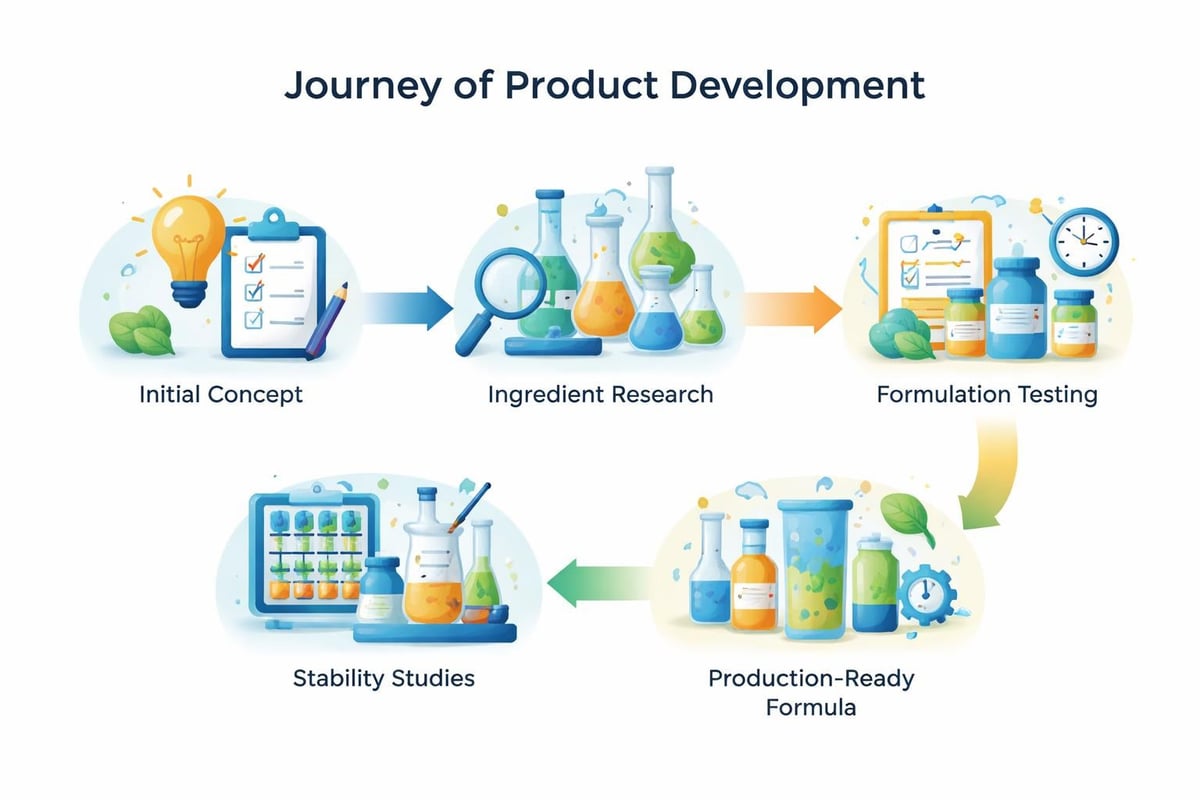
Most of the work sits in five areas. On any given day in our Auckland lab, a chemist will touch several of them.
- Formulating. Translating a brief (texture, skin type, actives, scent, pack, price point) into a starting formula, then making small lab batches and adjusting them until the sample feels and performs the way the brand wants.
- Testing. Checking pH, viscosity and appearance on every sample; running accelerated stability testing (heat, cold and freeze-thaw cycles) in the actual pack; and sending the formula for preservative efficacy testing, often called a challenge test or PET, to prove the preservative system copes with contamination in use.
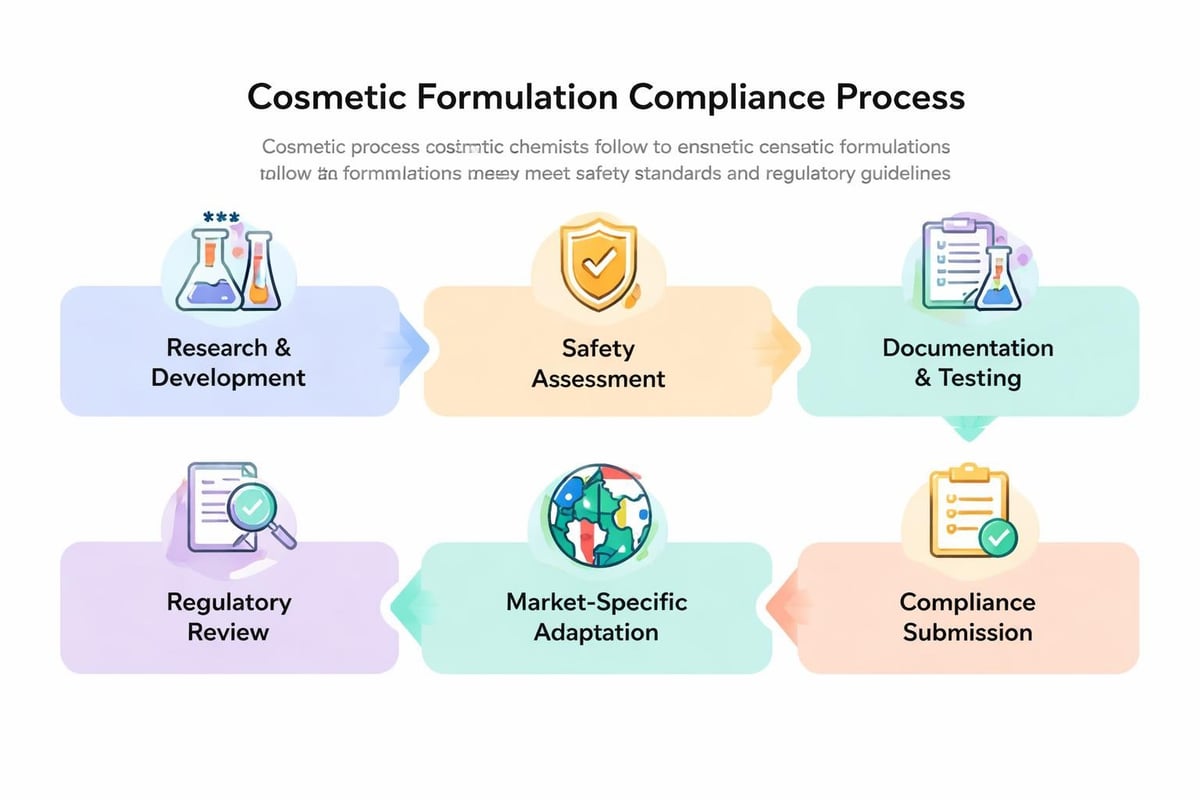
- Regulatory checks. Making sure every ingredient is allowed, and used within its limits, in each market the brand will sell in, and that the product stays a cosmetic rather than drifting into therapeutic claims.
- Documentation. Writing the formula record, the ingredient list in INCI names, raw-material specifications, the manufacturing procedure and the paperwork that follows each batch, such as the certificate of analysis (COA) and safety data sheet (SDS).
- Scale-up and troubleshooting. A 500 g lab beaker behaves differently from a production vessel. Mixing speed, heating and cooling rates and the order ingredients go in all change at scale, so the chemist sets these out and fixes problems such as separation, colour change or a texture that thins over time.
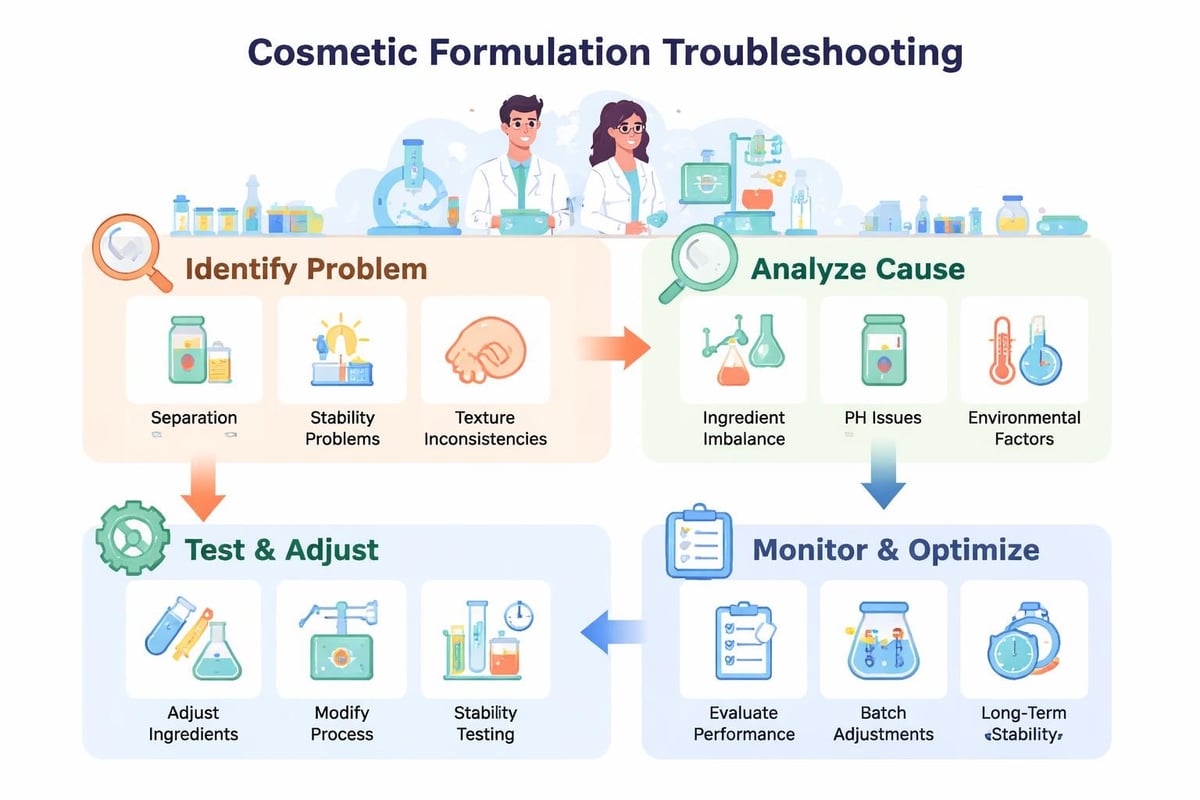
From the lab: the change that catches founders out most often is a small one made after a sample has been approved: one more botanical extract, or a different fragrance. Extracts can shift the pH and bring in salts that thin a gum or carbomer gel, and a new fragrance can cloud a clear serum or reduce how well the preservative works. When anything changes, we re-check pH, viscosity and appearance and agree with the brand whether stability needs repeating, rather than assuming the approved sample still stands.
Cosmetic chemist, formulator or consultant: what is the difference?
The titles overlap, and people use them loosely, so it helps to ask what someone will actually do for you.
| Role | What they usually do | Best when you need |
|---|---|---|
| Cosmetic chemist | Formulates and tests in a lab, writes the technical documents, checks regulations | A new formula, or a reformulation, that has to be stable and compliant |
| Formulator | Develops formulas; training and testing access vary widely | Check what testing and documentation are included |
| Cosmetic consultant | Advises on briefs, ingredients, regulations or claims; may not make samples | A second opinion, a regulatory review or help writing a brief |
| Formulation studio | A team of chemists developing formulas for brands; some also manufacture | Development plus a path to production |
| Contract manufacturer | Produces at scale, often with its own chemists focused on production | Larger runs once a formula is proven |
These are complementary rather than competing options. Many brands develop with a studio, then move to a contract manufacturer as volumes grow, and a good chemist will help that handover go smoothly. At The INCI Lab we formulate and manufacture in the same Auckland lab, from 100 units per product, which suits founders who want one team from first sample to first production run.
If you are comparing studios, our guide to choosing a formulation laboratory covers what to look for.
When should an indie brand hire a cosmetic chemist or consultant?
Earlier than most founders think. These are the points where a chemist saves the most time and money:
- Before you buy packaging or print labels. The formula, its pH and its oil content decide which packs work. Packaging chosen first often has to be changed later.
- When you have an idea but no formula. A chemist helps you turn a mood board into a one-page brief that can actually be formulated and priced.
- When a home-made product starts selling. Scaling a kitchen recipe safely means a tested preservative system, stability data and proper batch records.
- When you already own a formula and want it reviewed, adjusted or manufactured. See our formula supplied service and our guide to switching cosmetic manufacturers without losing your formula.
- When you plan to sell in Australia or overseas. Ingredient rules, labelling and business registration differ by market (more on this below).
- When something goes wrong. Separation, a colour shift, an off smell or mould are all problems a chemist can trace back to a cause.
For what to ask before you sign anyone up, see our guide on how to find and hire a cosmetic chemist.
Not sure which of these applies to you? A 30-minute Ask The Chemist video consult (NZ$150) is a quick way to sense-check an idea, a brief or a formula before you spend more. When you are ready to develop, you can begin a project with The INCI Lab and we will come back with the right pathway.
How does working with a cosmetic chemist actually work?
Every project is different, but at The INCI Lab it follows the same shape.
- Brief. One page is enough: product type, who it is for, the feel you want, must-have ingredients, a "must not contain" list, the pack, target retail price and the markets you will sell in.
- Choose a pathway. With The Accelerator we customise a stability-verified base with your actives and fragrance. It includes up to 2 lab sampling cycles (extra cycles are NZ$150 each) and typically takes 3 to 4 months. With The Visionary we build a clean-sheet formula with 3 sampling cycles and full IP transfer to you, typically 6 to 12 months. If you want to feel our stock formulas first, the Accelerator Discovery Kit (NZ$89) lets you try up to 2 at home.
- Sampling. You test samples and give feedback; we adjust.
- Testing. Accelerated stability testing is NZ$600 per formula and includes compatibility in your actual pack; it runs as a 12-week accelerated programme on every pathway. Preservative efficacy (challenge) testing is arranged per formula and quoted on request. Shelf life is then assigned per product, typically 3 years.
- Documentation and manufacturing. You receive the documentation for your formula. If we manufacture, the minimum is 100 units per product and production takes 3 to 4 weeks from when your packaging and raw materials arrive. Every batch is micro tested and supplied with a COA.
Packaging lead times usually decide the launch date more than the formula does, which is one more reason to bring a chemist in before you order bottles. Our step-by-step guide to creating a skincare brand walks through the whole launch, and our article on packaging design and production covers the pack side.
From the lab: we test every formula in the pack it will be sold in, because the same cream can behave differently in a jar, a tube and an airless pump. Oil-rich formulas can haze or soften some frosted plastics, fragrance can be lost through thin-walled packs, and a jar exposes the product to fingers every day, which puts more load on the preservative than an airless pump does.
What does a cosmetic chemist check for New Zealand and Australian rules?
Regulations are where a local chemist earns their keep. In plain terms:
- New Zealand. Cosmetics are covered by the EPA's Cosmetic Products Group Standard. Its ingredient schedules (prohibited and restricted substances, permitted colourants, preservatives and UV filters) are based on the EU Cosmetics Regulation, and updated rules apply to cosmetics imported or manufactured from 1 January 2026. Labels need an ingredient list (INCI or common chemical names), a batch code, and "nano" after any nanomaterial ingredient.
- Australia. A business that imports cosmetics, or makes them with any ingredient bought from overseas, must register with AICIS (the Australian Industrial Chemicals Introduction Scheme) before it starts, whatever the quantity. Ingredient labelling follows the ACCC-enforced Consumer Goods (Cosmetics) Information Standard 2020. Therapeutic claims and most primary sunscreens fall under the TGA instead.
- Claims in both countries. What you say about a product must be truthful and backed by evidence under New Zealand's Fair Trading Act and the Australian Consumer Law. A chemist helps keep claims cosmetic ("hydrates", "smooths") rather than therapeutic ("treats", "heals").
We also provide formulation and regulatory guidance for the EU, the UK, the US and the Middle East. If you are an Australian founder, our page on cosmetic formulation for Australian beauty brands covers working with a New Zealand lab in more detail.
How much does it cost to work with a cosmetic chemist in New Zealand?
It depends on how much of the work you need. As a guide to our own published prices:
- Ask The Chemist 30-minute video consult: NZ$150.
- Accelerator Discovery Kit (try up to 2 stock formulas): NZ$89.
- The Accelerator (semi-custom): from $2,350 + GST.
- The Visionary (full custom, with full IP transfer): $4,000-5,000 + GST.
- Accelerated stability testing: NZ$600 per formula, including packaging compatibility.
- Preservative efficacy (challenge) testing: arranged per formula and quoted on request.
- Extra Accelerator sampling cycles: NZ$150 each.
Your exact development quote follows once we have seen your brief, because a simple balm and a multi-active serum are very different amounts of lab work. Development is paid in milestones, and Klarna is available for each milestone. For manufacturing, we invoice 50% on order and 50% before dispatch, on actual filled units, with no annual or setup charge.
How do you become a cosmetic chemist?
Most cosmetic chemists start with a science degree, usually chemistry, and then learn formulation on the job in a lab, alongside short courses and industry training. Many come in from related fields; my own background includes soap and detergent formulation and contract manufacturing. Professional societies are a good place to start: in New Zealand that is the NZSCC, and in Australia the ASCC (Australian Society of Cosmetic Chemists). Both are member societies of the IFSCC, the international federation, and run conferences and education for chemists at every stage.
Why founders work with The INCI Lab
We are an award-winning, cruelty-free formulation studio in Mount Wellington, Auckland, trading for four years, working with founders in New Zealand and overseas, including clients in the UK, Thailand and Indonesia, and providing formulation and regulatory guidance for NZ, Australia, the EU, the UK, the US and the Middle East. Awards: Pure Beauty Global Gold 2023 | C&T Allē Awards 2025 & 2026 | Clean + Conscious Awards 2023 & 2026 (Gold + Editor's Choice). We formulate, test and manufacture in one place, from 100 units per product. See our formulation services for the full range.
Frequently asked questions
What does a cosmetic chemist do, in simple terms?
They create the formula for a cosmetic product and prove it works and stays safe. That covers choosing ingredients, making and adjusting samples, testing stability and preservation, checking the rules in each market, and writing the documents needed to manufacture it.
Do I need a cosmetic chemist to start a skincare brand?
If you are selling a product you made yourself, yes, in practice. You need a tested preservative system, stability data and accurate labelling, and a chemist provides all three. If you start from a ready-made, tested formula, a chemist still helps you choose the right base and pack.
How much does a cosmetic chemist cost in New Zealand?
At The INCI Lab, a 30-minute Ask The Chemist consult is NZ$150 and accelerated stability testing is NZ$600 per formula. The Accelerator starts from $2,350 + GST and The Visionary is $4,000-5,000 + GST; your exact quote follows once we see your brief, and development is paid in milestones.
Is there a society for cosmetic chemists in New Zealand and Australia?
Yes. New Zealand has the NZSCC (New Zealand Society of Cosmetic Chemists) and Australia has the ASCC (Australian Society of Cosmetic Chemists). Both belong to the IFSCC, the International Federation of Societies of Cosmetic Chemists.
Can a New Zealand cosmetic chemist work with an Australian brand?
Yes. We provide formulation and regulatory guidance for Australian brands. The Australian business importing the products registers with AICIS, labels follow the ACCC's cosmetics labelling standard, and we guide you through both and supply the documentation.
How long does it take a cosmetic chemist to develop a product?
With The Accelerator, typically 3 to 4 months; a full custom formula through The Visionary typically takes 6 to 12 months. Manufacturing then takes 3 to 4 weeks from when your packaging and raw materials arrive.
Ready to talk about your product? Book an Ask The Chemist consult or begin a project.
Reviewed by Merve Samur, cosmetic chemist, founder of The INCI Lab and President of the NZSCC.