

The beauty industry has witnessed an extraordinary surge in independent skincare brands over the past decade, with entrepreneurs launching innovative products that challenge established players. However, many founders overlook a critical aspect that can determine their long-term success: intellectual property ownership of their formulations. In an increasingly competitive marketplace where differentiation is paramount, understanding why indie skincare brands must own formulation ip represents the difference between building a valuable, sustainable business and creating a product line that could be replicated by competitors or even your own manufacturer.
The Foundation of Brand Independence
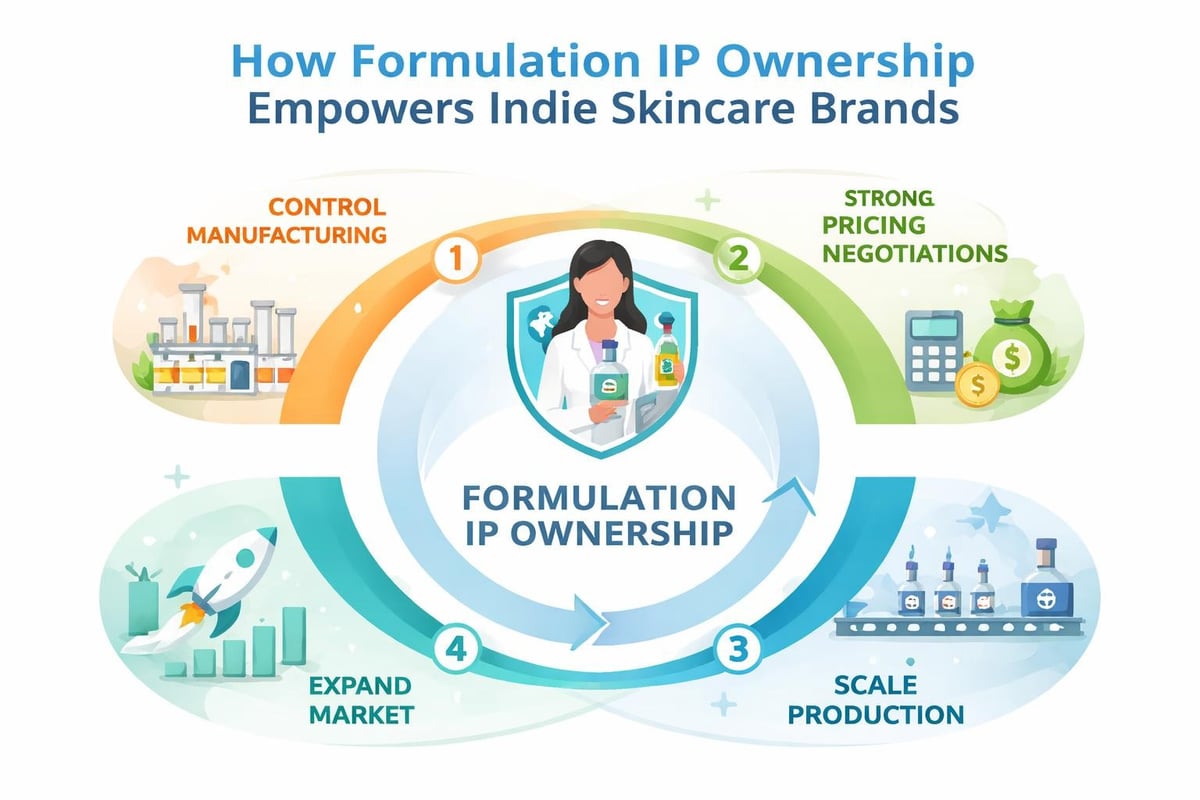
Intellectual property ownership in skincare formulation serves as the cornerstone of true brand independence. When you develop a custom formula with a contract manufacturer, the ownership terms outlined in your agreement determine whether you control your product's future or remain dependent on a single supplier.
Without formulation IP ownership, brands face critical limitations:
- Inability to switch manufacturers without losing their signature products
- Vulnerability to price increases from suppliers who control the formula
- Risk of manufacturers creating similar products for competitors
- Limited options for scaling production or entering new markets
- Reduced business valuation when seeking investment or acquisition
The strategic value of proprietary formulas extends far beyond simple product creation. When indie brands own their formulation intellectual property, they gain the freedom to negotiate with multiple manufacturers, optimize production costs, and maintain quality standards across different facilities.
Building Authentic Competitive Advantage
The modern consumer increasingly values authenticity and uniqueness, particularly when choosing indie skincare brands over mass-market alternatives. Proprietary formulations provide the foundation for creating genuinely distinctive products that can't be easily copied or commoditized.
Consider how formulation ownership impacts brand positioning:
| Aspect | With IP Ownership | Without IP Ownership |
|---|---|---|
| Product Uniqueness | Fully protected proprietary blends | White-label or semi-custom formulas |
| Story Authenticity | Genuine innovation narrative | Limited differentiation claims |
| Consumer Trust | Transparent about original development | Potential overlap with competitors |
| Market Position | Premium pricing justification | Price competition vulnerability |
When examining why indie skincare brands must own formulation ip, the connection to authenticity as a competitive advantage becomes clear. Consumers invest in indie brands because they represent innovation and genuine alternatives to mainstream products.
Financial Implications and Business Valuation
The financial ramifications of formulation IP ownership extend throughout a brand's lifecycle, from initial capital investment through eventual exit strategies. Understanding these implications proves essential for founders planning sustainable growth.
Investment and Acquisition Considerations
Venture capitalists, angel investors, and potential acquirers scrutinize intellectual property portfolios when evaluating beauty brands. Formulation ownership significantly impacts business valuation because it represents defensible assets that generate long-term value.
Key valuation factors influenced by IP ownership:
- Proprietary Technology Value: Unique formulations represent tangible intellectual assets that contribute to overall business worth
- Revenue Predictability: Owned formulas enable diverse manufacturing partnerships, reducing supply chain risk
- Market Exclusivity: Protected formulations prevent competitor replication, supporting premium pricing
- Growth Potential: IP ownership facilitates geographic expansion and product line extensions
- Exit Multiples: Companies with strong IP portfolios typically command higher acquisition multiples
Research into formula ownership in contract manufacturing reveals that brands retaining full IP rights maintain significantly greater flexibility when pursuing funding rounds or acquisition opportunities.
Cost Control and Margin Protection
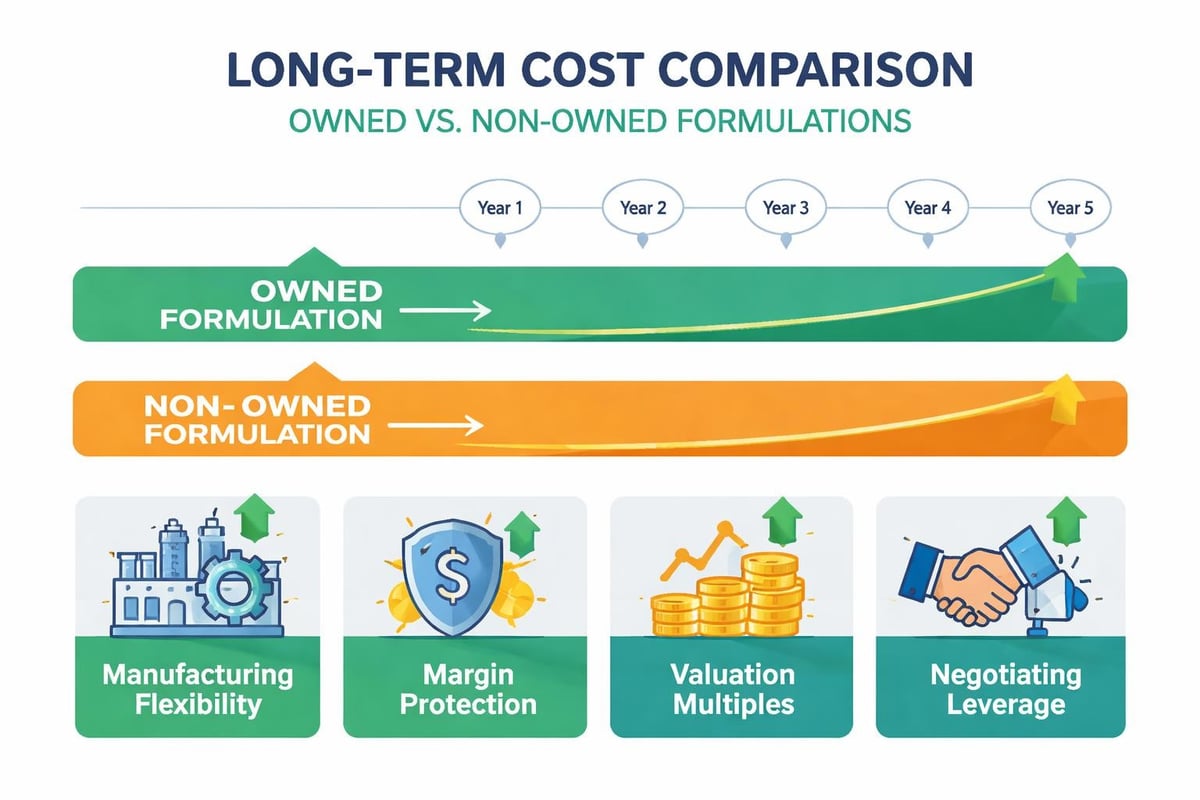
While developing custom formulations requires upfront investment, ownership delivers substantial long-term cost advantages. Brands without IP ownership often face margin compression as manufacturers raise prices, knowing the client cannot easily transition to competitors.
The economic case for why indie skincare brands must own formulation ip becomes compelling when analyzing multi-year projections:
- Negotiating Power: Multiple manufacturing quotes become possible when you own the formula
- Production Optimization: Freedom to select manufacturers based on quality, capacity, and cost efficiency
- Economies of Scale: Ability to increase production volumes without dependency on a single partner
- Vertical Integration Options: Potential to bring production in-house as the business grows
Quality Control and Product Integrity
Maintaining consistent quality across production runs, market expansions, and manufacturing partnerships requires complete access to formulation specifications. The importance of quality formulations in building consumer trust cannot be overstated, particularly for emerging brands establishing their reputation.
Ensuring Consistency Across Markets
As indie brands expand into new geographic markets, regulatory requirements vary significantly. Formulation ownership enables brands to adapt products for different regions while maintaining core performance characteristics and brand identity.
Without IP ownership, modifications for regulatory compliance require manufacturer approval and cooperation, potentially limiting international growth opportunities. Brands controlling their formulations can work with regional experts to adjust ingredients while preserving product efficacy and sensory experience.
Protecting Against Supply Chain Disruptions
The global supply chain challenges experienced in recent years highlighted the vulnerability of brands dependent on single manufacturing relationships. When exploring why indie skincare brands must own formulation ip, supply chain resilience emerges as a critical consideration.
Supply chain advantages of formulation ownership include:
- Rapid manufacturer transitions during disruptions or quality issues
- Dual-sourcing capabilities for business continuity
- Geographic diversification of production facilities
- Alternative ingredient sourcing without complete reformulation
- Emergency production capacity access during demand spikes
Understanding formulation manufacturing challenges that indie brands face reveals how IP ownership provides strategic flexibility during operational uncertainties.
Legal Protection and Risk Mitigation
The legal dimensions of formulation IP extend beyond simple ownership clauses in manufacturing agreements. Comprehensive intellectual property protection requires understanding patents, trade secrets, and contractual safeguards that preserve competitive advantages.
Understanding Ownership Structures
Different contract manufacturers offer varying IP ownership models, making careful contract review essential before committing to development partnerships. The nuances in these agreements can determine whether you truly own your formulation or merely license it.
| Ownership Model | Brand Rights | Manufacturer Rights | Long-Term Implications |
|---|---|---|---|
| Full Brand Ownership | Complete formula rights | Production knowledge only | Maximum flexibility and value |
| Shared Ownership | Limited modification rights | Can produce for others | Restricted scalability |
| Manufacturer Ownership | Marketing rights only | Full formula control | Severe limitations |
| License Agreement | Temporary usage rights | Retains all IP | No asset value |
Guidance on protecting custom formulation brand confidentiality emphasizes the importance of explicit contractual language defining ownership, usage rights, and confidentiality obligations.
Navigating IP Clauses in Contracts
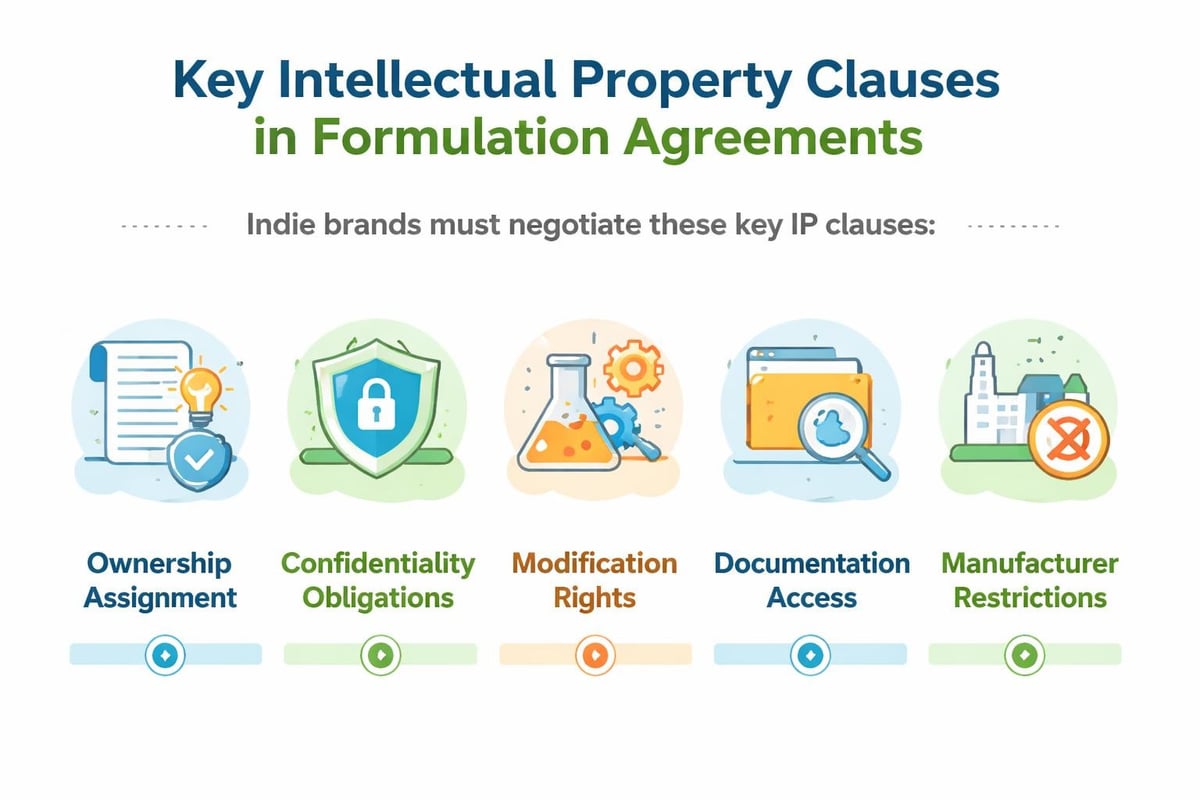
When evaluating manufacturing partners, scrutinizing intellectual property clauses requires legal expertise and industry knowledge. Many founders sign agreements without fully understanding the long-term implications of IP terms, discovering limitations only when attempting to scale or switch manufacturers.
Critical contract elements to review include:
- Formula Ownership Assignment: Explicit transfer of all rights to the brand
- Trade Secret Protection: Manufacturer obligations to maintain confidentiality
- Non-Compete Provisions: Limitations on producing similar formulas for competitors
- Documentation Access: Rights to complete formulation specifications and testing data
- Modification Rights: Freedom to adjust formulas without manufacturer approval
Resources about cosmetic formula intellectual property ownership provide founders with frameworks for evaluating contract terms and protecting their business interests.
Strategic Partnership Selection
Choosing the right formulation partner significantly impacts not just product quality but also long-term IP ownership and business flexibility. The decision regarding why indie skincare brands must own formulation ip begins with selecting manufacturers committed to transparent, client-favorable ownership structures.
Evaluating Manufacturer IP Policies
Not all contract manufacturers approach intellectual property ownership equally. Some actively support brand independence through complete formula transfer, while others retain ownership to maintain client dependency and recurring revenue.
When assessing potential partners, consider:
- Transparency: Clear communication about ownership terms before development begins
- Industry Reputation: Track record of supporting brand growth through IP transfer
- Contract Flexibility: Willingness to negotiate terms favorable to emerging brands
- Documentation Standards: Comprehensive formula specifications and testing protocols
- Long-term Alignment: Partnership philosophy supporting brand independence
The relationship between formulation flexibility and IP ownership in contract manufacturing influences a brand's strategic positioning and growth trajectory.
Building Relationships Based on Mutual Success
The most productive manufacturer-brand relationships recognize that client success drives mutual prosperity. Forward-thinking formulation partners understand that supporting brand independence through IP ownership creates loyal clients who return for new product development and recommend services to peers.
Progressive manufacturers differentiate themselves by offering complete formulation ownership as standard practice, recognizing this approach attracts ambitious, growth-oriented brands. These partnerships focus on value creation through expertise rather than client dependency through IP retention.
Innovation and Product Development Freedom
Formulation ownership directly impacts a brand's ability to innovate, iterate, and respond to market trends. When you control your intellectual property, product development becomes a strategic advantage rather than a logistical challenge requiring manufacturer approval.
Iterative Improvement and Market Response
Consumer preferences evolve constantly, and successful small cosmetic brands maintain relevance through continuous product refinement. Ownership enables rapid response to feedback, emerging ingredients, and competitive developments without navigating complex manufacturer relationships.
Innovation advantages of IP ownership:
- Immediate formula adjustments based on consumer feedback
- Incorporation of trending ingredients without complete reformulation
- Seasonal variations and limited editions using the core formula
- Performance optimization through ingredient upgrades
- Cost optimization by substituting comparable materials
The capacity to reformulate cosmetic products as needed provides competitive agility that distinguishes successful indie brands from static product lines.
Expanding Product Lines and Categories
Brand extension opportunities multiply when you own core formulations that can be adapted for new product categories. A successful facial serum formula might inform body care products, while expertise in specific ingredient combinations enables efficient development of complementary offerings.
Without formulation IP ownership, each new product potentially requires starting from scratch with a manufacturer, multiplying development costs and timelines. Owned formulations serve as platforms for efficient innovation and category expansion.
The Indie Brand Advantage
Understanding why indie skincare brands must own formulation ip ultimately connects to the fundamental value proposition that independent brands offer consumers: genuine innovation, authentic values, and products created with intention rather than mass-market formulation.
The cosmetic industry landscape continues evolving toward transparency and authenticity, with consumers increasingly scrutinizing brand claims and manufacturing practices. IP ownership supports authentic brand narratives by ensuring products truly represent the founder's vision rather than modified white-label formulas.
Sustainability and Ethical Considerations
Many indie brands differentiate through commitments to eco-friendly practices and sustainable ingredients. Formulation ownership enables brands to enforce these values throughout the supply chain, selecting manufacturers and ingredients aligned with ethical standards.
Without IP control, brands depend on manufacturer willingness to source preferred ingredients and maintain sustainability standards. Ownership transfers this decision-making power to the brand, ensuring values translate into actual product composition.
Consumer Trust and Transparency
Modern beauty consumers demand transparency about product origins, ingredient sourcing, and manufacturing processes. Brands that own their formulations can speak authentically about development processes, ingredient selections, and quality standards without navigating manufacturer confidentiality restrictions.
This transparency builds consumer trust, supporting premium pricing and brand loyalty that drives long-term profitability. The connection between formulation ownership and authentic brand storytelling reinforces why indie skincare brands must own formulation ip as a foundational business principle.
Practical Steps for Securing Formulation IP
Translating intellectual property awareness into action requires deliberate steps throughout the product development process. Founders entering formulation partnerships should prioritize IP ownership from initial conversations through final contract execution.
Recommended actions for securing formulation rights:
- Legal Review: Engage cosmetic industry attorneys to review all manufacturing agreements
- Explicit Documentation: Ensure contracts explicitly state complete formula ownership transfer
- Comprehensive Specifications: Request detailed formulation documentation, including raw material sources
- Testing Data: Obtain all stability, compatibility, and safety testing results
- Confidentiality Agreements: Implement NDAs protecting proprietary information
- Regular Audits: Periodically verify documentation completeness and accessibility
Working with partners like The INCI Lab that prioritize client IP ownership eliminates ambiguity and establishes clear rights from project inception.
Documentation and Knowledge Transfer
Complete formulation ownership requires comprehensive documentation that enables production with any qualified manufacturer. This includes:
- Detailed ingredient specifications with INCI names and percentages
- Manufacturing process instructions and temperature/timing parameters
- Quality control testing protocols and acceptable ranges
- Packaging compatibility data and stability testing results
- Regulatory compliance documentation for target markets
Insufficient documentation limits the practical value of formulation ownership, as reproducing products becomes challenging without complete specifications.
Securing intellectual property ownership for your formulations represents one of the most strategic decisions you'll make as an indie skincare brand founder, directly impacting your independence, valuation, and competitive positioning. At The INCI Lab, we believe your innovations should belong to you, which is why we provide complete formulation ownership with every custom development project. Our award-winning formulation expertise, combined with our commitment to eco-friendly practices and your business success, ensures you build valuable intellectual property assets while creating exceptional products that resonate with your target market.

